US, Russian spies often cooperate despite differences, says CIA director
February 26, 2016 Leave a comment
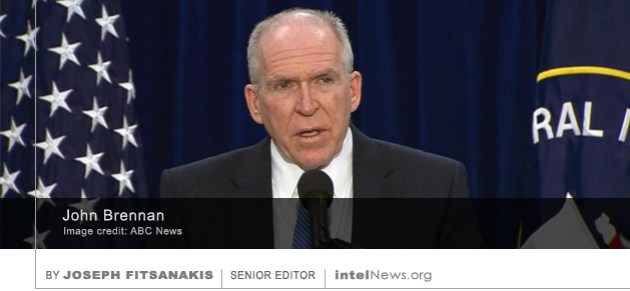 Russia is being “very aggressive” toward the United States, but cooperation on counter-terrorism between Moscow and Washington is “highly active” despite the differences between them, according to the director of the United States Central Intelligence Agency. John Brennan, a longtime CIA career officer, who has led the Agency for nearly three years, spoke on National Public Radio on Wednesday about US-Russian relations, Syria and the Islamic State. He told the Washington-based radio station that Russian President Vladimir Putin sees Russia as a superpower that has to assert its influence beyond its immediate region. Thus, said Brennan, Moscow’s actions in Ukraine could be understood in the context of Russia’s regional-power doctrine; but its “very assertive, very aggressive” support for Syrian President Bashar al-Assad is part of a wider strategy of geopolitical domination that includes the Middle East.
Brennan said that Russia is losing ground in Ukraine because its “hybrid war” is “not going as planned” and Putin “has found that he’s in a bit of a quandary” in the former Soviet republic. Not only is Putin “not realizing his objectives” in Ukraine, added the CIA director, but the widening geopolitical confrontation between Russian and the West is “causing a chill […] even in intelligence channels”. He added, however that the CIA continues to work closely with the Russian intelligence community in counter-terrorism operations directed against Islamist militants. Brennan described the CIA’s relationship with Russian intelligence operatives as a “very factual, informative exchange. If we get information about threats to Russian citizens or diplomats, we will share it with the Russians”, said the CIA director, adding: “they do the same with us”.
Brennan, a fluent Arabic speaker who spent many years in Saudi Arabia, used the 2014 Winter Olympics in Sochi, Russia, as an example of a collaborative project between the CIA and its Russian counterparts. “We worked very closely with them” during the Sochi games, said Brennan, in order to “try to prevent terrorist attacks”. “And we did so very successfully”, concluded the CIA director.
► Author: Joseph Fitsanakis | Date: 26 February 2016 | Permalink
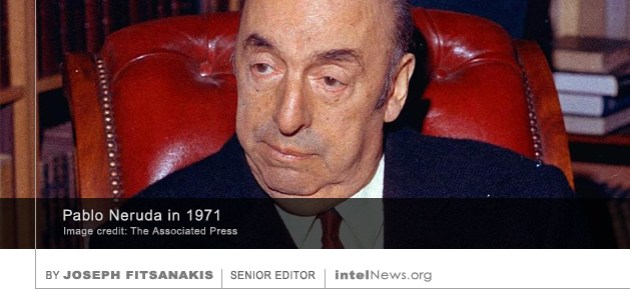 Two teams of international experts will examine the exhumed remains of Chilean Nobel Laureate poet Pablo Neruda, who some say was deliberately injected with poison by the Chilean intelligence services. The literary icon died on September 23, 1973, less than two weeks after a coup d’état, led by General Augusto Pinochet, toppled the democratically elected government of Salvador Allende, a Marxist who was a close friend of Neruda. The death of the internationally acclaimed poet, who was 69 at the time, was officially attributed to prostate cancer and the effects of acute mental stress caused by the military coup. In 2013, however, an
 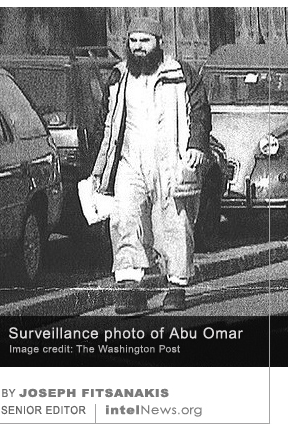 Europe’s highest human rights court has ruled against Italy in the case of an Egyptian man who was abducted from Milan in 2003 by the United States Central Intelligence Agency. Hassan Mustafa Osama Nasr, known as Abu Omar, is a former member of al-Gama’a al-Islamiyya, an Islamist group founded in the 1970s, which aimed to overthrow the Egyptian government and replace it with an Islamic regime. Members of the group have been implicated in the assassination of Egyptian President Anwar Sadat in 1981, as well as in numerous attacks on tourist facilities in Egypt in the 1990s. Once al-Gama’a al-Islamiyya was declared illegal in Egypt, Italian authorities offered Nasr political asylum, after he successfully argued that he would be subject to torture if arrested in Egypt.
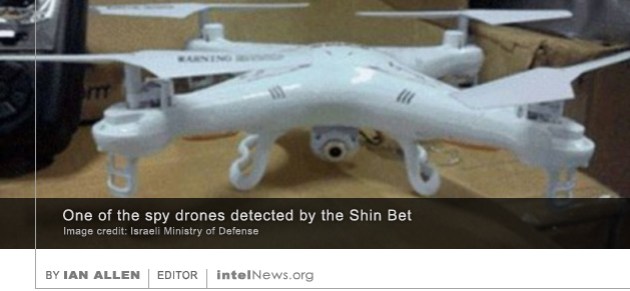 Authorities in Israel said on Sunday that they foiled a plan to smuggle dozens of spy drones from Israel into the Gaza Strip. The Israeli Ministry of Defense said in a statement late on Sunday that the drones had been detected by members of the Shin Bet, Israel’s security police. The incident reportedly took place at Kerem Shalom, a major border crossing in to Gaza, a Palestinian enclave that is controlled by Hamas. The Defense Ministry statement also said that Sunday’s incident was only the latest in a string of recent attempts to smuggle spy drones into Gaza, all of which had been stopped by the Shin Bet since January.
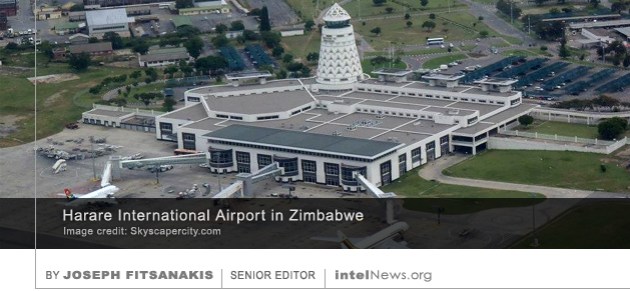 An American-registered airplane carrying large quantities of cash on behalf of a South African bank was impounded by authorities in Zimbabwe after a dead body was found on board. Zimbabwean media said police was notified after human blood was seen dripping from the plane’s cargo area during an emergency refueling stop. Authorities
 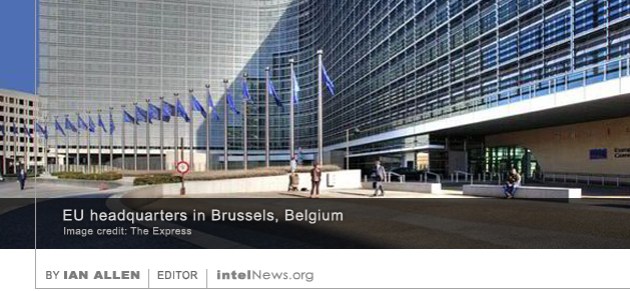 A debate on information security measures in the European Union was prompted last week after some officials voiced concerns that the proceedings of a closed-door meeting were secretly monitored by Israel. The meeting took place on January 15 as part of regular proceedings by the EU’s Political and Security Committee (PSC). The main item on the agenda was the EU’s Middle Eastern policy. According to some meeting participants, Israeli diplomats appeared to be aware of a statement discussed during the PSC meeting “in real time”, which prompted a wider debate on EU information security policies.
 Syrian and American media are reporting that Russian engineers, employed by a Moscow-based contractor with close ties to Russian President Vladimir Putin, are working at a Syrian gas plant under the control of the Islamic State. The facility in question is the so-called Tuweinan gas plant, which is located in central Syria, approximately 60 miles (40 kilometers) southwest of the city of Raqqa. The Islamic State declared Raqqa its capital shortly after occupying it, in June 2013, and the city has since served as the militant group’s administrative headquarters. The nearby Tuweinan gas plant is believed to be the largest of its kind in Syria. In 2013, it was occupied by an alliance of factions operating under the banner of the Al-Nusra Front, the primary al-Qaeda affiliate in Syria. But in early 2014, Islamic State forces took control of the plant following a military offensive against Al-Nusra.
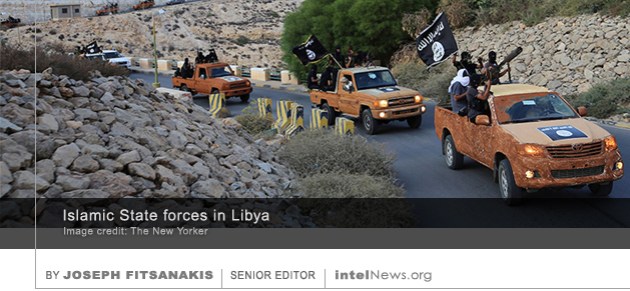 Senior members of the Islamic State are moving from Syria and Iraq to Libya, according to a Libyan intelligence official who spoke to the BBC. Since 2014 and the outbreak of the Second Libyan Civil War, the North African country has been engulfed in a multipolar struggle for dominance between rival armed groups and alliances. Among them is Libya Dawn, a loose coalition of former al-Qaeda-linked militants, ethnic Berbers, members of the pro-Egypt Muslim Brotherhood, as well as the al-Shorooq Force, an Islamist militia from Libya’s northwestern coastal city of Misrata. Libya Dawn troops have been engaged in ground-combat against Islamic State forces, which currently control Libya’s north-central coastal region.
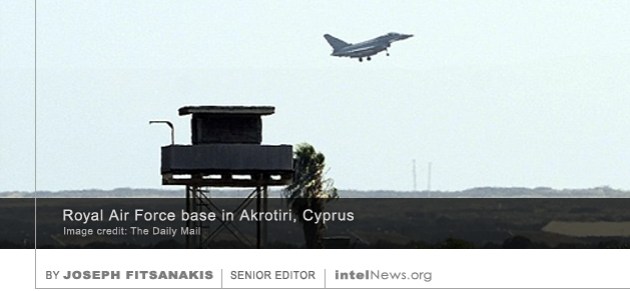 British and American intelligence services worked together to hack Israeli unmanned aerial vehicles in order to acquire information on the Jewish state’s military intentions in the Middle East, according to documents leaked last week. Online publication The Intercept, said the operation was code-named ANARCHIST and was a joint project of Britain’s General Communications Headquarters (GCHQ) and America’s National Security Agency (NSA). The publication said it acquired documents about the operation from former NSA contractor Edward Snowden, who defected to Russia in 2013 and was offered political asylum by Moscow.
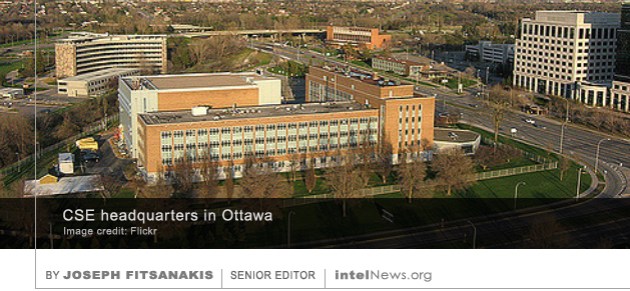 Canada says it will stop sharing certain types of intelligence with some of its closest international allies until it ensures that Canadian citizens’ information is not included in the data given to foreign spy agencies. The announcement follows an official admission, made earlier this week, that a Canadian intelligence agency failed to remove Canadian citizens’ data from information it shared with member-agencies of the so-called Five Eyes Agreement. The pact, which is sometimes referred to as the UK-USA Security Agreement, has been in existence since World War II. It provides a multilateral framework for cooperation in signals intelligence (SIGINT) between the United Kingdom, the United States, Canada, Australia, and New Zealand.
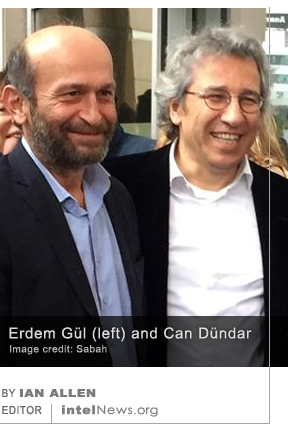 Two leading Turkish journalists, who claimed in a series of articles that Ankara has been arming militant Islamists in Syria, are facing espionage charges for “airing Turkish state secrets”. The two, Can Dündar and Erdem Gül, work for Cumhuriyet, (The Republic), Turkey’s oldest newspaper, which typically voices staunchly secularist views representing the center-left of the political spectrum. Last year Dündar, who is the paper’s editor, and Gül, who serves as the paper’s bureau chief in Ankara, published a series of articles claiming that the Turkish government was secretly supporting Salafi Jihadist groups in Syria.
 A Russian former intelligence officer, who is accused by the British government of having killed another Russian former spy in London, said the British intelligence services tried to recruit him in 2006. British government prosecutors have charged Andrei Lugovoi with the killing of Alexander Litvinenko, a former employee of the Soviet KGB and one of its successor agencies, the FSB. In 2006, Litvinenko died in London, where he had defected with his family in 2000, following exposure to the highly radioactive substance Polonium-210. In July of 2007, the British government charged Lugovoi and another Russian, Dmitri Kovtun, with the murder of Litvinenko, and expelled four Russian diplomats from London. Last week, following the conclusion of an official inquest into the former KGB spy’s death, the British government took the unusual step of summoning the Russian ambassador to London, to file an official complaint about Moscow’s refusal to extradite Lugovoi and Kovtun to the United Kingdom.
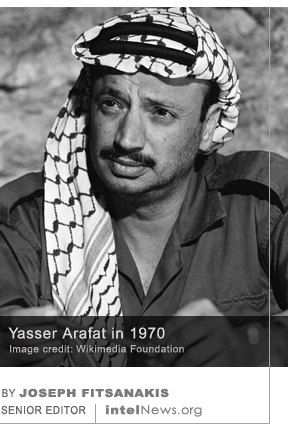 Switzerland secretly agreed in the 1970s to support calls for Palestinian statehood, in return for not being targeted by Palestinian militants, according to a new book. Written by Marcel Gyr, a journalist with the Zurich-based Neue Zürcher Zeitung, the book
 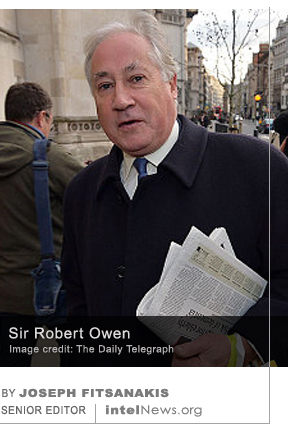 The British government has taken the unusual step of summoning the Russian ambassador to London, following the conclusion of an official inquest into the death of a former KGB officer who is believed to have been killed on the orders of Moscow. Alexander Litvinenko, an employee of the Soviet KGB and one of its successor organizations, the FSB, defected with his family to the United Kingdom in 2000. But in 2006, he died of radioactive poisoning after meeting two former KGB/FSB colleagues, Dmitri Kovtun and Andrey Lugovoy, in London. A public inquiry into the death of Litvinenko, ordered by the British state,








US lawmaker claims Pentagon is resisting probe into tweaked ISIS analysis
March 1, 2016 by Joseph Fitsanakis Leave a comment
Since that time, it has emerged that more than 50 intelligence analysts from the Defense Intelligence Agency have come forward to complain to the Pentagon’s Office of the Inspector General that their reports on the Islamic State were altered by CENTCOM officials, in order to give a falsely positive projection of US policy in relation to the militant Sunni organization. Some of the analysts have sharply criticized what they describe as the deliberate politicization of their reports by CENTCOM. Their complaints are now believed to be part of an official investigation into the matter by the Inspector General. The latter is required to produce a report in cooperation with the intelligence oversight committees of the US Congress.
But Nunes, who represents one such Congressional committee, complained last week that his staffers had been repeatedly forced to cancel fact-finding trips to CENTCOM’s headquarters in Florida. He also said at an intelligence committee hearing last week that he had been “made aware” that CENTCOM officials had systematically destroyed digital and printed files relating to the investigation. Nunes added that his committee expected the DoD to “provide these and other documents” in a timely manner. He added that his committee would “do a lot of interviews” in order to detect “what files were deleted”, since those “are the ones they don’t want you to see”.
Reporters from Foreign Policy magazine contacted CENTCOM spokesman Patrick Ryder, who refused to discuss the specifics of the case. He said, however, that all emails sent by senior CENTCOM officials are “kept in storage for record-keeping purposes”, and therefore “cannot be deleted”.
► Author: Joseph Fitsanakis | Date: 01 March 2016 | Permalink
Filed under Expert news and commentary on intelligence, espionage, spies and spying Tagged with CENTCOM, Devin Nunes, DIA, DoD Inspector General, intelligence analysis, intelligence oversight, Islamic State of Iraq and al-Sham, Islamic State of Iraq and Greater Syria, News, Patrick Ryder, US, US House of Representatives Permanent Select Committee on Intelligence