March 2, 2016
by Joseph Fitsanakis
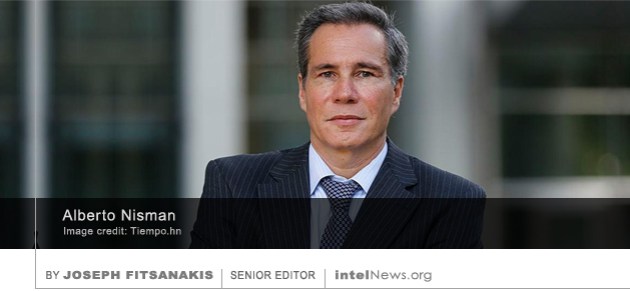 An Argentine former senior intelligence official has claimed in court testimony that the administration of President Cristina Fernández de Kirchner murdered a state prosecutor who had accused senior officials of having colluded with Iran to bomb Israeli targets in Buenos Aires. In January 2015, the prosecutor, Alberto Nisman, prompted international headlines by launching a criminal complaint against President Kirchner and several other notable personalities of Argentine political life. Nisman accused them of having colluded with the government of Iran to obstruct an investigation into the bombings of the Israeli embassy and a Jewish cultural center in Buenos Aires in the mid-1990s. A dozen people died in the bombing of the embassy, while another 85 were killed two years later, when the Asociación Mutual Israelita Argentina community center in the Argentine capital was bombed. Nisman was found dead on January 19, 2015, hours before he was due to give Congressional testimony on the subject. His body was found in the bathroom of his apartment, which had been locked from the inside.
Argentine authorities say they believe Nisman killed himself with a single shot to the head from a .22 caliber handgun. His family, however, as well as many notable personalities in Argentina, believe he was murdered on the orders of government officials who wanted to silence him. Such claims were reinforced this week following a dramatic 17-hour court testimony by Antonio Horacio Stiuso, better known as Jaime Stiuso, who served as chief operating officer for Argentina’s Secretaría de Inteligencia del Estado (SIDE) under President Kirchner. Stiuso was fired after Nisman’s death, when the government suddenly dissolved SIDE and replaced it with a new agency, the Agencia Federal de Inteligencia. In justifying the dramatic move, President Kirchner accused SIDE of feeding Nisman fabricated information implicating her and her government minsters in a fictional collusion with the Islamic Republic, and then killing him in order to destabilize her rule. She then charged SIDE’s leadership, including Stiuso, with involvement in Nisman’s killing. Stiuso promptly fled Buenos Aires for Brazil, from where he flew to Miami, Florida, on February 19, using an Italian passport.
But the former spy recently returned to Argentina and on Monday he testified in a closed-door hearing as part of an official investigation into Nisman’s death. Although Stiuso gave his testimony in secret, Argentine media published several extracts on Tuesday, which appear to have been leaked by witnesses. According to the excerpts, Stiuso accused members of an “inner circle” inside President Kirchner’s government of having killed Nisman and then tampered with incriminating evidence from the scene of the crime. The former spy appears to have told the judge in the case, Fabiana Palmaghina, that the state prosecutor’s death “was intimately linked to the work he was doing”. He is reported to have added that “the author of all this madness was that woman, Cristina Fernández de Kirchner.
Stiuso has refrained from talking to the media, and his comments to the court have not been confirmed. However, the judge in the case, who previously favored the view that Nisman committed suicide, has now referred Nisman’s case to a higher federal court in Argentina with instructions that it be examined as a possible homicide.
► Author: Joseph Fitsanakis | Date: 02 March 2016 | Permalink
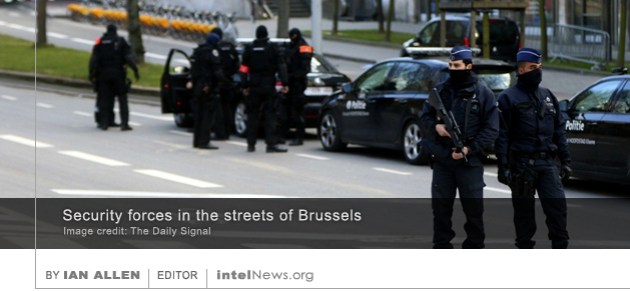 Belgian Intelligence Services ‘Overwhelmed and Outnumbered’. Tuesday’s deadly attacks on Brussels airport and a metro station, which left at least 30 people dead, demonstrate that the Belgian security forces are overwhelmed and outnumbered by the threat posed by radical Islamists, experts say. Belgium’s security services are not so much incompetent, say experts, as understaffed—that leaves them outnumbered by the high number of suspected radical Islamists, some home-grown and some who have traveled to Syria and back.
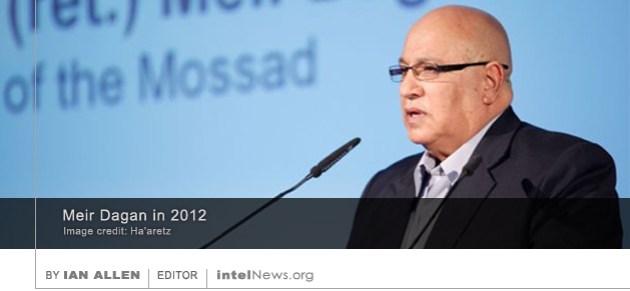 Meir Dagan, who directed the Israeli intelligence agency Mossad for a decade and emerged as a vocal critic of the Israeli government after his retirement, has died. A statement from his family said he died of liver cancer, a disease that prompted him to undergo a complex
  A court in Germany has sentenced a former officer of the country’s intelligence agency, who spied for the United States and Russia from 2008 to 2014. Regular readers of this website will recall the case of ‘Markus R.’, a clerk at the Bundesnachrichtendienst, or BND, Germany’s external intelligence agency. The 32-year-old was
  Authorities in Malaysia said they managed to foil a plan by the Islamic State to kidnap the country’s prime minister and two other senior cabinet officials, in exchange for ransom. According to the government of Malaysia, the Islamic State also planned to stage armed attacks throughout the country, including in major urban centers, such as Kuala Lumpur, the nation’s capital. News of the alleged plot was revealed in the Dewan Rakyat, the lower house of the Malaysian parliament, by Ahmad Zahid Hamid, the country’s deputy prime minister. He told members of parliament that Malaysian intelligence had managed to detect the plot, which had been planned for January 30, 2015, but that the government did not believe it was prudent to alarm the country until the investigation of the alleged plot had been finalized.
 Tens of thousands of classified documents belonging to the Islamic State have been released by a disillusioned former member of the organization, who says that the group has been taken over by secularists.
 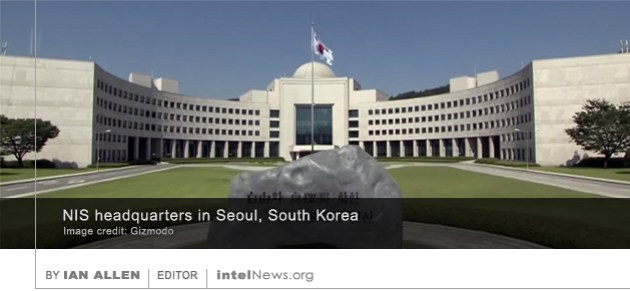 Dozens of cell phones belonging to senior government officials in South Korea were compromised by North Korean hackers who systematically targeted them with texts containing malicious codes, according to reports. The National Intelligence Service (NIS), South Korea’s primary intelligence agency, said the cell phone penetrations were part of a concerted campaign by North Korea to target smart phones belonging to South Korean senior government officials. Once they managed to compromise a cell phone, the hackers were able to access the call history stored on the device, the content of text messages exchanged with other users and, in some cases, the content of telephone calls placed on the compromised device. Moreover, according to the NIS, the hackers were able to access the contact lists stored on compromised cell phones, which means that more attacks may be taking place against cell phones belonging to South Korean government officials.
 Authorities in a northern German town have called on the Israeli embassy in Berlin to pay for the cost of extricating a car belonging to two Israeli spies, which was stuck in a mud pit in a restricted area. According to the Hamburg-based television station NDR, the
 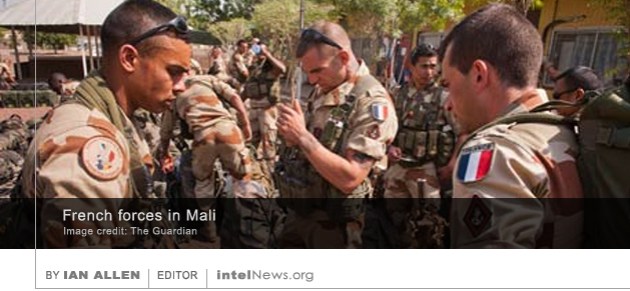 French troops have reportedly killed a Spanish citizen who was a senior commander of al-Qaeda in the Islamic Maghreb (AQIM), one of the most prolific al-Qaeda-linked groups in Africa. The Spaniard, Abu al-Nur al-Andalusi, 35, was from Melilla, a coastal Spanish enclave in northern Africa, which borders Morocco. Since 2014, al-Nur had operated as a military leader of AQIM, an armed Islamist group that aims to create a caliphate in northern Africa. AQIM emerged in the 1990s out of the brutal Algerian Civil War, which pitted the country’s secular but authoritarian government against a host of Islamist groups, including the Armed Islamic Group, known as GIA. In 1998 a band of GIA members left the group in protest against its indiscriminate killing of civilians, and formed a separate organization, which called itself Salafist Group for Preaching and Combat. In2007 the group renamed itself AQIM and pledged allegiance to al-Qaeda’s co-founder Osama bin Laden.
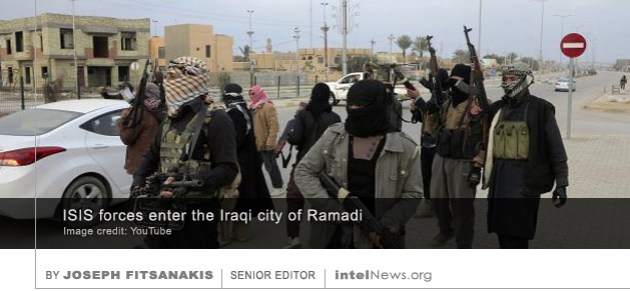 The leading lawmaker in the United States Congressional intelligence committee has accused the Department of Defense of resisting his efforts to investigate claims that intelligence products on the Islamic State were manipulated. Representative Devin Nunes (R-Ca.), who chairs the US House of Representatives Permanent Select Committee on Intelligence, said last week that he and his staffers were experiencing a “lack of cooperation” from the military during the course of an official probe into intelligence products. Nunes was referring to
 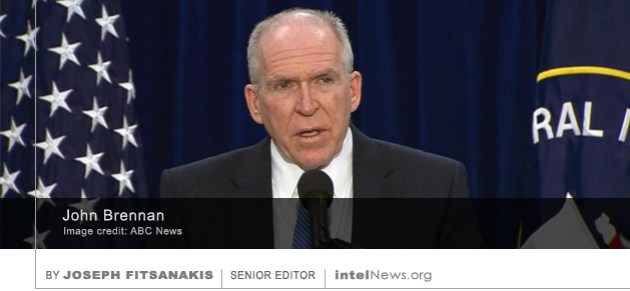 Russia is being “very aggressive” toward the United States, but cooperation on counter-terrorism between Moscow and Washington is “highly active” despite the differences between them, according to the director of the United States Central Intelligence Agency. John Brennan, a longtime CIA career officer, who has led the Agency for nearly three years,
 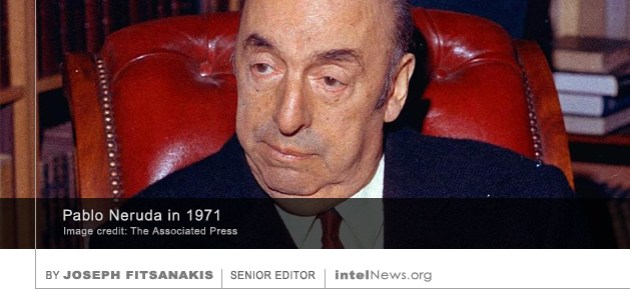 Two teams of international experts will examine the exhumed remains of Chilean Nobel Laureate poet Pablo Neruda, who some say was deliberately injected with poison by the Chilean intelligence services. The literary icon died on September 23, 1973, less than two weeks after a coup d’état, led by General Augusto Pinochet, toppled the democratically elected government of Salvador Allende, a Marxist who was a close friend of Neruda. The death of the internationally acclaimed poet, who was 69 at the time, was officially attributed to prostate cancer and the effects of acute mental stress caused by the military coup. In 2013, however, an
 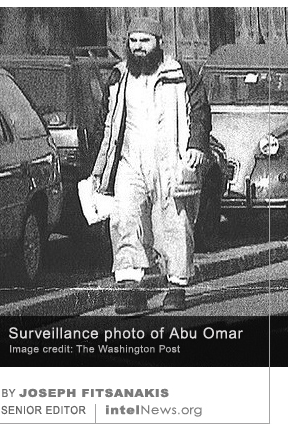 Europe’s highest human rights court has ruled against Italy in the case of an Egyptian man who was abducted from Milan in 2003 by the United States Central Intelligence Agency. Hassan Mustafa Osama Nasr, known as Abu Omar, is a former member of al-Gama’a al-Islamiyya, an Islamist group founded in the 1970s, which aimed to overthrow the Egyptian government and replace it with an Islamic regime. Members of the group have been implicated in the assassination of Egyptian President Anwar Sadat in 1981, as well as in numerous attacks on tourist facilities in Egypt in the 1990s. Once al-Gama’a al-Islamiyya was declared illegal in Egypt, Italian authorities offered Nasr political asylum, after he successfully argued that he would be subject to torture if arrested in Egypt.
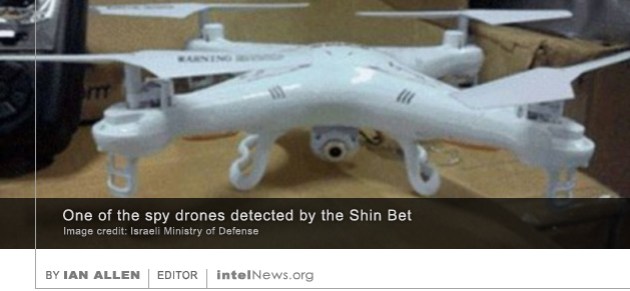 Authorities in Israel said on Sunday that they foiled a plan to smuggle dozens of spy drones from Israel into the Gaza Strip. The Israeli Ministry of Defense said in a statement late on Sunday that the drones had been detected by members of the Shin Bet, Israel’s security police. The incident reportedly took place at Kerem Shalom, a major border crossing in to Gaza, a Palestinian enclave that is controlled by Hamas. The Defense Ministry statement also said that Sunday’s incident was only the latest in a string of recent attempts to smuggle spy drones into Gaza, all of which had been stopped by the Shin Bet since January.








NSA director made secret visit to Israel last week
March 28, 2016 by Joseph Fitsanakis 1 Comment
According to Ha’aretz, Rogers was hosted in Israel by the leadership of the Israel Defense Forces’ SIGINT unit, which is known as Intelligence Corps Unit 8200. The secretive group, which is seen as Israel’s equivalent to the NSA, is tasked with collecting SIGINT from Middle Eastern locations and protecting Israel’s electronic information infrastructure from adversaries. According to the Israeli newspaper, Rogers’ visit was aimed at exploring ways in which the NSA and Unit 8200 can enhance their cooperation, especially against regional Middle Eastern powers like Iran or non-state groups like Hezbollah.
IntelNews readers will recall that the IDF’s Unit 8200 is viewed by some Middle East observers as the creator of the Stuxnet virus. Stuxnet is a sophisticated malware that is believed to have been designed as an electronic weapon against Iran’s nuclear program. Among these observers is New York Times correspondent David Sanger; in his 2012 book, Confront and Conceal, Sanger claimed that Stuxnet was designed by NSA and Unit 8200 programmers as part of a joint offensive cyber operation codenamed OLYMPIC GAMES. According to Sanger, the two agencies collaborated very closely between 2008 and 2011 in order to bring about Stuxnet and other carefully engineered malware, including Flame.
Ha’aretz said that Rogers’ visit was meant to solidify US and Israeli cooperation on offensive cyber operations, based on the legacy of Stuxnet and Flame. During his visit to Israel, the US intelligence official also met with the heads of other Israeli intelligence agencies, said Ha’aretz.
► Author: Joseph Fitsanakis | Date: 28 March 2016 | Permalink
Filed under Expert news and commentary on intelligence, espionage, spies and spying Tagged with IDF, intelligence cooperation, Israel, Michael Rogers, News, NSA, Operation OLYMPIC GAMES, SIGINT, Stuxnet, Unit 8200, United States