Swedish spy agency investigates drone sightings at three nuclear power plants
January 18, 2022 Leave a comment
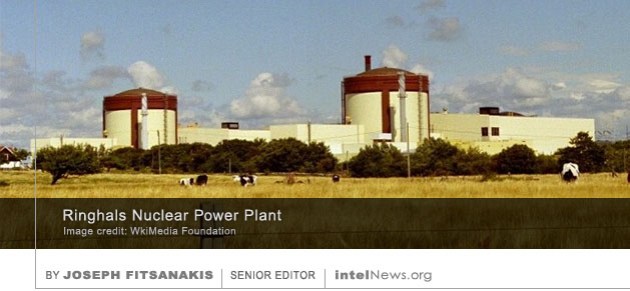 SWEDEN’S DOMESTIC SECURITY AGENCY said it had taken over from the police an investigation into sightings of unmanned aerial vehicles, commonly known as drones, at three nuclear power plants. On Monday, the Swedish Security Service, known by its Swedish acronym, SAPO, confirmed earlier reports that a large-size drone had been spotted on Friday by security guards over the Forsmark Nuclear Power Plant. The facility is located just short of 95 miles north of Sweden’s capital, Stockholm. It is known as the country’s largest producer of electricity, generating one sixth of its electricity supply.
Later, however, reports emerged about sightings of what appeared to be surveillance drones over Sweden’s two other nuclear power plants—namely the Oskarshamn Nuclear Power Plant, located on Sweden’s southeastern Baltic Sea coast, and the Ringhals Nuclear Power Plant, which is situated on the Värö Peninsula, on Sweden’s western coast. According to reports, the drones appeared to be large enough to withstand the gale force winds that were blowing over much of Sweden at the time. The drones disappeared without trace, and Swedish authorities say they have no suspects so far.
On Monday, SAPO said that it had assumed control of the probe into the drone sightings, “in order to be able to investigate the incidents in more detail”. In a report last weekend, the Reuters news agency pointed out that the drone sightings occurred a day after the Swedish military began patrolling the city of Visby, on the island of Gotland. According to Reuters, the patrols were sparked by “increased tensions” between Russia and the North Atlantic Treaty Organization (NATO). Like its neighboring Finland, Sweden is not a member of NATO, but there have been frequent calls in recent months for it go join, in light of renewed tensions between Russia and Ukraine.
► Author: Joseph Fitsanakis | Date: 18 January 2022 | Permalink
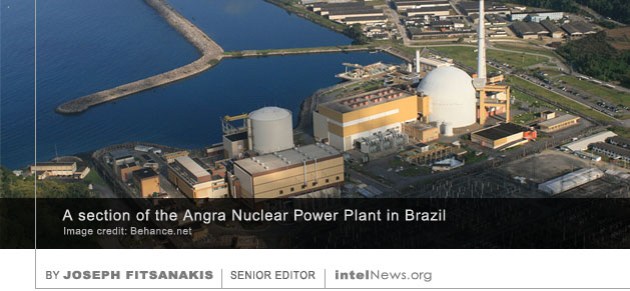 A convoy of trucks carrying nuclear fuel to one of Brazil’s nuclear plants was attacked by a heavily armed gang on Tuesday, according to police reports. The convoy was carrying uranium fuel from Resende, an industrial city in the municipality of Rio de Janeiro in southeastern Brazil. Its destination was the Angra Nuclear Power Plant in the coastal city of Angra dos Reis, which is located 100 miles south of Resende. Angra is Brazil’s sole nuclear power plant. It consists of two pressurized water reactors, Angra I and Angra II. It is owned by Eletrobras, Brazil’s state-owned power utility firm, which is also the world’s tenth largest electric utilities company.
 A highly radioactive device used by an energy company has gone missing in Malaysia, sparking a nationwide emergency for fear that it might have been stolen by a militant group. According to Malaysia’s Straits Times newspaper, a radioactive dispersal device (RDD), which is used for the industrial radiography of oil and gas supplies, disappeared during transit on August 10. The device, which weighs approximately 50 pounds, or 23 kilograms, disappeared from the back of a company truck in the early hours of the morning while it was being transported by two technicians. They were
  The United States Federal Bureau of Investigation is assisting authorities in some of Europe’s poorest states in their efforts to stop criminals with Russian connections from selling radioactive material to foreign terrorist organizations. The Associated Press







 intelNews.org
Concern mounts over Russia’s possible use of chemical weapons in Ukraine
March 11, 2022 by Joseph Fitsanakis Leave a comment
This is not the first time that Moscow has leveled such accusations against the United States and Ukraine. For over a decade, senior officials in the administration of Russian President Vladimir Putin have claimed that the United States and Britain have maintained secret networks of biological weapons laboratories in Eastern Europe. But the Kremlin’s accusations have been getting more frequent and more specific in recent days. On March 7, Igor Kirillov, Chief of the Russian military’s Radiation, Chemical and Biological Defense Forces, alleged that American and Ukrainian soldiers were destroying biological weapons facilities in Western Ukraine. Their goal, Kirillov claimed, was to keep lethal biological agents from falling into the hands of the Russian military.
Two days later, on March 9, Russian Defense Ministry spokesperson Major General Igor Konashenkov stated that Ukrainian forces had secretly transported “80 tons of ammonia” to a location northwest of Kharkiv. The purpose of the operation, Konashenkov said, was to carry out a “provocation using toxic substances”, and then blame Russia of using chemical weapons. During the Syrian Civil War, Moscow leveled similar allegations against Syrian rebels shortly before the government of Syrian President Bashar al-Assad launched chemical attacks against rebel-held areass.
There is also concern among Western analysts that the disconnection of the Chernobyl Nuclear Power Plant’s electrical network from Ukraine’s electrical grid may be “a Russian attempt to trigger nuclear panic over a potential radiological incident” in Ukraine. In light of this incident, some observers are beginning to interpret prior attacks on the Zaporizhia nuclear facility on March 4, and on a research facility containing a nuclear reactor in Kharkiv on March 6, as deliberate acts by Moscow. They say that the Kremlin may actively be seeking to introduce unconventional weapons into the war in Ukraine.
► Author: Joseph Fitsanakis | Date: 11 March 2022 | Permalink
Filed under Expert news and commentary on intelligence, espionage, spies and spying Tagged with 2022 Russian invasion of Ukraine, chemical warfare, chemical weapons, false flag operations, Igor Kirillov, Igor Konashenkov, News, nuclear security, Russia, Ukraine