News you may have missed #440 (USA edition)
October 19, 2010 Leave a comment
- US DNI scraps Intelligence Science Board. The newly appointed US Director of National Intelligence, James Clapper, has disbanded an advisory panel set up after 9/11, and tasked with providing him with scientific advice, ranging from nuclear physics to forensics to the psychology of interrogation. There are rumors that Clappers intends to disband another 19 advisory boards, believing them to be inefficient.
- Analysis: Uses and misuses of intelligence in four US wars. Former CIA analyst Melvin Goodman assesses the success of the CIA’s intelligence analysis by measuring the Agency’s performance before and during four controversial wars: Korea, Vietnam, Iraq, and Afghanistan.
- US Army awards medal to 95-year-old ex-OSS agent. George Vujnovich, a former agent of the US Office of Strategic Services, forerunner of the CIA, is to be awarded the US Army’s Bronze Star for helping rescue 512 American airmen in the former Yugoslavia during World War II.
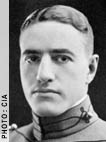

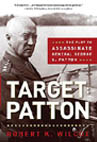 On December 9, 1945, a chauffeur-driven US military vehicle carrying US Army General George S. Patton was involved in what appeared to be a minor collision with another US military vehicle. The collision fatally injured General Patton a day before he was scheduled to leave US-occupied Germany and return to the United States. On December 21, 1945, Patton mysteriously died from his injuries, even though he appeared to be recovering. Now a new book by military historian Robert Wilcox






 intelNews.org
US employed ex-Nazis to develop interrogation methods
February 17, 2014 by Ian Allen Leave a comment
The United States relied on the assistance of dozens of German scientists to develop invasive interrogation techniques targeting the Soviet Union in the early years of the Cold War, according to a new book on the subject. The book, entitled Operation Paperclip: The Secret Intelligence Program that Brought Nazi Scientists to America, by American journalist Annie Jacobsen, is to be published this week. Operation PAPERCLIP was initially set up during World War II by the US Office of Strategic Services (OSS), a forerunner of the Central Intelligence Agency (CIA). Its aim was to recruit scientists that had previously been employed by the German Third Reich, with the primary goal of denying German scientific expertise to the USSR. Hundreds of former Nazi scientists were brought to the US under secret military research contracts during the second half of the 1940s. Eventually, the recruited scientists were used to augment an entire array of American government-sponsored endeavors, including the space program and several intelligence collection techniques. Jacobsen’s book details Operation BLUEBIRD, a program run by the CIA under PAPERCLIP, which employed former Nazi biological weapons experts, chemists and medical doctors. The latter were tasked with employing lysergic acid diethylamide, commonly known as LSD, in order to involuntary extort confessions from Soviet intelligence targets. In several cases, the hallucination-inducing chemical substance was dispensed on Soviet captives, who were also subjected to hypnosis and other methods of psychological manipulation. According to the book, the techniques were developed under the primary supervision of Dr. Walter Schreiber, Germany’s Surgeon General during the Third Reich. Schreiber helped the OSS set up an experimentation facility at Camp King, a CIA site located near Frankfurt in the American sector of Allied-occupied Germany. Read more of this post
Filed under Expert news and commentary on intelligence, espionage, spies and spying Tagged with Annie Jacobsen, CIA, Cold War, Germany, history, interrogation techniques, Kurt Blome, LSD, mental experimentation, mind experimentation, News, Operation BLUEBIRD, Operation PAPERCLIP, OSS, Walter Schreiber, World War II