Declassified documents show extent of Libyan support for Provisional IRA
January 3, 2022 1 Comment
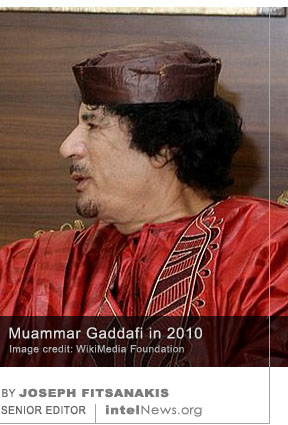 DOCUMENTS RELEASED LAST WEEK by the National Archives of Ireland show the extraordinary support given by the government of Libya to Irish republican separatists in Britain during the 1970s and 1980s. The previously classified documents were released last Tuesday by Ireland’s National Archives, which is the country’s official repository of state records. According to reports, the documents were released to the public in accordance with Ireland’s National Archives Act, which enables the declassification of certain state records 30 years after their production.
The documents contain details about the covert support given by the Libyan government of Colonel Muammar Gaddafi (pictured) to the Provisional Irish Republican Army (PIRA). The PIRA was a separatist militant organization that operated in British-ruled Northern Ireland and the Republic of Ireland for over 30 years, beginning in 1969. According to reports, the information in the documents came directly from the Libyan government in 1992, as part of a broader effort by the Libyans to mend relations with London following the Lockerbie bombing of 1988.
The documents outline the amount of armaments that the Libyans gave to the PIRA in several covert shipments from 1973 until late 1987. Collectively, the shipments consisted of 1,450 Kalashnikov automatic rifles, 66 machine guns, 180 semi-automatic pistols, 26 rocket-propelled-grenade launchers, 10 surface-to-air missiles, 765 grenades, nearly 6,000kg of Semtex explosive, over a thousand detonators, nearly 1.5 million rounds of ammunition, as well as several flame-throwers. The secret arms shipments came to an end in October 1987, when French military intelligence was able to intercept large quantities of weapons and war materiel that had been hidden aboard the ship MV Eksund by its Irish crew.
But the Libyans continued to secretly fund the PIRA, according to the documents released last week. By 1992, when the information contained in the documents was provided to the British by the Libyan government, Tripoli had given the PIRA “over $12.6 million in cash, the equivalent of roughly $45 million in today’s money”. British intelligence quickly shared this information with the Irish government, which is how these documents ended up in the National Archives of Ireland. The documents also include a list of PIRA volunteers who traveled to Libya and were trained in guerrilla warfare and sabotage. However, the names appear to be fake, and were probably used by the PIRA members “to disguise their travel to Libya”, according to reports.
► Author: Joseph Fitsanakis | Date: 03 January 2022 | Permalink
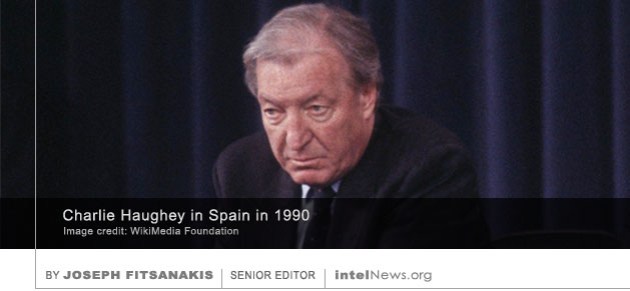 A NEW BOOK BY a veteran Irish journalist claims that the late Taoiseach (prime minister and head of the government of Ireland) Charlie Haughey was in effect an informer of the Provisional Irish Republican Army in the 1960s and 1970s. Written by Kevin O’Connor, the longtime political correspondent of The Sunday Independent, the book also claims that Haughey maintained regular contact with the leadership of the IRA throughout the 1970s.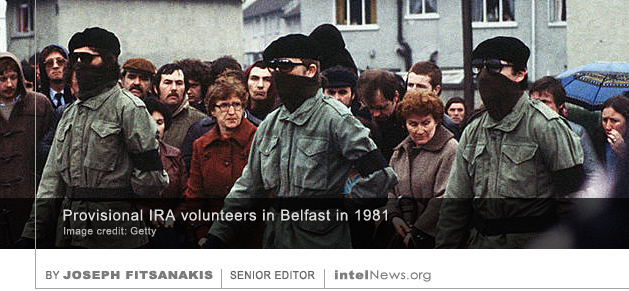
 Sean O’Callaghan, one of the most contentious figures in the history of the Provisional Irish Republican Army, has died in Jamaica. He was born in County Kerry, Republic of Ireland, in a strongly republican family, which sided with opponents of the Ango-Irish treaty and fought against the official Irish government in the Irish Civil War of 1922-1923. In 1971, aged just 17, O’Callaghan joined the Provisional Irish Republican Army, which fought to unite British-controlled Northern Ireland with the independent Republic of Ireland. Not long after, O’Callaghan was arrested by the Garda Síochána (Irish police) in his home county of Kerry, when a small quantity of explosives he was hiding in his parents’ house accidentally detonated.
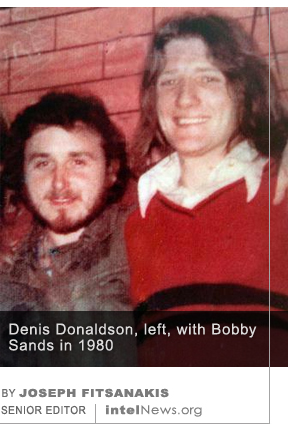 A former member of the Provisional Irish Republican Army, who was an agent for the British security services, has alleged that Gerry Adams, leader of the second-largest political party in Northern Ireland, ordered the killing of a British spy in 2006. The former agent was referring to the killing of Denis Donaldson, a senior member of the Provisional IRA, who was found dead months after it was revealed that he had been secretly spying on the republican organization on behalf of British intelligence.
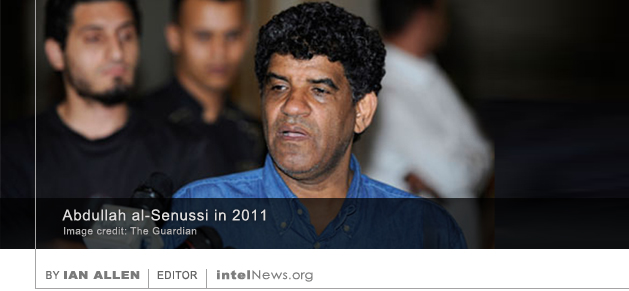 A group of American, British and Irish citizens are pressuring their respective governments to prevent the impending execution of Libya’s former intelligence strongman. Abdullah al-Senussi, 65, led Libya’s intelligence services during the regime of the country’s late dictator Muammar al-Gaddafi. Last week, however, he was sentenced to death by a court in Tripoli for his role in “inciting genocide” during the 2011 civil war that toppled Gaddafi’s regime. American, British and Irish officials are being urged to intervene to stop Senussi’s execution, so that he can help shed light on Libya’s role in international terrorist plots in the 1980s and 1990s.
 A lawsuit against Britain’s Security Service (MI5) by a former spy, who in the 1980s infiltrated the Provisional Irish Republican Army, commonly known as IRA, is to be judged in secret, a court in London has decided. The spy, Martin McGartland, of Belfast, Northern Ireland, was recruited by the Special Branch of the Royal Ulster Constabulary in the mid-1980s. The information he supplied to the security agencies over several years is widely credited with having saved the lives of at least 50 British police officers and soldiers. His autobiographical experiences formed the basis of the 2008 motion picture 50 Dead Men Walking.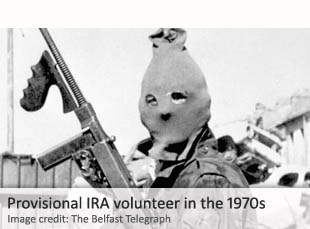
 By JOSEPH FITSANAKIS | intelNews.org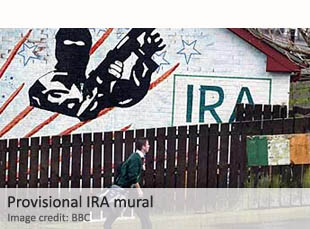







 intelNews.org
Decades after end of Northern Irish conflict, the legacy of spies remains obscure
August 4, 2022 by Joseph Fitsanakis 1 Comment
Although the bloody conflict has been the subject of numerous studies, its intelligence component is still obscure. This is especially so when it comes to the legacy of the spies who —by all accounts— were central to the day-to-day progression of this persistent conflict, which came to be known as “the Troubles”. In an insightful paper, Eleanor Williams, a PhD candidate at Queen’s University Belfast, and Thomas Leahy, Senior Lecturer at Cardiff University, examine this little-studied aspect of the Northern Irish conflict. The article, “The ‘Unforgivable’?: Irish Republican Army (IRA) informers and dealing with Northern Ireland conflict legacy, 1969-2021”, was published on Wednesday in the peer-reviewed journal Intelligence and National Security.
The authors list the substantial number of UK security agencies that had a role in recruiting and running informers during the Troubles. They include: the Security Service (MI5); the Metropolitan Police Special Branch; the Royal Ulster Constabulary Special Branch; and the Northern Irish Police Special Branch. Informants were also recruited by a host of intelligence organizations belonging to the British Armed Forces, such as the Military Reaction Force and the Force Research Unit. Although these agencies coordinated their intelligence activities to some extent, cooperation was not close. Consequently, there were hundreds of informants recruited by numerous UK state elements of the throughout the 30-year conflict. Their exact number remains unknown to this day. Read more of this post
Filed under Expert news and commentary on intelligence, espionage, spies and spying Tagged with academic research, Analysis, Northern Ireland, Provisional IRA, UK