News you may have missed #759 (analysis edition)
July 13, 2012 1 Comment
 By IAN ALLEN | intelNews.org |
►►What goes on in the mind of a spy? An interesting article on the psychology of espionage operatives and those who handle them. It includes several insightful observations, including this one: “Just as they face outward physical dangers, agents face many inner psychological adversities. These pressures in the psyche are as taxing as physical hardships. Furthermore, while physical hazards and hardships disappear once the active espionage is over, the psychological toll can linger”. IntelNews has covered psychological and psychiatric issues around espionage before.
►►Researchers propose using decoys to detect leaks. A group or researchers working for the US Pentagon’s research wing have come up with a new plan for busting leakers: spot them by how they search, and then entice the secret-spillers with decoy documents that will give them away. Computer scientists call it it “fog computing”, and it is seen as part of a broader assault on so-called “insider threats”, launched by the Pentagon in 2010, after the WikiLeaks imbroglio. In a related development, the US federal government announced recently that it spent over $11 billion to protect its secrets last year, double the cost of classification a decade ago. The total does not include the costs incurred by the US Intelligence Community, which remains classified.
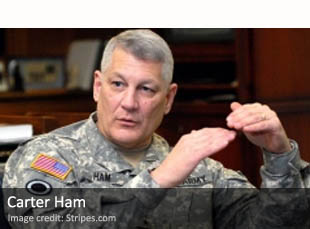
►►US General says US military spies ‘across Africa’. America’s top commander in Africa, General Carter Ham, has revealed that the US military has conducted spy operations all over the continent as part of the fight against international adversaries from al Qaeda-allied terror groups that target the homeland to suspected war criminals like Joseph Kony. “Do we collect information across Africa? Yes, we do”, the commander of US Africa Command said in a leadership conference at the Africa Center for Strategic Studies. Ham noted that US troops do at times go on “short-term deployments of capabilities” in various African nations, but always with the permission of the host country.










 intelNews.org
Trump’s Twitter feed is ‘gold mine’ for foreign spies, says ex-CIA analyst
July 3, 2018 by Joseph Fitsanakis 4 Comments
All intelligence agencies, explains Bakos, build psychological profiles of foreign leaders. These profiles typically rely on information collected through intelligence operations that are “methodical, painstaking and often covert”. The final product can be crucial in enabling countries to devise strategies that counter their adversaries, says Bakos. But with Trump, covert intelligence-collection operations are not needed in order to see what is on his mind, since “the president’s unfiltered thoughts are available night and day”, she claims. The former CIA analyst points out that President Trump’s tweets are posted “without much obvious mediation” by his aides and advisors, something that can be seen by the frequency with which he deletes and reposts tweets due to spelling and grammatical errors. These unfiltered thoughts on Twitter offer a “real-time glimpse of a major world leader’s preoccupations, personality quirks and habits of mind”, says Bakos.
Undoubtedly, she argues, foreign intelligence agencies are utilizing President Trump’s tweets in numerous ways while building his personality profile. The most obvious ways are by performing content analysis of his tweets, which could then be matched against information collected from other sources about major US policy decisions. Additionally, foreign intelligence agencies could identify media sources that the US president seems to prefer, and then try to feed information to these sources that might sway his views. Countries like Saudi Arabia and Russia may have done so already, claims Bakos. The US president’s views, as expressed through Twitter, could also be compared and contrasted with the expressed views of his aides or senior cabinet officials, in order to discern who he agrees with the least. It is equally useful to analyze the issues or events that the US president does not tweet about, or tweets about with considerable delay. One could even derive useful information about Trump’s sleeping patterns based on his tweets, says the former CIA analyst.
Bakos does not go as far as to suggest that the US president should abstain from social media. But she clearly thinks that the US leader’s use of social media is too impulsive and potentially dangerous from a national-security perspective. She also laments that, throughout her career in the CIA, she and her team “never had such a rich source of raw intelligence about a world leader, and we certainly never had the opportunity that our adversaries (and our allies) have now”, thanks to Trump’s incessant social media presence.
► Author: Joseph Fitsanakis | Date: 03 July 2018 | Permalink
Filed under Expert news and commentary on intelligence, espionage, spies and spying Tagged with Analysis, Donald Trump, intelligence analysis, Nada Bakos, psychology, social networking, Twitter, United States