Turkey claims Saudi dissident was killed, dismembered inside Saudi consulate
October 8, 2018 5 Comments
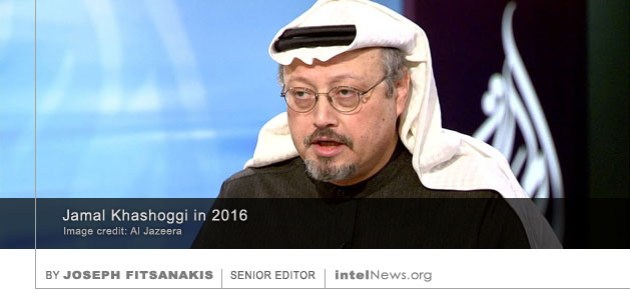 Turkish government sources have said that a former trusted aide of the Saudi royal family, who was shunned by Riyadh after criticizing Saudi policies, was murdered inside the Saudi Arabian consulate in Istanbul. Jamal Khashoggi, 59, is an American-educated former adviser to Saudi royals. He worked for years as an advisor to Prince Turki al-Faisal, one of Saudi Arabia’s most recognizable public figures who represented the Kingdom as ambassador to the United States and the United Kingdom. But in 2015, when Mohammad bin Salman, favorite son of Saudi Arabia’s King Salman, began to rise through the ranks of the royal family, Khashoggi became sharply critical of changes in the Kingdom’s style of governance. He moved to the United States, from where he began to criticize Saudi Arabia’s involvement in the civil war in Yemen, its support for the repression of political freedoms in Egypt, and other issues. Earlier this year, Khashoggi joined the staff of The Washington Post and penned columns in which he criticized Saudi policies.
In recent months, Khashoggi moved to Istanbul and planned to marry Hatice Cengiz, a local graduate student. Last Tuesday, in preparation for his wedding with Cengiz, Khashoggi went to the Saudi consulate in Istanbul on a prescheduled visit, reportedly to request a document certifying his divorce from his former wife in Saudi Arabia. The document was reportedly required under Turkish marital law. But The Washington Post columnist has not been seen since. On Sunday, Turkish government officials said that Khashoggi had been brutally murdered inside the Saudi consulate, probably on orders of the Saudi government. Turkish media reports said on Sunday that a 15-member Saudi team arrived in Istanbul shortly prior to Khashoggi’s visit to the consulate. The team, whose members carried diplomatic passports, tortured and then killed Khashoggi, said Turkish sources. They then dismembered his body and took it out of the consulate hidden inside a diplomatic vehicle.
On Sunday, Saudi Arabia denied the charges and said that Khashoggi left the consulate in Istanbul less than an hour after entering it on Tuesday afternoon. But Turkish officials, speaking anonymously to local media, said that the government had “concrete proof” and that the case would be solved soon through a series of public announcements. However, no accusations have been issued publicly and some doubt that Ankara has evidence to implicate the Saudi government in Khashoggi’s disappearance. Others wonder whether the Turkish government will wish to enter into an escalating diplomatic confrontation with the powerful Saudi royal family. The New York Times said late on Sunday that the Turkish government “was waiting until the investigation was complete” before making a full disclosure regarding Khashoggi’s disappearance. Meanwhile government representatives in the United States, a close ally of the Saudi government, said on Sunday that the Department of State “cannot confirm Mr. Khashoggi’s fate” and that it is “following the case”.
► Author: Joseph Fitsanakis | Date: 08 October 2018 | Permalink
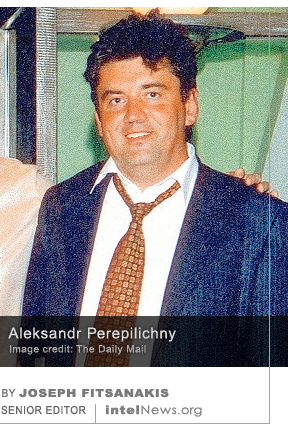 A judge has ruled that the British government has the right to withhold information relating to alleged links between British spy agencies and a Russian millionaire who died in mysterious circumstances in England. Aleksandr Perepilichny was a wealthy and influential investment banker living in Moscow. In 2009, however, he fled Russia saying that his life had been threatened following a business disagreement. He resettled in Surrey, south of London, and began cooperating with Swiss authorities who were investigating a multimillion dollar money-laundering scheme involving senior Russian government officials. Described by some as the biggest tax fraud in Russian history, the scheme is said to have defrauded the Russian Treasury of at least $240 million.
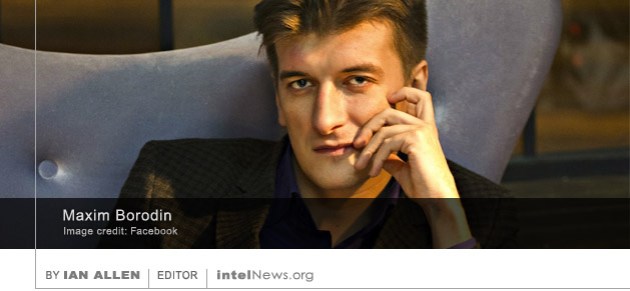 A Russian investigative journalist, who wrote a series of articles about Russian soldiers-for-hire in Syria, has died after falling from the balcony of his apartment in western Siberia. Some of his colleagues say they suspect foul play. Maxim Borodin wrote for Novy Den (New Day) an investigative online magazine. In the past few weeks, Novy Den published a series of probing articles by Borodin about the activities of Russian mercenaries working for the Syrian President Bashar al-Assad. Borodin was one of just a handful of Russian journalists who reported on claims that more than 200 Russian mercenaries were killed in Syria on February 7.
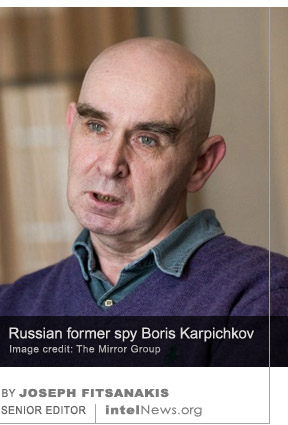 A former officer in the Soviet KGB, who now lives in the United Kingdom, is to be questioned by British police after alleging that there is a link between the recent poisoning of Sergei Skripal and the mysterious death of a British intelligence officer in 2010. There has been extensive media coverage in the past month of the poisoning of Sergei Skripal, a Russian former military intelligence officer who spied for Britain in the early 2000s and has been living in England since 2010. Nearly every European country, as well as Canada, Australia and the United States,
  A senior Chinese People’s Liberation Army (PLA) military official, who was seen as a close ally of President Xi Jinping, has allegedly committed suicide, according to Chinese state media. Zhang Yang was one of the most high-profile generals in the Chinese PLA. His rise to power after Xi became president of China was meteoric. He was appointed member of the Central Military Commission (CMC) of the Communist Party of China, which exercises political supervision of the Chinese armed forces. In addition to his role in the CMC, Zhang directed the General Political Department of the PLA’s Ground Force, which made him the top political commissar in the army.
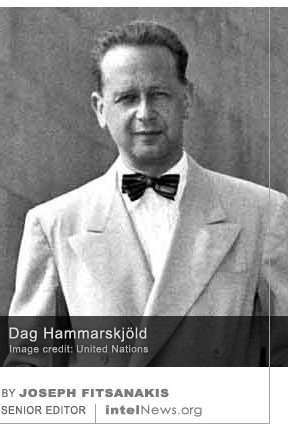 A deliberate attack by another aircraft may have caused the plane crash that killed the United Nations Secretary General in 1961, according to a report commissioned by the intergovernmental organization. On September 17, 1961, a Douglas DC-6 transport aircraft carrying United Nations Secretary General Dag Hammarskjöld crashed in the British-administered territory of Northern Rhodesia (now Zambia). The crash killed everyone onboard. At the time of his death, Hammarskjöld was flying to the Congo’s mineral-rich Katanga region to meet European-supported chieftains who in 1960 had seceded from the nationalist government of Congolese Prime Minister Patrice Lumumba. Ironically, Lumumba had been
 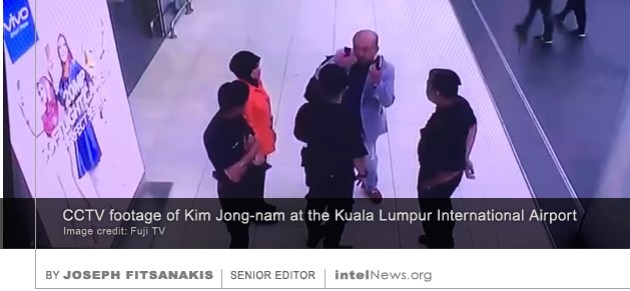 The exiled half-brother of North Korea’s leader, who was assassinated in Malaysia in February, is thought to have met with a man believed to be an American intelligence officer shortly before he was killed, according to reports. Kim Jong-nam the grandson of North Korea’s founder Kim Il-Sung,
 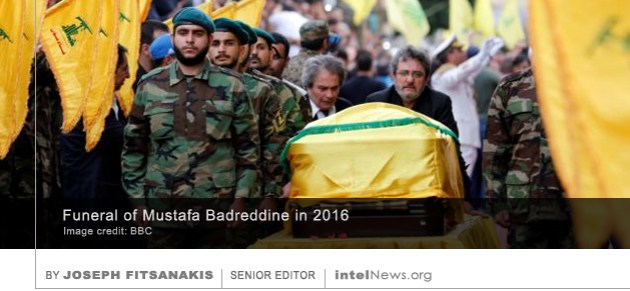 An Israeli military official has repeated claims in the Arab media that the Lebanese Shiite group Hezbollah killed its own military commander in Syria, following a dispute with Iran. Mustafa Amine Badreddine, 55, an expert in explosives and former bomb-maker, was a senior military commander in the military wing of Hezbollah. He rose through the ranks of the organization to become a trusted adviser to Hezbollah’s Secretary General, Hassan Nasrallah. In 2011, the Special Tribunal for Lebanon, set up by the United Nations, charged Badreddine with organizing the assassination of Lebanese Prime Minister Rafik Hariri. Hariri was killed with over 20 other people in a massive bomb blast in Beirut, in February of 2005.
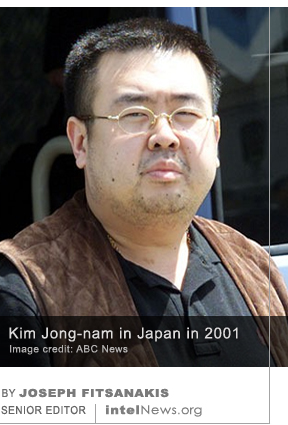 Two women have been arrested in the past 48 hours in connection with the assassination of Kim Jong-nam, half-brother of North Korea’s supreme leader, who died in Malaysia on Monday. Kim, the grandson of North Korea’s founder Kim Il-Sung, died after two women approached him at the Kuala Lumpur International Airport and splashed his face with liquid poison. Some reports suggest that he was injected with a poisoned needle.
  The half-brother of North Korean Supreme Leader Kim Jong-un has been killed in an audacious attack in Malaysia, reportedly by two female assassins who used a poisonous substance to murder him. Kim Jong-nam, was the eldest son of Kim Jong-il, and grandson of Kim Il-Sung, who founded the Democratic People’s Republic of Korea in 1948. However, he left the country in 2007, reportedly after it became clear that his younger half-brother, Kim Jong-un, was the regime’s preferred successor to his father, Kim Jong-il.
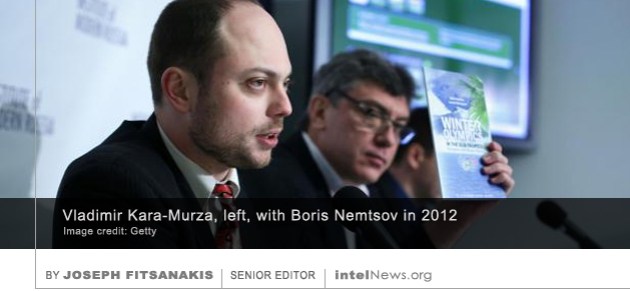 A prominent member of the Russian opposition and vocal critic of the Kremlin, is fighting for his life in a Moscow hospital as a result of “acute poisoning from an undefined substance”, according to his doctors. Vladimir Kara-Murza, 35, is a senior figure in the Open Russia Foundation, a political pressure group founded by Mikhail Khodorkovsky. Khodorkovsky, an ultra-wealthy Russian businessman who was once estimated to be worth over $15 billion, has been living in Switzerland since 2013. Immediately prior to that, he served a 10-year prison sentence in Russia for tax evasion. In 2013, Kara-Murza was a member of a network of Putin critics who helped organize opposition protests in Moscow and Saint Petersburg. He also co-authored a number of reports accusing the administration of Russian President Vladimir Putin of corruption.
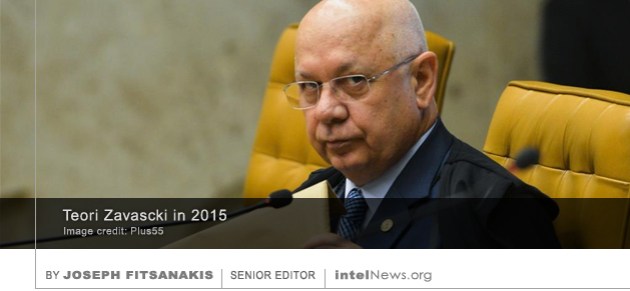 Brazilian authorities have launched an investigation into last week’s plane crash that killed the leading judge in the largest corruption probe in the nation’s history, involving government officials and two giant companies. Supreme Court judge Teori Zavascki died last Thursday with two other people, when the small airplane they were on
 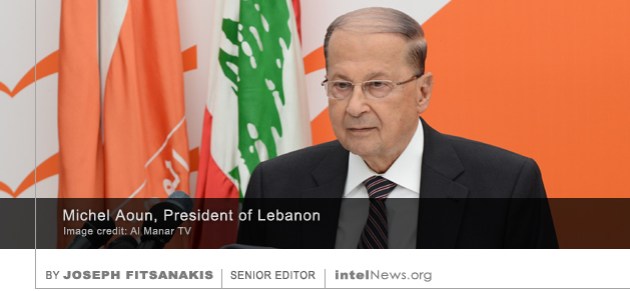 The president of Lebanon said on Wednesday that Israeli intelligence was behind the killing of a Lebanese businessman who was shot dead by a team of assailants last weekend in southwestern Africa. Amine Bakri, 54, who was from southern Lebanon, had lived and worked in Angola since his mid-20s. He was a well-known businessman in the Angola capital Luanda, where he owned a number of factories that make furniture and various medical equipment. On Sunday, Bakri was driving on an unpaved road in the Angolan capital, when his vehicle was ambushed by a group of three armed assailants. According to media reports, one of the men shot the windshield of Bakri’s car and then proceeded to shoot him in the head at close range. The men fled the scene and Bakri was transported to a local hospital, where he soon died from his wounds.
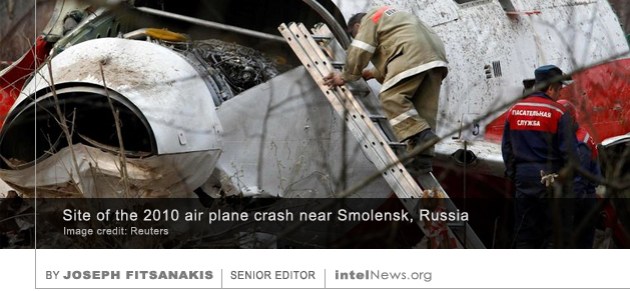 Authorities in Poland have exhumed the body of the country’s late prime minister and his wife as part of an investigation into the 2010 airplane disaster that killed them and nearly 100 others in Russia. The move has reignited persistent rumors that the crash that killed everyone onboard the plane, including Polish President Lech Kaczyński and his wife Maria, was not an accident. At the time of their death, the couple were leading a delegation of Polish officials and journalists traveling to Russia to participate in commemorations marking 70 years from the so-called ‘Katyn massacre’. The term refers to the extermination of approximately 22,000 Polish soldiers and civilians that was carried out by the Soviet military and secret services in 1940, following the Soviet invasion of Poland.






 intelNews.org
Major suspect in Maduro assassination plot dies in captivity in Caracas
October 10, 2018 by Joseph Fitsanakis Leave a comment
President Maduro, who escaped unharmed, has blamed Colombia-based far-right extremists for the attack, and has named former Colombian President Juan Manuel Santos as their leader. But the Colombian government has rejected these allegations and has demanded to see proof. Throughout August, several people were arrested by Venezuelan authorities and charged with treason in connection with the assassination plot. Approximately 30 people have been named as participants in the plan. Among them was Fernando Albán, a 56-year-old critic of Maduro, who was serving as an opposition city councilor in Caracas. Althouth his arrest was announced on Friday, there were no reports about his fate over the weekend. On Monday, however, the government said that Albán had died after committing suicide. A subsequent report said that the 56-year-old had died after throwing himself out of a window located on the tenth floor of the headquarters of the Bolivarian Intelligence Service, where he was being held. Later on Monday, Nestor Luis Reverol, Venezuela’s Minister of Interior, said that Albán voluntarily jumped out of the window as he was being transported to court in order to be formally charged.
On Monday night, Venezuela’s Attorney General Tarek William Saab said during a television interview that Albán had been given permission to go to the bathroom and used it as an opportunity to kill himself. But critics of the government see the August 4 assassination attempt as a false-flag operation orchestrated by the Maduro administration to justify a new crackdown on the opposition. They claim that Albán was murdered and that it would have been impossible for him to throw himself out of a window given the security precautions that are in place at the Bolivarian Intelligence Service building. Meanwhile, Albán’s attorney, Joel Garcia, dismissed the Venezuelan government’s explanation of his client’s death as “totally false” and doubted that he would have been allowed to go to the bathroom unaccompanied.
► Author: Joseph Fitsanakis | Date: 10 October 2018 | Permalink
Filed under Expert news and commentary on intelligence, espionage, spies and spying Tagged with assassinations, Bolivarian Intelligence Service, Bolivarian National Guard, Fernando Albán, News, Nicolás Maduro, suspicious deaths, Venezuela