US troops remain in Russian-dominated Syria with no clear goal, say insiders
September 8, 2020 1 Comment
 American forces remain in Syria without a clear goal in sight, as the conflict there nears its 10-year anniversary, and with Russia having emerged as the principal guarantor of security in the war-torn country, according to insiders. In an article published last week, Newsweek said American and American-supported Syrian officials feel disillusioned about America’s goals in the country. The website cited an anonymous senior United States intelligence official who described the US military mission there as “a clusterf**k”.
Officially, the goal of the US Department of Defense’s mission in Syria is to “ensure the enduring defeat” of the Islamic State. On the political level, the US seeks the removal of Syrian President Bashar al-Assad and the departure of all Iranian and Iranian-backed forces from the country. Last year, however, US President Donald Trump seemed to suddenly change the Pentagon’s mission, by telling reporters that the US military was in Syria only to secure access to the oil and natural gas fields that lay in the country’s northeast. He repeated that statement in August of this year.
This goal appears to have been adopted by the Pentagon as its new mission. Currently what remains of the US military presence in Syria is concentrated around a cluster of oil and gas fields in the northeastern part of the country. Sources told Newsweek that the US troops feel “stranded” and “forgotten” in Syria, and are virtually surrounded by numerically dominant Russian and Iranian forces. US allies in the area are shifting their alliances and looking to Russia, seeing Washington as a non-dependable actor.
Meanwhile, Moscow and Tehran have assumed leading roles in bringing rival forces to the table, while also fighting what is left of the Islamic State. Several meetings between representatives from rival factions, including the Assad government, pro-Turkish militias, and the opposition Syrian Democratic Forces, have taken place under Russian tutelage in the past year. The US has not participated in these negotiations, said Newsweek.
► Author: Ian Allen | Date: 08 September 2020 | Permalink
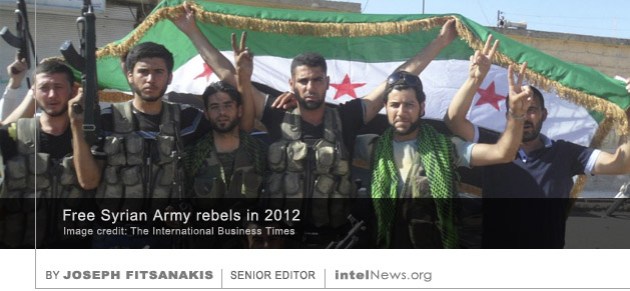 Turkey’s spy agency systematically downplayed the Islamist views of men seeking to join a Syrian rebel group, which was supported by the United States Central Intelligence Agency on account of its moderate leanings. The United States
 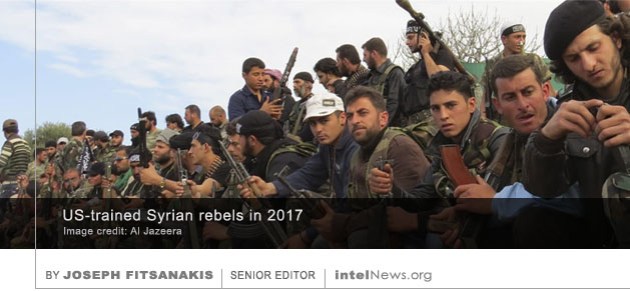 The United States government is unable to account for nearly $716 million in weapons it gave to various Syrian groups during the war against the Islamic State, according to a Department of Defense audit. The weapons were procured under the Counter Islamic State of Iraq and Syria Train and Equip Funds (CTEF) program, which was administered by the US Pentagon in 2017 and 2018. The CTEF program cost the US taxpayer a total of $930 million.
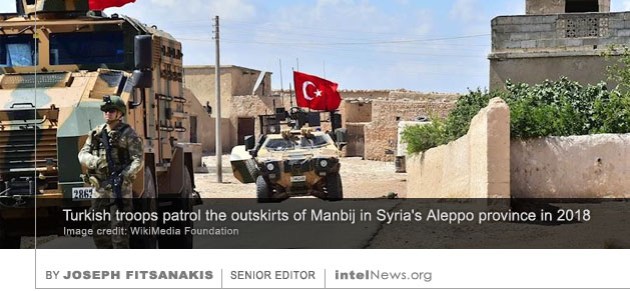 In a move that surprised observers, the intelligence chiefs of Turkey and Syria —two bitter rivals in the ongoing Syrian civil war— met in Russia on Monday. The meeting was held in Moscow and was acknowledged by officials from both sides, making it the first explicit contact between Turkish and Syrian intelligence in over a decade.
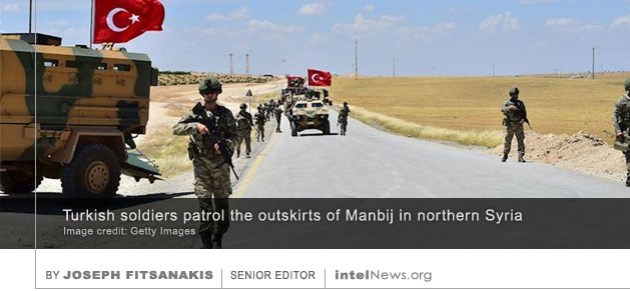 Senior White House officials close to United States President Donald Trump believed that Turkish President Recep Tayyip Erdoğan was bluffing when he threatened to invade northern Syria, according to sources. For over two years, most of northern Syria has been controlled by American-supported Kurdish militias, who were instrumental in helping Washington defeat the Islamic State. But the growing strength of the Kurdish forces alarmed Turkey, which views Kurdish nationalism as a bigger threat than the Islamic State.
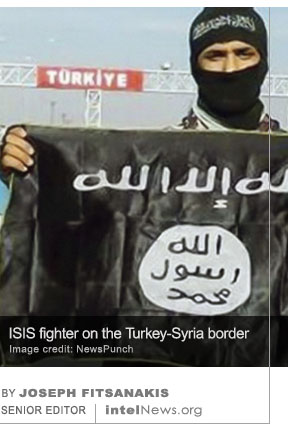 Officials in the United States, Europe and the Middle East have warned that thousands of jailed members of the Islamic State could escape from Kurdish-controlled prisons in northern Syria if Turkey invades the region. For more than two years, the area has been controlled by American-supported Kurdish militias, who were instrumental in helping Washington defeat the Islamic State —also known as Islamic State of Iraq and Syria, or ISIS. But the growing strength of the Kurdish forces has alarmed Turkey, which views Kurdish nationalism in the region as a bigger threat than Salafi jihadism. Ankara has repeatedly threatened to invade northern Syria and disarm the Kurdish groups, which it sees as terrorist.
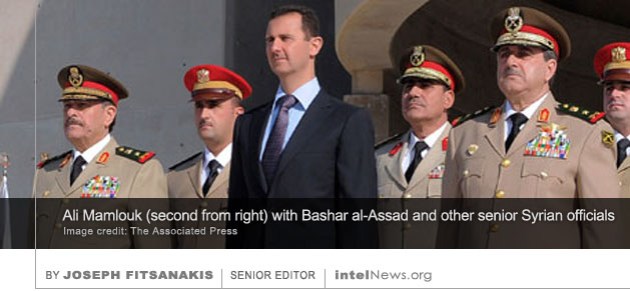 A delegation of senior American government officials met secretly with Syria’s spy chiefs in an effort to lay out the terms of a possible deal between Washington and Damascus, according to a Lebanese newspaper. Relations between the United States and Syria have been strained since the late 1950s, when Damascus blamed Washington for a failed coup and expelled America’s ambassador there. In 2012, the US shut down its embassy in the Syrian capital in response to the government’s violent suppression of protests. Since then, Washington has carried out missile strikes on Syrian soil at least twice, while openly supporting armed groups that are opposed to the government of President Bashar al-Assad.
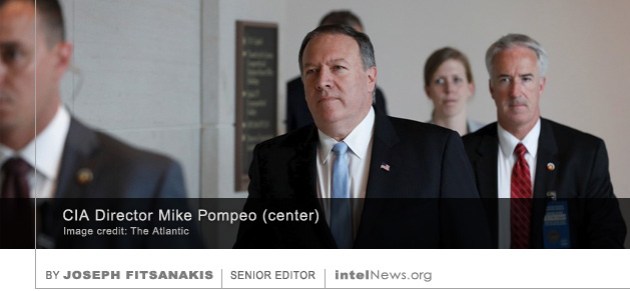 The outgoing director of the Central Intelligence Agency, Mike Pompeo, appeared on Thursday to confirm reports from last February that United States troops killed more than 200 Russian soldiers in Syria.
 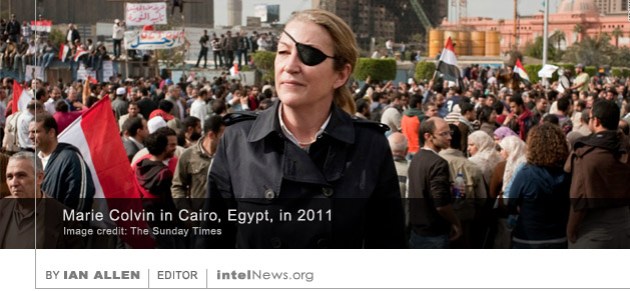 The Syrian government tracked down and killed American journalist Marie Colvin in order to stop her from reporting about the Syrian Civil War, according to a Syrian intelligence officer who has defected to Europe. Colvin was an experienced war correspondent who worked for The Sunday Times. The British newspaper sent her to Syria soon after the outbreak of the war. From there, she gave live interviews to media outlets such as CNN and the BBC. But on the morning of February 22, 2012, Colvin was killed along with French war photographer Remi Ochlik. Their death came when Syrian government forces repeatedly shelled a media center in the city of Homs, which housed the two reporters.
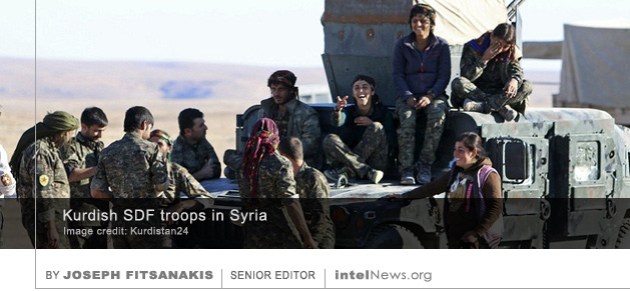 There are conflicting reports of Russian and Ukrainian fighters having been killed by American forces in northeastern Syria, with some sources claiming that up to 200 Russians and Ukrainians, most of them private contractors working for the Syrian government, were left dead in clashes last week. If such reports are accurate, they could point to the most lethal American-Russian confrontation since the end of World War II.
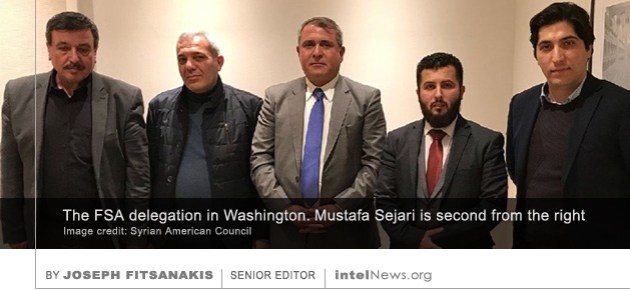 A delegation of Syrian rebels is currently in Washington to ask that that United States President Donald Trump authorizes the Central Intelligence Agency to resume giving them military assistance. In 2013, the then-US President Barack Obama instructed the CIA to provide covert support to fighters in Syria. The CIA promptly began to assist fighters affiliated with the Free Syrian Army (FSA), whose goal was to topple the regime of Syrian President Bashar al-Assad. Under the project, which was codenamed TIMBER SYCAMORE, CIA personnel trained FSA fighters and gave them light weaponry. But in July of last year, President Trump
 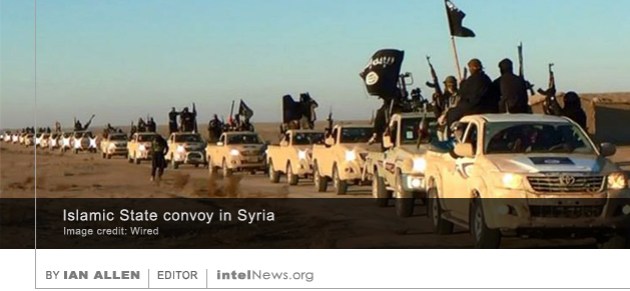 A senior former commander of one of Syria’s largest Kurdish rebel groups, who recently defected to Turkey, has accused the United States of agreeing to let thousands of heavily armed Islamic State fighters escape from Raqqa in exchange for conquering the city without a fight. The Syrian city served as the de facto capital of the Islamic State from early 2014 until October of this year, when it was captured by a coalition of forces supported by the United States and other Western powers. The Syrian Democratic Forces (SDF), a predominantly Kurdish militia, was among the groups that captured Raqqa. One of its spokesmen, Talal Silo, told Western media correspondents back in October that the Western-backed coalition had allowed fewer than 300 hardline fighters of the Islamic State to leave the war-ravaged city during the final stages of the battle.






 intelNews.org
Analysis: The fate of Russia’s military bases in Syria seems highly uncertain
December 9, 2024 by Joseph Fitsanakis 1 Comment
It is difficult to overstate the strategic significance of the Russian military facilities in Syria, some of which date as far back as 1971, when Hafez al-Assad, Bashar al-Assad’s father, assumed power in the country. The Russian naval base in Tartous is currently the only Russian military facility outside of the former Soviet Union. Furthermore, it constitutes the sole warm-port fueling and repair facility that is exclusively available to the Russian Navy. It is home to the Russian naval group in Syria, which consists of a submarine and five warships.
Likewise, the Khmeimim Air Base in Syria’s Latakia province is home to dozens of Russian fighter jets, which have been stationed there since 2015, ostensibly in order to protect the Syrian government from the Islamic State. However, Russia regularly uses the Khmeimim Air Base to transport troops and war materiel to Africa, and to project air power in the Mediterranean, through the presence of several bomber aircraft. The latter can be found, not only in the Khmeimim Air Base, but also in the Syrian military airports of Homs and Palmyra.
But these two military airports are now in the hands of the Hayʼat Tahrir al-Sham (HTS) forces that have captured much of Syria in the past two weeks. It is doubtful that the Russian Aerospace Forces will be able to use them from now on. Moreover, there are reports that Moscow will be forced to engage in a strategic withdrawal of the entirety of its military forces from Syria within hours, if not days.
On Sunday, the Russian Ministry of Foreign Affairs issued a dismissive statement claiming that, although Russian troops in Syria had been placed on high alert, “no serious threat to their security” had been detected. According to the Reuters news agency, the Russian government had been in communication with the leadership of the HTS leadership for several days. As a result of this communication, an agreement had allegedly been struck, which guaranteed “the safety of Russian military bases and diplomatic institutions in Syria”. Read more of this post
Filed under Expert news and commentary on intelligence, espionage, spies and spying Tagged with Analysis, Hayʼat Tahrir al-Sham, Joseph Fitsanakis, Khmeimim Air Base (Syria), Russia, Syria, Syrian Civil War, Tartous (Syria)