November 25, 2015
by Joseph Fitsanakis
 There are many unpredictable aspects of the Syrian conflict, but the downing of the Russian bomber by Turkish jets on Tuesday was not one of them. Indeed, given the simultaneous military campaigns taking place in a relatively small swath of territory by Russian, American, French, Syrian, Iranian, and other forces, it is surprising that such an incident did not happen earlier. Nevertheless, the downing of a Russian Sukhoi Su-24 by Turkish jets marked the first attack on a Russian fighter aircraft by a North Atlantic Treaty Organization (NATO) member state since 1953. Although this incident is not by itself sufficient to provoke an armed conflict between Turkey and Russia, it illustrates the main danger confronting the world in Syria: namely a conflagration between regional powers, many of which are armed with nuclear weapons.
In response to earlier incidents, Turkey had warned the Russian Air Force that it would not tolerate further violations of its air space by Russian jets conducting an air campaign in support of Syrian President Bashar al-Assad. The message delivered to the Russian ambassador in Ankara was that Turkish pilots would be ordered to open fire next time. That was precisely what happened on Tuesday, when a Turkish F-16 jet brought down a Russian bomber aircraft with a single missile strike. By most accounts, the Russian airplane was barely two miles inside Turkish airspace, presented no immediate threat to Turkey’s national security, and would probably have returned to Syrian airspace within seconds. But that did not stop the Turkish F-16 from shooting down the Russian plane. Adding injury to insult, Turkish-backed rebels on the Syrian side of the border shot dead one of the plane’s two Russian pilots and opened fire on a Russian rescue team that tried to save the crew, killing at least one marine.
Rather expectedly, a visibly furious Russian President Vladimir Putin, who is not used to being challenged militarily, described the incident as “a stab in the back” by “accomplices to terrorists”, and warned Ankara of “serious consequences”. But why would Turkey provoke Russia in such a direct way? Like every other country involved directly or indirectly in the Syrian Civil War, Turkey and Russia wish to see the Islamic State of Iraq and Syria (ISIS)  destroyed. But they differ drastically on what should follow. The Kremlin is adamant that President al-Assad, whom it considers its strongest ally in the Middle East, should remain in power. The Turks, on the other hand, view the Syrian president as an existential threat, due to his support for Kurdish militancy throughout the region.
The roots of the animosity between the Turkish state and the al-Assad regime go back to 1978, when the Kurdistan Workers Party (PKK) was established in Lebanon’s Beqaa Valley, which was at the time occupied by Syria. The PKK is a Marxist militant organization that seeks to establish a Kurdish homeland in eastern Turkey and northern Iraq. The group was actively trained, funded, armed and protected by Syria and the Soviet Union. The latter was actively interested in destabilizing Turkey, a NATO member, while Syria used the PKK to exercise pressure on its northern neighbor, with whom it was embroiled in a series of complex land- and water-rights disputes. In 1998, the al-Assad regime was forced to expel PKK leader Abdullah Öcalan, who was living in Damascus under Syrian protection, after Turkey threatened an all-out war if the Syrian intelligence services continued to shelter the PKK leadership.
Ankara saw the outbreak of the Syrian Civil War in 2011 as an opportunity to get rid of the al-Assad regime, which it sees as a primary threat to regional stability. Along with the United States, Turkey has been funding, arming and training a host of Syrian rebel groups, while at the same time hosting over 2 million refugees from Syria. The subsequent rise of ISIS alarmed America and its Western allies; but in the eyes of Ankara, ISIS pales into insignificance in comparison to the resurgence of Kurdish nationalism, which has been fueled by the demise of Ba’ath in Iraq and the fragmentation of Syria. For Turkey, Kurdish separatism poses an existential threat to the survival of the Turkish Republic, and is the primary reason for its involvement in the Syrian conflict.
It follows that Russia’s entry in the Syrian Civil War strengthens President al-Assad and the PKK, and is thus regarded by Turkey as a direct threat to its national security. Ankara is also concerned about France’s efforts to build a broad anti-ISIS alliance that includes Russia, and fears that the West is now openly flirting with the possibility of allowing al-Assad to stay in power in Damascus. The deliberate downing of the Russian airplane, which was undoubtedly authorized by the most senior levels of government in Ankara, was aimed at disrupting France’s efforts to build an anti-ISIS coalition, while at the same time pushing back against Russia’s regional ambitions.
What will happen next? Theoretically, Turkey could invoke Article 5 of the NATO charter, which would compel member-states to rush to its assistance. In reality, however, such an eventuality is remote, especially given the expressed willingness of Western leaders to help deescalate the Turkish-Russian row. Following their closed-door meeting on Tuesday, French President Francois Hollande and his American counterpart Barack Obama went out of their way to avoid mentioning the Russian plane incident, and briefly commented on it only after they were asked to do so by reporters. This does not mean that Russia will not respond; but it will most likely do so behind the scenes, probably by increasing its support for the PKK and other Kurdish separatist groups.
The downing of the Russian bomber highlights the immense contradictions and complica- tions that plague the anti-ISIS forces involved in the Syrian Civil War. It is clear that ISIS is now in a position to attack targets that are located far from its territory in Syria and Iraq, or in its wilayah (provinces) in Libya, Somalia, and elsewhere. However, the threat that ISIS currently poses to international peace and stability is at most marginal and symbolic. Of far more importance to the security of the world is the possibility of an armed conflagration between regional powers, which are being drawn into Syria by the vacuum created by the civil war. All of these regional powers, including Turkey, Russia, Iran, Saudi Arabia, Lebanon, Israel, and the US, are heavily armed, many with nuclear weapons. Moreover, they radically disagree on what a post-ISIS Middle East should look like.
The possibility of a serious conflagration between heavily armed regional actors will be removed only if and when the Syrian Civil War ends, even if that results in the loss of land to the so-called Islamic State. That must be the immediate goal of the Combined Joint Task Force and every other regional actor that wishes to see the end of ISIS. It is only after peace has been achieved in Syria that ISIS can be dealt with effectively.
 Russian intelligence services say they have foiled a large-scale bomb plot, after raiding an explosives laboratory belonging to the Islamic State and arresting four suspects. The four men were allegedly planning to target the Moscow Metro transit system and a busy shopping center in the Russian capital. In a statement released to the media this morning, the Russian Federal Security Service (FSB) did not specify the intended targets of the plotters. But it said it had arrested four people during an early morning raid at an explosives laboratory located in the Moscow suburbs. The FSB said that its officers confiscated large quantities of peroxide-based explosives that resemble the material used by the Islamic State in the November 2015 attacks in Paris, the March 2016 attacks in Brussels, and last May’s suicide bombing in Manchester.
 The decision by the White House to terminate American support for rebels in war-torn Syria could backfire by causing the suddenly unemployed fighters to join jihadist organizations, according to experts. The United States’ support for the rebels began in secret in early 2013, after the then US President, Barack Obama, instructed the Central Intelligence Agency to provide covert support to fighters in Syria. The CIA then joined forces with spy agencies from Britain, France, Saudi Arabia and the United Arab Emirates, to assist fighters affiliated with the Free Syrian Army. At that time, Washington saw the Free Syrian Army and forces affiliated with it as ideologically moderate. It also agreed with the group’s main aim, which was to topple the regime of Syrian President Bashar al-Assad.
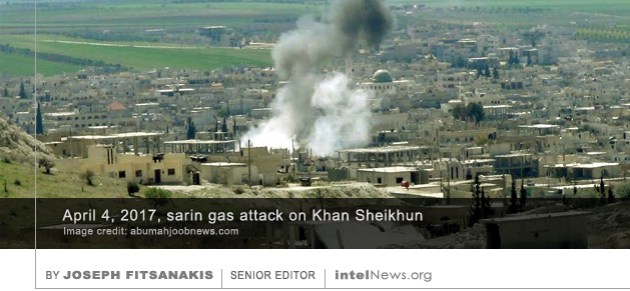 A comprehensive report released yesterday by the French Intelligence Community concludes with certainty that the government of Syrian President Bashar al-Assad was behind the April 4 sarin gas attack in northwestern Syria. The report, a “national evaluation” based on France’s own intelligence sources and scientific analysis of samples collected from the site of the attack, indicates that the poison gas used in the attack came from stockpiles that belong to the Syrian government.
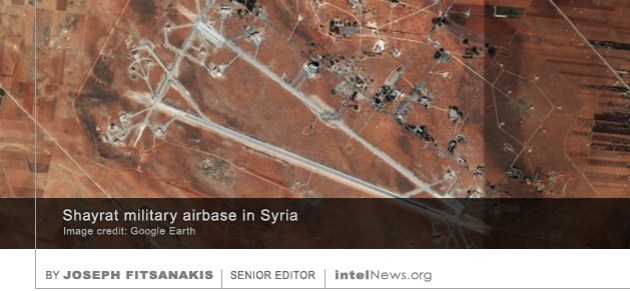 The nearly 60 Tomahawk missiles that the United States fired at Syria in the early hours of Friday local time were not the first. Nor were they the first that struck a Syrian government installation. In September of 2016, for example, a United States airstrike hit a
  given that Washington’s attack took place during the official visit to the United States by Xi Jinping, premier of China, another strong Syrian ally. Finally, it is worth considering possible Iranian responses to the US attack, especially if Iranian citizens end up on the casualty list.
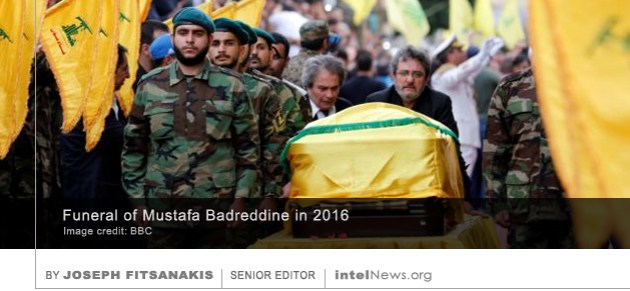 An Israeli military official has repeated claims in the Arab media that the Lebanese Shiite group Hezbollah killed its own military commander in Syria, following a dispute with Iran. Mustafa Amine Badreddine, 55, an expert in explosives and former bomb-maker, was a senior military commander in the military wing of Hezbollah. He rose through the ranks of the organization to become a trusted adviser to Hezbollah’s Secretary General, Hassan Nasrallah. In 2011, the Special Tribunal for Lebanon, set up by the United Nations, charged Badreddine with organizing the assassination of Lebanese Prime Minister Rafik Hariri. Hariri was killed with over 20 other people in a massive bomb blast in Beirut, in February of 2005.
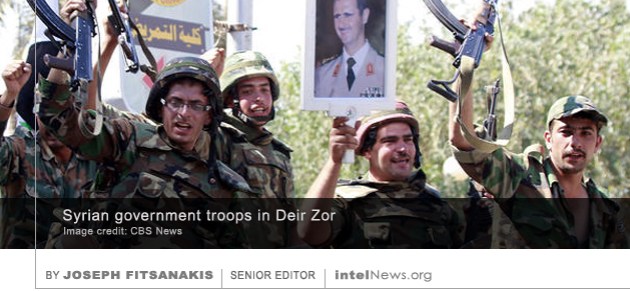 Ever since 2011, when the Syrian Civil War erupted, Turkey has refrained from directly intervening in the conflict, other than to provide material support to opponents of Syrian President Bashar al-Assad. The hope in Ankara was that Islamist and pro-Assad forces would exhaust each other. There is no evidence that Turkey was at any point seriously alarmed about the rise of Sunni militancy in Syria. Instead, the Turkish government of President Recep Tayyip Erdoğan made no secret of its primary concern, which was the rise of Kurdish nationalism in northern Syria.
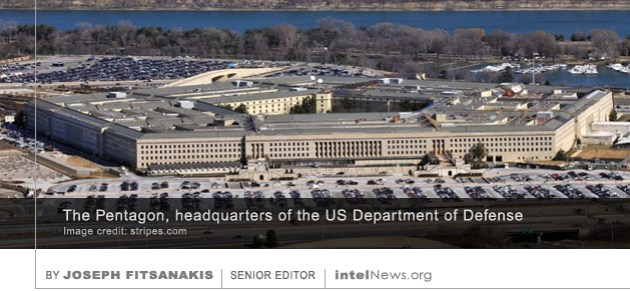 The United States Department of Defense has released details of an agreement with a private intelligence contractor, which experts believe involves the provision of services to American Special Forces working clandestinely inside Syria. The
 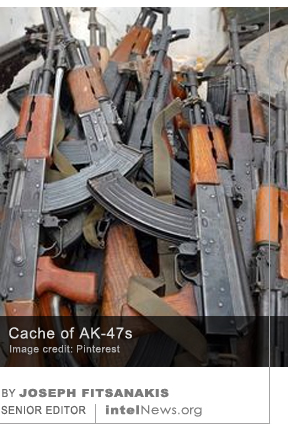 Unprecedented quantities of weapons and ammunition worth in nearly $1.5 billion have been procured from Eastern Europe and sent to Syria to arm nearly every side in the ongoing civil war, a study has found. The weapons are transported through the Balkans and sold legally to countries bordering Syria, including Jordan, Saudi Arabia and Turkey. Once there, they are secretly transported to Syria for use in the bloody five-year civil war, which has so far killed or displaced millions. The
 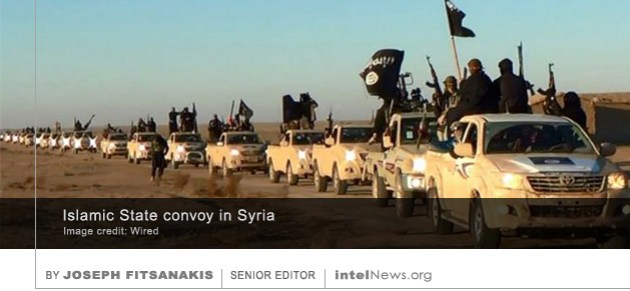 The two main warring parties in the Syrian Civil War, the government of Syria and the Islamic State, frequently contact one another in pursuit of commercial and military deals, according to internal Islamic State documents. British-based news agency Sky News said on Monday that it had acquired “secret Islamic State files”, which included handwritten orders to operatives sent directly from officials at the organization’s headquarters in Raqqa, Syria. The group said it received the documents from a regional branch of the Free Syrian Army (FSA), a largely secular armed opposition group that was formed in 2011 by defectors from the Syrian Armed Forces. The FSA unit in Raqqa left the Syrian city once it was occupied by the Islamic State, and is currently based in Turkey. One of the group’s core preoccupations is assisting Islamic State defectors in their efforts to escape from Raqqa and reach Turkey. It was through these defectors, according to Sky News, that the secret Islamic State documents were acquired.
 Syrian and American media are reporting that Russian engineers, employed by a Moscow-based contractor with close ties to Russian President Vladimir Putin, are working at a Syrian gas plant under the control of the Islamic State. The facility in question is the so-called Tuweinan gas plant, which is located in central Syria, approximately 60 miles (40 kilometers) southwest of the city of Raqqa. The Islamic State declared Raqqa its capital shortly after occupying it, in June 2013, and the city has since served as the militant group’s administrative headquarters. The nearby Tuweinan gas plant is believed to be the largest of its kind in Syria. In 2013, it was occupied by an alliance of factions operating under the banner of the Al-Nusra Front, the primary al-Qaeda affiliate in Syria. But in early 2014, Islamic State forces took control of the plant following a military offensive against Al-Nusra.
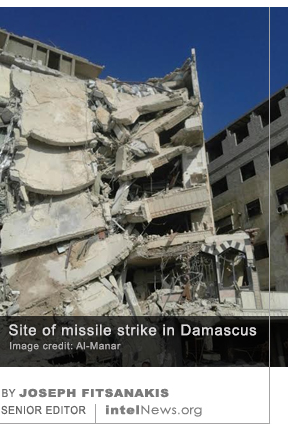 Israel has refused comment following the death of a senior official of Lebanese militant group Hezbollah, who was killed on Saturday in a missile strike in Syria. Samir Kuntar (also spelled Qantar) was a Druze who joined the Syrian-backed, Lebanese-based, Palestine Liberation Front (later Popular Front for the Liberation of Palestine – General Command) at a young age. In 1979, Kuntar was jailed for an attack on an apartment block in Israel’s northern coastal town of Nahariya, which resulted in the death of four Israeli civilians and two of the attackers. However, he was freed after nearly three decades in prison in exchange for the bodies of two Israel Defense Force soldiers, who had been captured and executed by Hezbollah in 2006.






 intelNews.org
US troops in Syria battle anti-Assad rebels once funded by the CIA
August 30, 2017 by Joseph Fitsanakis 1 Comment
Under the project, which was codenamed TIMBER SYCAMORE, CIA personnel trained Free Syrian Army fighters in irregular warfare, while also providing them with light weaponry including machine guns, sniper rifles and off-road vehicles. But on July 19 of this year, US President Donald Trump abruptly ended the CIA program, which he called “dangerous and wasteful”. It soon became apparent that many Free Syrian Army soldiers approached Turkey, seeking financial income and protection. By early August, there were reports from Syria that large groups of former Free Syrian Army troops were conducting raids in northern Syria in coordination with the Turkish military.
Early on Wednesday, a spokesman for the Combined Task Force Operation Inherent Resolve told reporters that US troops in Syria had come under fire by Turkish-commanded former Free Syrian Army units. The spokesman told reporters in Kuwait City that the rebels shot at US troops in the outskirts of Manbij, a northern Syrian city of about 70,000, located a few miles from the Turkish border. The American soldiers reportedly returned fire before seeking shelter from the assault. According to the US Pentagon, the Turkish government was promptly contacted by Inherent Resolve commanders, who described the incident as “not acceptable”. Washington alleges that its troops have come under fire “multiple times” in the past month. Some of the culprits are believed to be Turkish-controlled Syrian insurgents, including former members of the Free Syrian Army.
Turkey and the US are member states of the North Atlantic Treaty Organization. But the two countries do not follow a common policy on Syria. The US Pentagon supports Kurdish insurgents in Syria, which Turkey claims are connected with Kurdish separatists inside Turkey. Washington’s official position on Kurdish separatists is that they engage in terrorism against the Turkish state.
► Author: Joseph Fitsanakis | Date: 30 August 2017 | Permalink
Filed under Expert news and commentary on intelligence, espionage, spies and spying Tagged with CIA, covert action, Free Syrian Army, News, Syria, Syrian Civil War, TIMBER SYCAMORE, Turkey, United States