Underground network of spies helped Taliban score decisive victory in Afghanistan
November 30, 2021 2 Comments

THE TALIBAN RELIED ON an extensive network of intelligence operatives and sleeper agents in major Afghan cities, in order to sweep to power with stunning ease last summer, according to a new report. These networks of spies had infiltrated state agencies and civil society organizations throughout Afghanistan over many years. They were quickly able to neutralize opponents of the Taliban from the inside when commanded to do so, according to the Wall Street Journal.
In a lengthy exposé published on Sunday, the newspaper said that Taliban spies had managed to successfully penetrate most government ministries, military and security bodies, as well as business entities over several years. Many Taliban operatives were also present within universities and even inside Western-funded aid organizations, especially those were headquartered in the Afghan capital Kabul, according to the Wall Street Journal.
The two authors of the report, Yaroslav Trofimov and Margherita Stancati, said they spoke about the Taliban’s spy network with Mawlawi Mohammad Salim Saad, a senior Taliban commander who belongs to the Haqqani Network. The Haqqani Network is a Sunni militant group that works closely with the Taliban, but has retained its operational independence over several decades. Saad told the Wall Street Journal that Taliban spies had posed as ordinary Afghan citizens, living in large urban centers without arousing suspicion from other Afghans or foreigners. Most of them had been specifically instructed by their Taliban handlers to adopt Western customs, such as wearing jeans and shaving their beards, said Saad.
But on August 15 of this year, large units of Taliban sleeper agents received simultaneous instructions to access hidden caches of weapons and neutralize government personnel in strategic locations around the country. The Wall Street Journal discusses the example of one such unit of Taliban spies, who quietly stormed a government compound in downtown Kabul and disarmed the stunned guards. Several of these units had specific instructions to stop government personnel from destroying classified and other sensitive documents as the state around them collapsed, according to the article.
► Author: Joseph Fitsanakis | Date: 30 November 2021 | Permalink
 THE CONSENSUS VIEW OF British intelligence in the weeks leading to the fall of Kabul to the Taliban was that the Afghan government would be challenged, but that the rebels were unlikely to take over the country in 2021. This was revealed on Wednesday in the House of Commons by Britain’s Foreign Secretary, Dominic Raab.
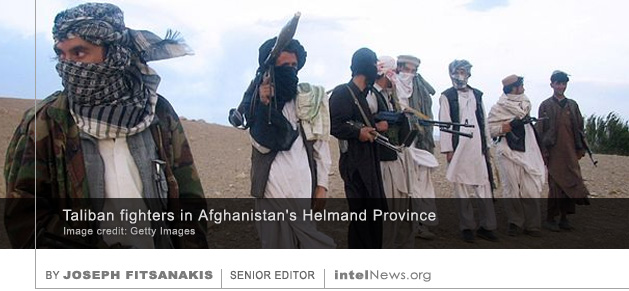
 Belgium’s spy services were aware of financial rewards that Russia allegedly offered to the Taliban in exchange for killing American and other Western troops in Afghanistan, according to Belgium’s defense minister. Late last month, three leading American newspapers, The New York Times, The Washington Post and The Wall Street Journal
  The White House is considering a plan to pull back Central Intelligence Agency officers from stations across Afghanistan, in a last-ditch effort to boost prospects for a peace deal with the Taliban. Plans for the peace deal were announced in February by representatives of the US and the Pashtun-based Sunni group, which has waged an Islamist insurgency against the US-supported government in Kabul since 2001.
 Extremist groups around the world are capitalizing on the novel coronavirus pandemic to rally their members around a common cause and spread chaos and violence, according to a new report. In an
  An imminent peace agreement between the United States government and the Taliban will inadvertently empower the Islamic State in Afghanistan, according to a number of insiders, who warn that the soon-to-be-announced deal may have grave unintended consequences for the war-ravaged country.
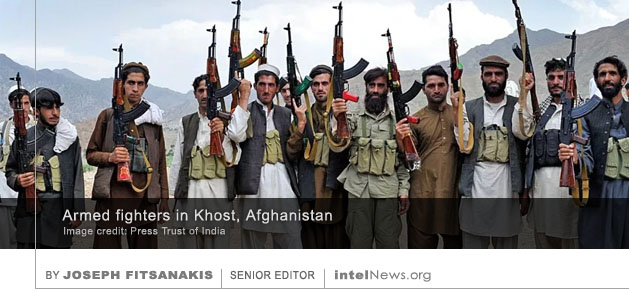 The United States Central Intelligence Agency plans to retain a strong presence on the ground in Afghanistan, despite reports that American troops may soon be leaving the country following a deal with the Taliban. Several news outlets
 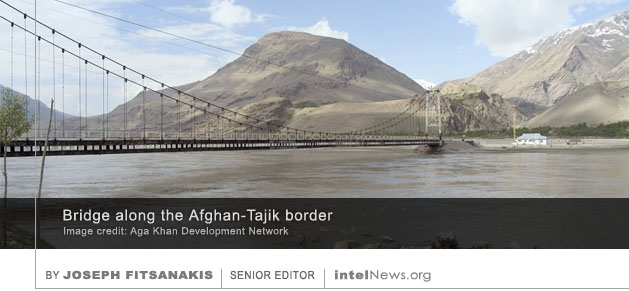 Russia, the United States and Tajikistan have all denied that they were behind a series of mystery airstrikes that took place along the Tajik-Afghan border on Sunday, while the identity of the targets also remains unknown. The 800-mile border between Afghanistan and Tajikistan consists of mountainous terrain. Unlike the Afghan-Pakistani border, which is rife with skirmishes and firefights, the Afghan-Tajik border is usually peaceful and sparsely guarded. But on Sunday, August 26, local officials from both sides of the Afghan-Tajik border






 intelNews.org
Taliban have executed over 100 ex-security forces personnel, UN report says
February 1, 2022 by Joseph Fitsanakis Leave a comment
The Taliban completed their swift take-over of Afghanistan on August 15 of last year. On that day, they entered the Afghan capital Kabul, facing almost no resistance by the Afghan National Army and the country’s security forces. Shortly afterwards, senior Afghan officials pledged that their regime would extend a “general amnesty” to government employees, including Afghans who worked with the United States-led International Security Assistance Force (ISAF).
But according to a confidential report produced earlier this month by the United Nations, the Taliban have executed at least 100 Afghan former government employees since taking power. The report was authored by staff of the United Nations Assistance Mission in Afghanistan (UNAMA), which is the Afghan branch of the United Nations’ Political Mission office. Established in 2002, the UNAMA is among the very few international bodies that have remained on the ground in Afghanistan since the Taliban took control the country.
The report was produced for the United Nations Security Council. According to the Associated Press, which accessed a copy of the report, it contains “credible allegations” that most of those who were executed did not receive even a rudimentary form of trial. Instead, their deaths were the result of “extrajudicial killings”, which were carried out “by the Taliban or its affiliates”. In addition to those killings, the United Nations report contains “credible allegations” of at least 50 extrajudicial killings of alleged members of the Islamic State-Khorasan Province. The Taliban have been engaged in a brutal war against the Islamic State branch in Afghanistan since 2015.
The report also details what it describes as systematic violent actions by Taliban against civil society activists. These include enforced disappearances, temporary arrests and detentions, physical beatings, as well as systematic threats and various forms of intimidation issued against growing numbers of Afghans. A substantial portion of the targets of these activities are former members of Afghanistan’s security forces and ISAF employees, according to the report.
► Author: Joseph Fitsanakis | Date: 01 February 2022 | Permalink
Filed under Expert news and commentary on intelligence, espionage, spies and spying Tagged with Afghanistan, human rights, News, Taliban, United Nations, United Nations Assistance Mission in Afghanistan