Britain summons Russian envoy to protest killing of ex-KGB spy in London
January 22, 2016 3 Comments
 The British government has taken the unusual step of summoning the Russian ambassador to London, following the conclusion of an official inquest into the death of a former KGB officer who is believed to have been killed on the orders of Moscow. Alexander Litvinenko, an employee of the Soviet KGB and one of its successor organizations, the FSB, defected with his family to the United Kingdom in 2000. But in 2006, he died of radioactive poisoning after meeting two former KGB/FSB colleagues, Dmitri Kovtun and Andrey Lugovoy, in London. A public inquiry into the death of Litvinenko, ordered by the British state, concluded this week after six months of deliberations involving sworn testimony by over 60 witnesses, including British intelligence officers who worked closely with Litvinenko.
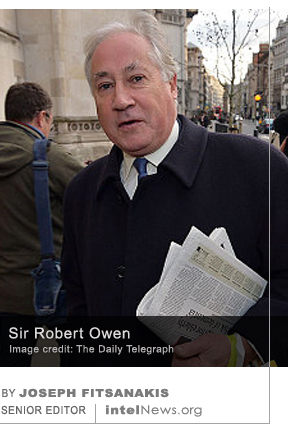
In releasing the inquiry report, the presiding judge, Sir Robert Owen, said it was clear that Kovtun and Lugovoi “were acting on behalf of someone else” when they killed their former colleague in London. He added that members of the administration of Russian President Vladimir Putin, including the Russian president himself, had “motives for taking action” against Litvinenko, “including killing him”. Moreover, President Putin’s systematic protection of Lugovoi, the primary suspect in the case, whom Russia currently refuses to extradite to the UK, “suggest a level of approval for the killing” at the highest levels of the Russian government, said Sir Robert.
Speaking during a session in the British House of Commons on Thursday, the UK’s Home Secretary Theresa May described Litvinenko’s killing as “a blatant and unacceptable breach of the most fundamental tenets of international law and civilized behavior”. On the same day, David Lidington, a Minister of state at the British Foreign Office, who currently serves as the country’s Minister for Europe, summoned the Russian Ambassador to London, Alexander Yakovenko, to file an official protest against Litvinenko’s murder. Meanwhile, the British state has moved to freeze the assets of the two main suspects in the case, while British Prime Minister David Cameron said further punitive measures against Russia were possible. Speaking to reporters in Davos, Switzerland, where he is participating in the World Economic Forum, Cameron said Britain wanted to have “some sort of relationship” with the Kremlin in light of the situation in Syria. But Whitehall would “look very carefully at the report and all the detail” and would proceed “with clear eyes and a very cold heart”, he said.
► Author: Joseph Fitsanakis | Date: 22 January 2016 | Permalink









 intelNews.org
UK may stop intelligence sharing with the US if Trump brings back torture
January 26, 2017 by Joseph Fitsanakis 3 Comments
But on Thursday, the British Prime Minister Theresa May warned that her government might be forced to reexamine its intelligence-sharing relationship with Washington, if the US reinstituted torture as a method of interrogation. Speaking to journalists during a flight to the US to meet President Trump, the British prime minister stressed that the United Kingdom “absolutely condemn[ed] the use of torture” and that she would deliver that message to her American counterpart. According to British law, government officials and intelligence personnel are forbidden from sharing intelligence with countries that are known to employ torture against detainees. They are also not allowed to use intelligence gathered by other countries through the use of torture.
Thursday’s comments by Theresa May point to a potentially serious rift between American and British, as well as European intelligence agencies, whose attitudes toward so-called ‘enhanced interrogation’ differ widely from those of President Trump. British newspaper The Daily Mail quoted Matt Tait, a former information security specialist for Government Communications Headquarters, Britain’s signals intelligence agency, who warned of a potential split between British and American spy agencies. If Trump reinstituted torture as a form of interrogation, it would mean that the United States Intelligence Community would “intentionally engage in war crimes”, said Tait. That would “make it impossible” for the UK to cooperate with the US “across a range of intelligence programs”, he added.
► Author: Joseph Fitsanakis | Date: 27 January 2017 | Permalink
Filed under Expert news and commentary on intelligence, espionage, spies and spying Tagged with Donald Trump, intelligence cooperation, News, Theresa May, torture, UK, United States, waterboarding