U.S. Pentagon ran secret COVID-19 anti-vaccination campaign to undermine China
June 17, 2024 1 Comment
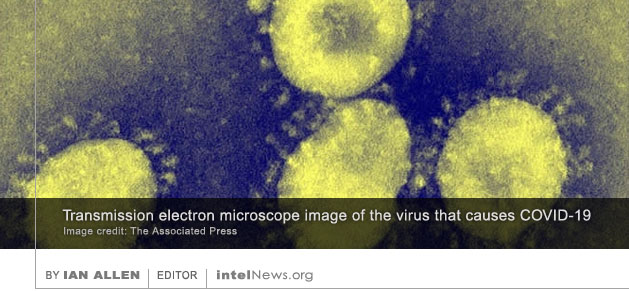 THE UNITED STATES DEPARTMENT of Defense ran a secret psychological operation on multiple social media platforms, aimed at undermining Chinese-manufactured vaccines against COVID-19. The controversial campaign was met with objections by several U.S. government officials, but continued for over a year, spanning both the Trump and Biden administrations.
According to the Reuters news agency, which uncovered the alleged plot, the psychological operation initially targeted the Philippines in the spring of 2020. During that time, the Southeast Asian nation relied heavily on the CoronaVac, also known as the Sinovac COVID-19 vaccine, which was manufactured by the Chinese biopharmaceutical firm Sinovac Biotech. The CoronaVac vaccine was approved for human consumption by the World Health Organization.
An investigation by Reuters determined that the U.S. Pentagon attempted to undermine the efficacy of the Chinese-manufactured vaccine, in order to sabotage the relations between China and the Philippines. Over time, the Pentagon project morphed into an anti-vax campaign that questioned the quality of Chinese-produced coronavirus test kits and Chinese-supplied face masks. There was also an attempt to stigmatize Chinese-produced medical supplies relating to COVID-19. The campaign argued that the coronavirus had originated in China, which made Chinese-manufactured medical supplies suspect.
The psychological operation utilized hundreds of fake social media accounts on multiple platforms, which were unified under the hashtag #Chinaangvirus —Tagalog for “China is the virus.” By early 2021, the campaign had expanded to the Middle East and Central Asia. Some social media posts claimed that Muslims should not be using the Sinovac COVID-19 vaccine because it contained pork gelatin and should thus be considered forbidden under Islamic law. These tactics raised objections by some U.S. government officials, notably from the State Department, who expressed them in meetings with Pentagon personnel. The secret campaign was terminated in June of 2021.
The Reuters news agency spoke to Greg Treverton, former chairman of the U.S. National Intelligence Council, which ensures that the work of the nation’s intelligence agencies reflect the government’s policy priorities. Treverton told the news agency that getting “as much vaccine in people’s arms as possible” would have been in the national interest of the U.S., adding that the Pentagon’s secret operation “crosses a line”. Reuters said that a senior Pentagon official acknowledged a secret psychological operation was indeed launched, in order to “disparage China’s vaccine in the developing world.” However, the official “declined to provide details” of the operation.
► Author: Ian Allen | Date: 17 June 2024 | Permalink
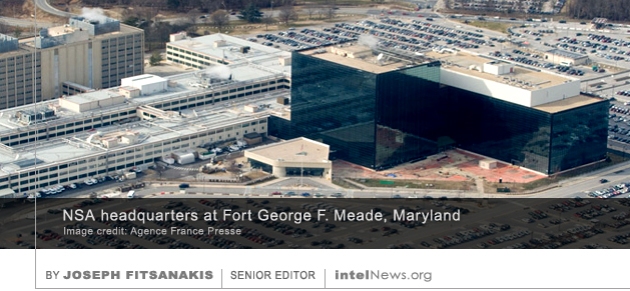 AMERICA’S LARGEST SPY AGENCY, the National Security Agency, has reportedly placed on administrative leave its general counsel, who was installed on orders by the White House just hours before the end of Donald Trump’s presidency. Michael Ellis worked as an aide to Representative Devin Nunes (R-Ca) until 2017, when he joined the White House as the senior associate counsel to President Trump and deputy legal advisor to the National Security Council (NSC). In 2020 he was promoted to NSC’s senior director for intelligence.
 United States military officials are raising concerns about the rate of increase of COVID-19 cases in the Armed Forces, which appears to be growing at
  A United States Department of Defense report warned about the danger of a global crisis caused by a “novel respiratory disease”. The existence of the 2017 study adds to the mounting skepticism about President Donald Trump’s
 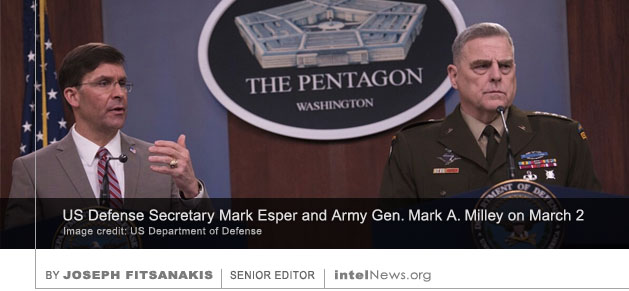 The United States Department of Defense is working under the assumption that the COVID-19 epidemic will seriously affect the life of the country for “at least several months”, and might cause “political chaos” in parts of the world. This was stated during a virtual town hall for members of the US Armed Forces, which was hosted on Tuesday by Defense Secretary Mark Esper and Joint Chiefs of Staff Chairman General Mark Milley.
 The United States government is unable to account for nearly $716 million in weapons it gave to various Syrian groups during the war against the Islamic State, according to a Department of Defense audit. The weapons were procured under the Counter Islamic State of Iraq and Syria Train and Equip Funds (CTEF) program, which was administered by the US Pentagon in 2017 and 2018. The CTEF program cost the US taxpayer a total of $930 million.
 A report from the United States Department of Defense warns that the Islamic State is swiftly returning to its insurgent roots, as observers in Iraq and Syria caution that the group is witnessing a revival. It has been four years since the Islamic State —known then as the Islamic State of Iraq and Syria, or ISIS— conquered much of eastern Syria and more than a third of Iraq’s territory. But by the end of 2017, virtually the entirety of ISIS’ self-styled ‘caliphate’ had been obliterated by an ‘unholy alliance’ of US-backed Iraqi government forces, Iranian-supported Shiite militias, Kurdish guerillas and Western airpower.
 The online arm of the Islamic State, which was once one of the organization’s most noticeable trademarks, has declined markedly in 2018, according to expert observers in the United States and elsewhere. This is especially applicable to the militant group’s online propaganda and recruitment campaign, which appears to have effectively ceased, say experts.
 Nearly half a billion of American taxpayers’ funds were wasted by contractors hired by the United States government to train Afghan intelligence personnel, according to a scathing report by a Congressional body. The funds were spent between 2010 and 2013 by the US Department of Defense, in order to train several thousand members and a few dozen aspiring trainees of the Afghanistan National Defense and Security Forces (ANDSF). Two companies, Legacy Afghanistan R&D and Afghanistan Source Operations Management, oversaw the training program. It was primarily executed by a contractor, Imperatis Corporation, and a subcontractor, New Century Consulting, at a total cost of $457 million to the US taxpayer.






 intelNews.org
Pentagon orders its cyber arm to stop operations against Russia [updated]
March 1, 2025 by Ian Allen 12 Comments
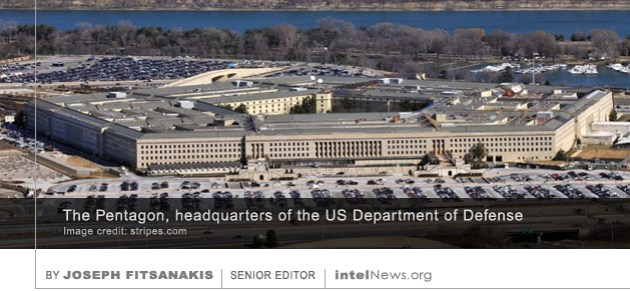
Established in 2009, the US Cyber Command is among the 11 unified combatant commands of the US Armed Forces. It coordinates and directs cyber operations in the Department of Defense, having achieved a degree of autonomy from the National Security Agency (NSA), which has historically led the US military’s defensive and offensive cyber operations.
According to the Record, Secretary Hegseth’s order appears to encompass all offensive cyber operations aimed at Russia. These are carried out by US Cyber Command’s National Mission Teams, as well as all component commands, which reside under the US Armed Forces branches —namely the Army, Marine Corps, Air Force, and Navy. The order also appears to apply to all cyber operations carried out by the US European Command. However, the order does not apply to the NSA, according to the report.
The precise scope of Secretary Hegseth’s order remains unclear. The exact duration of the order is also not known at this time. But, according to the Record, Hegseth’s order provides “more evidence of the White House’s efforts to normalize ties with Moscow,” as the Trump administration continues to push for a negotiated end to the Russo-Ukrainian war.
In a separate development, Secretary Hegseth reportedly told Mexican government officials on Friday that the US military was “prepared to take unilateral action” to combat drug cartels in the country. According to the Wall Street Journal, which first reported this development, the Trump administration has begun transporting nearly 2,000 troops to the US-Mexican border, to assist in “machine operation, medical evacuation and administrative support.
UPDATE: The New York Times is also reporting this as of March 2, stating that move is “apparently part of a broader effort to draw President Vladimir V. Putin of Russia into talks on Ukraine and a new relationship with the United States.”
► Author: Ian Allen | Date: 01 March 2025 | Permalink
Filed under Expert news and commentary on intelligence, espionage, spies and spying Tagged with News, Pete Hegseth, Russia, United States, US DoD, US DoD Cyber Command