Film on spy Col. Kuklinski premiered in Poland

Dariusz Jablonski’s eagerly awaited War Games documentary, about the life of Polish spy Ryszard Kuklinski, has been shown for the first time at the Warsaw Philharmonic Hall in Poland. The film, whose first official screening was attended by a number of Polish government ministers, will be shown at the CIA headquarters on Thursday, Polskie Radio reports. Kuklinski, a Polish Army Colonel, was an instrumental US and NATO asset during the Cold War, thanks to his crucial post as Polish General Staff’s liaison to the Warsaw Pact. Read more of this post

NRO leases new office facility in Chantilly

Yesterday we reported on the National Security Agency’s ongoing renovation of a huge building in San Antonio, TX, which is soon to serve as a data-mining warehouse. Now another secretive member-organization of the US intelligence community is looking to expand its facilities. The Washington Business Journal reports that an “unnamed” US intelligence agency has leased an entire 100,000-square foot office building located at 14151 Meadow Drive, along Route 28, in Chantilly, VA. According to Cryptome, the “unnamed” organization is no other than the National Reconnaissance Office (NRO), the agency that designs, builds, operates and maintains the spy satellites used by the US government. The NRO is headquartered in Chantilly. [IA].

Rift between CIA and Obama transition team continues

During the past several weeks we have been reporting that US President-Elect Barack Obama’s plans for the CIA have “created anxiety in the ranks of the agency’s clandestine service”, as the The New York Times put it. The Agency has effectively warned Obama a that he “may have difficulty finding a candidate who can be embraced by both veteran officials at the agency and the left flank of the Democratic Party”. It is believed that Obama is trying to alleviate the agency’s “anxiety” by proposing to retain the CIA’s current leadership. On Tuesday the Democratic Chairman of the House Intelligence Committee, Rep. Silvestre Rees of Texas, was enlisted by the CIA to pressure Obama to “keep the country’s current national intelligence director and CIA chief in place for some time to ensure continuity in US intelligence programs”. Read more of this post

Reporter who helped expose CIA drugs scandal remembered

In August 1996, Garry Webb, a Pulitzer Prize-winning journalist for The San Jose Mercury News, published a trilogy of articles under the title “Dark Alliance”. In it, he openly alleged that the Reagan Administration, along with the active support of the CIA’s leadership, had allowed the Nicaraguan Contras to fund some of their operations against the Sandinistas by illegally trafficking cocaine into the United States. What followed Webb’s allegations was a barrage of demonization by virtually the entire US media industry, which discredited his professionalism and effectively ended his career. Read more of this post

Analysis: Is Latvia Turning into a Security State?

Seventeen years after gaining its formal independence from the USSR, Latvia has been admitted to the Council of Europe, NATO and the European Union. It has even joined Washington’s visa waiver program, which gives all Latvians the right to travel to the US without a visa. George W. Bush says he “love[s] the fact that [Latvia is] a free nation and willing to speak out so clearly for freedom”. And yet last month a law-abiding Latvian economist and a pop singer were summarily arrested by the Latvian Security Service, an agency normally responsible for counterespionage and antiterrorism operations. Their crime? Daring to publicly express doubts about the Latvian government’s handling of the economy. Joseph Fitsanakis explains some strange goings on in the tiny Baltic state. Read article →

A rare look at the new NSA center in Texas

Based on revelations in James Bamford’s new book, The Shadow Factory, Greg Schwartz has produced a rare piece on the new National Security Agency (NSA) data mining facility San Antonio, TX. The gigantic Agency, which is tasked with worldwide communications surveillance, as well as communications security, is in the process of renovating its soon-to-be-unveiled Texas Cryptology Center. The 470,000-square-foot facility will cost “upwards of $130 million” and be used primarily to store intercepted communications data. Bamford speculates that “[c]onsidering how much data can now be squeezed onto a small flash drive, the new NSA building may eventually be able to hold all the information in the world”. Read more of this post

Corporate intelligence firms seeing business boom

Fortune magazine reports that corporate intelligence firms, such as Control Risks in London and Kroll in New York, represent a sector of the economy that “stand[s] to gain from the financial crisis”. In fact, such “specialized consultancy” firms, largely staffed by former MI6 and CIA agents, are already “seeing a dramatic uptick in business from a surge of banks, private equity firms, and hedge funds that need to make sure those pesky multimillion-dollar investments they made when times were good will hold up”. Read more of this post

Hi-tech Mumbai attacks pose forensics problems for intel agencies

The barriers to government-authorized communications interception posed by the increasing use of Internet-based communications systems by militants or criminals are nothing new. Intelligence and law enforcement agencies have been struggling with this issue since the late 1990s, when audio-enabled instant messenger services began to rise in popularity. In 2005, a brief report in Time magazine correctly described Internet-based audio communications as a “massive technological blind spot” troubling FBI wiretap experts. It has now emerged that last month the Pakistani militant group, Lashkar-e-Taiba, used voice-over-Internet-protocol (VOIP) software to communicate with the Mumbai attackers on the ground and direct the large scale operation on a real-time basis. Read more of this post

Comment: Obama may retain current CIA leadership

In early November, US President-Elect Barack Obama appeared to be determined to install John Brennan, former head of the National Counterterrorism Center and supporter of so-called “enhanced interrogation techniques”, to the post of Director of the CIA. The stir caused by Brennan’s support of torture techniques soon caused him to resign from the candidacy. The New York Times described Brennan’s resignation as “the biggest glitch so far in what has been an otherwise smooth transition for Mr. Obama”. On December 3, the paper warned that Obama’s decision to exclude Brennan from the CIA has “created anxiety in the ranks of the agency’s clandestine service”. It also quoted an unnamed intelligence official who cautioned the Obama transition team that Obama “may have difficulty finding a candidate who can be embraced by both veteran officials at the agency and the left flank of the Democratic Party”. In other words, the Clandestine Service does not intend to co-operate with a progressive attempt to restructure the CIA along essentially democratic lines. The threat appears to have been received. US News and World Report has cited the usual anonymous “intelligence sources” in speculating that “it is possible that [the President-Elect] might ask CIA Director Mike Hayden to stay on for a while”. Read more of this post

Russian Patriarch was KGB agent, say accusers

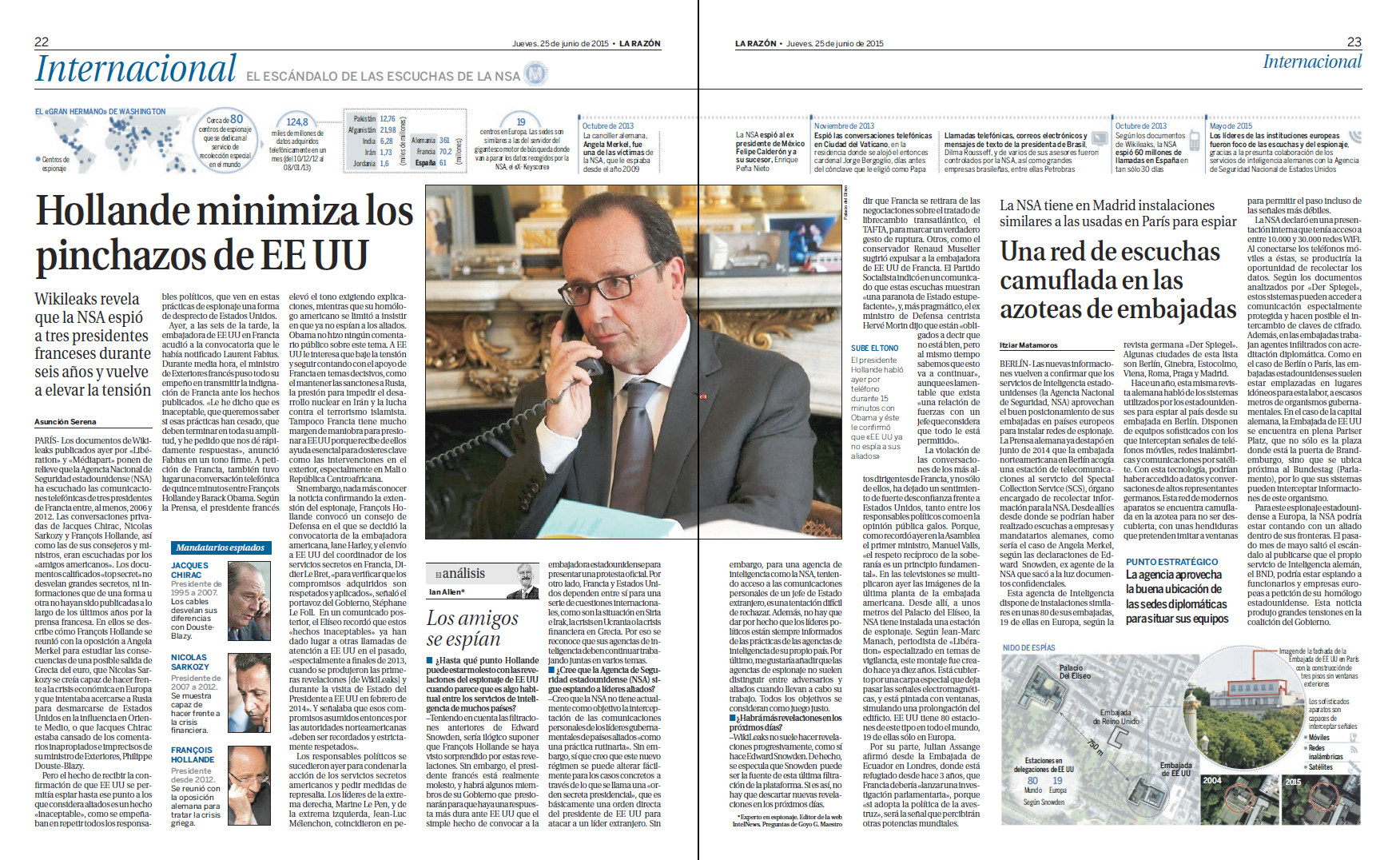
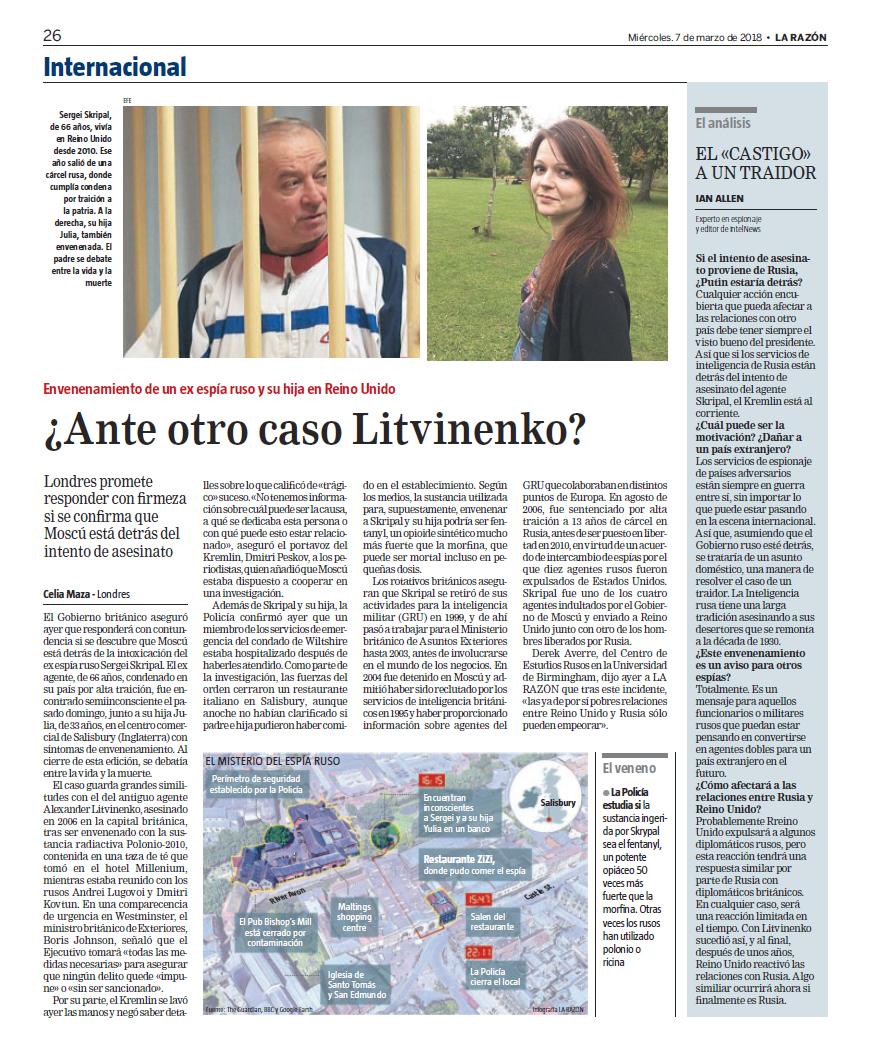
Alexei Mikhailovich Ridiger, better known as Patriarch Alexy II of Russia, head of the Russian Orthodox Church, died in Peredelkino, Russia, on December 5, 2008. His death has been overshadowed by allegations that he was for years “a favorite of the KGB”, having been recruited by the Soviet intelligence agency in 1958, while still a junior priest in Tallinn, Estonia. British newspaper The Guardian quotes KGB defector Oleg Gordievsky, who states that Alexy “worked for the KGB for over 40 years […] and was mentioned in KGB archives under the codename Drozdov”. French press agency AFP cites Gleb Yakunin, a Soviet-era human rights activist who has examined church-related KGB files. Yakunin said that “[p]ractically all the bishops consecrated in Soviet times worked with the KGB […]. They were all informers […]. But Alexy stood out especially. He was very active in this profession”. Alexy’s funeral is to be held tomorrow in Moscow, Russia. [JF]

Interesting questions about the Cyber Security Committee’s report

After the recent stir caused by purported cyber-attacks that struck the US Pentagon’s computers in October, news has emerged that the Commission on Cyber Security for the 44th Presidency has finally revealed its findings about the future of online governmental security. The Commission, whose panel “includes executives, high-ranking military officers and intelligence officials, leading specialists in computer security, and two members of Congress”, spent the last few months visiting computer labs at the National Security Agency as well as being briefed “in closed-door sessions by top officials from Pentagon, CIA, and British spy agency MI5”. Read more of this post

Comment: Declassified documents shed light on closing Cold War stages

The National Security Archive has posted a brief analysis of declassified documents relating to the last official meeting between Soviet Premier Mikhail Gorbachev and US President Ronald Reagan. The meeting, which took place at Governor’s Island, New York, in December 1988, was also attended by then US President-Elect George Bush, Sr. The released documents consist of three separate batches, namely previously secret high-level Soviet memoranda, CIA reports and estimates, as well as detailed transcripts of the meeting. According to the report’s editors, Soviet memoranda reveal that at the time of the meeting “Gorbachev was prepared for rapid arms control progress leading towards nuclear abolition”. The extent of the Soviet leader’s commitment stunned even the CIA, whose estimates had not anticipated such massive unilateral offer to disarm. The Archive’s press release blames the then President-Elect George Bush, Sr., for failing “to meet Gorbachev even half-way”, thus essentially preventing “dramatic reductions in nuclear weapons, fissile materials, and conventional armaments, to the detriment of international security today”. Read more of this post

INDIAN POLICE ARREST INTELLIGENCE AGENT BY MISTAKE

On December 1, we reported that accusing Pakistan’s Inter-Services Intelligence (ISI) agency of complicity in the recent militant attack of selected targets in Mumbai overlooks the responsibility of Indian intelligence agencies to prevent such attacks. We [^1] specifically pointed to revelations in Indian newspapers that “clear warnings of a coming assault were ignored” by local police forces and “that Indian intelligence agencies had precise information at least 10 months ago that Pakistani militants were planning an attack” but failed to act. It now appears that the infamous operational disconnect between Indian intelligence and police agencies has resulted in the arrest of an actual Indian undercover agent in connection with the Mumbai attacks. Specifically, last weekend the Calcutta police arrested two Indians who had used false identities to purchase 22 subscriber identity module (SIM) cards later used by militants who participated in the Mumbai attacks.

One of the arrestees is Mukhtar Ahmed, an Indian from Jammu Kashmir. It later emerged that Ahmed was in fact an Indian counterintelligence agent working on a “long-term [infiltration] mission with police in Indian-administered Kashmir”. Among his tasks was procuring “SIM cards for Lashkar-e-Taiba [^1] fighters and pass the numbers to police so that all calls from those numbers could be monitored by intelligence”. Unnamed senior Indian counterintelligence sources say that Ahmed’s arrest has blown “a high-value asset” and that Ahmed’s family is now “at risk”. Indian counterintelligence officials are further frustrated by the release of Ahmed’s name by the Calcutta police, even though local police officials had been told “categorically to keep shut on the entire Mumbai investigations”. It appears that Calcutta officials believed they had a “huge catch and [simply] wanted publicity”. [IA]

New
New
RSS Feed
icon_new

Ian La Razon


About intelNews 2

About J and I 2

Press Room 2

Media Inquiries

ACI Indexed Blog 2

Social Networking 2

In Partnership With 2

German intelligence spied on relief group in Afghanistan

It appears that the Bundesnachrichtendienst (BND), Germany’s foreign intelligence service, is finding it impossible to stay out of the news headlines. In November, three deep-cover agents working for the BND were arrested and summarily expelled from the newly independent Balkan nation of Kosovo. Now Der Spiegel magazine reports that the spy agency has admitted conducting covert surveillance on the communications of ANSO, a German relief project active in Afghanistan. Read more of this post

Comment: Security is a Democratic Imperative

British public opinion was shocked recently by the controversial arrest of Conservative Member of Parliament and Shadow Immigration Minister Damian Green, which, critics have charged, amounted to a “Stalinist” act of a police state. Mr. Green was arrested in connection with a series of leaks of immigration-related information from the British Home office. Having failed to uncover the source of the leak, the Home Office contacted London’s Metropolitan Police in early October, with a request for help. The investigation led to Christopher Galley, a junior Home Office official, who in turn led police to the next link in the chain, namely Mr. Green. Early in the afternoon of November 27, the Conservative Parliamentarian was arrested and his offices and residence were searched. Mr. Green was held in police custody for nine hours before being released. Keep reading →