Year in review: The biggest spy-related stories of 2019, part I
December 31, 2019 Leave a comment
 Since 2008, when we launched intelNews, it has been our end-of-year tradition to take a look back and highlight what we believe were the most important intelligence-related stories of the past 12 months. In anticipation of what 2020 may bring in this highly volatile field, we present you with our selection of the top spy stories of 2019. They are listed below in reverse order of significance. This is part one in a three-part series. Part two is here. Part three is available here.
10. Germany’s BND now boasts the world’s largest spy headquarters. In February, German Chancellor Angela Merkel inaugurated the Zentrale des Bundesnachrichtendienstes, which is the new headquarters of the German Federal Intelligence Service (BND). The BND, which operates as Germany’s foreign-intelligence service, is now believed to be the owner of the largest headquarters of any spy agency in the world. Interestingly, the German spy agency employs fewer than 7,000 employees, which is only a fraction of the employees employed by the BND’s American, Russian or Chinese equivalents. Some analysts have interpreted this development as part of Germany’s attempt to reassert itself as a major player in the global security landscape, especially following the election of US President Donald Trump, whom Berlin views as being disinterested in European security. During her inauguration speech, Chancellor Merkel said that the world was becoming “increasingly confusing”, which made the need for a “strong and efficient [German] foreign intelligence service […] more urgent than ever”. Interestingly, the new complex features a sizeable visitor’s center that is open to the public, making the BND the world’s first foreign intelligence agency with a public-access visitors’ facility.
09. Israel extends intelligence document classification period to 90 years. Israel, home of one of the world’s most active intelligence communities, augmented the secrecy of its espionage apparatus by raising the classification period of official intelligence documents to 90 years. Until the end of last January, government documents produced by Israel’s spy agencies, such as its external spy organization, the Mossad, or its domestic security agency, the Shin Bet, could remain hidden from public view for up to 70 years. In 2018, Israel’s Supreme Council of Archives, a body within the Israel State Archives that advises the Office of the Prime Minister on matters of classification, recommended against extending the classification period by more than five years. But in early 2019, Israeli Prime Minister Benjamin Netanyahu rejected the recommendation and managed to pass an amendment to the classification regulations, which will keep documents secret for 90 years from now on. The Israeli newspaper Ha’aretz, which published news of the amended regulation, said that documents from 1949, the year that the Shin Bet and the Mossad were founded, would normally have been published this year. But now they will remain hidden from public view until 2039. Documents relating to more recent cases will not be released until 2100.
08. The CIA kept a secret communication channel with North Korea for 10 years. The overtures made in recent years by US President Donald Trump to North Korea surprised many —but probably not the United States Central Intelligence Agency. In an article published in July, The Wall Street Journal claimed that an intelligence channel between the CIA and North Korean intelligence officials has been active for at least a decade. The previously unreported channel has led to a number of public meetings, such as the 2014 visit to Pyongyang by James Clapper, the then US Director of National Intelligence, as well as an earlier visit to the North Korean capital by former US President Bill Clinton in 2009. However, most of the contacts have been secret. They include several visits to North Korea by CIA official Joseph DeTrani before and after Clinton’s visit, as well as two trips to Pyongyang by CIA Deputy Director Michael Morell, in 2012 and 2013. His successor, Avril Haines, also visited North Korea, said The Journal, but noted that the channel went “dormant late in the Obama administration”. Upon becoming CIA director following the election of Trump to the presidency, Mike Pompeo was briefed about the secret channel’s existence and decided to resume it, with Trump’s agreement. That led to his eventual visit to North Korea along with Andrew Kim, who at the time headed the CIA’s Korea Mission Center. Eventually, this channel of communication facilitated the high-level summit between Trump and Supreme Leader Kim Jong-un in June 2018 in Singapore.
This is part one in a three-part series; Part two is here. Part three is available here.
► Author: J. Fitsanakis and I. Allen | Date: 31 December 2019 | Permalink
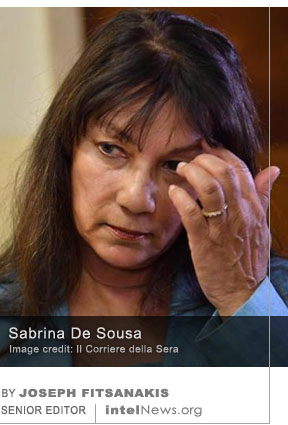 A former officer in the United States Central Intelligence Agency, who was convicted of involvement in the 2003 abduction of a Muslim cleric in Italy, says she fled Europe for the United States in fear of her safety. Sabrina De Sousa, 63, was a diplomat at the US consulate in Milan, Italy, when a CIA team abducted Hassan Mustafa Osama Nasr from a Milan street in broad daylight. Nasr, who goes by the nickname Abu Omar, is a former member of Egyptian militant group al-Gama’a al-Islamiyya, and was believed by the CIA to have links to al-Qaeda. Soon after his abduction, Nasr was renditioned to Egypt, where he says he was brutally tortured and raped, and held illegally for years before being released without charge.
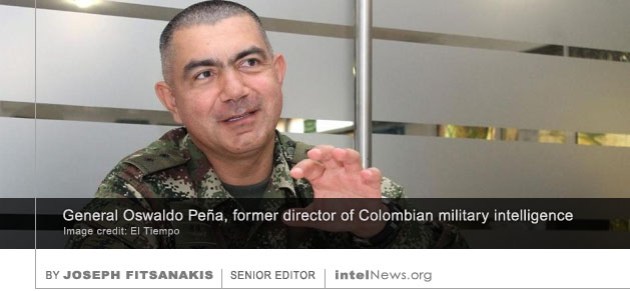 Colombia’s military spy chief has resigned, after the Colombian president was found to have misused intelligence at a United Nations speech to blame Venezuela for allegedly aiding paramilitary groups. For many years, authorities in Bogotá have accused Venezuela of aiding armed groups such as the National Liberation Army (ELN) and the Revolutionary Armed Forces of Colombia (FARC). These groups have been engaged in a decades-long guerrilla war against the Colombian state. In 2017, the largest of these groups, the FARC, laid down its weapons and signed a peace treaty with the Colombian government. But the ELN has refused to follow suit, while a number of hardline FARC leaders recently announced that they would be resuming their armed struggle against the Colombian authorities.
 Facebook has disabled a large network of fake accounts that it says were involved in an extensive disinformation operation tied to the government of Saudi Arabia. The social media company said on Thursday that the operation concentrated on spreading state-approved propaganda that extolled the Saudi royal family and its policies in the Middle East. The operation employed over 350 fake accounts, which collectively had nearly 1.5 million followers. It is believed that the Saudi propaganda scheme was also active on Instagram, the popular image- and video-sharing service, which is owned by Facebook.
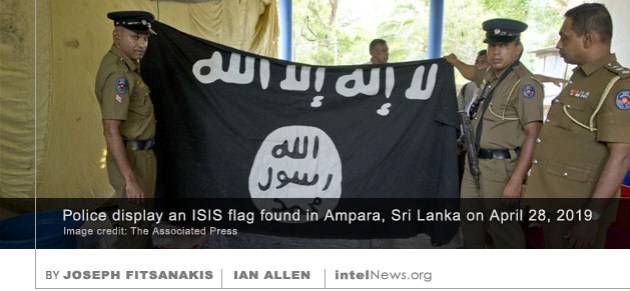 The April 21 suicide attacks in Sri Lanka, which were claimed by the Islamic State, may indicate that the militant group is moving east in search of fertile recruiting ground, according to some observers. In
  ranks. It follows that Sri Lanka is one of several East Asian countries that face major threats by the group, as the latter tries “to ignite creating fear in societies already battling so much division”, says Ash Gallagher, an American war correspondent based in East Asia. Writing for the British newspaper The Independent, Gallagher notes that not only is the Islamic State already established in Afghanistan (where it has “swallowed whole units of Taliban fighters”,
  Since 2008, when we launched intelNews, it has been our
  Since 2008, when we launched intelNews, it has been our
 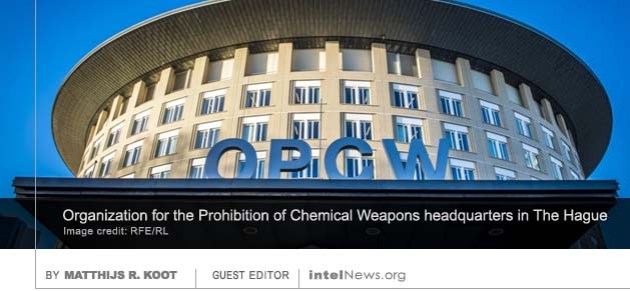 Western intelligence agencies thwarted a plot involving two Russians intending to travel to a Swiss government laboratory that investigates nuclear, biological and chemical weapons, and hack its computer systems. According to two separate reports by Dutch newspaper
  In a dramatic change to longstanding policy, senior United States diplomats have reportedly held secret meetings with Taliban leaders without the presence –and presumably knowledge– of the Afghan government. For over a decade, the Taliban have refused to negotiate with the Afghan government, which they view as a puppet regime controlled by Washington. They have instead sought to speak directly with the United States, without Kabul’s mediation. In 2015, the United States sought to initiate peace talks with the Taliban in the Qatari capital Doha, but the effort collapsed after the Afghan government denounced it and demanded a seat at the table. The negotiation process has remained dormant since then.
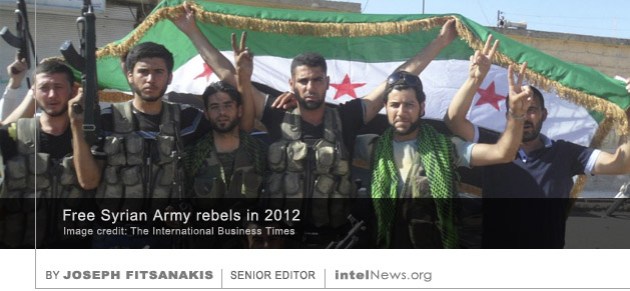 A United States federal judge ruled on Monday that a tweet by President Donald Trump did not inadvertently disclose a top-secret program by the Central Intelligence Agency to aid rebel groups in Syria. The lawsuit, brought by The New York Times, centered on news reports published in 2017 by
 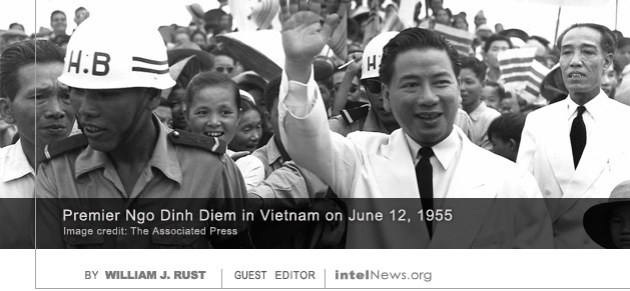 A newly declassified report by the Inspector General of the United States Central Intelligence Agency reveals that the South Vietnamese generals who overthrew President Ngo Dinh Diem in 1963 used CIA money “to reward opposition military who joined the coup”. Acknowledging that “the passing of these funds is obviously a very sensitive matter”, the CIA Inspector General’s report contradicts the sworn testimony of Lucien E. Conein, the CIA liaison with the South Vietnamese generals. In 1975, Conein told a United States Senate committee that the agency funds, approximately $70,000 or 3 million piasters, were used for food, medical supplies, and “death benefits” for the families of South Vietnamese soldiers killed in the coup.
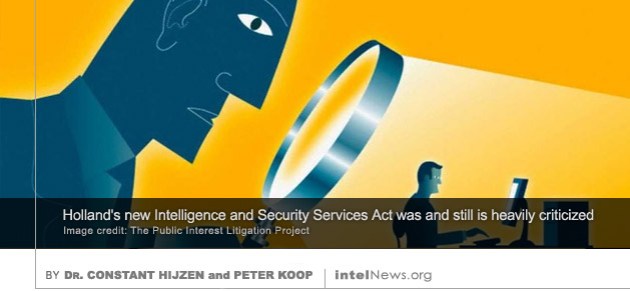 For the past year, the Netherlands has had a new law governing its two secret services, the AIVD and the MIVD. The new Intelligence and Security Services Act (Wet op de inlichtingen- en veiligheidsdiensten or Wiv) was and still is heavily criticized, especially because it allows untargeted access to cable-bound telephone and internet traffic. Under the previous law, which dates from 2002, the intelligence services were only allowed to conduct bulk interception of wireless transmissions, like satellite and radio communications —besides of course the traditional targeted telephone and internet taps aimed at individual targets.
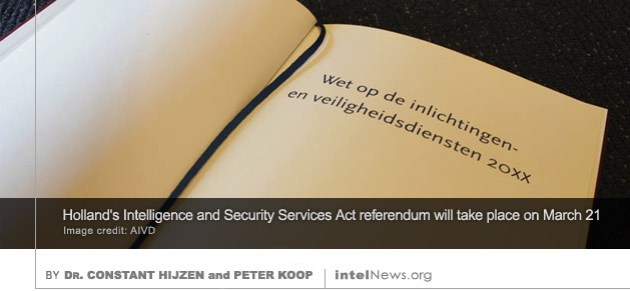 On March 21, the Dutch public cast their vote about the new Intelligence and Security Services Act, in Dutch






 intelNews.org
Year in review: The biggest spy-related stories of 2019, part II
January 1, 2020 Leave a comment
07. Western spy agencies hacked into Russia’s version of Google. Media reports tend to portray Western intelligence agencies as constantly defending themselves against cyber attacks from abroad —notably from North Korea, Iran and Russia. The reality of cyber espionage is far more complicated, as intelligence agencies from all sides adopt defensive and offensive postures, often concurrently. One example of this complexity emerged in last June, when the Reuters news agency reported that Western spy agencies used a malware described as the “crown jewel” of cyber-espionage tools to hack into Russia’s version of Google. The hackers targeted Yandex (Яндекс), the largest technology venture company in the Russian Federation and the fifth most popular search engine in the world. Yandex also provides services such as mapping and email in Russia and several other countries in Central Asia and the Middle East. The hackers appeared to be interested in acquiring technical information about how Yandex authenticates user accounts. That information could potentially enable them to impersonate Yandex users and access private information such as email messages, geolocation information, and other sensitive data. Reuters said that the hackers attempted to breach Yandex for purposes of espionage, not sabotage or disruption, or stealing intellectual property for commercial purposes.
06. The CIA may have lost 17 of its spies in Iran. If the announcements from Tehran are to be believed, the United States Central Intelligence Agency lost at least 17 spies in Iran in the months leading up to March 2019. According to Iran’s Ministry of Intelligence, the Islamic Republic busted an alleged “CIA network” operating in sensitive private sector companies and government agencies that relate to defense, aerospace and energy. At least some of the 17 alleged spies have reportedly been sentenced to death, though their exact number remains unknown. As we explained in July, losing 17 assets in one big sweep sounds fantastical. However, if it is true, it would mark one of the biggest intelligence-collection disasters in the CIA’s 72-year history. What may be equally worrying for the CIA is that the Iranians claim to have visually identified a number of CIA case officers, whose job is to recruit and handle foreign assets. If the Iranians are telling the truth, many units at the CIA will be in recovery mode for quite some time.
05. NATO allies use spy agencies to back opposing sides in Libyan War. The chaos that is the Libyan Civil War deepened this year, largely because foreign countries are backing opposing sides in the conflict. In April, several European Union member-states, led by Italy, criticized France for blocking a joint resolution calling on all warring factions in Libya to cease all hostilities and return to the negotiations table. France has joined the United States, Saudi Arabia, and the United Arab Emirates, in supporting the Libyan National Army (LNA), which is led by Field Marshal Khalifa Haftar. Haftar is an old adversary of the Libyan leader Muammar al-Gaddafi, who lived in the United States under Washington’s protection for several decades. In 2011 he returned to Libya in order to launch a military campaign from the eastern city of Tobruk. Since that time, he has led the LNA in a war of attrition against the United Nations-backed Government of National Accord (GNA), which is based in the Libyan capital Tripoli. The GNA is supported by Italy, and more recently Turkey, which has offered to send troops to help the GNA in its war against the LNA. It is wroth noting that, in 2017, two leading international legal scholars accused Haftar of having ordered his troops to commit war crimes. Ryan Goodman, a professor and former special counsel to the general counsel of the United States Department of Defense, and Alex Whiting, a Harvard University law professor who served as an international criminal prosecutor at the International Criminal Court, said that in September of 2015, Haftar openly urged his troops to “to take no prisoners” in battle.
This is part two in a three-part series; Part one is available here. Part three is available here.
► Author: J. Fitsanakis and I. Allen | Date: 1 January 2020 | Permalink
Filed under Expert news and commentary on intelligence, espionage, spies and spying Tagged with year in review