 Since 2008, when we launched intelNews, it has been our end-of-year tradition to take a look back and highlight what we believe were the most important intelligence-related stories of the past 12 months. In anticipation of what 2020 may bring in this highly volatile field, we present you with our selection of the top spy stories of 2019. They are listed below in reverse order of significance. This is part three in a three-part series. Part one is available here. Part two is available here.
04. No shortage of high-profile assassinations and abductions in 2019. There was no shortage of assassinations, assassination attempts, suspicious deaths and abductions in 2019. In January, the Dutch government officially accused Iran of ordering the contract murders of two Iranian men on Dutch soil in 2015 and 2017. The accusation prompted Iran to expel two Dutch diplomats from Tehran, which in turn prompted Holland to recall its ambassador from the Iranian capital. In March, a medical examination suggested that Mikhail Yuriyevich Lesin, a former senior adviser to Russian President Vladimir Putin, who died allegedly by falling while intoxicated in a luxury hotel room in Washington, may in fact have been strangled to death. According to the medical examiner —whose name has been redacted in the declassified report— the state of Lesin’s hyoid bone showed signs of “hanging or manual strangulation” or asphyxiation. Also in March, Daniel Forestier, a former paramilitary officer in France’s Directorate-General for External Security (DGSE), who was under investigation for allegedly plotting to kill General Ferdinand Mbahou, a senior Congolese opposition figure, was shot dead in the French Alps. According to a police report, Forestier had been shot five times in the chest and head in what a public prosecutor described as “a professional job”. In August, German authorities accused Moscow of ordering the assassination in Berlin of Zelimkhan Khangoshvili, a 40-year-old Chechen separatist who was shot in the head in broad daylight by a man wearing a wig and carrying a pistol fitted with a silencer. In October, Yossi Cohen, the chief of the Mossad —Israel’s main external intelligence agency— said in an interview that he had authorized “more than a few” assassinations during his tenure and warned that more may be on the way. In October, Iranian authorities announced the capture of Ruhollah Zam, a Paris-based Iranian dissident, who was reportedly lured out of France and then abducted by Iranian agents in a third country. It was later reported that the Iranian government may have used a female intelligence officer to lure Zam from his home in France to Iraq, where he was abducted by Iranian security forces and secretly transported to Iran. In November, Ibragim Eldzharkiev, a senior counter-terrorism officer in the Russian police, was gunned down along with his brother in a downtown Moscow street, in what authorities described as a contract killing.
03. Saudi Arabia hired Twitter employees to spy on users. In November US authorities charged two Saudi-born employees of the social media firm Twitter with spying on American soil. They also charged a member of staff of Saudi Arabia’s royal family with handling the two employees. They were allegedly recruited in 2015, on orders from the Saudi government, to spy on the identities of anonymous Twitter users who posted negative views of Saudi Arabia’s ruling dynasty. The employees gave the Saudis private information that included the email addresses, IP addresses and dates of birth of up to 6,000 Twitter users, who had posted negative comments about the Saudi royal family on social media. One of the two Twitter employees reportedly managed to escape to the oil kingdom before he was captured by the FBI. Remarkably, only a day after the US Department of Justice charged the three Saudi citizens with engaging in espionage on American soil, Saudi officials hosted in Riyadh Gina Haspel, the director of the CIA, reportedly to discuss “the longstanding Saudi-US partnership”.
02. A wiretapping scandal of vast proportions was unearthed in Spain. At the beginning of 2019, a Spanish court widened an investigation into an illegal network that spied on scores of politicians, business executives, journalists and judges for over 20 years. At the center of the case is José Manuel Villarejo, a 67-year-old former police chief, who allegedly spied on hundreds of unsuspecting citizens on behalf of corporate competitors and individual wealthy clients. A year earlier, five active police officers and an employee of Spain’s tax revenue service admitted to working for Villarejo’s network. They disclosed information about Operation KITCHEN, an espionage effort that targeted Luis Bárcenas, a senator and party treasurer of Spain’s conservative Partido Popular, who was eventually jailed for 33 years for his role in the so-called Gürtel case. The Gürtel case was the largest corruption scandal in modern Spanish history, and brought down the conservative government of Prime Minister Mariano Rajoy in July of 2017. The BBVA, Spain’s largest bank, is also accused of having made illicit payments of nearly $11.1 million to Villarejo for over 13 years.
01. US weapons given to UAE and Saudi Arabia are diverted to al-Qaeda. Weapons supplied to the Saudi and Emirati governments by the United States and other Western nations are ending up in the hands of al-Qaeda-linked Sunni militias in Yemen, according to two separate investigations. The weapons are being supplied to Saudi Arabia and the United Arab Emirates (UAE) by the West on the understanding that they will be used in the war in Yemen, in support of the country’s Sunni-dominated government. Since 2015, the Yemeni state has been at war with an Iran-backed alliance of rebel groups from Yemen’s Shiite communities, known as the Houthi movement. In an effort to support Yemen’s Sunni government, Western countries have supplied Saudi Arabia and the UAE with more than $5 billion-worth of weaponry. However, a report published in February by Amnesty International alleged that some of that weaponry, including machine guns, mortars and even armored vehicles, are being deliberately diverted to Sunni militia groups in Yemen, which have al-Qaeda links. A separate investigation aired by CNN claimed that weaponry given by Washington to the Saudi and Emirati militaries has been ending up in the hands of Salafist militias in Yemen. Among them is the Sunni Abu al-Abbas Brigade, which is closely linked to al-Qaeda in the Arabian Peninsula (AQAP).
This is part three in a three-part series; Part one is available here. Part two is available here.
► Author: J. Fitsanakis and I. Allen | Date: 2 January 2020 | Permalink
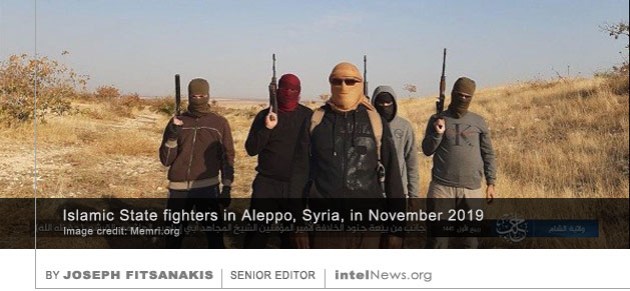 In a recent video message, the new head of the Islamic State calls COVID-19 a “great torment” from God against unbelievers, and vows that “not a single day will pass without bloodshed” due to attacks by his forces. The 39-minute video is entitled “The Crusaders Will Know Who Will Win in the End”, and began to circulate on the popular messaging application Telegram last Thursday.
 Ever since the emergence of the novel coronavirus, in December of last year, prominent public health scientists have consistently
  Since 2008, when we launched intelNews, it has been our
  Since 2008, when we launched intelNews, it has been our
 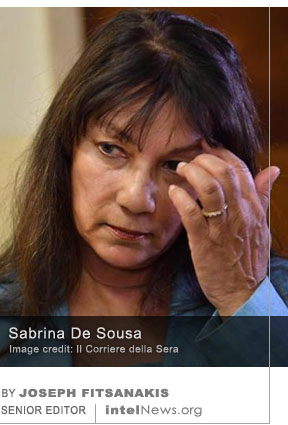 A former officer in the United States Central Intelligence Agency, who was convicted of involvement in the 2003 abduction of a Muslim cleric in Italy, says she fled Europe for the United States in fear of her safety. Sabrina De Sousa, 63, was a diplomat at the US consulate in Milan, Italy, when a CIA team abducted Hassan Mustafa Osama Nasr from a Milan street in broad daylight. Nasr, who goes by the nickname Abu Omar, is a former member of Egyptian militant group al-Gama’a al-Islamiyya, and was believed by the CIA to have links to al-Qaeda. Soon after his abduction, Nasr was renditioned to Egypt, where he says he was brutally tortured and raped, and held illegally for years before being released without charge.
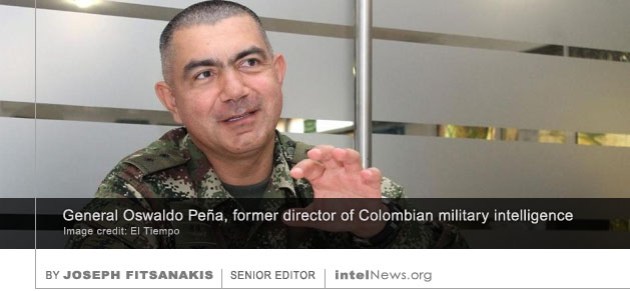 Colombia’s military spy chief has resigned, after the Colombian president was found to have misused intelligence at a United Nations speech to blame Venezuela for allegedly aiding paramilitary groups. For many years, authorities in Bogotá have accused Venezuela of aiding armed groups such as the National Liberation Army (ELN) and the Revolutionary Armed Forces of Colombia (FARC). These groups have been engaged in a decades-long guerrilla war against the Colombian state. In 2017, the largest of these groups, the FARC, laid down its weapons and signed a peace treaty with the Colombian government. But the ELN has refused to follow suit, while a number of hardline FARC leaders recently announced that they would be resuming their armed struggle against the Colombian authorities.
 Facebook has disabled a large network of fake accounts that it says were involved in an extensive disinformation operation tied to the government of Saudi Arabia. The social media company said on Thursday that the operation concentrated on spreading state-approved propaganda that extolled the Saudi royal family and its policies in the Middle East. The operation employed over 350 fake accounts, which collectively had nearly 1.5 million followers. It is believed that the Saudi propaganda scheme was also active on Instagram, the popular image- and video-sharing service, which is owned by Facebook.
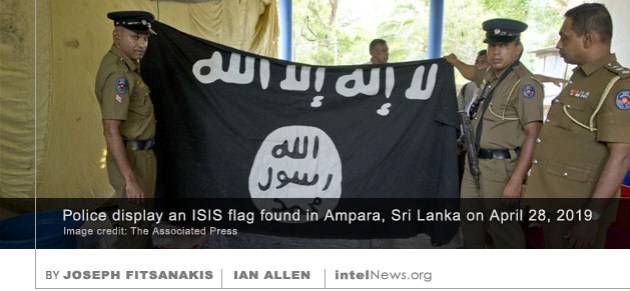 The April 21 suicide attacks in Sri Lanka, which were claimed by the Islamic State, may indicate that the militant group is moving east in search of fertile recruiting ground, according to some observers. In
  ranks. It follows that Sri Lanka is one of several East Asian countries that face major threats by the group, as the latter tries “to ignite creating fear in societies already battling so much division”, says Ash Gallagher, an American war correspondent based in East Asia. Writing for the British newspaper The Independent, Gallagher notes that not only is the Islamic State already established in Afghanistan (where it has “swallowed whole units of Taliban fighters”,
 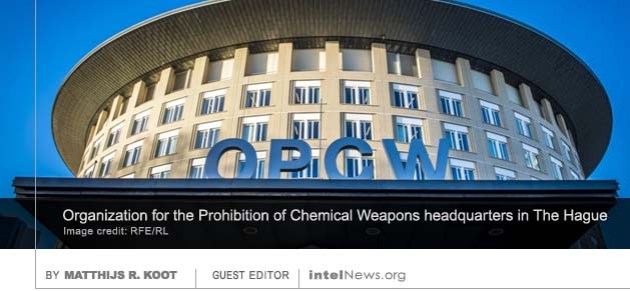 Western intelligence agencies thwarted a plot involving two Russians intending to travel to a Swiss government laboratory that investigates nuclear, biological and chemical weapons, and hack its computer systems. According to two separate reports by Dutch newspaper
  In a dramatic change to longstanding policy, senior United States diplomats have reportedly held secret meetings with Taliban leaders without the presence –and presumably knowledge– of the Afghan government. For over a decade, the Taliban have refused to negotiate with the Afghan government, which they view as a puppet regime controlled by Washington. They have instead sought to speak directly with the United States, without Kabul’s mediation. In 2015, the United States sought to initiate peace talks with the Taliban in the Qatari capital Doha, but the effort collapsed after the Afghan government denounced it and demanded a seat at the table. The negotiation process has remained dormant since then.







Analysis: The second intifada, a spontaneous act that shocked Israelis and Palestinians
September 22, 2020 Leave a comment
One opinion in Israel states that the intifada was the result of an initiative by the head of the Palestinian Authority, Yasser Arafat, and that Israeli intelligence knew about it in advance and warned Prime Minister Ehud Barak, who did not listen. This opinion was expressed in the memoirs of Maj. Gen. Res. Amos Gilad, formerly the head of the research division in the Israeli Military Intelligence (IMI) and former Israel Defense Forces (IDF) chief of staff, Lieutenant Gen. Res. Moshe (Boogie) Ya’alon. However, the picture presented by the two former IDF senior personalities seem to be wrong, and in this article, I’ll present another view showing that actually, the IMI (which is responsible for Israel’s national intelligence estimates), contrary to its allegation, failed to predict the Palestinian moves and did not warn the IDF and the Prime Minister to prepare for the intifada.
The different and probably correct opinion has been argued by the ISA (Israel Security Agency, known also as Shabak or the Shin Bet) former managing directors at the time, who discussed the event very openly and presented a clear conclusion: namely that Palestinian Authority Chairman Arafat did not initiate the intifada but was as much surprised by it as was Israel. The source of the views presented by ISA leaders is the book The Gatekeepers (in Hebrew) by David Moreh (2014), in which six former ISA leaders were interviewed. Among other things, the book raised the question of how the second intifada broke out. It is important to mention that there is no doubt in Israel that the ISA is the organization that has the best intelligence on the Palestinian territories. Read more of this post
Filed under Expert news and commentary on intelligence, espionage, spies and spying Tagged with Analysis, Avner Barnea, Israel, Palestine, Shin Bet