 Since 2008, when we launched intelNews, it has been our end-of-year tradition to take a look back and highlight what we see as the most important intelligence-related stories of the past 12 months. In anticipation of what 2018 may bring in this highly volatile field, we give you our selection of the top spy stories of 2017. They are listed below in reverse order of significance. This is the last part in a three-part series. Part one is available here. Part two is available here.
 04. Unprecedented security changes are taking place in Saudi Arabia. Analysts agree that the Kingdom of Saudi Arabia is undergoing its most important political changes in generations. On November 4, 2017, nearly 50 senior Saudi officials, including at least 11 princes, some of them among the world’s wealthiest people, were suddenly fired or arrested. A royal decree issued on that same evening said that the arrests were carried out by a new “anti-corruption committee” led by Crown Prince Mohammed bin Salman, the king’s 32-year-old son, who is first in line to the throne. The king and his son appear to be in the process of removing their last remaining critics from the ranks of the Kingdom’s security services, which they now control almost completely. Earlier in the year, the BBC alleged that Saudi security services were secretly abducting Saudi dissidents from abroad and jailing them in Saudi Arabia. Also in November, Saudi Arabia was seen to be behind a failed attempt by Lebanon’s Prime Minister Saad al-Hariri —a dual Lebanese-Saudi citizen— to resign while on a trip to Saudi Arabia. There were allegations that Hariri was under arrest by the Saudis, who objected to the presence of Hezbollah members in his cabinet. But Hariri later returned to Lebanon and rescinded his resignation.
03. Extraordinary transformation of the intelligence landscape in South Korea. Developments in North Korea have been at the forefront of security reporting in recent months. But reports from the Korean Peninsula have largely ignored the dramatic changes 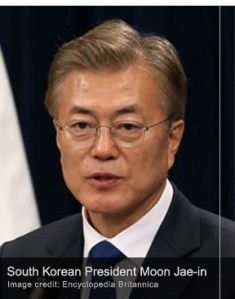 taking place in the intelligence infrastructure of South Korea, which are arguably as important as developments north of the 38th parallel. In June, the new center-left government of President Moon Jae-in banned the powerful National Intelligence Service (NIS) from engaging in domestic intelligence gathering. The move came after a lengthy investigation concluded that the NIS interfered in the 2012 presidential elections and tried to alter the outcome in favor of the conservative candidate, Park Geun-hye, using 30 dedicated teams of officers for that purpose. In November, three former NIS directors were charged with secretly diverting funds from the agency’s clandestine budget to aid Park, who has since been impeached and is now facing a lengthy prison sentence.
02. Turkey’s fallout with the West is affecting spy relations. Turkey has been a NATO member since 1952. However, rising tensions in the country’s domestic political scene are negatively affecting Ankara’s relations with its Western allies, particularly with Germany and the United States. Last month, Turkey issued an arrest warrant for Graham Fuller, an 80-year-old former analyst in the CIA, who Ankara says helped orchestrate the failed July 2016 military coup against the government of President Recep Tayyip Erdoğan. Washington flatly denies these allegations. In May, the Turkish Minister of Foreign Affairs Mevlüt Çavuşoğlu accused “the secret services of [Western] countries” of “using journalists and also bloggers [as spies] in Turkey”. Earlier in the year, a German report claimed that the Turkish state had asked its diplomats stationed all over Europe to spy on Turkish expatriate communities there, in order t to identify those opposed to the government of President Erdoğan. In some cases, Turkish spies have asked their Western European counterparts to help them monitor the activities Turkish expatriates, but such requests have been turned down. Nevertheless, there is increasing unease in Western Europe as Turkey intensifies its unilateral intelligence activities aimed at monitoring political dissent among Turkish communities abroad.
01. With America divided, Russian spies make dramatic post-Cold War comeback. The collapse of the Soviet Union was a traumatic experience for the once all-powerful Russian spy agencies. But, if CIA and FBI assessments are correct, the bitterly divisive state of American politics gave Russian spooks a chance for a dramatic comeback. Using a mixture of human and online intelligence operations, Russian spies helped drive a wedge between the White House and the US Intelligence Community. American intelligence agencies are tasked with providing information to  assist policy-makers, including the president. So when the CIA and the FBI conclude that the Russian government launched an extensive and sophisticated campaign to undermine the 2016 US presidential election, one expects the president to take that advisement under serious consideration. However, the US leader has openly dismissed the conclusions of his own Intelligence Community and has publicly stated that he believes President Vladimir Putin’s assurances that his country did not meddle in the US election.
What we have here, therefore, is a US president who sees the Kremlin as more trustworthy than his own Intelligence Community. This is a remarkable, unprecedented state of affairs in Washington, so much so that some CIA officials have reportedly questioned whether it is safe for them to share information about Russia to President Trump. Throughout that time, the FBI has been conducting an extensive counterintelligence investigation into alleged ties between the president’s campaign team and the Kremlin. As intelNews has noted before, the FBI probe adds yet another layer of complexity in an already intricate affair, from which the country’s institutions will find it difficult to recover for years to come, regardless of the outcome of the investigation. The state of Russian politics may be uncertain, and the country’s economy in bad shape. But Russian spooks can look back to 2017 as the year in which they made an unexpected comeback, scoring a dramatic victory against their decades-old rival.
This is the last part in a three-part series. Part one is available here. Part two is available here.
► Authors: Joseph Fitsanakis and Ian Allen | Date: 03 January 2018 | Permalink
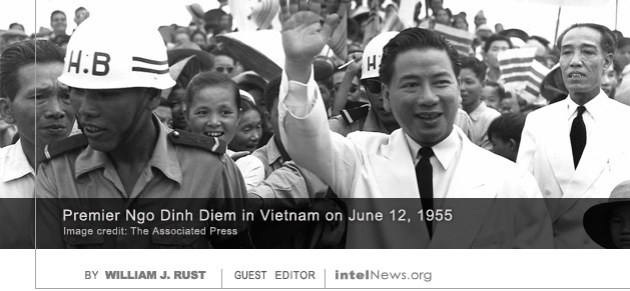 A newly declassified report by the Inspector General of the United States Central Intelligence Agency reveals that the South Vietnamese generals who overthrew President Ngo Dinh Diem in 1963 used CIA money “to reward opposition military who joined the coup”. Acknowledging that “the passing of these funds is obviously a very sensitive matter”, the CIA Inspector General’s report contradicts the sworn testimony of Lucien E. Conein, the CIA liaison with the South Vietnamese generals. In 1975, Conein told a United States Senate committee that the agency funds, approximately $70,000 or 3 million piasters, were used for food, medical supplies, and “death benefits” for the families of South Vietnamese soldiers killed in the coup.
 For the past year, the Netherlands has had a new law governing its two secret services, the AIVD and the MIVD. The new Intelligence and Security Services Act (Wet op de inlichtingen- en veiligheidsdiensten or Wiv) was and still is heavily criticized, especially because it allows untargeted access to cable-bound telephone and internet traffic. Under the previous law, which dates from 2002, the intelligence services were only allowed to conduct bulk interception of wireless transmissions, like satellite and radio communications —besides of course the traditional targeted telephone and internet taps aimed at individual targets.
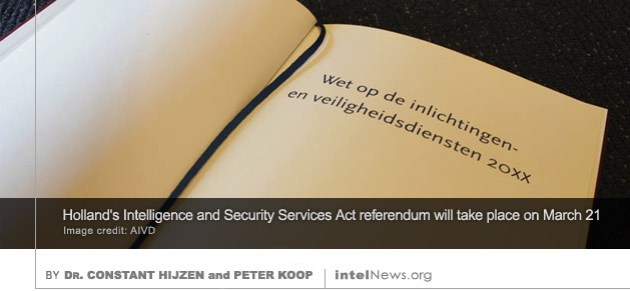 On March 21, the Dutch public cast their vote about the new Intelligence and Security Services Act, in Dutch
  Since 2008, when we launched intelNews, it has been our
  as a result of “acute poisoning from an undefined substance”, according to his doctors. Also in February, Kim Jong-nam, half-brother of North Korean Supreme Leader Kim Jong-un, was killed in an
  support for the rebels could backfire by causing the suddenly unemployed fighters to join jihadist organizations. In August, there were reports that US troops
  Since 2008, when we launched intelNews, it has been our
  10.
10. 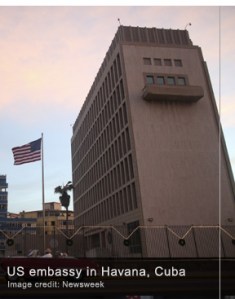 the alleged device may have been deployed by an intelligence service of a third country —possibly Russia— without the knowledge of the Cuban authorities. In October, the White House expelled 15 Cuban diplomats from the US in response to the incident. But the question of what harmed the health of at least 20 employees at the US embassy in Havana remains largely unanswered.
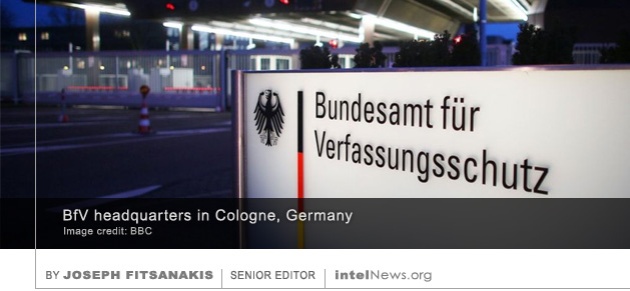 In an unusual step, German intelligence officials have issued a public warning about what they said are thousands of fake LinkedIn profiles created by Chinese spies to gather information about Western targets. On Sunday, Germany’s Federal Office for the Protection of the Constitution (BfV) held a press conference in which it said that it had discovered a wide-ranging effort by spy agencies in China to establish links with Westerners. The agency said that it undertook a 9-month investigation, during which it identified 10,000 German citizens who were contacted by Chinese spy-run fake profiles on LinkedIn. Across Europe, the number of targets could be in the hundreds of thousands,
 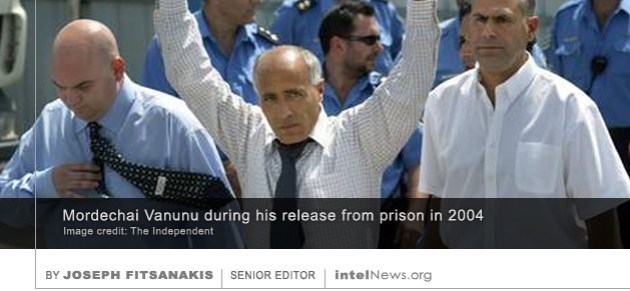 The controversial Israeli nuclear whistleblower Mordechai Vanunu, who was jailed for 18 years for revealing the existence of Israel’s nuclear program, has been invited to go to Norway to be reunited with his new wife. Vanunu was employed at Israel’s top-secret Negev Nuclear Research Center, located in the desert city of Dimona, which was used to develop the country’s nuclear arsenal. But he became a fervent supporter of nuclear disarmament and in 1986 fled to the United Kingdom, where he revealed the existence of the Israeli nuclear weapons program to the London-based newspaper The Times. His action was in direct violation of the non-disclosure agreement he had signed with the government of Israel; moreover, it directly challenged Israel’s official policy of ‘nuclear ambiguity’, which means that the country refuses to confirm or deny that it maintains a nuclear weapons program.
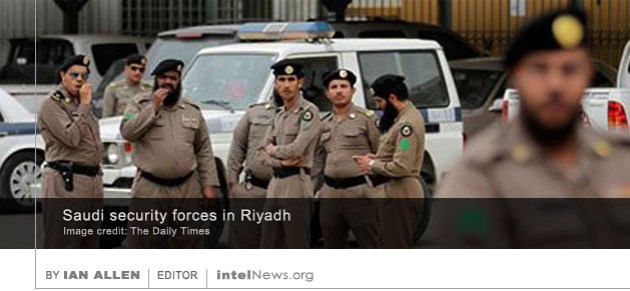 Officials in Saudi Arabia said on Tuesday that they foiled an elaborate suicide attack on the country’s defense ministry headquarters and infiltrated a foreign spy ring in the Kingdom, arresting its members. The near-simultaneous announcements were made by a member of the Presidency of State Security, an intelligence body founded only in July of this year, which is directly accountable to the county’s prime minister.
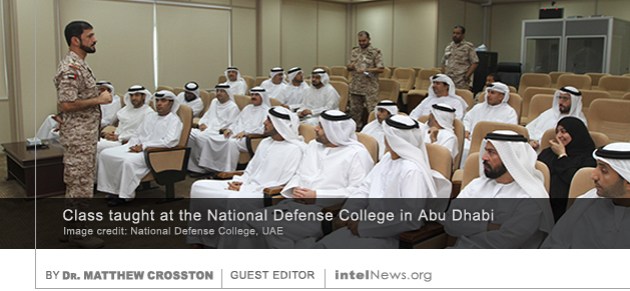 Emirati intelligence has to be seen in two disparate tiers: actual home-grown intelligence efforts, which usually revolve within the small policing and military forces of the United Arab Emirates (UAE); and more elaborate, highly secretive, outsourced activities that use the UAE as a facilitating conduit or go-between with a clear advantage to Emirati interests.
 ultra-modern intelligence capabilities, and cooperates with international organizations, other countries, and policing agencies. In addition, the UAE leadership has taken initiatives recently to create a domestic level of intelligence scholarship and professionalization, namely in the form of the
  For a very long time, the field of Intelligence Studies has been dominated by analysis of the Five Eyes community, which is comprised of the United States, Great Britain, Australia, New Zealand, and Canada. In reality, that study is more often the study of intelligence in the US and the UK. While not entirely fair to characterize this as Western prejudice —access to data is better in these two countries and intelligence scholars and analysts for the most part do not fear retribution or reprisal— more voices need to come forward to consider intelligence and its role on societies beyond the Five Eyes.
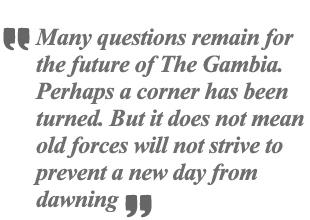 electoral reforms back in April of 2016. The protests were geared to influencing the December 2016 presidential election, which ultimately saw the defeat of incumbent President/Strongman Yahya Jammeh to Adama Barrow. Jammeh had corruptly governed the country since rising to power as a young military officer in a bloodless military coup in 1994.
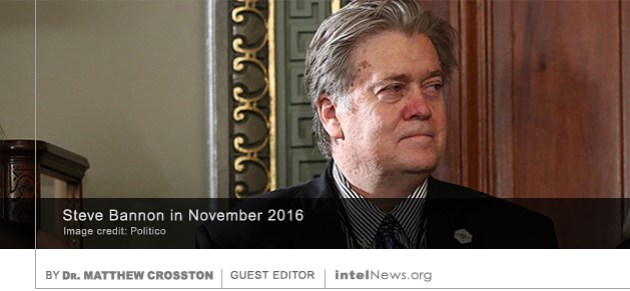 There has been much consternation and confusion over the maneuverings engineered by United States President Donald Trump with the National Security Council (NSC). By now everyone knows the Chairman of the Joint Chiefs of Staff and the head of the Office of the Director of National Intelligence (ODNI) have been essentially demoted down to Principals Committee meetings, with the no-doubt unsatisfying caveat that “when their specific expertise” is needed they will be asked to attend the main Principals meeting with the President. The irony, of course, is that both of these offices have always been oversight and unifying leadership positions: the Chairman of the Joint Chiefs oversees and coordinates discussion and debate between the heads of all the military branches while the ODNI was basically created to go do the thing the Department of Homeland
 Security was initially meant to do after 9/11 —coordinate and improve communication and cooperative transparency across the entire US Intelligence Community. It is therefore somewhat mystifying as to why two deeply experienced actors with comprehensive knowledge of military and intelligence affairs writ large would be inexplicably categorized as ‘knowledge specialists’, not required for the big general meeting. It is not like the ODNI came into the NSC meetings pre-Trump as the ‘Basque subject matter expert’ alone, or the Chairman of the Joint Chiefs laid claim to being the world’s only ‘Gulf of Aden’ maritime security specialist. While it is still too early to know, it seems a logical bet that there is some personality conflict or discomfort between these two men and the incoming member(s) that Trump has designated. Safe money is on General Michael Flynn. But since that right now will remain unsubstantiated rumor and gossip, we are left with nothing but conjecture.
 There is no doubt whatsoever that Russia has compiled ‘information’ on United States President Donald Trump. Russian intelligence considers it a rightful duty to compile information on persons of relevance, especially when they are conducting significant business or maintain political relations with Russia. Trump qualified under that definition long before he even thought about running for president. Even I have been followed, during my numerous times in Russia, both openly and tacitly. I have had my computer hacked and hotel phone bugged. And my affairs in Russia have come nowhere near to the financial or political relevance of Donald Trump.
 intelligence on Trump has nothing to do with American celebrity culture. If it truly exists, this would have been done under the edict of ‘national security’ for Russian geopolitical interests. As such, the proper Russian intelligence behavior would be to deny its existence and hold on to anything it has until a time deemed strategically best. The least efficient usage of that compromising material would be to just embarrass him publicly before he is inaugurated, TMZ ‘gotcha’ style. Russians simply don’t work that way. Rather, keeping it secret and using it in a non-public but strategically effective manner for their national interests is the Russian way.







Judge rules that Trump’s tweet did not disclose top-secret CIA operation in Syria
July 4, 2018 Leave a comment
But President Trump allegedly terminated $1 billion program soon after he took office. Last July, the president openly disputed an account by The Washington Post’s Greg Jaffe and Adam Entous, which claimed that Trump had ended the program as a concession to Russia. In a tweet, Trump said: “The Amazon Washington Post fabricated the facts on my ending massive, dangerous, and wasteful payments to Syrian rebels fighting Assad”. Shortly afterwards, another newspaper, The New York Times, filed a Freedom of Information Act (FOIA) request, arguing that the president’s tweet had effectively disclosed the existence of the covert CIA program and seeking full details from the government. But the CIA rejected the The New York Times’ rationale, at which point the paper took the case to court.
But on Monday, US District Court Judge Andrew Carter Jr. dismissed the paper’s argument. In a 20-page decision, posted online by the US-based news website Politico, Judge Carter said that President Trump’s tweet had been too vague and ambiguous to be considered as effectively declassifying the secret CIA program. At no point did the US president “make an unequivocal statement, or any statement for that matter, indicating that he was declassifying information”, said the judge. Additionally, Trump’s tweet and other public statements on the matter did not undermine the legal authority of the US government to continue to keep details about the CIA program under wraps. According to Politico, which reported on Judge Carter’s decision, this development will make it difficult for other FOIA filers to use Trump’s tweets as justification for seeking information about secret government programs. Meanwhile, The New York Times said on Monday that it would seek to appeal Judge Carter’s decision.
► Author: Joseph Fitsanakis | Date: 04 July 2018 | Permalink
Filed under Expert news and commentary on intelligence, espionage, spies and spying Tagged with CIA, Donald Trump, FOIA, Free Syrian Army, lawsuits, News, Syria, Syrian Civil War, United States