 Ever since 2008, when we launched intelNews, we have monitored daily developments in the highly secretive world of intelligence while providing an expert viewpoint removed from sensationalism and conspiratorial undertones. As 2015 is about to conclude, we take a look back at what we think are the ten most important intelligence-related developments of the past 12 months. Regular readers of this blog will surely agree that we witnessed our fair share of significant intelligence-related stories this year. Some of them made mainstream headlines, while others failed inexplicably to attract the attention of the news media. In anticipation of what 2016 may bring, we present you with our selection of stories, which are listed below in reverse order of significance. This is part two in the series; part one was published yesterday.
5. CIA may have pulled officers from Beijing embassy following OPM hack. Up to 21 million individual files were stolen in June 2015, when hackers broke into the computer system of the US Office of Personnel Management. The office, known as OPM, handles applications for security clearances for agencies of the federal government.ch The breach gave the unidentified hackers access to the names and sensitive personal records of millions of Americans who have filed applications for security clearances. In late November it was reported that the Central Intelligence Agency (CIA) pulled a number of officers from the United States embassy in Chinese capital Beijing, following the massive cyber hacking. The irony is that, according to The Washington Post, the records of CIA employees were not included in the compromised OPM database. The latter contains the background checks of employees in the US State Department, including those stationed at US embassies or consulates around the world. It follows that US diplomatic personnel stationed abroad whose names do not appear on the compromised OPM list “could be CIA officers”, according to the paper.
4. Provisional IRA ‘still broadly in place’, says Northern Ireland police chief.. On July 28, 2005, the Provisional Irish Republican Army (PIRA), which fought British rule in Northern Ireland for decades, announced that was ceasing all paramilitary operations and disbanding as of that day. Three years later, the Independent Monitoring Commission declared that the PIRA’s Army Council, which steered the activities of the militant organization, was “no longer operational or functional”. In the ensuing years, which have seen the implementation of the Good Friday Agreement that restored peace in Northern Ireland, it has been generally assumed that the PIRA had ceased to exist. In August, however, George Hamilton, the head of the Police Service of Northern Ireland, told reporters that “some of the PIRA structure from the 1990s remains broadly in place” in the area. Hamilton was speaking in reference to the murder earlier that month of Kevin McGuigan in east Belfast. McGuigan, a 53-year-old father of nine, was a former member of the PIRA, who had fallen out with the organization. He was gunned down at his home, allegedly in retaliation for the murder last May of Gerard Jock Davison, a former commander of the PIRA, who was also shot dead in the Markets area of Belfast.
3. US Pentagon may have doctored intelligence reports on the Islamic State. Many Middle East observers, including this website, have made notably dire projections about the continuing reinforcement and territorial expansion of the Islamic State. In August, a leaked US intelligence report published by the Associated Press said the Islamic State’s strength had remained stable throughout 2014 and 2015, despite a US bombing campaign. However, earlier assessments by the Defense Intelligence Agency (DIA), which were communicated to senior US policymakers, including President Barack Obama, were far more optimistic about America’s ability to defeat the militant group. Why the discrepancy? According to The Washington Post, which published the story in late August, officials with the US Central Command (CENTCOM), the Pentagon body that directs and coordinates American military operations in Egypt, the Middle East and Central Asia, had systematically doctored the conclusions of intelligence reports about the Islamic State before passing them on to American leaders. It appears that the evidence pointing to deliberate manipulation of intelligence assessments was convincing enough to prompt the Pentagon’s Office of the Inspector General to launch an official probe into the matter.
2. China and Taiwan swap jailed spies in historic first. Few ongoing intelligence conflicts are as fierce as the one that has been taking place between China and Taiwan since 1949, when the two countries emerged following a bitter civil conflict between communist and nationalist forces. Observers were therefore surprised when, two weeks ahead of a historic November 7 meeting between Chinese President Xi Jinping and Taiwanese President Ma Ying-jeou, the two countries announced a spy swap. The exchange, which took place in secret in late October, was the first of its kind in the history of the two bitter rivals. Taipei released Li Zhihao, a mysterious Chinese intelligence officer known in spy circles as “the man in black”, who had been arrested in 1999 and was serving a life sentence. In return, Beijing freed Chu Kung-hsun and Hsu Chang-kuo, two colonels in Taiwan’s Military Information Bureau, who were arrested in mainland China’s nearly a decade ago. It is believed that they were the highest-ranked Taiwanese spies imprisoned in China. Their release, therefore, marks an unprecedented development in Chinese-Taiwanese relations.
1. Russia, Iraq, Iran, Syria, now officially sharing intelligence in war against ISIS. The increased involvement of major powers in Syria has been arguably the greatest intelligence-related development of 2015. The United States, Russia, Iran, Turkey, Israel, Germany, France, and the United Kingdom, are only some of the state and non-state actors that are now actively engaged on the ground in Syria, both with armies and with intelligence personnel. A significant related development is the growing relationship between the intelligence apparatus of US ally Iraq and a number of countries with which Washington has an adversarial relationship. Intelligence-sharing had been practiced for a while between Russia, Syria and Iran. But in September of this year, Iraq entered the intelligence alliance for the first time. According to the Baghdad-based Iraqi Joint Forces Command, the agreement entails the establishment of a new intelligence-sharing center in the Iraqi capital. It is staffed with intelligence analysts from all four participating countries, who pass on shared information to their respective countries’ militaries. In October, The Washington Times reported that Iraq had been fully integrated into the Russian-led intelligence-sharing alliance, and that the Iraqi government was already using Russian-supplied intelligence in its war against the Islamic State, according to officials in Baghdad.
► Authors: Joseph Fitsanakis and Ian Allen | Date: 31 December 2015 | Permalink
 United States President Barack Obama has signed a new law that designates $160 million to set up a government center for “countering foreign propaganda and disinformation”. The law authorizes the US departments of State and Defense to work with other federal agencies in establishing the new body. Its precise tasks are not yet known, nor is the role in it —if any— of intelligence agencies, though the Director of National Intelligence is mentioned in the body of the legislation.
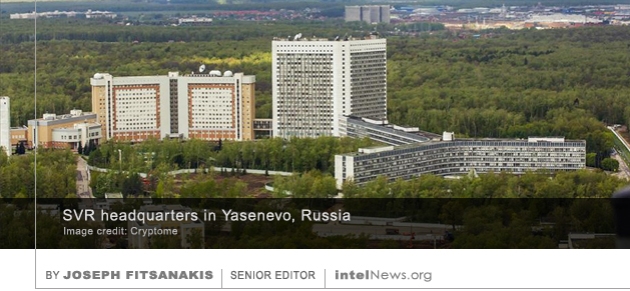 Last week, following the results of Russia’s parliamentary election, Russian media run a story suggesting that the Kremlin is planning to implement far-reaching changes to the country’s intelligence apparatus.
 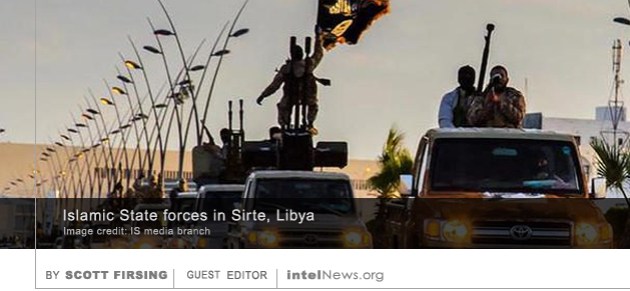 As United States air strikes and special-forces operations
 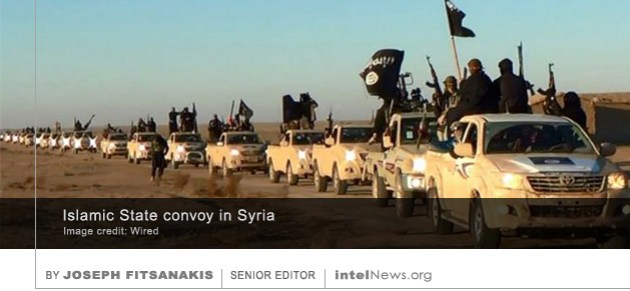 An investigation by Republican lawmakers in the United States House of Representatives has reportedly found that military intelligence analysts were pressured into changing reports on the Islamic State by their superiors. The investigation follows
  A videotaped lecture by Kim Philby, one of the Cold War’s most recognizable espionage figures, has been unearthed in the archives of the Stasi, the Ministry of State Security of the former East Germany. During the one-hour lecture, filmed in 1981, Philby addresses a select audience of Stasi operations officers and offers them advice on espionage, drawn from his own career. While working as a senior member of British intelligence, Harold Adrian Russell Philby, known as ‘Kim’ to his friends, spied on behalf of the Soviet NKVD and KGB from the early 1930s until 1963, when he secretly defected to the USSR from his home in Beirut, Lebanon. Philby’s defection sent ripples of shock across Western intelligence and is often seen as one of the most dramatic moments of the Cold War.
 Ever since 2008, when we launched intelNews, we have monitored daily developments in the highly secretive world of intelligence while providing an expert viewpoint removed from sensationalism and conspiratorial undertones. As 2015 is about to conclude, we take a look back at what we think are the ten most important intelligence-related developments of the past 12 months. Regular readers of this blog will surely agree that we witnessed our fair share of significant intelligence-related stories this year. Some of them made mainstream headlines, while others failed inexplicably to attract the attention of the news media. In anticipation of what 2016 may bring, we present you with our selection of stories, which are listed below in reverse order of significance. This is part one in the series; part two is available
 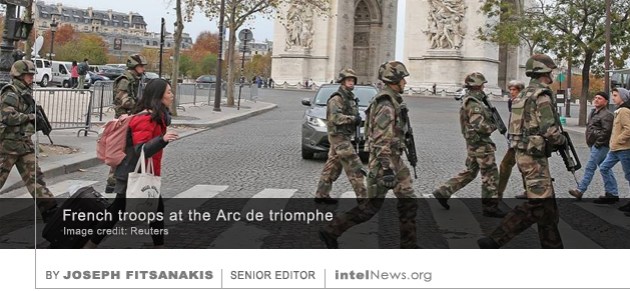 Paris is still reeling from Friday’s unprecedented carnage, which left at least 130 people dead and over 350 wounded. The six separate incidents included the first known suicide bombings in the country’s history and marked the deadliest coordinated attacks on French soil since World War II. The magnitude of the attacks prompted the French government to close the country’s borders and declare a nationwide state of emergency —the first since 1961. The shock from the mass killings is today reverberating throughout Europe, a continent that had not seen such a deadly incident since the Madrid train bombings of 2004, when a group of al-Qaeda-inspired militants killed 191 people in the Spanish capital. A response from France and its Western allies is to be expected. However, the West should pause and think very carefully before deepening its engagement in a chaotic and unpredictable war that is like nothing it has ever experienced. Specifically, Western leaders should consider the following:
 a venue where “a party of perversity” was taking place. Europe’s response to this phenomenon is dismissal and indifference. Most Westerners are still at a loss trying to understand the basic differences between Sunni and Shia Islam, let alone the ideological and spiritual underpinnings of groups like the Islamic State, Jabhat al-Nusra, and others. The idea that radical Islam can be defeated before it is understood is naïve and dangerous.
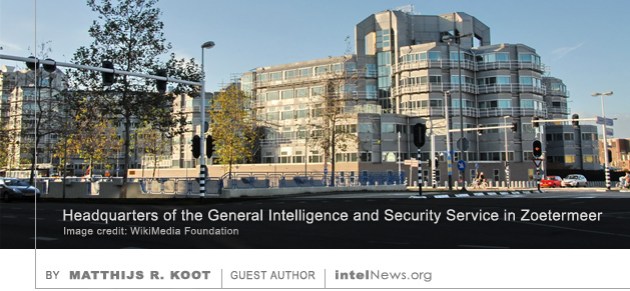 A 28-year-old criminal investigator of the Dutch National Crime Squad was arrested by Dutch police on September 29 over allegations of corruption, neglect of duty, and money laundering. The man, named as Mark M., applied for a job at the Dutch police in 2009. According to an online résumé, M. dropped out of professional college in journalism after several years of being self-employed as a freelance reporter covering crime issues.
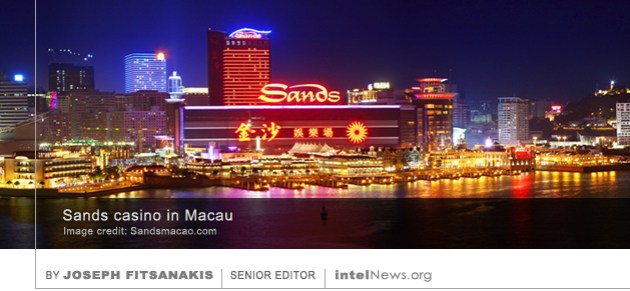 Officials in China think that United States spy agencies are using casinos in Macau to entrap Chinese government employees, according to a report produced on behalf of an American-owned casino chain in the former Portuguese colony. The report was produced by a private investigator and was commissioned by Sands China, the Macau branch of a casino venture owned by American gambling magnate Sheldon Adelson. Its goal was to investigate why the Chinese-appointed authorities in Macau were hostile to the gambling industry in general and Sands China in particular.
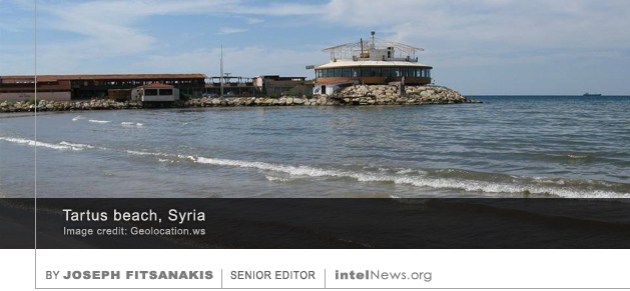 A leaked document from an American intelligence agency appears to confirm that Israeli commandos were behind the assassination of a top Syrian government official, who was shot dead outside his luxury villa on the Syrian coast in 2008. Muhammad Suleiman had been a close aide of current Syrian President Bashar al-Assad even before the latter rose to power in 2000. Once al-Assad became ruler of Syria, Suleiman was appointed special presidential advisor in the areas of arms procurement and strategic weapons. He handled intelligence affairs for the Assad regime and he was involved in weapons transfers from Iran to the Lebanese militant group Hezbollah, while also helping train Hezbollah operatives. He was also rumored to have a senior administrative role in the Syrian nuclear weapons program.
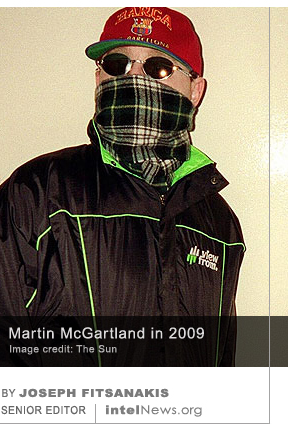 A lawsuit against Britain’s Security Service (MI5) by a former spy, who in the 1980s infiltrated the Provisional Irish Republican Army, commonly known as IRA, is to be judged in secret, a court in London has decided. The spy, Martin McGartland, of Belfast, Northern Ireland, was recruited by the Special Branch of the Royal Ulster Constabulary in the mid-1980s. The information he supplied to the security agencies over several years is widely credited with having saved the lives of at least 50 British police officers and soldiers. His autobiographical experiences formed the basis of the 2008 motion picture 50 Dead Men Walking.
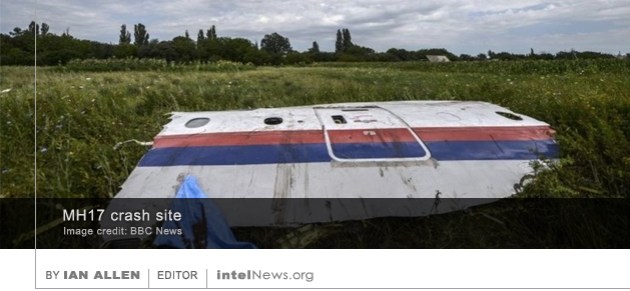 A German investigator, who is probing the downing of a civilian airliner over Ukraine nearly a year ago, says that an informant has claimed a multimillion reward for information pointing to those responsible for the attack. The investigator, Josef Resch, of Lübeck, Germany, says that a binding non-disclosure agreement does not allow him to reveal his client, who offered the $47 million reward. But he told German business magazine Capital that he is hopeful his client will soon reveal the details, since “people who pay that kind of money in exchange for information do not keep it for themselves”. However, he also hinted that his client may be an intelligence agency, who may decide to “deal with the matter without fanfare”.








Year in review: The 10 biggest spy-related stories of 2016, part I
December 29, 2016 Leave a comment
10. Kim Philby videotaped lecture surfaces in Germany. While working as a senior member of British intelligence, Harold Adrian Russell Philby, known as ‘Kim’ to his friends, spied on behalf of the Soviet NKVD and KGB from the early 1930s until 1963, when he secretly defected to the USSR from his home in Lebanon. Philby’s defection shocked Western intelligence and is seen as one of the most dramatic moments of the Cold War. In April of this year, the BBC found a videotaped lecture by Philby in the archives of the BStU, the Federal Commissioner for Stasi Records in Germany. During the one-hour lecture, filmed in 1981, Philby addresses a select audience of operations officers from the Stasi, the Ministry of State Security of the former East Germany. Excerpts were aired publicly for the first time.
9. Britain’s MI6 to increase in size by 40% by 2020. It was revealed in July that, according to satellite images, the headquarters of the Russian Foreign Intelligence Service, known as SVR, has doubled, and possibly tripled, in size in the past nine years. So it probably shouldn’t come as a surprise that the British government plans to implement a 40 percent increase in personnel numbers for MI6 over the next four years. The agency, which is formally known as the Secret Intelligence Service, currently employs about 2,500 people. But that number will rise to approximately 3,500 by 2020. Experts agree that we are witnessing the most significant growth in the size of state intelligence agencies since the end of the Cold War.
8. Israel’s Mossad has a successful year, allegedly. It has been quite a year for Israel’s primary external intelligence agency, the Mossad. In 2015, the secretive organization got a new director, Yossi Cohen. Since that time, it has emerged that Bassam Mahmoud Baraka, a senior member of the military wing of Hamas, the Palestinian militant group that governs the Gaza Strip, has defected to Israel. Mossad is also believed to be behind the killing of Mohamed Zaouari, a senior aviation engineer who headed Hamas’ unmanned aerial vehicle program. Zaouari was shot dead outside his home in Tunisia earlier this month, by a group of assailants using gun silencers.
7. Information points to previously unknown ISIS spy agency. According to The New York Times, the Islamic State has set up a secretive intelligence agency whose task is to set up sleeper cells abroad and has already sent “hundreds of operatives” to Europe and Asia. The ISIS intelligence agency goes by the name Emni and appears to be a multilevel organization that includes domestic and external operational components. Emni’s external unit is tasked with conducting terrorist operations abroad. These are the responsibility of several lieutenants, who are permitted to recruit the most capable members of ISIS from around the world.
6. South Korea announces most high-profile defection from North since Korean War. An announcement issued by the South Korean government in April said it had given political asylum to a colonel in the Korean People’s Army, who worked for the Reconnaissance General Bureau, a military-intelligence agency that resembles the US Central Intelligence Agency’s Special Activities Division. The unnamed man is the most high profile defector to the South since the end of the Korean War in 1953, according to authorities in Seoul. Meanwhile, Thae Yong-Ho, the second-in-command at the North Korean embassy in the United Kingdom, also defected with his wife and children in August, and was given political asylum in South Korea.
This is part one in a two-part series; part two is here.
► Author: Joseph Fitsanakis and Ian Allen | Date: 29 December 2016 | Permalink
Filed under Expert news and commentary on intelligence, espionage, spies and spying Tagged with Analysis, espionage, intelligence, year in review