Analysis: The mysterious case of IDF ‘Officer X’ who died in an Israeli prison
June 18, 2021 2 Comments
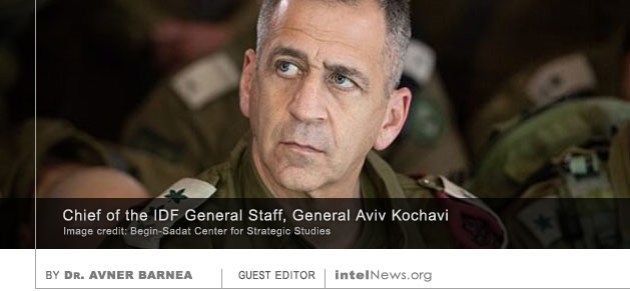
The State of Israel has been in turmoil for several weeks, after it became known that an outstanding officer in one of the elite technological units of the Israel Defense Forces (IDF) Intelligence Division (Israel Military Intelligence, or IMI) was found dead while in custody in a military prison. He had been serving an eight-month sentence on suspicion of causing serious security damage to a critical intelligence technological system. The IDF’s chief of staff, Major General Aviv Kochavi (pictured), said in relation to the case: “The officer from the IMI committed very serious offenses. He committed them on purpose, for reasons I cannot describe. He almost [revealed] a big secret and we stopped it in the [last] minute”.
After the officer’s death, it was revealed by the IDF that his arrest was not a case of treason, or espionage and that he acted for personal, rather than for ideological, nationalistic or financial motives. Following public pressure about IDF’s handling of the matter and the unclear circumstances of the officer’s death, the IDF has provided some more details.
Officer X, who, according to an American website was named Tomer Aiges, was a 25-year-old captain with three honorary awards by the IMI. He had graduated from high school while simultaneously receiving a BSc in computer sciences at the age of 18. Before enlisting in the IDF, he worked in several hi-tech companies in Israel. People who worked with him there testified that he was a young man with extraordinary technical abilities, which is why he was recruited to the technology unit of the IMI.
There are two main issues of concern among the Israeli public. One is how the officer was held in custody for a long time without being brought to trial, even though a serious indictment —the details of which are not known— was filed against him, and when no one except his parents knew about it. To the young man’s acquaintances it seemed that he had mysteriously disappeared. What is more, much of his page on Facebook was deleted and no further updates appeared following his arrest. It was reported that during his arrest, there was a process of criminal mediation, in which the State of Israel sought to sentence him to ten years in prison.
The second problematic issue concerns the circumstances of his death. There are many questions about to how he could have died when his detention cell was under non-stop surveillance by closed-circuit cameras. Further questions remain as to why the investigation into the circumstances of his death has yet to be completed. There have been demands by Israeli former intelligence officers to hand over the investigation to a civilian inquiry committee headed by a Supreme Court judge, as there is grave concern that the IDF could be hiding information that could demonstrate it was negligent in protecting the officer’s life.
The publication of additional details about this case is subject to a strict ban by the Israeli military censorship —it should be noted that Israel is the only Western country that exercises security censorship. The Israeli public is eagerly awaiting the publication of further details about the circumstances of the death of the intelligence officer, Officer X.
Dr. Avner Barnea is research fellow at the National Security Studies Center of the University of Haifa in Israel. He served as a senior officer in the Israel Security Agency (ISA).
► Author: Avner Barnea | Date: 18 June 2021 | Permalink
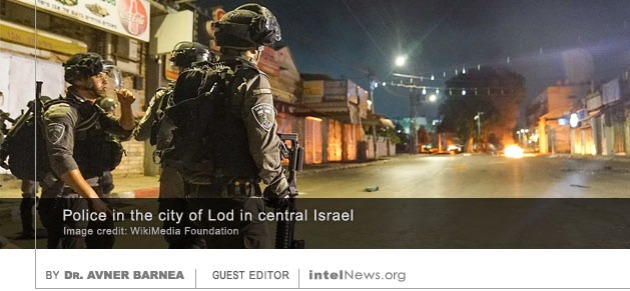
 surprised observers with its range of weapons, such as long-range missiles with a reach that is in excess of 150 miles. This constitutes a strategic surprise for Israel. So far (May 13, 2021), Hamas has fired about 1,500 missiles at Israel, most of which have been intercepted by Israel’s air defense system called the Iron Dome.
 LAST MONTH I WROTE an
  THE FEDERAL BUREAU OF Investigation and the New York Police Department gave Capitol Police officials specific warnings that supporters of United States President Donald Trump were determined to engage in serious violence on January 6, according to federal officials. The FBI even made contact with known far-right radicals across the United States in early January, and warned them not to travel to Washington for the pro-Trump rally that resulted in the bloody attack on the US Capitol,
  IF WEDNESDAY’S ATTACK ON the United States Capitol Complex was part of a coup d’état, then the American political system should be considered safe for the time being. The mob that ransacked the Capitol was disordered, leaderless, and appeared to have no coordination, or even direction. However, the broader militant movement that it represents is evolving very rapidly. If left unchecked, it will be able to turn its weaknesses into strengths and spell major trouble ahead for the already stormy waters of American politics. The nation’s law enforcement and security agencies must therefore prepare for a period of widespread insurrection, some of which will be armed and lethal in nature. Insurrectionist acts are likely to occur across the nation, and may last for months, if not longer.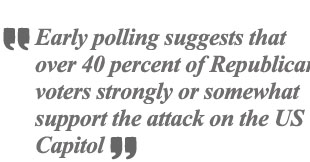
 Isaac Shoshan, an Israeli undercover operative, who was involved in some of Israel’s most daring and controversial intelligence operations for over 40 years,
  Since 2008, when intelNews was launched, it has been our
  Since 2008, when intelNews was launched, it has been our
  Since 2008, when intelNews was launched, it has been our
 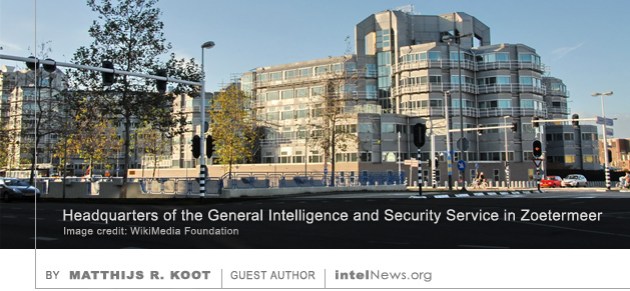 On 10 December 2020, the Dutch Minister of the Interior and Kingdom Relations, Kajsa Ollongren, sent a
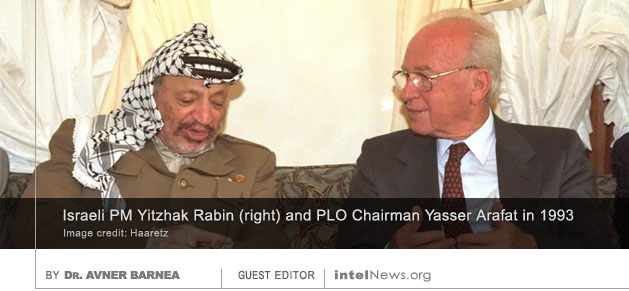
 THE SOVIET UNION INFLICTED incalculable damage to West German spy agencies —and by extension to their American patrons— by recruiting dozens of former Nazis who populated the ranks of West German intelligence after World War II. These are the preliminary conclusions of a study into the topic by Danny Orbach, a lecturer in history at Hebrew University in Jerusalem, which relies on recently declassified documents from American and German intelligence agencies.








Analysis: Counterintelligence dimensions of the Gilboa prison break in Israel
September 24, 2021 Leave a comment
EARLIER IN SEPTEMBER, FIVE members of Palestinian Islamic Jihad and one member of Fatah escaped from the Gilboa Prison in Israel, by digging a tunnel under the prison walls. The escape was a dramatic surprise and caused wonder in the Israeli defense establishment, since the Gilboa Prison is one of the most secure prisons in the country. The Israeli police, together with the Israeli Defense Forces (IDF) and the Israeli Security Service (ISA), immediately began an intense pursuit. About five days later, four of the six men were arrested inside Israel’s borders, after they asked for assistance from Israeli Arabs, who reported them to the Police. The remaining two were arrested a week later in the city of Jenin in the Occupied Territories.
The initial investigation revealed serious misconduct in the Israel Prison Service. Following these findings, the Israeli government decided to establish a state inquiry commission headed by a judge, in order to investigate the prison break and the conduct of the Prison Service. There are already indicators showing a lack of intelligence before and after the prison break.
The Israel Prison Service has a large intelligence unit, whose main purpose is to prevent 6,500 Palestinian prisoners from escaping. In the nine months during which the tunnel was excavated, the Israel Prison Service’s intelligence unit had no information about this activity. Throughout that time, there were various indications that suspicious activity was taking place in the prison, such as blockages of the prison’s sewer pipe with sand. Also, after the six prisoners got out of the prison walls, a system of cameras and sensors did give various signals, but these failed to get the attention of the guards. Serious endemic problems have been found in the intelligence unit, which include its senior director. This individual was allegedly appointed despite having no experience in intelligence and having taken no courses on the subject. Additionally, it is alleged that he does not speak Arabic and is not acquainted with Palestinian culture and outlook.
The second intelligence issue relates to intelligence collection after the prison break. Although some of the most advanced collection tools and significant search resources were used to locate the fugitives, the information that eventually led to their capture came from human intelligence (HUMINT) —namely Israeli Arab citizens, whom the escapees met by chance and asked for help. These Israeli Arabs have demonstrated, contrary to the opinion of right-wing political elements in Israel, their loyalty to the state. Two of the fugitives managed to cross the security fence between Israel and the Occupied Territories and reached the city of Jenin. It then took only a short time for them to be caught, as the ISA has a highly efficient HUMINT system there. Additionally, the two escapees made serious errors, such as when one of them called his father on a cell phone.
Although all six fugitives were captured, they are now considered heroes on the Palestinian street, not just among Islamic Jihad and Hamas supporters.
Dr. Avner Barnea is research fellow at the National Security Studies Center of the University of Haifa in Israel. He served as a senior officer in the Israel Security Agency (ISA).
► Author: Avner Barnea | Date: 24 September 2021 | Permalink
Filed under Expert news and commentary on intelligence, espionage, spies and spying Tagged with Avner Barnea, Gilboa prison, Israel, law enforcement, prison