France arrests members of humanitarian charity accused of being a Russian front

SOS DonbassFRENCH AUTHORITIES HAVE ARRESTED three individuals and placed a fourth person under supervision after scrutinizing the operations of a humanitarian organization suspected of being a front for Russian intelligence. The arrests were announced on Tuesday by the General Directorate for Internal Security (DGSI), France’s domestic security agency.

The organization in question was registered at the Pyrénées-Atlantiques prefecture of southwestern France in 2022 under the name “Sud Ouest Solidarité Donbass” (“Solidarity for South-West Donbass). This was abbreviated in the organization’s marketing material as “SOS Donbass”. Its expressed mission is to raise funds in support of civilians in Ukraine’s war-torn region of Donbass, most of which is currently under Russian military control.

The DGSI said it began monitoring the activities of SOS Donbass in early 2025. It claims that members of the organization used the cover of humanitarian work in order to spread Russian propaganda in France on the orders of Moscow. It also claims that they attempted to collect “economic information” from executives of French firms. At least one member of the group participated in a concerted campaign of putting up posters in downtown Paris, bearing the slogan “Russia is not my enemy” (pictured), according to the DGSI.

The director of SOS Donbass, identified in French media reports as “Anna N.”, 40, who was born in Russia but lives in France, was arrested by DGSI on November 17. Another Russian-born member of SOS Donbass, “Vyacheslav B.”, also 40, was arrested on the same day. A third individual, “Vensan B.”, 63, who is French-born and lives in Paris’ northern Seine-Saint-Denis suburb, was arrested the following day. A fourth individual, identified as “Bernard F.”, 58, has been placed under strict supervision and is required to report to the police weekly.

According to France’s Le Parisien newspaper, Anna N. and Vyacheslav B. have been formally charged with “colluding with a foreign power”, “conducting activities to gather information on the interests of the nation for a foreign power” and “actions likely to harm the fundamental interests of the nation”, which carry sentences of up to 10 years.

Author: Ian Allen | Date: 26 November 2025 | Permalink

Dutch spy services have restricted intelligence-sharing with the United States: report

Mark Rutte NATO TrumpINTELLIGENCE SERVICES IN THE Netherlands have restricted intelligence-sharing with their United States counterparts due to political developments in Washington, according to two leading Dutch intelligence officials. This development—which may typify Europe’s current approach to transatlantic intelligence-sharing—was confirmed last week by the heads of the Netherlands’ two largest intelligence agencies in a joint interview with De Volkskrant newspaper.
The joint interview was given to De Volkskrant by Erik Akerboom, director of the General Intelligence and Security Service (AIVD), and Peter Reesink , director of the General Intelligence and Security Service (MIVD)—AIVD’s civilian military counterpart.

Both men stressed that inter-agency relations between Dutch and American intelligence organizations remain “excellent”. However, they added that the Netherlands has grown more selective about what it chooses to share with American intelligence agencies—particularly the Central Intelligence Agency and the National Security Agency. “That we sometimes don’t share things anymore, that’s true,” Reesink said, referring to sharing information with American intelligence agencies. Akerboom added: “sometimes you have to think case by case.” He went on to say: “We can’t say what we will or won’t share. But we can say that we are more critical.”

According to the two senior officials, Dutch spies have been intensifying intelligence cooperation and sharing with their European counterparts. This is particularly applicable to a collection of central and northern European intelligence services from countries like Scandinavia, France, Germany, the United Kingdom, and Poland, according to De Volkskrant.

Author: Ian Allen | Date: 20 October 2025 | Permalink

Hackers breach website used by US intelligence community to solicit vendor contracts

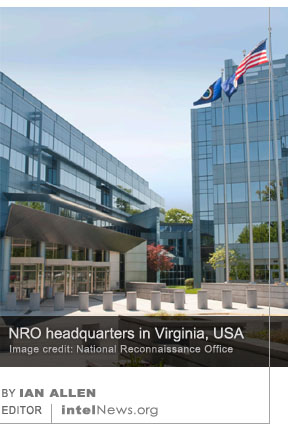
NRO - IAHACKERS HAVE COMPROMISED A website used by the United States Intelligence Community (IC) to solicit sensitive contracts from the private sector, according to a new report. The target of the attack, and the methods used by the hackers, appear to point with a high degree of certainty to a state actor.

The website in question belongs to the Acquisition Research Center (ARC), an initiative of the US government’s Acquisition Center of Excellence. Even though the ARC solicits contracts on behalf of the entire US IC, its public-facing website is maintained by the National Reconnaissance Office (NRO), which last week notified several companies affected by the breach.

The ARC online interface is designed for companies in the private sector who want to register as government vendors in the national security space. Once they register through the ARC system, these companies can pitch a variety of intelligence agencies with a particular technology or idea. Recent projects solicited through the ARC system have involved communications interception systems, artificial intelligence-powered data collection or analysis tools, predictive technologies, signature-reduction systems, or various tools used in physical surveillance.

It is believed that the hackers targeted the unclassified portion of the ARC website, seeking personal information about vendors, as well as proprietary intellectual property. An NRO spokesperson told The Washington Times that the breach was being looked at by federal law enforcement but declined to provide further information about what he described as an “ongoing investigation”.

Author: Ian Allen | Date: 28 July 2025 | Permalink

Pentagon orders its cyber arm to stop operations against Russia [updated]

PentagonTHE UNITED STATES DEPARTMENT of Defense has reportedly ordered its Cyber Command to “stand down from all planning” of cyber operations aimed at Russia. According to technology news source The Record, the order was issued by President Donald Trump’s newly appointed Secretary of Defense, Pete Hegseth. Citing three anonymous sources familiar with the matter, the Record said US Cyber Command’s outgoing Director of Operations, Marine Corps Major General Ryan Heritage, communicated the order last week to all component commands.

Established in 2009, the US Cyber Command is among the 11 unified combatant commands of the US Armed Forces. It coordinates and directs cyber operations in the Department of Defense, having achieved a degree of autonomy from the National Security Agency (NSA), which has historically led the US military’s defensive and offensive cyber operations.

According to the Record, Secretary Hegseth’s order appears to encompass all offensive cyber operations aimed at Russia. These are carried out by US Cyber Command’s National Mission Teams, as well as all component commands, which reside under the US Armed Forces branches —namely the Army, Marine Corps, Air Force, and Navy. The order also appears to apply to all cyber operations carried out by the US European Command. However, the order does not apply to the NSA, according to the report.

The precise scope of Secretary Hegseth’s order remains unclear. The exact duration of the order is also not known at this time. But, according to the Record, Hegseth’s order provides “more evidence of the White House’s efforts to normalize ties with Moscow,” as the Trump administration continues to push for a negotiated end to the Russo-Ukrainian war.

In a separate development, Secretary Hegseth reportedly told Mexican government officials on Friday that the US military was “prepared to take unilateral action” to combat drug cartels in the country. According to the Wall Street Journal, which first reported this development, the Trump administration has begun transporting nearly 2,000 troops to the US-Mexican border, to assist in “machine operation, medical evacuation and administrative support.

UPDATE: The New York Times is also reporting this as of March 2, stating that move is “apparently part of a broader effort to draw President Vladimir V. Putin of Russia into talks on Ukraine and a new relationship with the United States.”

Author: Ian Allen | Date: 01 March 2025 | Permalink

US government wants to ban Chinese-made smart cars over espionage, sabotage fears

Chinese car industryTHE UNITED STATES DEPARTMENT of Commerce is proposing new regulations that seek to ban the sale of Chinese-made cars in the United States, over concerns that they could be used for espionage or sabotage. Several reports on the proposal noted that it was hurriedly introduced last week as a “national security action,” rather than a trade-related dispute between the US and China.
American government officials said that the new proposals come out of lengthy investigations into the software and technical specifications of Chinese cars. The investigations raised concern about “[c]ertain technologies originating from the [People’s Republic of China] or Russia” that are often found in Chinese-made cars. Such technologies include vehicle cameras, microphones, tracking devices, and several software packages that connect the cars to the world wide web.

Washington is concerned that these devices, and the software that runs them, could be used to collect the personal data of users, or to facilitate espionage activities on a large scale. Concerns have also been raised by US officials that Chinese-made smart cars could be remotely manipulated and used for sabotage during wartime. According to the US Department of Commerce, a central source could potentially “take control of all [the Chinese-made] vehicles operating in the US all at the same time, causing crashes, block[ed] roads, etc.”

When asked by reporters to justify the proposed regulations, Jake Sullivan, White House national security adviser, replied that the US had “already seen ample evidence of the [People’s Republic of China] pre-positioning malware on our critical infrastructure for the purpose of disruption and sabotage. And with potentially millions of vehicles on the road, each with 10- to 15-year lifespans, the risk of disruption and sabotage increases dramatically”.

Author: Ian Allen | Date: 23 September 2024 | Permalink

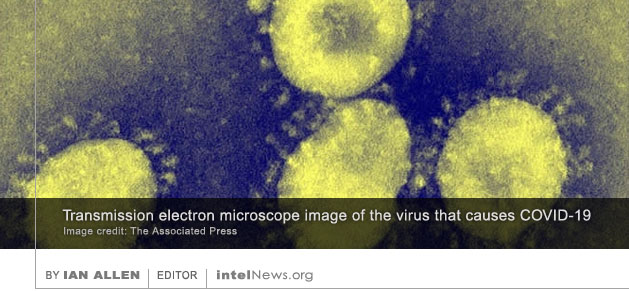
U.S. Pentagon ran secret COVID-19 anti-vaccination campaign to undermine China

Coronavirus COVID-19THE UNITED STATES DEPARTMENT of Defense ran a secret psychological operation on multiple social media platforms, aimed at undermining Chinese-manufactured vaccines against COVID-19. The controversial campaign was met with objections by several U.S. government officials, but continued for over a year, spanning both the Trump and Biden administrations.

According to the Reuters news agency, which uncovered the alleged plot, the psychological operation initially targeted the Philippines in the spring of 2020. During that time, the Southeast Asian nation relied heavily on the CoronaVac, also known as the Sinovac COVID-19 vaccine, which was manufactured by the Chinese biopharmaceutical firm Sinovac Biotech. The CoronaVac vaccine was approved for human consumption by the World Health Organization.

An investigation by Reuters determined that the U.S. Pentagon attempted to undermine the efficacy of the Chinese-manufactured vaccine, in order to sabotage the relations between China and the Philippines. Over time, the Pentagon project morphed into an anti-vax campaign that questioned the quality of Chinese-produced coronavirus test kits and Chinese-supplied face masks. There was also an attempt to stigmatize Chinese-produced medical supplies relating to COVID-19. The campaign argued that the coronavirus had originated in China, which made Chinese-manufactured medical supplies suspect.

The psychological operation utilized hundreds of fake social media accounts on multiple platforms, which were unified under the hashtag #Chinaangvirus —Tagalog for “China is the virus.” By early 2021, the campaign had expanded to the Middle East and Central Asia. Some social media posts claimed that Muslims should not be using the Sinovac COVID-19 vaccine because it contained pork gelatin and should thus be considered forbidden under Islamic law. These tactics raised objections by some U.S. government officials, notably from the State Department, who expressed them in meetings with Pentagon personnel. The secret campaign was terminated in June of 2021.

The Reuters news agency spoke to Greg Treverton, former chairman of the U.S. National Intelligence Council, which ensures that the work of the nation’s intelligence agencies reflect the government’s policy priorities. Treverton told the news agency that getting “as much vaccine in people’s arms as possible” would have been in the national interest of the U.S., adding that the Pentagon’s secret operation “crosses a line”. Reuters said that a senior Pentagon official acknowledged a secret psychological operation was indeed launched, in order to “disparage China’s vaccine in the developing world.” However, the official “declined to provide details” of the operation.

Author: Ian Allen | Date: 17 June 2024 | Permalink

China accuses married couple of spying for Britain’s MI6

MSS China - IATHE SPY CONFLICT BETWEEN China and the United Kingdom escalated last week, as the Chinese government accused a married couple of carrying out espionage missions on behalf of British intelligence. In a rare statement to the press, China’s Ministry of State Security (MSS) said it was investigating the activities of a husband-and-wife team, whom it accused of working as assets for Britain’s Secret Intelligence Service, better known as MI6.
According to the MSS statement, the husband, whose last name is Wang, participated in a student exchange program in the United Kingdom in 2015. While there, he was surreptitiously accosted by MI6 and was invited to dinners and other outings. Eventually Wang was offered part-time employment as a consultant for a British firm that operated as a front for MI6. He was eventually approached by MI6 directly and was recruited as a spy in exchange for substantial monetary rewards.

Wang was allegedly trained in espionage tradecraft and returned to China to collect intelligence on the Chinese government on behalf of MI6. The MSS claims that Wang’s MI6 handlers asked him to recruit his wife, whose last name is Zhou, as a spy. Eventually both Wang and Zhou spied for MI6 in return for money. It is not known whether the alleged spies worked for the MSS or another intelligence-related government agency.

The MSS press statement was issued a few days after the agency unveiled a seemingly unconnected case of espionage involving “a former government employee who was lured by a foreign intelligence agency through the internet” and “stole secrets for money”. The MSS also said that the man’s handler, named Xiao Jing, had been arrested and charged with operating as “a spy working for a foreign intelligence agency”.

Author: Ian Allen | Date: 03 June 2024 | Permalink

United States consistently underestimates Cuban intelligence, sources say

AGENTS OF THE CUBAN government have “penetrated virtually every segment of the United States national security structure,” enabling Havana to share actionable intelligence with Russia and China, according to a new report. Citing former United States and Cuban intelligence officers, The Wall Street Journal said on Saturday that Washington’s counter- intelligence efforts are no match for Cuba and its intelligence service, the Dirección de Inteligencia (DI). The DI is “the best damn intelligence service in the world” for cultivating agents, according to Brian Latell, a retired CIA analyst who served as the U.S. Intelligence Community’s National Intelligence Officer for Latin America. Latell told The Wall Street Journal that the Dirección de Inteligencia bears the imprint of Fidel Castro himself, who took a personal interest in running the service during his reign.

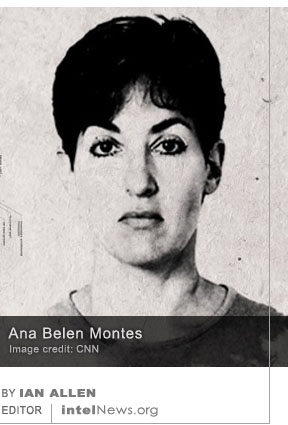
Among the strengths of the Cuban intelligence service is its ability to recruit Americans who are motivated by ideological reasons, rather than by financial gain. The Cubans have historically approached Americans at a young age, usually at universities in the United States or other countries in the Americas. They cultivate those relationships by employing strategic patience that pays off many years —even decades— later. By recruiting ideological sympathizers, the Cubans rarely need to pay their agents large amounts of money, as the cases of Defense Intelligence Agency analyst Ana Belén Montes and State Department diplomat Manuel Rocha suggest. Many Cuban agents enter military service in the United States, which means they acquire Secret or Top-Secret clearances. Others are instructed to penetrate anti-communist groups of Cuban-Americans in southern Florida, according to The Wall Street Journal.

The U.S. counterintelligence strategy prioritizes Russia and China, which means that Cuban intelligence operations are treated as “an afterthought,” claims the paper. The Federal Bureau of Investigation (FBI), America’s primary counterintelligence agency, dedicates relatively few resources to investigating Cuban intelligence. Its efforts are chronically “understaffed and outmatched” by Havana, according to former counterintelligence officers who spoke to The Wall Street Journal. The paper notes that the FBI is often aware of several dozen cases of “actual or potential” Cuban agents operating in the U.S. However, it routinely lacks the requisite resources to investigate them.

Author: Ian Allen | Date: 18 March 2024 | Permalink

CIA director secretly visits Somalia and Kenya amidst rising tensions in East Africa

Al-Shabaab - IAWILLIAM BURNS, DIRECTOR OF the United States Central Intelligence Agency (CIA), reportedly visited in secret at least two East African nations last week, amidst growing tensions and instability in the region. The trip was confirmed by both the Kenyan and Somali governments after Burns had already returned to the United States.
Reports indicate that Burns held a high-level meeting on Monday in Nairobi with Kenyan President William Ruto and Noordin Haji, the director of Kenya’s National Intelligence Service. The United States Ambassador to Kenya, Margaret Whitman, was also reportedly present at the meeting. Later in the week, on Thursday, the CIA director met with Somali President Hassan Sheikh Mohamud in Mogadishu before departing for the United States.

The specific details of the discussions during Burns’ visit remain undisclosed, leading to considerable speculation. Notably, it is highly unusual for senior American intelligence officials to personally visit sub-Saharan Africa, as the CIA typically communicates with the local governments through station chiefs or American ambassadors. Burns’ in-person visit suggests compelling reasons for the direct engagement.

According to some Kenyan news outlets, discussions encompassed the escalating instability in sub-Saharan Africa, which are stemming from various sources. These include the ongoing conflict in Sudan between government-aligned forces and militias loyal to the paramilitary Rapid Support Forces. Additionally, there is growing turmoil in the Democratic Republic of Congo after last month’s elections, resulting in the re-election of President Félix Tshisekedi. Disputes over the election’s fairness have led to military deployments to maintain peace amid rising tensions throughout the country.

Washington’s concerns also revolve around the continuing presence of al-Shabaab in East Africa. Operating in Somalia, al-Shabaab, an al-Qaeda-linked armed group, engages in conflict with the Somali government and is responsible for several terrorist attacks in Kenya. The United States currently has around 500 military advisors in Somalia, supporting the Somali government in its efforts against al-Shabaab.

Notably, the CIA has not issued an official statement regarding Burns’ visit to East Africa.

Author: Ian Allen | Date: 22 January 2024 | Permalink

South Korean president fires nation’s spy chiefs in major intelligence shake-up

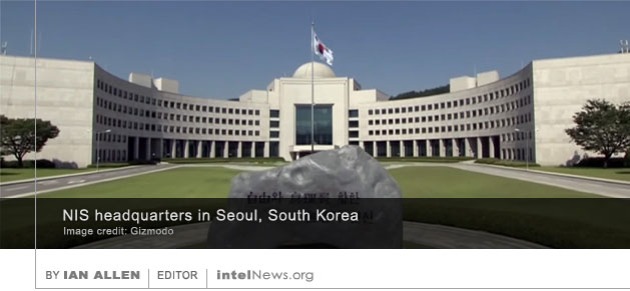
NIS South Korea - IAIN A SURPRISING MOVE that has stirred curiosity across Asia, South Korean President Yoon Suk Yeol has abruptly ousted the entire senior leadership of the National Intelligence Service (NIS), a powerful entity in the country. The announcement came through a statement released on Sunday by the Office of the President, stating that President Yoon had accepted the resignations of the NIS director and two deputy directors. However, it is widely understood that these resignations were not voluntary but rather a result of pressure exerted by the president.

Among those dismissed, Director Kim Kyou-huyn and First Deputy Director Kwon Chun-taek, both considered close to President Yoon, had lengthy backgrounds in South Korea’s diplomatic corps. Kim, a seasoned executive with deep insights into South Korea-United States relations, had served lengthy tours in the South Korean embassy in Washington. Kwon, with experience in the diplomatic corps and roles at the United Nations, also had a strong international background. Yoon had appointed both to lead the NIS soon after assuming the presidency in May 2022. The third ousted NIS executive was Second Deputy Director Kim Soo-youn, appointed by Yoon in June 2022. The second deputy traditionally oversees activities related to North Korea, while the first deputy is responsible for the agency’s global collection operations, counterterrorism, and counterintelligence.

Speculation in Seoul abounds regarding the reasons behind President Yoon’s swift decision to dismiss the NIS leadership. A firebrand politician who is seen as a representative of a new generation of South Korean conservatives, Yoon has pledged a robust security and defense policy in response to perceived North Korean provocations. Recent media reports have hinted at Yoon’s impatience with bureaucratic obstacles within the NIS, particularly regarding personnel management.

South Korean media reports indicate that another seasoned diplomat, Hong Jang-won, has assumed the NIS first deputy directorship, while the former North Korea area chief, Hwang Won-jin, has taken over as the second deputy director. Notably, the director position remains vacant, with Hong temporarily leading the agency until a new director is appointed in the coming weeks.

Author: Ian Allen | Date: 27 November 2023 | Permalink

Two arrested in Britain for spying for China, report reveals

House of Commons Parliament Britain United KingdomAUTHORITIES IN BRITAIN HAVE arrested two individuals on charges of espionage, among them a researcher for the British parliament who is being investigated for spying for China. According to the British newspaper The Sunday Times, the two individuals were arrested on March 13 of this year in two different addresses. One of the suspects, reportedly in their 30s, was arrested in or around the city of Oxford. The other, reportedly an individual in their mid-20s, was apprehended in the Scottish capital Edinburgh.
A third address, located in an eastern borough or London, was also searched by the Counter-Terrorism Command of the Metropolitan Police, which is leading the investigation into the two suspects. Notably, the parliamentary researcher had worked for prominent members of the Conservative Party, including members of parliament. These reportedly included Alicia Kearns, who chairs the Foreign Affairs Select Committee of the British House of Commons. The Times reported that the suspect had also worked for the Minister of State for Security Tom Tugendhat. The Guardian newspaper reported that Tugendhat said he had not been in touch with the suspect since he assumed his current ministerial role in September of 2022. Kearns did not comment on the case.

The last time a British newspaper reported claims of Chinese espionage was in February of 2021, when The Telegraph reported on the expulsion of three Chinese citizens, who were working as journalists. The paper claimed that the three had been “quietly expelled” after they were caught carrying out espionage. Citing an anonymous “government source”, The Telegraph said that, according to Britain’s Security Service (MI5), the three Chinese journalists were in reality employees of China’s Ministry of State Security. The report did not provide details about when the three Chinese citizens had been expelled, saying only that the expulsions had occurred at different times in the previous year.

According to The Times, the two suspects who were arrested in last March were initially transferred to a south London police station, where they were arraigned. They were then released on bail and are expected to appear in court in October.

Author: Ian Allen | Date: 11 September 2023 | Permalink

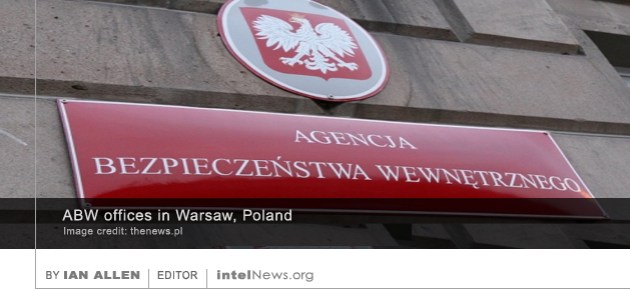
Poland’s super-secretive ‘school of spies’ marks 50 years of operation

ABW PolandDURING THE COLD WAR, Poland hosted the Eastern Bloc’s only known intelligence training facility for operations officers situated outside of the Soviet Union. The highly secretive training facility operated out of a heavily guarded compound located near the northern Polish village of Stare Kiejkuty in Gmina Szczytno county, approximately 65 miles from the Polish-Soviet border. Today, 50 years after its establishment, the facility continues to train the operations officers of post-communist Poland’s intelligence services.

During World War II, and in the immediate post-war period, Soviet authorities trained Polish intelligence personnel in Kuybyshev (in 1991 renamed to Samara) in southwestern Russia. This setup continued following the establishment of the Soviet-controlled Polish intelligence community. By the 1960s, the Polish intelligence community was being led by the Ministry of Public Security, referred to by its Polish initials, SB. The SB’s elite operations officers, which staffed its First Department, were all trained in the Soviet Union and in a Soviet-controlled facility in Warsaw.

But in 1970, Poland’s reformist President, Edward Gierek, put in motion a plan to modernize the Polish intelligence services. Gierek’s goal was for Polish intelligence to catch up with the pace of technological development, especially in the emerging digital realm. He also wanted Polish spy organizations to be able to compete directly against rival agencies in Western Europe. The rapid establishment of the Intelligence Personnel Training Centre near Stare Kiejkuty was the centerpiece of Gierek’s intelligence reforms.

Construction began in 1971 and was mostly completed within two years. In 1973, the heavily guarded training facility, which had been disguised as a “holiday resort” in official government maps, welcomed its first students. Students were taught how to operate undercover in the West and how to recruit sources in countries like West Germany, France and the United Kingdom. They were taught about Western European lifestyles and had access to Western products, including soft drinks and vending machines, which were absent from Polish life. Read more of this post

Israeli, Italian intelligence officers drown as boat capsizes in Lake Maggiore

ONE ISRAELI AND TWO Italian intelligence officers are among the victims of a boating accident in northern Italy. Local reports indicate that the incident occurred last Sunday evening, when a passenger boat named the Gooduria capsized and sank rapidly in Italian territorial waters. The boat was on a sightseeing trip near the Italian shoreline of Lake Maggiore, a popular destination situated on the southern side of the Alps between Italy and Switzerland.
It has been reported that nearly all of the approximately two dozen passengers aboard the Gooduria were current or former members of the Italian and Israeli intelligence services. These individuals were believed to have collaborated professionally as intelligence officers and had gathered for “a convivial meeting to celebrate the birthday of one of the group”, according to a statement issued by the Italian government.

It is worth noting that some Italian news outlets have expressed skepticism about the precise nature of the gathering. An article in the Italian daily Corriere della Sera suggested that “the gathering was a working meeting of intelligence agents”. Another Italian daily, La Stampa, said that the gathering was “an opportunity to exchange information between agents of the two countries”. These claims have not been confirmed by the Italian and Israeli governments.

Italian authorities have stated that no foul play is suspected in the accident. Instead, it is believed that inclement weather, possibly coupled with overcrowding onboard the Gooduria, contributed to the incident. The Ministry of Foreign Affairs of Israel released a brief statement on Sunday acknowledging the death of a retired member of the Israeli intelligence services, without identifying the victim by name or professional title. However, local media reports have identified the deceased as Shimoni Erez, 50, a recent retiree from the Mossad, Israel’s external intelligence agency.

The two Italian victims of the accident have been identified as Claudio Alonzi, 62, and Tiziana Barnobi, 53, both of whom were intelligence officers. Additionally, among the casualties was a Russian national named Anna Bozhkova, 50, who was reportedly the wife of the captain of the Gooduria. Following the capsizing of the boat, Israeli diplomats promptly arranged for the immediate evacuation of ten active Israeli intelligence officers from Italy. They were swiftly removed from regional hospitals and transported back to Israel via a military flight.

Author: Ian Allen | Date: 31 May 2023 | Permalink

Australian court releases judge’s remarks in unprecedented ‘secret prisoner’ trial

first-post-v-2AN AUSTRALIAN HIGH COURT has released the sentencing remarks in an unprecedented closed-door trial of an intelligence officer, identified only as “Witness J”, who was convicted in 2019 of a crime that cannot be revealed. The man, who is also known as “Prisoner 123458,” was given a jail sentence in November of 2019. His sentencing came following a closed-door hearing, which was described by a judge as “generally undesirable” and “unusual”. The very existence of the court case came to light only after Witness J filed a lawsuit against the jail in which he was being held, arguing that his treatment was substandard.

Witness J is believed to be in his mid-30s and to have served for many years as an intelligence officer in the Australian military, with a top secret security clearance. He is also believed to have served in Iraq, Afghanistan and East Timor with a distinguished service record. But he drew the attention of counterintelligence investigators in 2018, while undergoing a routine re-evaluation of his security clearance status. During that time he was reportedly serving as a civilian in an undisclosed country in Southeast Asia. This period, according to reports, coincided with the deterioration of Witness J’s mental health.

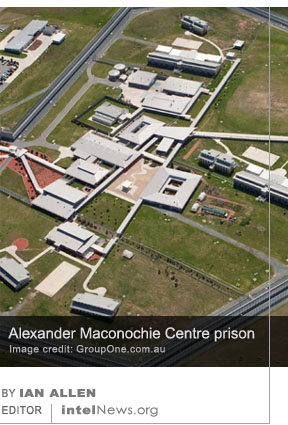
Witness J was eventually jailed in mid-May 2018 and spent a month in solitary confinement. He was then placed in a high-security wing for serious sex offenders at the Alexander Maconochie Centre prison in Canberra. This was not because he was a sex offender, but because it was determined that he would be safer there than in the other wings of the prison. In early 2019, Witness J was sentenced in a closed-door trial, which was held under the secrecy provisions of Australia’s 2004 National Security Information Act. He was released from prison 15 months into his 24-month sentence, after agreeing to plead guilty to security breaches.

Last week, the Supreme Court of the Australian Capital Territory (ACT) released the sentencing remarks of the judge in Witness J’s case, which had remained secret since November of 2019. According to ABC News, the remarks are heavily redacted in order to comply with restrictions under the National Security Information Act. The redacted document makes clear that Witness J faced a total of five charges. However, the sentencing remarks make no mention of the nature of the charges against him.

In his remarks, the judge in the case, Justice John Burns, mentions that the court had been given a report by Witness J’s doctor, which detailed his deteriorating mental state and his depression. The judge goes on to explain that he took the doctor’s report into account in sentencing Witness J. He argues, however, that despite his illness, the accused was aware of his actions and deliberately chose to conduct himself in a “grossly reckless” manner.

Author: Ian Allen | Research credit: P.C.| Date: 24 April 2023 | Permalink

WHO calls on US and China to release intelligence about origins of COVID-19

World Health OrganisationTHE WORLD HEALTH ORGANIZATION has called on the United States and China to share what they know about the source of the COVID-19 pandemic. The call, made by WHO’s Director-General Dr. Tedros Adhanom Ghebreyesus and others, came days after United States Federal Bureau of Investigation Director Christopher Wray said in a television interview that COVID-19 “most likely” originated from a Chinese government laboratory.

Wray made the statement last week in a televised interview with Fox News, in response to a question about the origins of the COVID-19 virus. Wray said that, “for quite some time now”, the FBI has “assessed that the origins of the pandemic are most likely a potential lab incident in Wuhan”, a city in central China. Wuhan hosts the Wuhan Institute of Virology, which includes laboratories that specialize on biosecurity and the study of newly emerging infectious diseases. Wray added that Beijing has “been doing its best to try to thwart and obfuscate the work” of the United States in trying to determine the precise origins of the virus.

Late last week, Dr. Maria Van Kerkhove, an infectious disease epidemiologist and the WHO’s technical lead on COVID-19, said the WHO had contacted the United States’ mission to the United Nations in Geneva, Switzerland, to inquire about the information that informs the FBI’s assessment. On Friday, meanwhile, Dr. Tedros called for “any country [with] information about the origins of the pandemic” to come forward. The WHO Director-General went on to say that “it’s essential for that information to be shared with WHO and the international scientific community”.

The WHO also called on China “to be transparent in sharing data and to conduct the necessary investigations and share the results” with the global scientific community, “not so as to apportion blame, but to advance our understanding of how this pandemic started, so we can prevent, prepare for and respond to future epidemics and pandemics”. When asked about the WHO’s own investigation into the origins of COVID-19, Dr. Tedros responded that “all hypotheses on the origins of the virus remain on the table”.

In the meantime, China responded angrily to the FBI director’s comments. Beijing has previously dismissed claims that COVID-19 may have emerged as a result of an accident at a Chinese government-funded lab as a disinformation campaign designed to smear its image and reputation around the world. Last week, Mao Ning, a spokeswoman for China’s Ministry of Foreign Affairs, reacted angrily to allegations that the government of China is responsible for the COVID-19 pandemic. Mao called on the United States to “look to its own biological laboratories scattered across the world when searching for the virus’s source”.

Author: Ian Allen | Date: 08 March 2023 | Permalink



