FBI reorganizes cyber-crime and foreign cyber-espionage divisions as cases rise
October 2, 2020 Leave a comment

The United States Federal Bureau of Investigation is reorganizing its cyber-crime and foreign cyber-espionage divisions in order to combat growing activity in those areas, while also increasing its cross-agency contacts. The goal is to reinforce investigations into computer hacking perpetrated by organized cyber-criminals, as well as by foreign states aiming to steal government and corporate secrets.
According to the Reuters news agency, the FBI made the decision to reorganize its cyber divisions after Internet-based crime and espionage cases rose to unprecedented levels in the past year, a trend that is partly driven by the COVID-19 epidemic. Aside from the damage caused to national security, the financial loss associated with computer hacking is said to be incalculable.
In an interview with Reuters, Matt Gorham, assistant director of the FBI’s Cyber Division (established in 2002), said the reorganization includes both the Bureau’s cyber-crime and foreign cyber-espionage wings. It also includes increased FBI emphasis on the National Cyber Investigative Joint Task Force (NCIJTF), an amalgamation of cyber-security specialists from dozens of US federal agencies, including the Secret Service, the National Security Agency, the Department of Homeland Security and the Central Intelligence Agency.
Under the new system, the NCIJTF will serve as the coordinating body of the US government’s cyber-security efforts. Additionally, said Gorham, the FBI is creating “mission centers” located within various cyber units, and connect their work with the NCIJTF. These mission centers will include concentrations on specific cyber-espionage actors, such as Iran, North Korea, China or Russia. Lastly, the restructured NCIJTF will increase its contacts with domestic and foreign law enforcement agencies, such as the Australian Federal Police, as well as with telecommunications service providers, which are engaged on the front lines of the fight against cyber-crime and cyber-espionage.
► Author: Ian Allen | Date: 02 October 2020 | Permalink
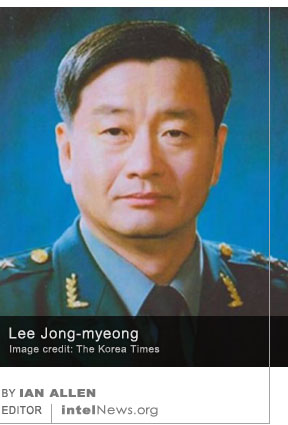 A former deputy director of South Korea’s spy agency has been given a prison sentence for diverting funds from the agency’s clandestine operations budget, in order to aid South Korea’s disgraced former President, Lee Myung-bak, who has himself been sentenced to 15 years in prison.
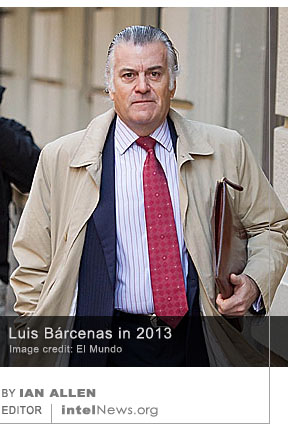 A court in Spain has begun to examine the findings of a long-running probe into an illegal network that spied on people in return for payments, which almost certainly implicates senior figures in the former governing party. The probe focuses on what is known in Spain as the Gürtel case, which is described by observers as one of the most extensive corruption scandals in Spanish political history. It centers on an extensive network of tax evasion, bribery and money laundering, which brought together leading business executives, criminal kingpins, and senior politicians from Spain’s conservative Popular Party (PP).
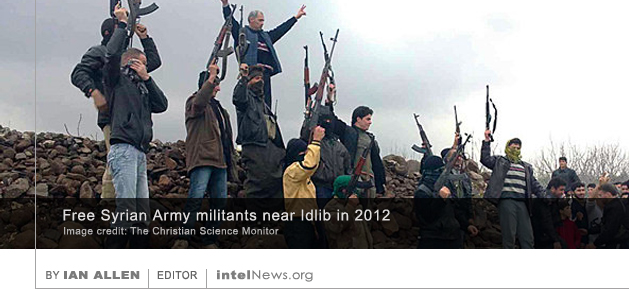 American forces remain in Syria without a clear goal in sight, as the conflict there nears its 10-year anniversary, and with Russia having emerged as the principal guarantor of security in the war-torn country, according to insiders. In an
 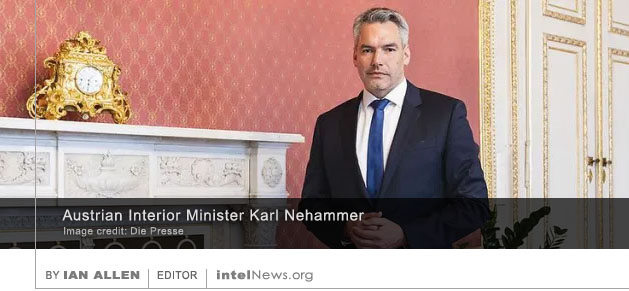 There were angry exchanges between Austrian and Turkish officials on Tuesday, after the Austrian government announced it would press charges against an individual allegedly caught spying for Turkish intelligence. The charges were
 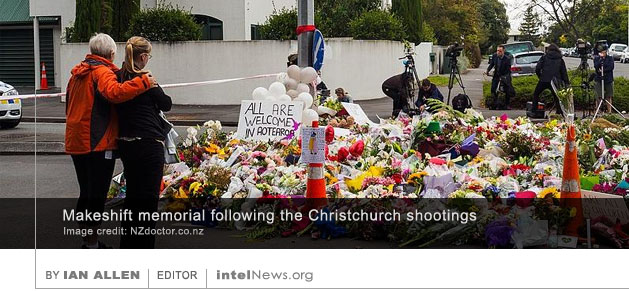 An Australian far-right militant, who killed 51 people at two mosques in New Zealand in 2019, used a commercial drone to spy on his targets and plan his attack months in advance, according to newly released information. On March 15, 2019, Brenton Tarrant killed a total of 51 people at the Al Noor and Linwood mosques, in the city of Christchurch. Using an AR-15 rifle, Tarrant, 29, shot his victims one by one, before being stopped by police as he was on his way to a third mosque in the area.
 Authorities in Norway will not release the name of a man who was arrested on Saturday, reportedly after he met with a Russian intelligence officer in Oslo. The arrest of the unnamed man, who is a Norwegian citizen, was announced on Monday by the Norwegian Police Security Service, Norway’s counterintelligence agency.
 In a surprising move, the United States government is seeking to dismiss espionage charges it filed last year against three men, including a member of staff of Saudi Arabia’s royal family, who were caught spying on American soil. Last November, the Federal Bureau of Investigation
 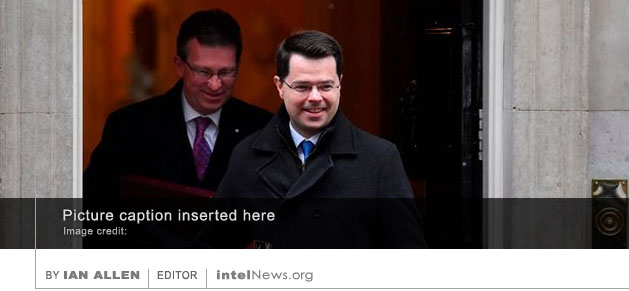 Senior United Kingdom officials have said the country will seek to “modernize” its laws on counterespionage, after a long-awaited parliamentary report criticized the government for failing to stop Russian spy operations. Earlier this week saw the release of the report by the British Parliament’s Intelligence and Security Committee. The
 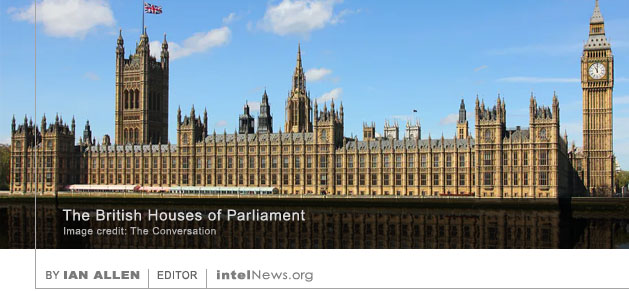 Britain is abuzz today with news of the long-awaited release of the Parliament’s
  considerably longer. It was given to the prime minister on October 17. But by November 6, when parliament was dissolved in preparation for the election that brought Boris Johnson to power, it had not been approved. It finally came out yesterday, after numerous and inexplicable delays. Many speculated that the government did not want to deal with the uncomfortable conclusions in the report.
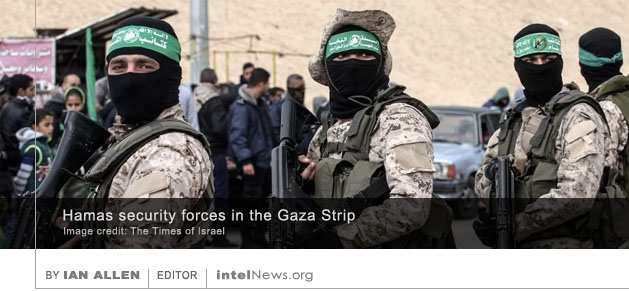 • Analysis: The outstanding issue of the Libyan intelligence services. The post of Chief of the Libyan Intelligence Service of Tripoli’s Government of National Accord (GNA) is still vacant. Therefore, this is an optimal situation for the Head of Tripoli’s government, who is currently pro tempore Director of the GNA agencies, while the struggle for the next Intelligence Service director is
 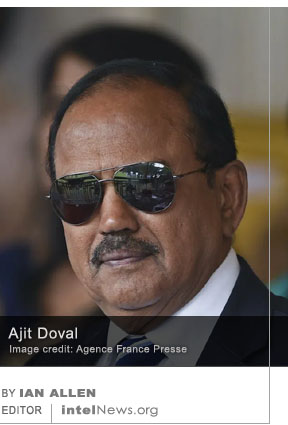 • In-fighting erupts between Syrian intelligence and army in Damascus. Violent clashes broke out between Syrian regime intelligence forces and local militias affiliated with the army’s 4th Division and national defense in Damascus’ countryside, local media sources reported. Sporadic fighting
 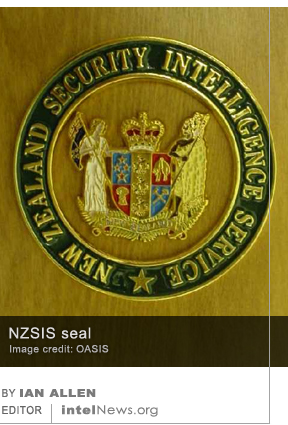 The spy agency of New Zealand broke into at least three foreign embassies in Wellington at the request of the United States and Britain, according to an investigative report by the country’s public radio broadcaster. Radio New Zealand reported on Tuesday that the highly controversial break-ins targeted the Indian High Commission and the Iranian Embassy in the late 1980s and early 1990s. A few years earlier, the New Zealand spy agency had allegedly broken into the Czechoslovakian embassy in Wellington.
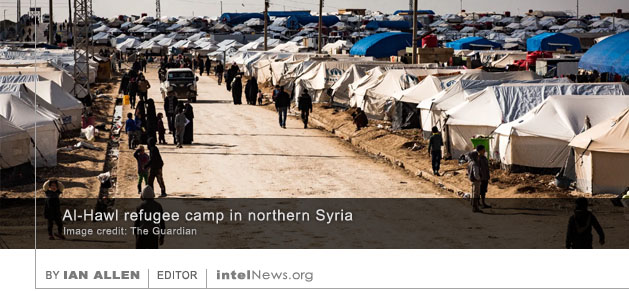 • South African intelligence concerned about spread of insurgency in Mozambique. This is the first public






 intelNews.org
Dutch hacker says he logged into Trump’s Twitter account by guessing password
October 23, 2020 1 Comment
A DUTCH ETHICAL COMPUTER hacker and cybersecurity expert claims to have logged into the personal Twitter account of United States President Donald Trump, reportedly after guessing his password. The hacker, Victor Gevers, took several screenshots of the private interface of Trump’s Twitter account, and shared them with Dutch news media, before contacting US authorities to notify them of the breach.
Trump attributes much of his popularity and electoral success to social media, and is especially fond of Twitter as a means of communication. He has tweeted nearly 20,000 times since 2015 (including re-tweets), with at least 6,000 of those tweets appearing in 2020 alone. His personal account, which uses the moniker @realDonaldTrump, has almost 90 million followers.
But Gevers, a self-described ethical computer hacker, cybersecurity researcher and activist, said he was able to guess the American president’s password and log into his Twitter account after four failed attempts. The hacker claims that Trump’s password was “maga2020!”. According to Gevers, Trump’s account did not require a two-factor authentication log-in process, which usually requires a password coupled with a numeric code that is sent to a user’s mobile telephone. As a result, Gevers said he was able to access Trump’s private messages on Twitter and —had he wanted to— post tweets in the name of the US president. He could also change Trump’s profile image, had he chosen to do so.
The Dutch hacker took several screenshots of the webpages he was able to access and emailed them to Volkskrant, a Dutch daily newspaper, and Vrij Nederland, an investigative monthly magazine. Shortly after accessing Trump’s account, Gevers said he contacted the US Computer Emergency Readiness Team (US-CERT), which operates under the Department of Homeland Security’s Cybersecurity and Infrastructure Security Agency. He said the US president’s password was changed “shortly after”, and that he was then contacted by the US Secret Service.
Also on Thursday, a Twitter spokesman said the company’s security team had seen “no evidence to corroborate” Gevers’ claim. He added that the San Francisco, California-based social media company had “proactively implemented account security measures for a designated group of high-profile, election-related Twitter accounts in the United States, including federal branches of government”. Such measures included “strongly” encouraging such accounts to enable two-factor authentication, said the spokesman. But he did not specify whether Trump’s account had activated this feature. The White House also denied Gevers’ claim, calling it “absolutely not true” and adding that it would “not comment on security procedures around the president’s social media accounts”.
► Author: Ian Allen | Date: 23 October 2020 | Permalink
Filed under Expert news and commentary on intelligence, espionage, spies and spying Tagged with computer hacking, Donald Trump, News, social networking, Twitter, Victor Gevers