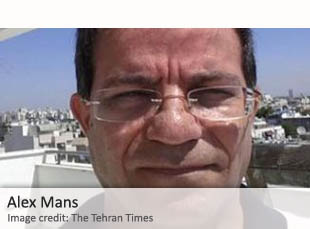
Israel arrests Belgian citizen for ‘spying for Iran’

Alex MansBy JOSEPH FITSANAKIS | intelNews.org
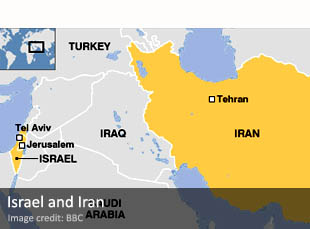
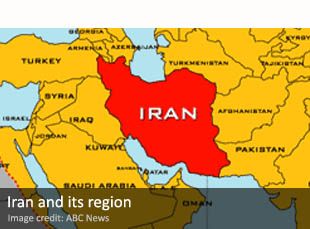
A Belgian citizen has been arrested in Israel on suspicion of spying on behalf of the Islamic Republic of Iran. The man, Alex Mans, was arrested two weeks ago, but the Israeli government kept the incident under wraps until Sunday. Israeli media reports state that Mans was arrested by Israeli Police and officers of Shin Bet, Israel’s internal security service. He was reportedly detained at Ben-Gurion International Airport as he was preparing to leave Israel. According to Israeli security officials, Mans made frequent trips to Israel, during which he presented himself as a Belgian investor interested in export opportunities in Israel. He allegedly used his business venture in selling windows and roofing material for commercial buildings in order to establish contacts with businesses in Tel Aviv. But officials at Shin Bet maintain that Mans’ business operations, which included seemingly legitimate websites and social media profiles, served as a cover for his spy activities. These are alleged to have included “intelligence gathering [and support for] terrorism”, as well as efforts to “bypass the embargo on trade and financial transactions with Iran”. Israeli security officials believe that Mans was born in Iran in 1958 and had the name Ali Mansouri. He is thought to have moved to Turkey in 1980, aged 22, where he lived for nearly 20 years. In 1997 he received an immigration visa to Belgium, where he met and married a Belgian citizen and changed his name to Mans. Soon afterwards, however, he divorced, and in 2007 he moved back to Iran, where he married a local woman. According to Israeli media reports, Mans told Shin Bet interrogators that he was approached in 2012 by the Islamic Revolutionary Guards Corps (IRGC) and offered up to $1 million to spy on Israel on behalf of the Iranian government. He reportedly agreed and was handled by Haji Mustafa, of the IRGC’s Special Operations Unit. Read more of this post

Files reveal names of Americans targeted by NSA during Vietnam War

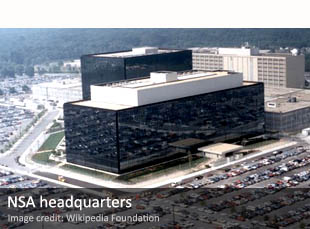
NSA headquartersBy JOSEPH FITSANAKIS | intelNews.org
The names of several prominent Americans, who were targeted by the United States National Security Agency (NSA) during the height of the protests against the Vietnam War, have been revealed in declassified documents. The controversial communications interception operation, known as Project MINARET, was publicly acknowledged in the mind-1970s, during Congressional inquiries into the Watergate affair. We know that MINARET was conducted by the NSA between 1967 and 1973, and that it targeted over a thousand American citizens. Many believe that MINARET was in violation of the Agency’s charter, which expressly prevents it from spying on Americans. But despite the media attention MINARET received during the Watergate investigations, the names of those targeted under the program were kept secret until Wednesday, when the project’s target list was declassified by the US government. The declassification decision was sparked by a Freedom of Information Request filed by George Washington University’s National Security Archive. The two Archive researchers who filed the declassification request, William Burr and Matthew Aid, said MINARET appears to have targeted many prominent Americans who openly criticized America’s involvement in the Vietnam War. The reason for the surveillance was that US President Lyndon Johnson, who authorized the operation, was convinced that antiwar protests were promoted and/or supported by elements outside the US. The newly declassified documents show that Dr. Martin Luther King, Jr., was a major surveillance target of the government. Read more of this post

British, American citizens among Kenya shopping center attackers

Westgate shpping mallBy JOSEPH FITSANAKIS | intelNews.org
Several Americans and at least one British subject were allegedly involved in planning and carrying out the armed attack on a shopping center in Kenya last week, according to the Kenyan government. The bloody attack was carried out on September 21 at the upscale Westgate shopping mall in Kenyan capital Nairobi. At least 15 attackers stormed the shopping complex and executed several shoppers in cold blood, before proceeding to take several people hostage. Responsibility for the attack has been claimed by Somali Islamist group al-Shabaab. The group has been at war with the Kenyan government since October of 2011, when Kenyan troops invaded Somalian territory. The group said that the attack had been carried out as retribution for Kenya’s invasion of Somalia. Kenyan officials have so far refused to speculate on the precise identity of the perpetrators of the Westgate attack. But on Tuesday, Kenyan President Uhuru Kenyatta said during a televised address to the nation that some of the identities of the armed militants who stormed the complex had been confirmed. He added that the perpetrators included a British woman and “two or three” American citizens. A few hours later, Kenyan Minister of Foreign Affairs, Amina Mohamed, said during a press conference that, according to information currently available, “one Brit[ish subject], a woman”, had been involved in the attack. She added that the female suspect “has done this many times before”, implying that she is a seasoned Islamist militant. Minister Mohamed added that “two or three Americans […], aged about 18 or 19”, were also involved in the attack, adding that they were Arab or Somali in origin and had moved to Africa from “Minnesota and one other place” in the United States. Read more of this post

CIA warned Tunisian officials about murder of opposition politician

Brahmi supporters in TunisBy JOSEPH FITSANAKIS | intelNews.org
The Tunisian government has admitted that it received advance warning by “an external intelligence source” of an assassination operation against a popular opposition figure. The politician, Mohammed Brahmi, a widely respected member of the country’s National Constituent Assembly, was gunned down 11 days after the alleged warning was received. His death, in July of this year, plunged the country into political chaos, which continues to dominate Tunisian politics today. Speaking to lawmakers on Thursday, Tunisia’s Minister of the Interior, Lotfi Ben Jeddou, said the warning had been received on July 15, 2013. He refused to identify the source of the warning, but Tunisian media speculated that it was most likely the United States Central Intelligence Agency (CIA). The warning was included in a memorandum, which stated that Brahmi was likely to be targeted by “Salafist elements” because of his secular and liberal political beliefs. The minister said that the warning contained no “further clarification”, but added that the absence of details in the memorandum did not justify the failure of the Tunisian security establishment to adequately respond to it. Brahmi, died on July 25 after being shot over a dozen times at close range outside his house in the al-Gazala neighborhood of Tunisian capital Tunis. On Saturday, two days after Minister Ben Jeddou’s revelation, Tunisian newspaper Al Maghreb published a leaked memorandum that contains a summary of the warning about Brahmi’s killing. The leaked summary, which is signed by Tunisia’s Director General of National Security, Mustafa Ben Amor, appears to be dated July 15, 2013, exactly 11 days before Brahmi’s assassination. It describes a warning issued by a CIA official, concerning credible threats to Brahmi’s life. Read more of this post

Interview with US airman who spied for East Germany

Jeff CarneyBy JOSEPH FITSANAKIS | intelNews.org
A former intelligence specialist in the United States Air Force, who became one of East Germany’s most lucrative spies in the West, has given a rare media interview. Jeff Carney was a linguist and intelligence specialist assigned to the US Electronic Security Command at Tempelhof Central Airport in West Berlin during the closing stages of the Cold War. In April of 1983, Carney, who was then aged just 19, walked across the dividing line between West and East Berlin and asked to speak to representatives of the East German government. He has since argued that his defection was prompted by his disagreement with the foreign policy of the administration of US President Ronald Reagan. But in an interview aired on Wednesday by the BBC, he claimed there was “nothing ideological about his decision to defect”, and that he, as a gay man, “felt unwanted” because of the US military’s stance on homosexuality. His plan, which he described in his interview as “an impulsive move” was to request to live in the German Democratic Republic. But instead of granting his wish, East German intelligence officials commanded him to return to his post at Tempelhof and become an agent-in-place. Carney claims that they threatened to reveal to his US Air Force superiors his attempt to defect if he refused to cooperate. The young airman returned to his base and began spying for East Germany’s Ministry for State Security (MfS), commonly known as Stasi. He was provided with a miniature camera, given the operational codename UWE, and was told supply his handler, codenamed RALPH, with classified documents, which he smuggled out of Tempelhof in his shoes and clothing. His West German tour came to an end in 1984, when he was transferred to the US state of Texas. While there, he continued to spy for the Stasi, traveling to Rio de Janeiro, Brazil, and Mexico City, Mexico, in order to meet with his East German handlers. However, in 1985, believing that his superiors in the Air Force were beginning to suspect him of espionage, he traveled to Mexico and walked in the East German embassy in Mexico City, demanding to be transferred to East Germany. The Stasi eventually smuggled him out of Mexico to Cuba, and from there to Czechoslovakia before resettling him to East Germany. Read more of this post

Belgian state telecom targeted by ‘international espionage’

Belgacom headquartersBy JOSEPH FITSANAKIS | intelNews.org
Belgium’s largest telecommunications service provider has fallen victim to a sophisticated cyberespionage operation that was most likely carried out by a government agency of another country. According to Flemish newspaper De Standaard, the operation targeted Belgacom, which is Belgium’s state-owned telecommunications company. The paper said that the cyberhacking was uncovered in June of this year during a routine maintenance check by technicians, who detected an “unidentified virus” that had infected several dozen mainframe computers. Belgacom’s technical experts seem to think that the malware had been active for at least two years on Belgacom’s computers, and that it specifically targeted telecommunications traffic carried by Belgacom’s international subsidiaries. Among them is Belgacom International Carrier Services (BCIS), which specializes in providing wholesale carrier services to over 1,000 telecommunications service providers across Africa and the Middle East. De Standaard’s article said that the sophisticated malware had been designed so as to prevent disruption of BCIS’ voice and Internet traffic, thus remaining unnoticed. Its ultimate goal, said the paper, was “not sabotage, but rather collecting strategic communications content”. Federal prosecutors told the Reuters news agency that the technical complexity of the virus meant that it must have been designed by “an intruder with significant financial and logistic means”. The malware’s complexity, coupled with its grand scale, “points towards international state-sponsored cyber espionage”, said the Federal prosecutors. Commenting on the story, De Standaard claimed that “everything points to the [United States] National Security Agency as the culprit” of the cyberespionage. Read more of this post

Ex-CIA officer seeks Italian pardon for role in abduction operation

Giorgio Napolitano By JOSEPH FITSANAKIS | intelNews.org |
A former officer of the United States Central Intelligence Agency (CIA), who has been convicted in absentia in Italy for his role in an abduction operation, has contacted the Italian president seeking a formal pardon. Robert Seldon Lady was the CIA station chief in Milan in February 2003, when a team of 23 Americans, most of them CIA operatives, abducted Mustafa Osama Nasr. The CIA suspected the Egyptian-born Nasr, also known as Abu Omar, of working as a recruiter for a host of radical Islamist groups, including al-Qaeda. In 2005, Italian authorities, which had not authorized Nasr’s kidnapping, convicted Lady, along with 22 other Americans, of abduction. The convictions were delivered in absentia, as the Americans had earlier left the country. Washington has refused to extradite them to Rome. Earlier this week, Lady wrote a letter to the President of the Italian Republic, Giorgio Napolitano, saying he had never intended to “disrespect Italy’s sovereignty” and asking for the President’s “personal forgiveness and pardon”. In his letter, Lady argues that he operated “under orders from senior American officials” with the aim of protecting lives, adding that US intelligence activities had been able to “stop numerous plans and targets of terrorists operating in Milan and elsewhere in Italy”. The former CIA officer also claims that the 2003 kidnapping of Nasr had taken place “in liaison with senior members of the Italian government”. He concludes by expressing his “regret” for his “participation in any activities which could be viewed as contrary to the laws of Italy”. Read more of this post

NSA gives Israel raw intercepts containing US citizens’ data

NSA headquartersBy JOSEPH FITSANAKIS | intelNews.org |
The United States National Security Agency (NSA) shares raw intercepted data with Israeli intelligence without first deleting information pertaining to American citizens, according to a leaked document. British newspaper The Guardian published on Wednesday an informal memorandum of understanding between the NSA and the Israel SIGINT National Unit (ISNU). The five-page document was supplied to the newspaper by Edward Snowden, a technical contractor for the NSA who defected to Russia this past summer. It outlines an agreement reached in 2009 between the NSA and the ISNU, under which the American side provides the Israelis with raw intercepts, which often contain telephone and email data belonging to American citizens. The memorandum describes this type intelligence sharing as a “routine” aspect of a broader “SIGINT relationship between the two organizations”. SIGINT refers to signals intelligence, a term used in the intelligence community to describe the interception of communications data or content. Additionally, the document specifically mentions that the data shared with the Israelis is “raw” or “unminimized”, meaning it has not been subjected to the process of extracting and deleting information that identifies US citizens or residents —known as “US persons”. By law, the NSA is not permitted to spy on US persons and is required to ‘minimize’ intercepted data so that the communications of US persons remain private, unless they are absolutely indispensible in understanding a piece of foreign intelligence. The memorandum describes a number of restrictions on the use of this information by Israeli intelligence, stating that the ISNU is forbidden from using it in order to target US persons. It also states that the ISNU must shield the identities of US persons when sharing the information with other Israeli government agencies. Read more of this post

Commission urges probe of plane crash that killed UN secretary general

Dag HammarskjöldBy JOSEPH FITSANAKIS | intelNews.org |
A commission of experts formed to examine the 1961 death of former United Nations Secretary General Dag Hammarskjöld has urged the reopening of an investigation into the airplane crash that killed him. Hammarskjöld died when the Douglas DC-6 transport aircraft that was carrying him crashed in the British-administered territory of Northern Rhodesia (now Zambia). He was on his way to Congo’s mineral-rich Katanga region to meet European-supported chieftains who in 1960 had seceded from the nationalist government of Congolese Prime Minister Patrice Lumumba. Two subsequent investigations into the crash, conducted by the Rhodesian Board of Investigation and the Rhodesian Commission of Inquiry, failed to determine the precise cause of the crash. But an official United Nations Commission of Investigation, conducted in 1962, concluded that deliberate sabotage could not be ruled out as a likely cause of the tragedy. In 2011, a Swedish investigator argued in a report that Hammarskjöld’s plane had been “shot down by an unidentified second plane”. The investigator told The Guardian newspaper that British colonial authorities had deliberately left the sole surviving airplane passenger, American sergeant Harold Julian, to die of his injuries at a makeshift hospital in Northern Rhodesia. In 2012, the Hammarskjöld Inquiry Trust appointed an international team of lawyers to study all available evidence and report to the United Nations. The team, called the Hammarskjöld Commission, is composed of a diplomat and three judges from the Netherlands, the United Kingdom, South Africa, and Sweden. On Monday, they held a press conference to present the findings of their investigation. Its conclusion is that the UN should reopen the 1962 probe into the plane crash, because “significant new evidence” has recently emerged. The Commission report suggests that American intelligence agencies, in particular the National Security Agency (NSA), may hold “crucial evidence” that could help clarify the causes of the crash. Read more of this post

Dissident playwright assassinated with poison pellet 35 years ago

Georgi MarkovBy JOSEPH FITSANAKIS | intelNews.org |
This past Sunday marked 35 years since the assassination with a poisoned umbrella pellet of Bulgarian literary icon and political dissident Georgi Markov. By 1969, when he defected from Bulgaria, Markov had achieved considerable fame in his homeland and was considered one of the Eastern Bloc’s most talented and promising young novelists. Increasingly, however, Markov fraternized with dissident artists and intellectuals, and several of his short stories and plays were disapproved by Bulgarian government censors. In 1969, while visiting his brother in Bologna, Italy, Markov decided to remain in the West. Two years later, he moved to the United Kingdom where he was offered a job at the Bulgarian unit of the BBC World Service. He also did contract work for Germany’s Deutsche Welle and Radio Free Europe, which was funded by the United States government. This prompted the Bulgarian authorities to view Markov’s actions as a defection, and he was sentenced in absentia to nearly seven years in prison by a court in Sofia. But Markov continued his work unabated, earning critical acclaim for his plays in the UK and elsewhere in the West. But on September 7, 1978, the Bulgarian dissident developed a powerful fever and was admitted to a London hospital, where he died 72 hours later, on September 11. Following an autopsy, Britain’s Metropolitan Police concluded that Markov had been poisoned by a micro-engineered pellet made of platinum, which had been filled with ricin. While on his deathbed, Markov had told police investigators that he had felt a sharp pinch on the back of his right thigh while walking across London’s Waterloo Bridge over the River Thames. When he turned around, prompted by the pinching feeling, he said he saw a well-dressed man picking up an umbrella from the ground. The man then quickly crossed the street and hailed a taxi. Since then, Soviet intelligence defectors, including Oleg Gordievsky and Oleg Kalugin, have suggested that Markov’s murder had been planned by the Soviet KGB and carried out by Bulgarian intelligence. Read more of this post

US spy agencies probed job seekers with links to al-Qaeda

CIA headquartersBy JOSEPH FITSANAKIS | intelNews.org |
One in five applicants for jobs in American intelligence agencies, who were rejected due to questionable backgrounds, were found to have connections with foreign intelligence or militant groups, including al-Qaeda.  This is revealed in an internal document provided to The Washington Post by American defector Edward Snowden. Snowden, a former technical expert for the Central Intelligence Agency (CIA) and the National Security Agency (NSA), is currently living in Russia, where he has been granted political asylum. Last week, he gave The Post a top-secret document containing the 2012 budget summary for the US National Intelligence Program. Among other things, the document reveals that individuals with links to what the United States Intelligence Community terms “hostile intelligence”, or foreign terrorist organizations, have sought to obtain intelligence-related jobs in the US. According to the paper, roughly one out of every five job seekers at the CIA,  whose applications were rejected by the Agency due to suspicious backgrounds, had “significant terrorist and/or hostile intelligence connections”. Such connections allegedly included links with Lebanese Hezbollah, Islamic Hamas, as well as various al-Qaeda affiliates, all of which are on the US State Department’s list of foreign terrorist organizations. The Post subsequently spoke to a CIA source who argued that the number of applicants found to have ties with militant groups was relatively small. The leaked document also mentions that the NSA has launched a major counterintelligence scheme aimed at uncovering “potentially suspicious or abnormal […] activity” among its employees. Read more of this post

Announcement: Calling All Undergraduate Students of Intelligence

Security and Intelligence Studies JournalBy JOSEPH FITSANAKIS | intelNews.org |
The academic study of security and intelligence used to be seen as a strictly graduate-level preoccupation. Today, however, it is routinely encountered in undergraduate curricula and constitutes one of the fastest growing programs in political science. In response to the rising undergraduate interest in this field of study, the Security and Intelligence Studies program at King University in Bristol, Tennessee, launched The Security and Intelligence Studies Journal last spring. It is the world’s first undergraduate scholarly journal focusing exclusively on themes of intelligence, security, counterterrorism, geopolitics and international relations. The first issue of the SIS Journal was published in May of 2013 and is available on Amazon. It contains some of the finest undergraduate research on the theme: “security challenges in the 21st century”. For its second issue, the SIS Journal calls on interested authors to submit papers of up to 3,000 words in length on the theme: “Al-Qaeda – past, present, future”.

The theme’s elaboration, which can be found on the journal’s website, is as follows: “In less than a quarter of a century, al-Qaeda has grown from a small administrative unit in the Hindu Kush Mountains to a leading global agent of Sunni militancy. The history of this enigmatic organization is replete with unpredictable twists and turns that continue to mystify scholars and counterterrorism experts alike. During the last decade, the demise of central al-Qaeda figures, including its founder and Emir, Osama bin Laden, have prompted some to proclaim the organization extinct. Others point to the rise of al-Qaeda-inspired franchise groups in the Arabian Peninsula and parts of Africa, as well as lone-wolf terrorist acts around the world, in arguing that al-Qaeda’s ideology is far from obsolete. The Security and Intelligence Studies Journal calls on interested authors to explore various aspects of al-Qaeda’s past, present, or future, in an effort to shed scholarly light on one of the world’s most mysterious and elusive militant groups”.

The deadline for submissions of relevant scholarly papers of up to 3,000 words in length has been set for October 20, 2013. The SIS Journal editors encourage undergraduate students from around the world with a serious scholarly interest in security and intelligence to contact the journal by visiting its website or emailing the editors at kcsis@king.edu, to express their interest in submitting a paper. Collaborative works are welcome. We also kindly ask academics to forward this call for papers to their undergraduate students.

Snowden exposes ‘unprecedented’ US intelligence budget details

Report coverBy JOSEPH FITSANAKIS | intelNews.org |
In what experts call an unprecedented move, The Washington Post has published excerpts from the classified United States intelligence budget, obtained from American defector Edward Snowden. Snowden, a former technical expert for the Central Intelligence Agency (CIA) and the National Security Agency (NSA), is currently in Russia, where he has been granted political asylum. He gave The Washington Post a top-secret document containing the 2012 budget summary for the US National Intelligence Program. A new version of this document is produced each year by the United States Intelligence Community (IC). It provides Congressional intelligence committees with a detailed justification for the funds requested by the IC, while highlighting the objectives, priorities, successes and failures of American intelligence agencies. The Post published several charts and tables from the document, which show that the US intelligence complex is currently sustained at a financial level that exceeds that reached at any point during the Cold War. Moreover, funding for the IC appears to have doubled since 2001 and is up by a quarter since 2006. Perhaps the most unexpected feature in the leaked document centers on the revelation that funding for the CIA is 50 percent higher than that of the NSA, which had long been seen by outsiders as the best-funded American intelligence agency. It appears, however, that the NSA, which specializes in communications interception, and is by far the largest American intelligence agency, received just over $10 billion last year, way below the $15 billion given to the CIA. The latter’s budget also exceeded that of the National Reconnaissance Office, a highly technical and very expensive government agency that maintains America’s spy satellites. In the words of The Post, the CIA’s requested budget “vastly exceeds outside estimates” and represents in excess of a quarter of the entire US intelligence budget. Another interesting revelation is that the US IC places Israel alongside Cuba, China, Russia and Iran, as a “priority target” when it comes to counterintelligence —meaning efforts to prevent these countries from spying on the US. Read more of this post

Israeli intelligence ‘critical’ in US case for strikes on Syria

Regional map of SyriaBy JOSEPH FITSANAKIS | intelNews.org |
As the United States prepares to make its case in support of military action against the Syrian government, there are reports that Israeli intelligence will be playing “a central role in cementing” Washington’s argument. The White House indicated this week that it is prepared to launch military strikes against Syrian government targets, following reports that chemical weapons were fired at a Damascus suburb. Western intelligence sources suggest that last week’s chemical weapon strikes killed “hundreds of people” and wounded “at least a thousand”, including many civilians. Interestingly, while the US administration of President Barack Obama is collating the evidence of the Syrian government’s complicity in the attacks, reports from Israel have identified even the Syrian Army unit that allegedly fired the chemical rounds. Late last week, Israel’s Channel 2 claimed that the attack was launched by the 155th Brigade of the Syrian Army’s 4th Armored Division, which is known to be commanded by Maher al-Assad, brother of Syrian President Bashar al-Assad. German media reports suggest that the source of the claim was Unit 8200, the electronic interception division of the Israel Defense Forces (IDF). It is believed that the IDF has in its possession intercepted conversations between senior Syrian military commanders allegedly discussing last week’s chemical attack. Most analysts appear confident that Israel would play no visible part in a possible US-led military strike on Syria. But many senior Israeli cabinet ministers are voicing strong support for direct Western military involvement in the Syrian civil war. On Tuesday, Naftali Bennett, Israel’s Economy and Commerce Minister, said the time for intervention had come: “it cannot be that less than 100 kilometers from Israel, children are being gassed to death and we let the world remain silent and ignore it”, he told reporters. Read more of this post

CIA shuts down office that declassifies historical materials

CIA headquartersBy JOSEPH FITSANAKIS | intelNews.org |
The division of the United States Central Intelligence Agency that is responsible for weeding through and declassifying historical materials from the Agency’s archives is to close due to the sequester budget cuts. The CIA’s Historical Collections Division has been at the source of some of the most sensational declassification of American intelligence material in recent years, spanning several decades of postwar history. But it has now been disbanded due to budget cuts associated with so-called sequester. The widespread cuts were automatically imposed after the two political parties in Congress failed to compromise last year on the Federal budget. The sequester is an across-the-board budget reduction that affects every single agency or office operating under the US government. It is believed that the CIA dealt with the cuts by terminating an unknown number of agreements with outside contractors, some of whom were responsible for the declassification of historical documents. The Los Angeles Times, which reported on the story, quoted CIA spokesman Edward Price, who told journalists last week that the Historical Collections Division had been “moved into a larger unit” within the Agency in order to “create efficiencies”. He identified that unit as the CIA’s Office of the Chief Information Officer, whose Information Management Services handle all Freedom of Information Act requests from the public. Price assured reporters that the CIA remained faithful to declassifying historical material, which it described as part of its “public interest mission”. But The Times quoted several scholars who said that the disbandment of the CIA’s Historical Collections Division will almost certainly result in a reduced number of public disclosures. Read more of this post