Closed-door trial of Soviet/Russian sleeper agents starts in Germany

The Anschlags' house in MeckenheimBy JOSEPH FITSANAKIS | intelNews.org |
A married couple accused of spying on Germany on behalf of the Soviet Union and Russia for over two decades has gone on trial in Stuttgart. Andreas Anschlag, 54, and his wife, Heidrun, 48, were arrested in October 2011 by GSG-9, the elite counter-terrorism and special operations unit of the German Federal Police. They were later charged with having spied since at least 1990 for the Soviet KGB’s First Chief Directorate and its post-Soviet successor organization, the SVR. German federal prosecutors also accuse the couple of document forgery, since their Austrian passports, which they used to enter West Germany from Mexico in 1988 (Andreas) and 1990 (Heidrun) are believed to be counterfeit. There is also speculation that the couple’s surname may in fact be an alias given to them by their intelligence handlers. Upon entering West Germany in 1988 and 1990, the Anschlags initially settled in Aachen, on the German-Belgian border, before moving to Meckenheim, a small town with a population of less than 30,000 located a few miles southwest of Bonn. They concentrated on blending into German society, while raising their son daughter and leading what their neighbors describe as a “discreet life”. Over the years, they managed to recruit a number of informants, including a Dutch diplomat identified by authorities in Holland only as ‘Raymond P’. The diplomat, who was arrested last June, is believed to have given the Anschlags nearly 500 classified documents originating from the German armed forces, the North Atlantic Treaty Organization and the European Union. Read more of this post

Iran secretly sold ‘untold quantities’ of ammo to African warring groups

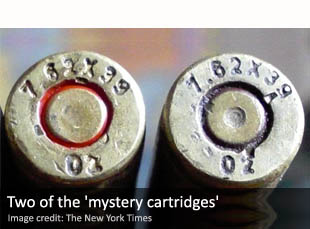
Two of the 'mystery cartridges'By JOSEPH FITSANAKIS | intelNews.org |
An independent report has concluded that some of Africa’s most brutal conflicts are currently being fuelled by “untold quantities” of Iranian-manufactured small-arms ammunition. The ire of weapons-trafficking researchers is usually directed at the ‘heavyweights’ of the global arms-trade, including Russia, China, the United States, and France, among other countries. It appears, however, that Iran’s state-owned weapons manufacturer has been selling ammunition throughout Africa since at least 2006 via a secret network of distributors. According to The New York Times, a group of arms-trafficking experts from the United Nations, Amnesty International, the Federation of American Scientists, and other bodies, has found that Iran began selling ammunition to African clients in 2006 or earlier. On that year, a new brand of ammunition rounds for Kalashnikov assault rifles started appearing in armed clashes in Kenya, Uganda, and Darfur (now South Sudan). By 2010, the same type of cartridges had been found in Guinea, Ivory Coast and the Democratic Republic of Congo. More recently, says The Times, similar cartridges were discovered in the hands of groups in Niger connected with Al-Qaeda in the Islamic Maghreb. Suspiciously, the cartridges bore no factory code and their packaging had been deliberately constructed to obscure the identity of the manufacturer. However, according to the expert study, it is now considered “beyond dispute” that the Ammunition and Metallurgy Industries Group, a subsidiary of Iran’s state-owned and operated Defense Industries Organization, is the source of the mysterious cartridges. It is worth pointing out that many of the governments or militias that have been found to use Iranian ammunition are officially subject to UN resolutions that bar arms transfers to the countries or territories in which they operate. Read more of this post
Turkey peace talks halted as Kurdish activists are assassinated in Paris

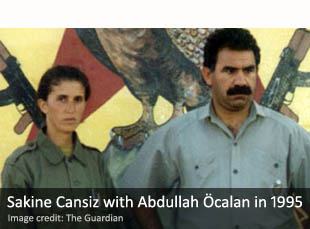
Sakine Cansiz with Abdullah Öcalan in 1995By JOSEPH FITSANAKIS | intelNews.org |
The future of peace talks between the Turkish government and the country’s Kurdish minority appeared uncertain yesterday, after three female Kurdish activists were found murdered execution-style in downtown Paris, France. The murders marked the first-ever killings in Europe of senior members of the Kurdistan Workers’ Party (PKK), which operates as the primary political and paramilitary agent of Turkey’s Kurdish population. According to reports from France, a gun fitted with a silencer was used to kill two of the women in the back of the neck and the third one in the stomach.

One of the dead, Leyla Sönmez, was a Kurdish activist responsible for Kurdish diplomatic relations in France. Another, Fidan Doğan, who was also a French citizen, was the Paris representative of the Kurdistan National Congress (KNK), which operates as Kurdistan’s government-in-exile based in Brussels, Belgium. But the most prominent victim of the triple murder is Sakine Cansiz, co-founder of the PKK, who is described as a “legend” among party activists. Cansiz who was present at PKK’s founding in 1978, was imprisoned by the Turkish government in the 1980s and given political asylum in France in 1998. Read more of this post

Iran official in secret visit to Egypt to discuss ‘new spy agency’

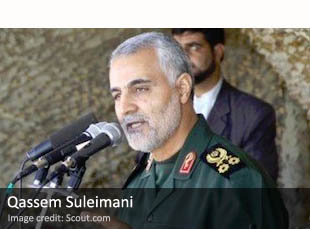
Qassem SuleimaniBy JOSEPH FITSANAKIS | intelNews.org |
A senior Iranian intelligence official paid a secret visit to Egypt earlier this month, allegedly to discuss the establishment of a new intelligence service controlled by the Muslim Brotherhood. Several Egyptian newspapers, including the quality broadsheet Al-Masry Al-Youm, said that the Iranian official was Qassem Suleimani, commander of Quds Force, a unit inside the Islamic Revolutionary Guard Corps, which is specifically tasked with exporting the Iranian Revolution abroad. The Quds Force has traditionally constituted the primary channel of communication between the government of Iran and a host of international groups allied to it, including Hezbollah in Lebanon and Hamas in Palestine. Suleimani is said to have traveled incognito to Cairo at the personal invitation of Egyptian President Mohammed Mursi, who is also a leading member of the Muslim Brotherhood. The group, which was legalized in Egypt after the 2011 revolution, is the Egyptian branch of a Pan-Islamic political and social movement that assumed control of the government after the ousting two years ago of Egyptian longtime dictator Hosni Mubarak. According to reports from Egypt, Suleimani met with “senior officials” in the Egyptian capital, including President Mursi’s chief adviser on foreign affairs, Issam al-Haddad, as well as prominent members of the Muslim Brotherhood. Al-Masry Al-Youm said the Iranian commander discussed plans to develop a new civilian intelligence service in post-Mubarak Egypt, which will be answerable to the government of the country. The apparent plan of the Muslim Brotherhood is to create a brand new spy service that will operate outside the control of Egypt’s military, which currently commands the bulk of the country’s intelligence community. Read more of this post

Analysis: Will 2013 Be the Year of the Unmanned Drone?

Predator droneBy JOSEPH FITSANAKIS | intelNews.org |
As United States President Barack Obama prepares to enter his fifth year in office, one may be excused for thinking that his administration’s response to insurgency warfare essentially boils down to one thing: the joystick. This is the means by which Washington’s unmanned aerial vehicle (UAV) fleet is remotely guided, usually from the safety of ground control stations located thousands of miles away from selected targets. Even prior to last November’s Presidential election, Obama administration officials declared in every possible way that the drone campaign would remain a permanent feature of the White House’s counterinsurgency campaign. Not only that, but it seems increasingly apparent that when, on November 19, 2012, Defense Secretary Leon Panetta announced that America’s UAV fleet would expand, he meant it both in terms of raw numbers and geographical reach. Africa appears now to be high on the list of UAV targets. The US is currently busy establishing a large network of small air bases located in strategic locations throughout the continent, in what US observers have termed a “massive expansion” of US covert operations in Africa. Read more of this post

Soviets used civilian airliners to gather intelligence, documents show

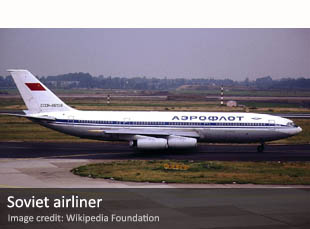
Soviet Aeroflot airlinerBy JOSEPH FITSANAKIS | intelNews.org |
Soviet spy agencies routinely used civilian airplanes to collect aerial intelligence over Western military installations, according to newly declassified documents. The revelation is contained in British government files from 1982 that were declassified on Friday, following the expiration of the United Kingdom’s 30-year classification rule. According to Bloomberg’s Robet Hutton and Thomas Penny, who accessed the files, they include a detailed memorandum addressed to Conservative Party politician Margaret Thatcher, who was serving as Britain’s Prime Minister at the time. The memorandum, which was authored by then Secretary of State for Defence, John Nott, informed Mrs. Thatcher that the airborne behavior of airliners belonging to Aeroflot, the Soviet Union’s state-owned civilian air carrier, appeared suspicious. Secretary Nott wrote in the memo that Britain’s Royal Air Force had “established that some [Soviet] aircraft deviated from their flight-plan routes” when flying over Western military bases. He goes on to describe an “incident of particular interest”, in which an Aeroflot Ilyushin IL62 airplane descended without authorization from 35,000 feet to 10,000 feet right above the village of Boulmer. Located in Northumberland, England, Boulmer is adjacent to a Royal Air Force base, which at the time featured a newly modernized radar system. The same Aeroflot airplane behaved in similar fashion while flying over a United States Navy base in Groton, Connecticut, which at the time hosted the first US submarine equipped with Trident Ballistic Missiles. The memorandum states that the circumstances surrounding the flight patterns of Aeroflot airliners had led the Royal Air Force to assume that the Soviet airplanes “were gathering intelligence” on Western military targets. Read more of this post

Who wiretapped Turkish Prime Minister’s office, home?

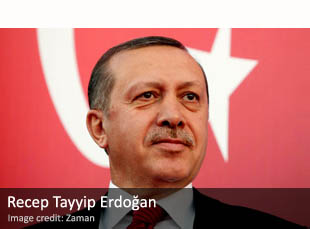
Recep Tayyip ErdoğanBy JOSEPH FITSANAKIS | intelNews.org |
During a televised interview on December 21, Turkish Prime Minister Recep Tayyip Erdoğan revealed that four unauthorized wiretapping devices had been detected in his parliamentary office and government car. A subsequent report from the Office of the Prime Minister on December 25 said that one more device had been found in Mr. Erdoğan’s home-office at this residence in Turkish capital Ankara. Who is behind the operation? In his December 21 interview, the Prime Minister told a nationwide audience that the bugs had been planted by “elements of a deeper state” within Turkey. “A deeper state exists in nearly every country”, he said, adding: “we try a lot but unfortunately it is impossible to [completely] eradicate the deeper state”. The term ‘deep’ or ‘deeper state’, which is used frequently in Turkey, is meant to signify a covert collaboration of convenience between organized crime and members of the country’s intelligence services.

One example of the Turkish ‘deep state’ that comes to mind is Ergenekon, a clandestine ultra-nationalist organization with secularist and anti-Western objectives. Its membership, which is reportedly drawn primarily from Turkey’s military and security establishments, is involved in both criminal and political activities aiming to preserve the political power of Turkey’s armed forces, while subverting the rise of Islamism and keeping Turkey out of the European Union. The existence of this mysterious organization was revealed in 2001 by Tuncay Güney, an operative of Turkey’s National Intelligence Organization (MİT), who was arrested for petty fraud. In 2009, an investigation into Ergenekon uncovered a clandestine network of safe houses in Ankara, as well as in the Turkish-occupied northern Cyprus, for the sole purpose of wiretapping the communications of targeted individuals and organizations. The safe houses were reportedly equipped with wiretapping systems purchased in Israel, some of which were portable and were thus moved to various cities and towns in Turkey, in accordance with Ergenekon’s mission directives. But are Ergenekon’s tentacles powerful enough to reach into the Turkish Prime Minister’s residence? Read more of this post

Revealed: The CIA bodyguard unit that protects officers and spies

Raymond Allen DavisBy JOSEPH FITSANAKIS | intelNews.org |
The popular view of Central Intelligence Agency operations officers as gun-brandishing martial arts experts who can kill an adversary using their bare hands could not be further from the truth. Typically, CIA operatives are trained to avoid attracting attention while establishing useful, long-lasting relationships with foreign assets. Broadly speaking, guns are rarely used in day-to-day intelligence work. Increasingly, however, CIA case officers operating on counterterrorism assignments in the post-9/11 environment find themselves in warzones with a level of physical risk rarely encountered during the Cold War. CIA operations planners believe that case officers cannot properly run foreign assets while constantly having to worry about their personal safety, as well as the safety of their recruits. To address this problem, the CIA put together a new unit shortly after 9/11, which goes by the name Global Response Staff (GRS). An article published yesterday in The Washington Post provides the most detailed public examination of this new unit to date. The Post’s Greg Miller and Julie Tate, who authored the article, suggest that the GRS currently has around 250 members, about half of whom are detailed to CIA stations around the world at any given time. Most are contracted by the Agency as retired Special Forces officers, and only work three to four months a year for around $140,000. Recruitment is done largely by word of mouth. The Post quotes an unidentified former US intelligence official, who says that GRS recruits are not required to operate within the typical CIA operational framework: unlike their CIA colleagues, “they don’t learn languages, they’re not meeting foreign nationals and they’re not writing up intelligence reports”. Instead, they are expected to conduct “area familiarization” work, that is, mapping escape routes from places where CIA case officers meet their assets. Read more of this post

CIA helped senior Syrian defector escape to Washington, say sources

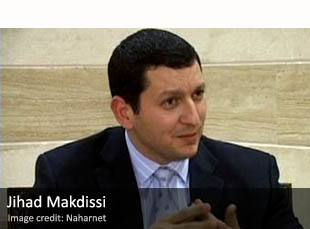
Jihad MakdissiBy JOSEPH FITSANAKIS | intelNews.org |
American intelligence operatives helped facilitate the escape of a senior Syrian government official, who is now allegedly assisting the Central Intelligence Agency’s operations in Syria, according to a British newspaper. The sudden disappearance last November of Jihad Makdissi, official spokesperson of Syria’s Foreign Affairs Ministry, caused widespread speculation that he might have defected. Makdissi, a career diplomat, had been a close collaborator of senior Syrian cabinet officials, including Minister of Foreign Affairs Walid al-Moallem, and Dr. Adnan Hassan Mahmoud, Minister of Information. Initial reports claimed that Makdissi, who is a Christian and is fluent in English and French, had crossed into Lebanon and was hiding in a Christian Beirut neighborhood. But London-based newspaper The Guardian said on Monday that the diplomat had been assisted by “US intelligence officials”, who organized his escape into Lebanon, along with his wife and two children, before secretly transferring them to Washington, DC, “almost one month ago”. If The Guardian’s claim is true, it would mean that US intelligence has secured the cooperation of one of the Syrian regime’s most prominent defectors in recent times. Some argue that Makdissi’s importance as a defector is second only to that of Syria’s former Prime Minister, Riyad Farid Hijab, who escaped with this immediate family to Jordan in August. Read more of this post

US wants immunity for Pakistanis implicated in attacks that killed 166

2008 Mumbai attacksBy JOSEPH FITSANAKIS | intelNews.org |
The United States government has argued in court that current and former officials of Pakistan’s intelligence service should be immune from prosecution in connection with the 2008 Mumbai attacks. At least 166 people, including 6 Americans, were killed and scores more were injured when members of Pakistan-based militant group Lashkar-e-Taiba stormed downtown Mumbai, India, taking the city hostage between November 26 and 29, 2008. The Indian government has openly accused Pakistan’s Inter-Services Intelligence directorate (ISI) of complicity in the attack, which has been described as the most sophisticated international terrorist strike anywhere in the world during the last decade. Using evidence collected by the Indian government, several Americans who survived the bloody attacks sued the ISI in New York earlier this year for allegedly directing Lashkar-e-Taiba and the Mumbai strikes. But Stuart Delery, Principal Deputy Attorney General for the US Department of State, has told the court that the ISI and its senior officials are immune from prosecution on US soil under the US Foreign Sovereign Immunities Act. According to the 12-page ‘Statement of Interest’ delivered to the court by Delery, no foreign nationals can be prosecuted in a US court for criminal actions they allegedly carried out while working in official capacities for a foreign government. The affidavit goes on to suggest that any attempt by a US court to assert American jurisdiction over current or former Pakistani government officials would be a blatant “intrusion on [Pakistan’s] sovereignty, in violation of international law”. It appears that nobody has notified the US Department of State that the US routinely “intrudes on Pakistan’s sovereignty” several times a week by using unmanned Predator drones to bomb suspected Taliban militants operating on Pakistani soil. Washington also “intruded on Pakistan’s sovereignty” on May 2, 2011, when it clandestinely sent troops to the town of Abbottabad to kill al-Qaeda founder Osama bin Laden. Read more of this post

Are Kremlin’s spies targeting Russian scientists with foreign links?

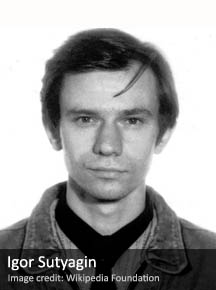
Igor SutyaginBy JOSEPH FITSANAKIS | intelNews.org |
Back in November, we reported on the case of Valentin Danilov, a Russian physicist who spent nearly a decade in prison, allegedly for spying on his country on behalf of China. What is interesting about Danilov is that, even after his release from prison, following a pardon issued by the administration of Russian President Vladimir Putin, he fervently maintains his innocence. He is not alone; many Russian scientists and human rights campaigners have argued for years that Danilov should never have been convicted. In some cases, activists accuse the Kremlin of persecuting Danilov for political reasons, namely to reinforce Russian President Vladimir Putin’s “attempts to intimidate academics with ties to other countries”. A well-written analysis by Time magazine’s Simon Shuster argues that Danilov’s story is not unique in Russia. There have been at least a handful of similar cases in the last decade, all involving Russian scientists with links to foreign countries or organizations. Shuster mentions the example of nuclear expert Igor Sutyagin, former division head in the Russian Academy of Sciences’ USA and Canada Institute, who served 11 years of a 15-year sentence for allegedly passing state secrets to a CIA front company. Sutyagin, who now lives in London, United Kingdom, was one of four jailed Russians expelled to the West in exchange for the repatriation of ten Russian illegals captured by the FBI in the summer of 2010. But he maintains he was never a spy, and claims that all of the information he gave to the two Americans who employed him, in return for money, came from open sources. Undoubtedly, observers are free to draw different conclusions about either Danilov or Sutyagin. But the question that Shuster poses is, at a time when virtually no field of scientific research can develop without international collaboration, is Moscow being overly suspicious of its academics, and is this hampering Russian science as a whole? Read more of this post

Jailed US spy gave Israel information on Pakistan nuclear program

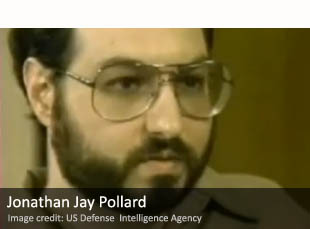
Jonathan Jay PollardBy JOSEPH FITSANAKIS | intelNews.org |
An American intelligence analyst, who was jailed in 1987 for spying for Israel, gave his spy handlers information on Pakistan’s nuclear weapons program, according to declassified documents. Former United States Navy intelligence analyst Jonathan Jay Pollard is currently serving a life sentence for selling classified information to the Israeli government between 1985 and 1987. On December 14, the Central Intelligence Agency declassified its official damage assessment of Pollard’s espionage, who some counterintelligence officials believe was the most prolific mole that ever spied on the US government for a foreign country. This was the second time that the CIA declassified the document, titled The Jonathan Jay Pollard Espionage Case: A Damage Assessment, following an appeal by George Washington University’s National Security Archive. Even though this latest version of the declassified document is still heavily redacted, it contains some new information. One new revelation is that Pollard’s Israeli handlers specifically asked him to acquire intelligence collected by the US government on the Pakistani nuclear weapons program. In a section titled “Implications of Compromises: What Israel Gained from Pollard’s Espionage”, the CIA assessment states that Pollard focused on “Arab and Pakistani nuclear intelligence” and gave his Israeli handlers information on a secret Pakistani “plutonium reprocessing facility near Islamabad”. Further information in the declassified report about this subject is completely redacted. The question is, what kind of information on Pakistan’s nuclear weapons program did Tel Aviv acquire from Pollard?  According to A.Q. Khan, the so-called father of the Pakistani nuclear bomb, Islamabad was able to detonate a nuclear device “within a week’s notice” by as early as 1984. Read more of this post

Iran accuses Israel of kidnapping former Deputy Defense Minster

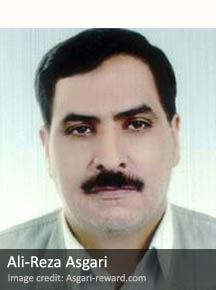
Ali-Reza AsgariBy JOSEPH FITSANAKIS | intelNews.org |
Iran’s Deputy Defense Minister has accused Israel of kidnapping his predecessor in 2006, while he was on an official visit trip to Turkey. Brigadier General Ali-Reza Asgari, who once commanded Iran’s Revolutionary Guard Corps, disappeared on December 9, 2006, from his hotel room in Istanbul. His fate remains unknown. But on Saturday, Brigadier General Hossein Daqiqi, who is currently Tehran’s second most senior military official, pointed the finger at Israel’s foremost covert-action agency, the Mossad. He was speaking to reporters in the Iranian capital during a public ceremony to mark the sixth anniversary of Asgari’s disappearance. He told Iranian media that the government had “a lot of evidence proving that members of the Israeli intelligence service have kidnapped Asgari”. There are conflicting reports about Asgari’s whereabouts, but most observers seem to believe he is still alive. A year after his disappearance from Turkey, Hans Rühle, former Director of Policy Planning in the German Ministry of Defense, wrote in Swiss newspaper Neue Zuercher Zeitung that Asgari was in Western hands and that “information was obtained” from him. Israeli media have reported that the Iranian General is in the hands of the United States and that he is helping Washington crack the “most inner workings [of] Iranian nuclear development”. Danny Yatom, former director of the Mossad, told the London-based Times newspaper in 2007 that Israel had played no part in Asgari’s disappearance and that the Iranian General had willingly defected “to the West”, but that he didn’t know his exact whereabouts. Since then, other sources have echoed Yatom’s claim that Asgari defected willingly, including Dafna Linzer of the Washington Post and intelligence historian Gordon Thomas, in his 2009 book Secret Wars: One Hundred Years of British Intelligence (see intelNews book review). Read more of this post

Litvinenko was working for UK, Spanish intelligence when he was killed

Alexander LitvinenkoBy JOSEPH FITSANAKIS | intelNews.org |
A lawyer representing the family of a KGB defector to Britain, who died of poisoning in 2006, has told a court hearing in London that the late spy was working for British and Spanish intelligence at the time of his death. Alexander Litvinenko was an employee of the Soviet KGB and one of its successor organizations, the FSB, until 2000, when he defected with his family to the United Kingdom. He soon became known as a vocal critic of the administration of Russian President Vladimir Putin. In 2006, Litvinenko came down with radioactive poisoning soon after meeting a former KGB/FSB colleague, Andrey Lugovoy, at a London restaurant. Speaking at a preliminary court hearing on Thursday, in light of an upcoming British government inquiry into Litvinenko’s death, Ben Emmerson, QC, said that the late Russian spy was a “registered and paid” asset of the Secret Intelligence Service. This is not the first time that Litvinenko has been linked to the SIS —known informally as MI6— Britain’s external spy agency. Litvinenko’s widow, Marina, made similar claims to the British press in January of this year. But yesterday’s testimony by her legal team provided the public record with further revelations about her husband’s connections with British intelligence. The court heard that Litvinenko received a regular stipend from MI6 either in cash or via electronic transfer and that he had been provided with an encrypted telephone, which MI6 used to contact him on a routine basis. The night before his poisoning, said Emmerson, Litvinenko had met his MI6 handler, who went by the operational alias MARTIN. Read more of this post

Who leaked Iranian nuclear document that turned out to be a hoax?

The leaked documentBy JOSEPH FITSANAKIS | intelNews.org |
On November 27, the Associated Press published an alleged Iranian document which it said proved Iran was working on a nuclear bomb. The news agency said the disclosure was the latest in a series of similar leaks to the media by “officials from a country critical of Iran’s atomic program”. However, the authenticity of the document, which contained a diagram calculating the explosive force of a nuclear weapon, is now heavily disputed. An analysis of the leaked document in the latest issue of The Bulletin of the Atomic Scientists concluded that it was either massively erroneous or a hoax designed by amateurs. The Bulletin, a specialist publication founded by physicists involved in the Manhattan Project, said the document was “unlikely to have been made by research scientists working at a national level”. The obvious question is who leaked the disputed document and why? An article in British newspaper The Guardian cites unnamed “Western officials” who claim that the diagram, along with several previous disclosures of a similar nature, was leaked by Israel “in an attempt to raise international pressure on Tehran”. If this is so, the leak appears to have seriously backfired and may have compromised the credibility of an ongoing investigation into the Iranian nuclear program by the International Atomic Energy Agency (IAEA). This is because the leaked document was part of an intelligence file on Iran’s nuclear program, compiled by the IAEA, which formed the factual basis for a new set of penalties and sanctions imposed on Iran by the United States and the European Union in November of 2011. The question that some United Nations officials are now asking is, if the leaked document is indeed a hoax, how could the IAEA guarantee the authenticity of the remaining documents on its file on Iran? Read more of this post