In rare speech, Australian intelligence chief stresses urgent need to recruit more spies
May 10, 2022 1 Comment
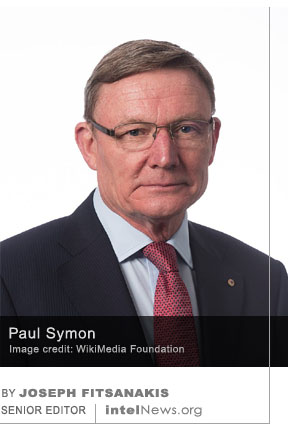 AUSTRALIAN INTELLIGENCE MUST recruit foreign spies with more urgency than at any time since the opening years of the Cold War, according to the head of Australia’s main foreign intelligence agency. Paul Symon, director of the Australian Secret Intelligence Service (ASIS), was speaking at a public event to mark the 70th anniversary of the organization’s history. It was a rare public speech by the head of Australia’s secretive main foreign intelligence service.
Symon’s talk was hosted in Sydney by the Lowy Institute, an independent Australian think-tank that focuses on international affairs. During his talk, which was made available afterwards on the Lowy Institute’s website, Symon spoke about a range of issues relating to Australia’s geopolitical priorities and their connection to intelligence operations. He told the audience that the primary task of ASIS, which is to recruit foreign subjects to spy on behalf of Australia, remained as crucial as ever.
He added, however, that a growing number of pressing concerns made “the need to recruit new spies” more essential than ever before. According to Symon, ASIS needs to “recruit and work with even more vigor and urgency than at any other point in our 70-year history”. In this task, China remains a strategic focus for ASIS, given its role in the region. Symon claimed there were signs that increasing numbers of Chinese state “officials [and] individuals” were “interested in a relationship” with ASIS. This was because many Chinese are becoming concerned about what he described as the rise of “an enforced monoculture” in China, and wish to stop it, said Symon.
Later in his speech, the ASIS director touched in broad terms on the challenge posed by technology on human intelligence (HUMINT) operations, in which ASIS specializes. He described these challenges as “extraordinary”, and said they resulted from an interaction between “a complex strategic environment [and] intensified counter-intelligence efforts” by Australia’s adversaries, as well as a host of “emergent and emerging technologies”. These technologies are in many ways posing “a near-existential” risk to the types of HUMINT operations carried out by ASIS, as the organization’s collection activities run the risk of becoming “increasingly discoverable”, said Symon.
► Author: Joseph Fitsanakis | Date: 10 May 2022 | Permalink
 A SERIES OF LARGE-scale incidents of destruction, which have been occurring across Russia in recent days, are prompting speculation that the county may be experiencing a wave of attacks against its strategic infrastructure. The incidents include enormous fires at power plants, munition depots and state-owned storage facilities. The collapse of at least one railway bridge has also been reported. There are additional reports of massive wildfires raging across Siberia, which are imposing heavy demands on Russia’s emergency response infrastructure.
 A NEWLY DISCOVERED CYBER-espionage group appears to target the senior leadership of private corporations involved in large-scale financial transactions, but employs skills and methods that are usually associated with state-sponsored threat actors. The group has been termed “UNC3524” by the American cybersecurity firm Mandiant, which says it discovered it in December of 2019. In a detailed
  ISRAEL’S MOSSAD INTELLIGENCE AGENCY allegedly foiled a plot by Iranian intelligence to send assassins abroad and kill an Israeli diplomat, an American military official and a French reporter, according to reports. The information about the alleged plot first surfaced late last week in the Iran International News Channel, a British-based Iranian news agency, which is opposed to the government in Tehran. The news agency claimed that the plot had been organized by the Quds Force, the paramilitary wing of the Islamic Revolutionary Guards Corps.
 THE RUSSIAN FEDERATION HAS reportedly ordered 175,000 new diplomatic passports to be printed, prompting speculation about their possible use at a time when Western sanctions are affecting Russia’s governing elite. Diplomatic passports are travel documents that are issued to accredited diplomats and government officials, such as foreign ministry envoys and others. Pursuant to the Vienna Convention of Diplomatic Relations, holders of diplomatic passports enjoy diplomatic immunity and are typically subjected to very limited inspections by security personnel when crossing international borders.
 AUSTRALIAN INTELLIGENCE HAD A role in the mysterious disclosure of a secret memorandum about a controversial defense pact between China and the Solomon Islands, which is causing consternation in the West. Western leaders claim that the pact will turn the tiny Melanesian nation into a logistical hub for Chinese warships in a strategic region of the Pacific Ocean. The pact also stipulates a training role for Chinese police and military personnel, who are called to “assist […] in maintaining social order” in the island nation.
 RUSSIAN DEEP-COVER SPY Mikhail Vasenkov, who was caught by authorities in the United States in 2010, and was later part of a multi-person spy-swap between Washington and Moscow, has reportedly died. Vasenkov was an officer for the Soviet-era Committee for State Security (KGB), under which he constructed his non-official cover identity. In 1976, he
  TELEPHONE SYSTEMS BELONGING TO the British government were compromised by the Pegasus surveillance software, according to a Canadian research group. The allegation was made on Monday in an investigative
 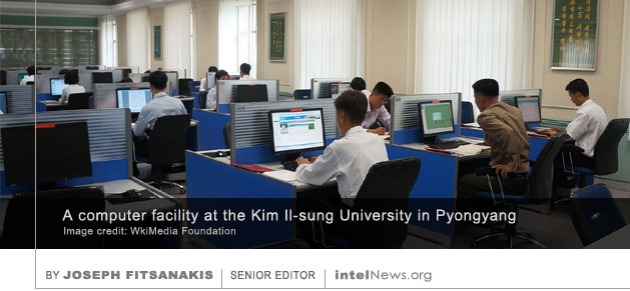 AN AMERICAN COMPUTER PROGRAMMER has been jailed for 63 months for providing “highly technical information” to North Korea, which related to cryptocurrency systems, according to United States officials. The programmer, Virgil Griffith, 39, also known as “Romanpoet”, became widely known in the early 2000s, when he began describing himself as a “disruptive technologist”. He later consulted with the Federal Bureau of Investigation and other law enforcement agencies in the area of the dark web and cryptocurrencies.
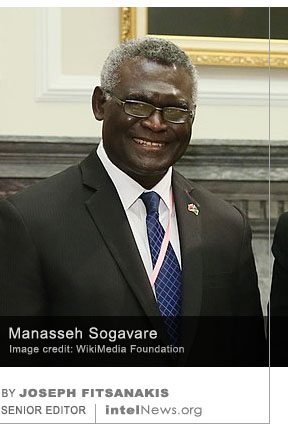 A LEAKED PLAN FOR a security alliance between China and the small Melanesian nation of the Solomon Islands has sparked concerns about a large-scale military buildup by regional powers in the South Pacific. The draft agreement, which was leaked online last week, appears to turn the Solomon Islands into a logistical hub for Chinese warships. It also stipulates a training role for Chinese police and military personnel, who are called to “assist […] in maintaining social order” in the island nation.
 THE FEDERAL BUREAU OF Investigation arrested two men on Wednesday, who allegedly tried to influence four agents of the United States Secret Service with money and gifts, according to an affidavit. The men were identified on Thursday as Haider Ali, 36, and Arian Taherzadeh, 40. Both are United States citizens and residents of Washington, DC. On the same day, FBI personnel searched five apartments and a number of cars that belong to the two men.
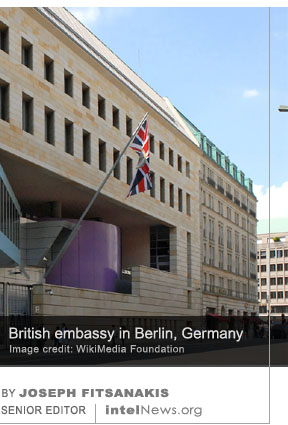 A BRITISH CITIZEN, WHO worked as a security guard at the British embassy in Berlin, has been charged with spying for the Russian intelligence services. Authorities in the United Kingdom announced on Wednesday that David Ballantyne Smith, 57, who lives in Potsdam, Germany, has been charged on nine different offenses under the 1911 Official Secrets Act.
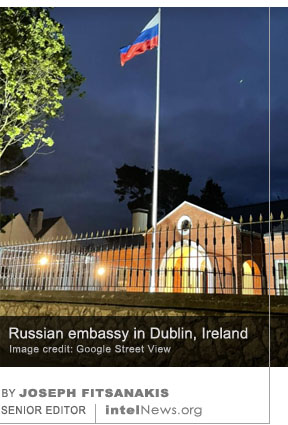 FOUR RUSSIAN DIPLOMATS, WHO Ireland claims are undercover intelligence officers, met with Irish paramilitaries as part of a wider plan to “stoke political unrest” in Britain and Ireland, according to a new report. In a press conference held in Dublin last week, Irish Taoiseach (Prime Minister) Micheál Martin
 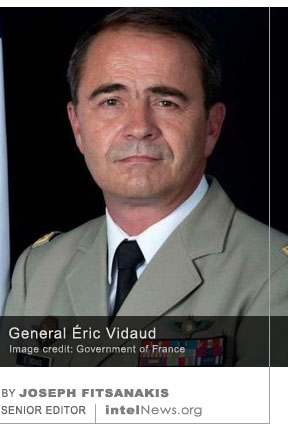 THE DIRECTOR OF FRANCE’S military intelligence agency has been asked to resign, allegedly because of his agency’s failure to anticipate the Russian invasion of Ukraine. General Éric Vidaud is a career military officer, who rose through the ranks to command the 1st Marine Infantry Parachute Regiment, one of the three units in the French Army Special Forces Command. In 2018, he was placed at the helm of the Special Operations Command, which oversees the joint activities of special forces units from all of France’s military branches. In August of last year, Vidaud assumed command of the Directorate of Military Intelligence (DRM), which operates under France’s Armed Forces Ministry.






 intelNews.org
West German intelligence infiltrated Adolf Eichmann trial in Israel, documents show
May 16, 2022 2 Comments
Since 2011, new files on the West German response to Eichmann’s abduction and trial have been uncovered by the Independent Commission of Historians to Research the History of the Federal Intelligence Service, 1945-1968. The Independent Commission consists of professional historians, who have been granted near-complete access into the archives of Germany’s Federal Intelligence Service (BND). Known as Bundesnachrichtendienst, the BND conducts foreign intelligence, making it Germany’s equivalent of the United States Central Intelligence Agency. The project has been praised as a rare case of openness and transparency in historical research into the activities and operations of a still-functioning intelligence agency.
Led by Professor Klaus-Dietmar Henke, the Independent Commission has published 15 volumes of research on the BND. The latest release concerns (among other things) Hans Globke, a senior official in Germany’s Nazi-era Ministry of the Interior, who was eventually appointed to the Office for Jewish Affairs. From that post, Globke helped draft the legislation, known as the Nuremberg Race Laws of 1935. These laws gave legal sanctuary to the exclusion of Germany’s Jewish population from political, commercial and other social activity. The same laws were eventually used to confiscate assets belonging to Jewish German citizens.
After the war, Globke closely aligned himself with the British forces and became testified as a witness in the prosecution of senior Nazi war criminals. He rebuilt his political career, initially on the local level, and eventually as Chief of Staff to the Office of the Chancellor of West Germany. He also served as West Germany’s Secretary of State, promoting a pro-Atlanticist foreign policy that closely aligned Western Germany with the United States.
According to the latest release by the Independent Commission, Globke tasked the BND with infiltrating Eichmann’s trial, in order to limit the details exposed about the Nazi government during the trial proceedings. The primary goal of the operation, according to the new information, was to prevent even the mention of Globke’s name during Eichmann’s trial. If that was not achieved, the aim was to protect Globke’s reputation and shield the public from details about his Nazi past, especially relating to the Holocaust.
When asked about the revelation, a spokesperson for the BND refused to comment on it, saying only that “the draft results of the independent historical commission speak for themselves”. A spokesperson for the German federal government appeared to reject a call to withdraw a number of civilian medals and other honors that Globke was bestowed prior to his death. According to the spokesperson, German law does not have provisions for “posthumous withdrawal” of awards.
► Author: Joseph Fitsanakis | Date: 16 May 2022 | Permalink
Filed under Expert news and commentary on intelligence, espionage, spies and spying Tagged with Adolf Eichmann, BND, Germany, Hans Globke, history, Holocaust, Israel, News, West Germany