Spy agencies must regulate ethics of manipulation in HUMINT, researcher argues
November 7, 2022 3 Comments
 IT IS DIFFICULT TO argue against the widely shared view that clandestine human intelligence (HUMINT) is replete with ethical dilemmas. These are inherent in the process of gathering intelligence via the use of human sources or covert agents. Yet it is possible —indeed desirable— for intelligence agencies to implement well-regulated ethical approaches to clandestine HUMINT, according to Dr. Stephan Lau, a junior professor of psychology and member of the Faculty of Intelligence at the Federal University of Administrative Sciences in Berlin, Germany.
In an article entitled “The Good, the Bad, and the Tradecraft: HUMINT and the Ethics of Psychological Manipulation”, which was published last month in the peer-reviewed journal Intelligence and National Security, Lau argues that the concept of manipulation, which is often central in HUMINT, is nothing new. In fact, he explains, manipulation is a type of social influence that occurs naturally in human interactions, and may even have positive outcomes, depending on the case. Indeed, researchers have analyzed manipulation as a form of beneficial influence, which can help further commonly established social goals and norms. If anything, therefore, argumentative —also known as persuasive— forms of influence are normative aspects of interpersonal negotiation between humans.
COERCIVE INFLUENCE AND MANIPULATION
There is, however, a darker side, Lau explains, which relates to coercive influence —i.e. using threats or force to modify a person’s behavior. The subject becomes even more complicated when manipulation is instrumentalized as “a piece in the toolbox of HUMINT tradecraft”. The author goes on to suggest that manipulative influence in HUMINT can be distinguished between legitimate (harmless) and illegitimate (harmful). It follows that it is possible to attach a degree of ethical responsibility to the actions of case officers, or other covert operators, who engage in clandestine HUMINT activities as part of their work. Read more of this post
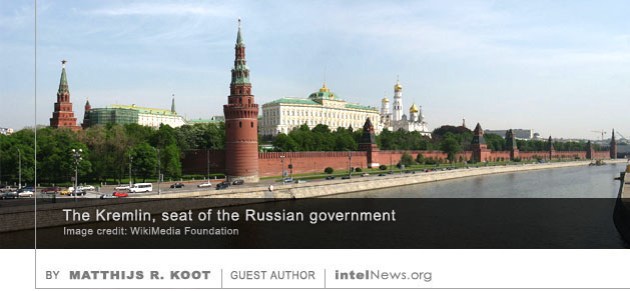
 AN ALLEGED RUSSIAN DEEP-cover intelligence operative, who was arrested by Norwegian police last week, spent years building his fake cover in Canada, while studying there as a Brazilian citizen, according to reports. Norway’s Police Security Service (PST)
  As intelNews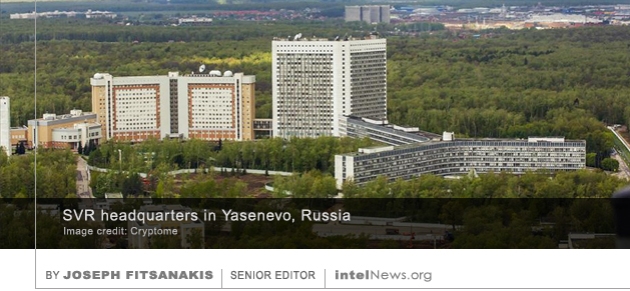
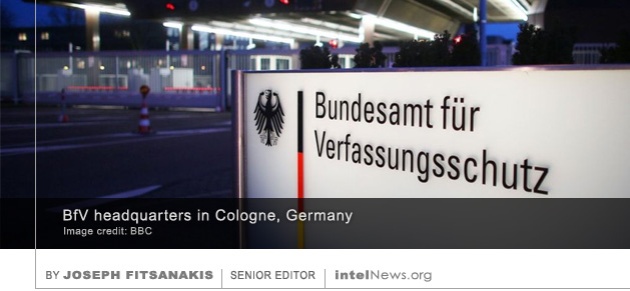 LAST SUMMER, GERMAN EMBASSY staff in Russia issued an entry visa to a Russian national, despite warnings by at least two European security agencies that he was a known intelligence officer, according to a report. The incident has fueled persistent allegations that Berlin’s counterintelligence posture against Russia is ineffective.
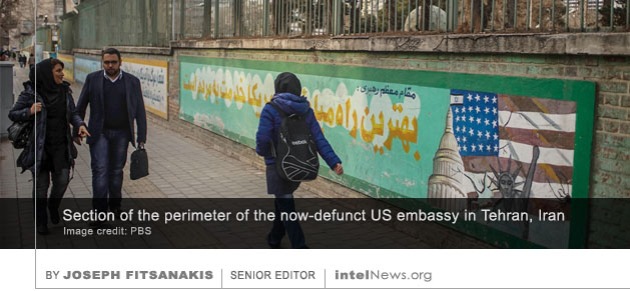 A YEAR-LONG INVESTIGATION by the Reuters news agency attempts to shed light on the alleged arrests of more than a dozen Iranian spies, who claim to have worked for the United States Central Intelligence Agency. Periodically Iran claims to have captured members of alleged CIA spy rings operating across its territory. For instance, in 2019 Iran’s Ministry of Intelligence
  MUCH HAS BEEN WRITTEN about the wartime intelligence exploits of the Allies against Japan. Such exploits range from the United States’ success in breaking the Japanese JN-25 naval code, to the
  Attachés, and Intelligence Failures: The Imperial Japanese Navy’s Efforts to Establish Espionage Networks in the United States Before Pearl Harbor”.
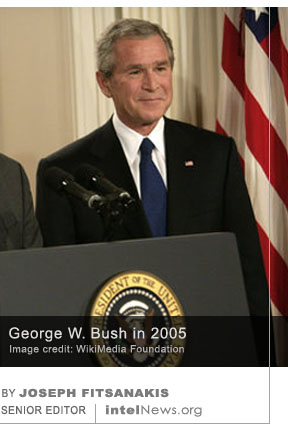 A TIP BY BELGIAN intelligence helped the Federal Bureau of Investigation foil a plot by Iraqi nationals to kill former United States President George W. Bush. American news outlets
  THE AUSTRIAN STATE HAS launched a probe into an attempt by alleged pro-Russian government officials in Vienna to create a brand new intelligence service in 2018, according to news reports. The effort did not succeed.
  THE UNPRECEDENTED GROWTH OF digital access in our time has revolutionized online user access to information. Yet, the same phenomenon is behind the growing power of individuals, groups and state actors to create and disseminate misinformation and disinformation with unprecedented intensity. In the case of misinformation, false, mistaken or otherwise misleading information is disseminated by unsuspecting users. When these actors are acting deliberately with the intention to mislead, deceive or confuse, their actions amount to disinformation.
 A NEW STUDY SHEDS light on the little-studied topic of counterintelligence operations launched against Israel by the Islamic Resistance Movement, better known as Hamas. Hamas is a Palestinian Sunni Islamist and nationalist organization with a 35-year history, which has controlled the Gaza Strip since 2007. As is typically the case with Middle Eastern non-state actors, Hamas is a complex umbrella organization that combines social-service and administrative functions with armed elements. The latter include internal policing components and a full-time military wing, as well as reserve armed forces.
 A NEW PAPER, PUBLISHED by the United Kingdom’s Royal United Services Institute (RUSI) for Defence and Security Studies, sheds light the complex relationship between Italy and the West’s two principal adversaries, Russia and China. Italy is a major global economic power. It is a prominent member of the Group of Seven (G7), which collectively account for more than 50 percent of global net wealth. It is also a member of the North Atlantic Treaty Organization (NATO) and the European Union (EU).
 A SECURITY BULLETIN ISSUED jointly by the United States Department of Homeland Security (DHS) and the Federal Bureau of Investigation (FBI)
  A GROWING CONVERGENCE BETWEEN the Central Intelligence Agency (CIA) and the United States military has been one of the most notable changes in American intelligence after 9/11.








Sweden charges two brothers with spying for Russian military intelligence
November 14, 2022 2 Comments
The two brothers have been named by Swedish media as Payam Kia, 35, and Peyman Kia, 42. They were reportedly born in Iran and became Swedish citizens in 1994. It is also reported that Payam Kia worked for SAPO and had access to classified information from a host of Swedish government agencies. SAPO accuses the two men of having worked “jointly” to pass information to the Main Directorate of the Russian Armed Forces’ General Staff, known broadly as GRU.
According to Swedish authorities, the two men began spying for Russia in September of 2011 and continued until the fall of 2021. Peyman Kia allegedly acted as a courier, passing information and payments between his brother and his Russian handlers. Per Lindqvist, chief prosecutor for Sweden’s National Security Unit, told the Associated Press news agency that the Kia brothers case involved “extremely sensitive topics”, but did not elaborate. Some reports claim that Payam Kia had access to the files of Swedish spies operating abroad.
The younger of the two brothers was reportedly arrested in September of 2021. His older brother was arrested in November of the same year. They face up to life imprisonment. They both deny the charges against them.
► Author: Joseph Fitsanakis | Date: 14 November 2022 | Permalink
Filed under Expert news and commentary on intelligence, espionage, spies and spying Tagged with counterintelligence, espionage, GRU, News, Payam Kia, Peyman Kia, Russia, SAPO (Sweden), Sweden