Analysis: A murky assassination that could radically alter Turkish politics
January 30, 2023 1 Comment
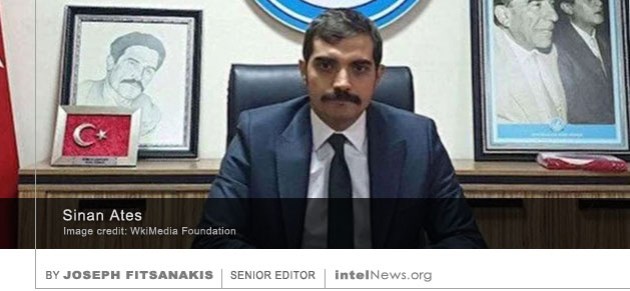 ON FRIDAY, DECEMBER 30, 2022, an assailant on a motorcycle opened fire on Sinan Ateş, the leader of Turkey’s most feared paramilitary force, known as the Grey Wolves. By that evening, the 38-year-old Ateş had expired in an Ankara hospital, prompting analysts to forewarn that Turkish politics had entered new and unchartered territory. Indeed, some observers claim that Ateş’ assassination may impact Turkey’s upcoming presidential elections in unpredictable ways. The leading political figures in this strategically important NATO member-state, including its authoritarian leader, Recep Tayyip Erdoğan, are paying close attention.
Turkey’s Far-Right Shock Troops
Known officially as the Idealist Clubs Educational and Cultural Foundation, the Grey Wolves organization is the paramilitary arm of the Nationalist Movement Party (MHP), a militant political force that occupies most of the far-right space of Turkish politics. The MHP espouses authoritarian and anti-Western views and is violently opposed to negotiations with Turkey’s ethnic minorities, including the Kurds. Its politics appeal to ultra-conservative voters, who are usually male and over the age of 35. The Grey Wolves operate as the MHP’s shock troops, often engaging in bloody street fights against Kurds, leftists, and other popular forces that stand in opposition to the Turkish far-right. Known for their machismo and violent bravado, the Grey Wolves appeal to working-class men in their teens and twenties. In essence, therefore, the MHP and the Grey Wolves are two sides of the same coin.
In 2015, the MHP formed an electoral pact with President Erdoğan’s Justice and Development Party (AKP). The formation of this pact, known as the People’s Alliance, marked the culmination of a long process of informal cooperation between the two sides, which had been going on since at least 2007. The People’s Alliance has been instrumental in preserving the AKP’s domination of Turkish political life in recent years, despite the loss of popularity that President Erdoğan has been experiencing. Currently the AKP relies directly on the MHP’s parliamentary support to rule Turkey with a minority government. The Grey Wolves, which tend to be more unruly than their parent organization, are nominally in support of Erdoğan, but tend to see him as too mellow and not sufficiently authoritarian.
The Fragmentation of the MHP
The MPH likes to project itself as a unified militant organization. In reality, it has always been the product of an uneasy alliance between disparate far-right groups. Its membership ranges from social conservatives to ultranationalists, Hanafi (Sunni) puritans and even neo-fascists. In 2017, when the MHP and the AKP formed the People’s Alliance, several of these groups voiced serious misgivings about aligning themselves with Erdoğan. Eventually, a vocal faction of pro-Western and secularist conservatives left the party over concerns that the MHP would be completely absorbed by the pro-Islamist and anti-Western AKP. Read more of this post
 AUTHORITIES IN THE UNITED States have launched at least two separate investigations into the business dealings of Charles McGonigal, the highest-ranking former employee of the Federal Bureau of Investigation (FBI) to face criminal charges in recent times. Much has been written about McGonigal’s
 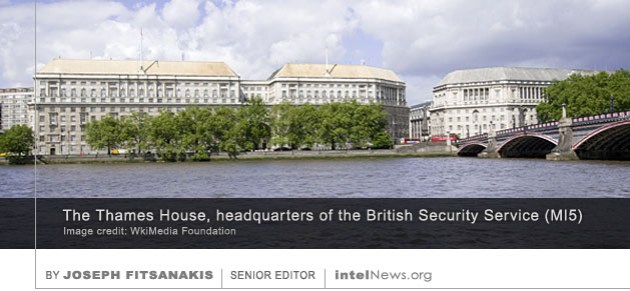 A DIPLOMAT STATIONED AT the embassy of the Russian Federation in London proposed to channel Russian funds to the British Conservative Party, according to a formal complaint made by a Conservative Party activist. The information was
 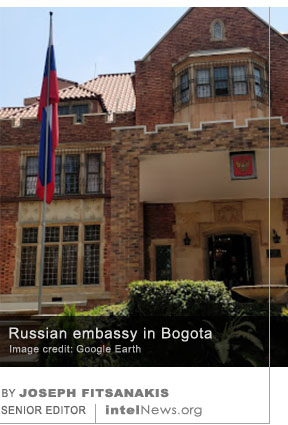 COLOMBIAN INTELLIGENCE CARRIED OUT surveillance operations against Russian and Cuban diplomats stationed in Colombia between 2016 and 2019, according to media reports that surfaced earlier this week. The
 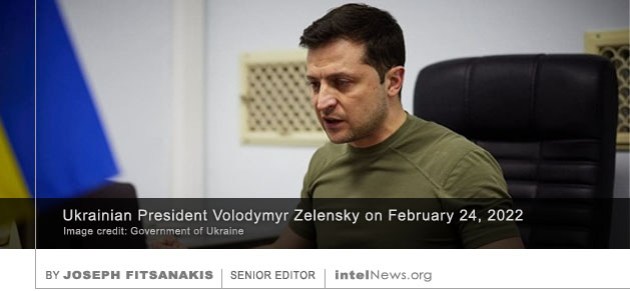 INFORMATION PROVIDED BY THE United States Central Intelligence Agency helped Kyiv foil two Russian plots against the life of Ukraine’s President, Volodymyr Zelenskyy, in the crucial early stages of the Russo-Ukrainian war, according to a new book. The claim is made in
  IRAN ANNOUNCED ON SATURDAY one of the most high-profile executions in its recent history, involving Alireza Akbari, who served as the Islamic Republic’s deputy minister of defense in the 2000s. Akbari, 61, a dual Iranian-British citizen, was
 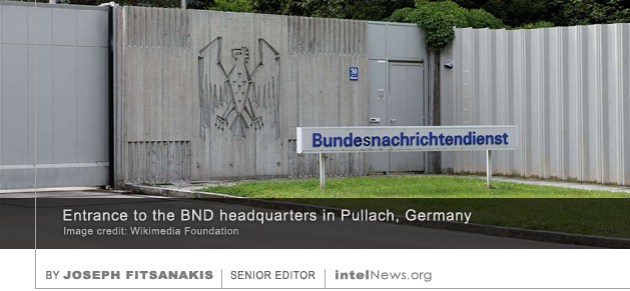 WESTERN INTELLIGENCE AGENCIES HAVE been alarmed by the arrest of a senior German intelligence official, who has been charged with spying for Russia, according to an expert in German intelligence. On December 22, the German government
 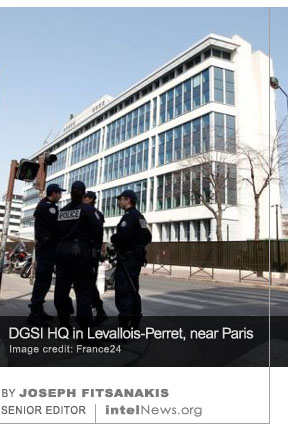 PROSECUTORS IN FRANCE HAVE asked for a trial in a high-profile case involving the former head of France’s domestic intelligence agency, a former senior Paris police official and a retired appeals court judge, among others. The decade-long case has become known in France as the “Squarcini affair”, after Bernard Squarcini, who headed France’s General Directorate for Internal Security (DGSI) from 2008 to 2012.
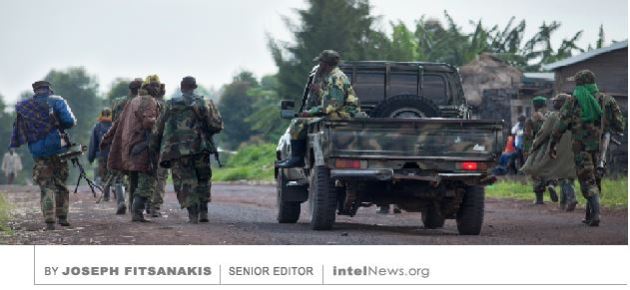 THE GOVERNMENT OF THE Democratic Republic of the Congo (DRC) has dismantled an alleged Rwandan spy network and has charged its members with plotting to assassinate the country’s president. This development, which was announced late last week by authorities in Kinshasa, has plunged relations between the two neighboring countries into a new low.
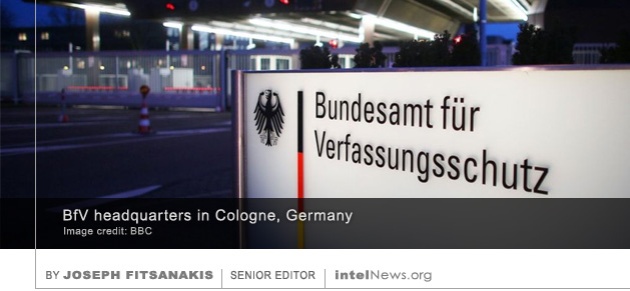 RUSSIAN FOREIGN INTELLIGENCE ACTIVITIES in Germany have increased exponentially since the start of the war in Ukraine, and are projected to further-increase in 2023, according to the head of German counterintelligence. In an
  THE CRIMINAL CORRUPTION SCANDAL known as Qatargate, which has rocked the European Parliament in recent weeks, involves covert influence operations by Moroccan spies, in addition to Qatari intelligence operatives, according to news reports.
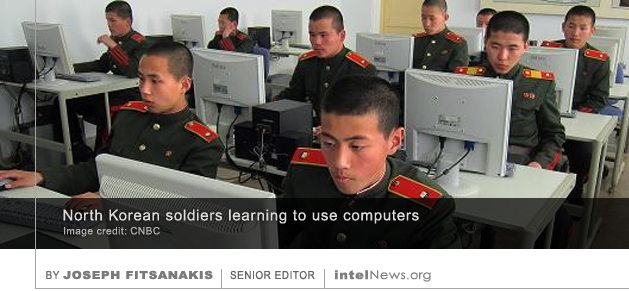 A NOTORIOUS NORTH KOREAN hacker group is believed to be behind a “sophisticated” effort to elicit the views of international experts on issues that are of concern to Pyongyang, according to an investigation by Reuters. The news agency
 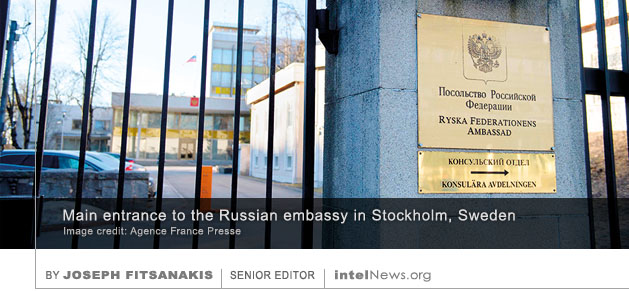 NUMEROUS UNANSWERED QUESTIONS SURROUND the arrest of a Russian married couple in Sweden, on charges of espionage. The arrest took place in dramatic fashion in the early hours of Tuesday, November 22.
  ISRAELI AUTHORITIES HAVE STEPPED up measures to protect its senior intelligence and security figures, over concerns they may be targeted by agents of the Iranian state, according to news reports. The news comes amidst widespread concerns that the ongoing shadow conflict between Israel and Iran is escalating in the shadow of the Russo-Ukrainian war.








Germany arrests alleged collaborator of intelligence officer who spied for Russia
January 31, 2023 1 Comment
On December 22, German authorities arrested a senior German intelligence official, who has been charged with treason and remains in custody. The official, named only as “Carsten L.”, in compliance with Germany’s strict privacy laws, worked in the signals intelligence (SIGINT) wing of the Federal Intelligence Service (BND). As Germany’s foreign intelligence agency, the BND is tasked with collecting intelligence on foreign targets, a mission that makes it broadly equivalent to the United States Central Intelligence Agency (CIA).
As intelNews reported earlier this month, Carsten L.’s seniority within the BND allowed him to access several compartmentalized areas of information, including secrets shared with the BND by other Western intelligence agencies. For this reason, it was reported that some Western intelligence officials were “most incensed” with this case. One source reported that British intelligence leaders were “considering whether they will continue to provide the BND with their most sensitive information”.
Now a second arrest has come to arguably add to the gravity of this case. On January 22, the German Federal Criminal Police Office announced the arrest of “Arthur E.”, who was captured at the Munich International Airport. Apparently, Arthur E. is a German citizen who has German-Russian background. According to the press release issued by the German government, Arthur E. was arrested through a collaborative effort between the BND and the United States Federal Bureau of Investigation (FBI). Apparently, the FBI became suspicious when Arthur E. attempted to frantically leave the United States after Carsten L.’s arrest. Read more of this post
Filed under Expert news and commentary on intelligence, espionage, spies and spying Tagged with Arthur E., BND, Carsten L., espionage, Federal Criminal Police Office (Germany), Germany, News, Russia