Bomb hidden inside decorative figurine kills pro-Kremlin military blogger in Russia
April 3, 2023 3 Comments
 A POWERFUL EXPLOSION, LIKELY caused by a bomb hidden inside a decorative figurine, has killed one of the most prominent pro-Kremlin bloggers as he was giving a public talk in downtown St. Petersburgh, Russia. The bomb killed Maxim Fomin, 40, who was known in online blogger circles under the pseudonym Vladlen Tatarsky. Born in eastern Ukraine, Fomin supported the pro-Russian secessionist movement in the Donbas. By 2021, when he obtained Russian citizenship, he had already made a name for himself as a pro-Kremlin military blogger on the Telegram social media platform.
In 2022, when the Russian military invaded Ukraine again, Fomin used his Telegram channel to spread pro-Kremlin information among his nearly 600,000 followers. He quickly rose to prominence as a commentator on military matters on Russian state-owned television. He also authored several books espousing Russian nationalist views. Fomin’s online activism came to embody a new generation of Russian bloggers who use their reach among Russian Internet users to aggressively promote pro-Kremlin political views.
On Sunday afternoon, Fomin was the main speaker at a pro-Kremlin event held in a St. Petersburg meeting hall, which is known as the Street Food Bar #1 Café. The downtown establishment used to belong to Yevgeny Prigozhin, one of Russian President Vladimir Putin’s closest collaborators. Prigozhin is the alleged owner of the Wagner Group private military company. In 2019, Prigozhin is believed to have donated the property to a group of pro-Kremlin activists, who have since been using it to host nationalist meetings in downtown St. Petersburg.
On Sunday afternoon, Fomin was the main speaker at an event held in the Street Food Bar #1 Café. The event had been organized by Cyber Front Z, an umbrella group of Russian nationalist bloggers, who refer to themselves on Telegram as a pro-Kremlin cyber army. At least 100 people were present at the event, according to reports. Shortly before the event began, an unknown woman tried to enter the facility carrying a large box. She told the event organizers at the entrance that the box contained a figurine, which she intended to present to Fomin as a gift. Read more of this post
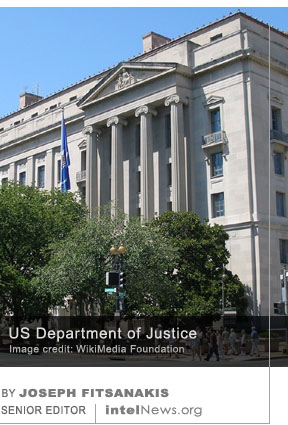 A RUSSIAN INTELLIGENCE OPERATIVE, who lived in Maryland using forged Brazilian identity documents, has been charged with espionage and other crimes by the United States Department of Justice. Victor Muller Ferreira, a Brazilian national, was stopped from entering the Netherlands in June of last year, where he had intended to join the International Criminal Court (ICC) as an intern.
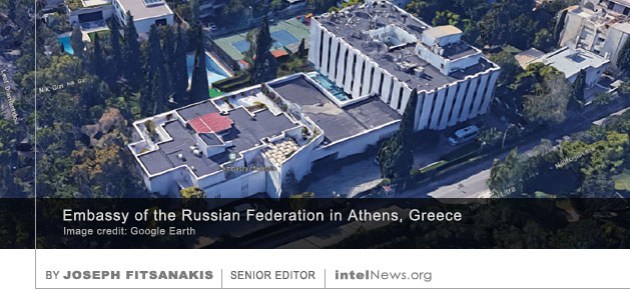 GREEK INTELLIGENCE OFFICIALS ANNOUNCED late last week that they had uncovered the identity of a female Russian spy who lived in central Athens using a set of forged identity documents. According to the Greek National Intelligence Service (NIS/EYP), the case is under investigation by several Western intelligence agencies. Additionally, there seems to be a connection with Brazil where the Russian spy’s husband lived until recently, using forged identity papers.
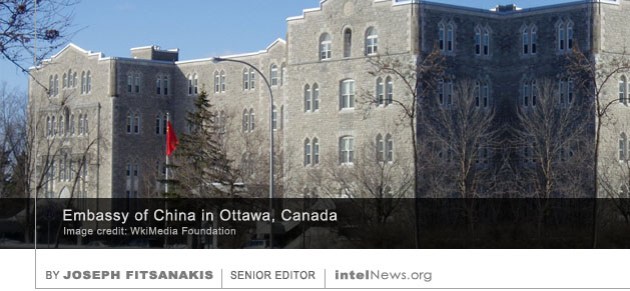 AUTHORITIES IN CANADA ARE reportedly probing claims that the Chinese government is operating at least two “clandestine police stations” in Montreal, which allegedly monitor the activities of Chinese citizens and Canadians of Chinese origin. The announcement comes less than four months after a similar
 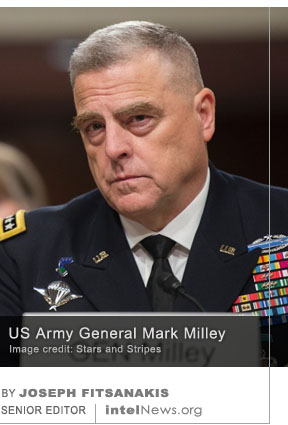 THE SPIRALING SOCIAL UNREST in Israel and the Palestinian Territories may harm longstanding intelligence-sharing agreements between Israel and its Western allies, including the United States, according to reports. Historically, intelligence-sharing partnerships between Israel and its closest ally, the United States, have tended to remain largely unaffected by regional upheavals. This time, however, some Israeli officials are concerned that the Israeli-American intelligence relationship is “under a question mark and under great tension”.
 A KEY COMMITTEE IN the Parliament of Canada passed a motion late last week that calls on the government to investigate allegations of foreign interference in the country’s general elections. Last Thursday’s vote by the Standing Committee on Procedure and House Affairs came soon after its members attended closed-door testimony by senior intelligence officials, which touched on various topics relating to the national security of Canada.
 THE GOVERNMENT OF AUSTRALIA has ordered the deportation of a Kazakh-born Irish citizen, who is believed to be a spy for the Russian Federation, according to reports from Australia and Ireland. The woman in question has been identified as Marina Sologub, 39, an ethnic Russian who was born in Kazakhstan, but grew up in the Republic of Ireland.
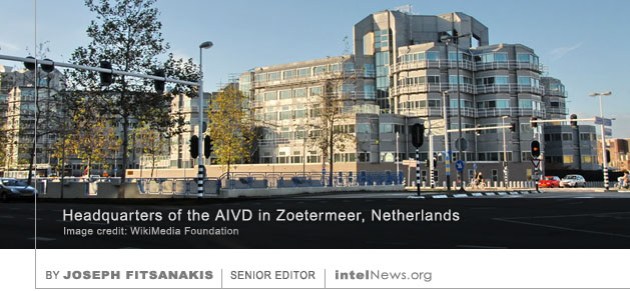 THE RUSSIAN INTELLIGENCE SERVICES are “covertly mapping” the energy infrastructure of the North Sea, in preparation for acts of disruption and sabotage, according to a new report form the Dutch government. The 32-page
 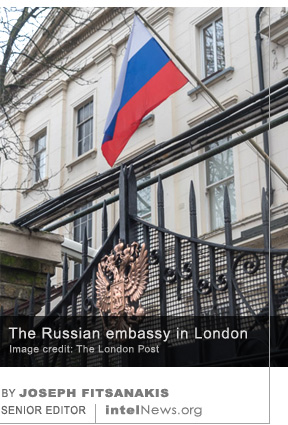 RUSSIA’S ABILITY TO CONDUCT human intelligence operations in Europe has suffered greater damage in recent years than at any time since 1991, according to some experts. These setbacks have partly been caused by what The Washington Post refers to in a
 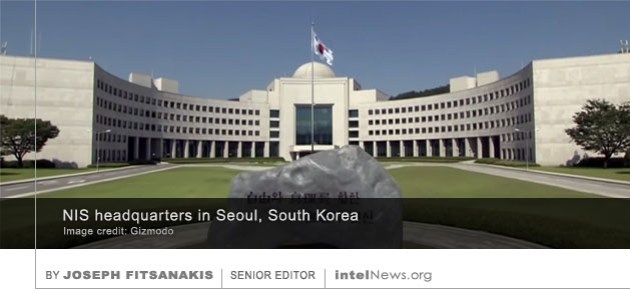 TENSION IS MOUNTING BETWEEN the government and opposition forces in South Korea, as the conservative administration of President Yoon Suk Yeol appears to be behind an effort to probe alleged links between senior liberal political figures and North Korean intelligence. The effort, which some commentators
 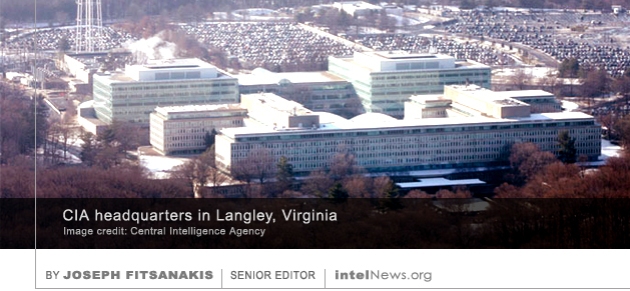 A BOOK BY A former Central Intelligence Agency (CIA) case officer, which alleges that a senior Agency official sabotaged American counterintelligence efforts on orders from Moscow, has prompted a series of fiery exchanges by retired CIA personnel. The primary figures in the dispute are the book’s author, Robert Baer, and Paul J. Redmond, who served as the CIA’s Associate Deputy Director of Operations for Counterintelligence.
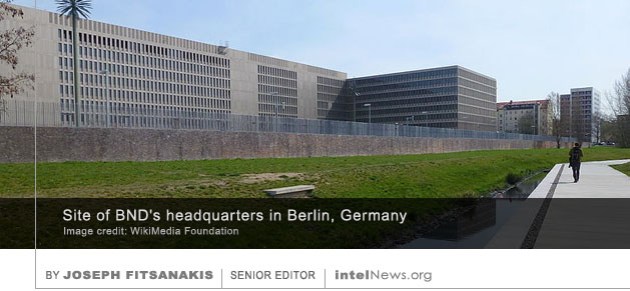 GERMANY’S EXTERNAL INTELLIGENCE AGENCY, the Federal Intelligence Service (BND), constitutes a liability for Europe’s security and is in desperate need of a drastic and immediate overhaul. That is the conclusion of a blunt
 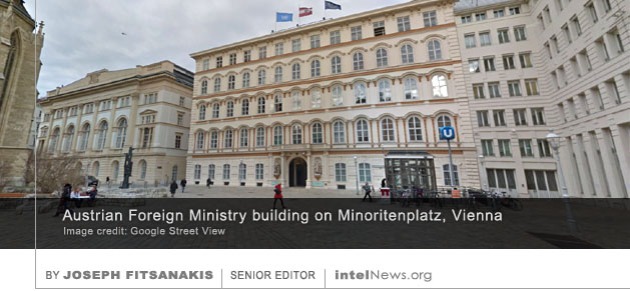 THE MINISTRY OF FOREIGN Affairs of Austria announced Thursday that it has ordered the expulsions of four Russian diplomats from its territory. It is highly unusual for Austria, which is traditionally reluctant to take sides in international political disputes, to expel Russian diplomats.








New report assesses record of Russian unconventional operations in Ukraine war
April 10, 2023 5 Comments
The 39-page report was published on March 29 by the Royal United Services Institute (RUSI). It is titled “Preliminary Lessons from Russia’s Unconventional Operations During the Russo-Ukrainian War, Feb 2022-Feb 2023”. It suggests that the early assessments of the Russian intelligence community failed to anticipate by a wide margin the strength of the Ukrainian opposition to the Russian invasion, as well as the West’s resolve to assist Kyiv. Moreover, early assessments by Russian intelligence agencies severely over-estimated the capabilities of the Russian military, with near-catastrophic results.
However, the report claims that, in contrast to its early assessments, the record of unconventional operations by Russia’s intelligence community in Ukraine has been largely successful, and has allowed Moscow to effectively subdue occupied populations in eastern Ukraine. It suggests that Russian intelligence agencies began planning for the military invasion at least eight months in advance. They prepared the ground by assembling a large network of agents on the ground in Ukraine, which included at least 800 Ukrainian government officials. Some of these officials offered to spy for Russia voluntarily, while others were coerced through various means.
The agent network inside Ukraine gave Russian intelligence agencies access to government databases, as well as to communications intercepts. These were used to construct detailed assessments of targeted individuals in occupied areas of Ukraine, and enabled Russian intelligence agencies to operate surgically in neutralizing leading pro-Kyiv officials in those areas. That method has been largely effective in the past year, and has allowed Moscow to exercise strict control in areas under occupation through “a steady stream of human intelligence” from its agent networks, the report claims.
In an unrelated development, a trove of leaked documents circulated on several social media platforms late last week. The documents appear to contain intelligence briefs compiled by the Joint Staff of the United States Department of Defense. The briefs contain intelligence information from a host of American intelligence agencies, including the Central Intelligence Agency and the National Security Agency. According to reports, the documents show the extent to which American intelligence has penetrated the Russian government. They also show Washington’s ability to assess with accuracy Moscow’s military and intelligence planning. The New York Times, which reported on the leak last week, said the documents show that “nearly every Russian security service [has been] penetrated by the United States in some way”.
► Author: Joseph Fitsanakis | Date: 10 April 2023 | Permalink
Filed under Expert news and commentary on intelligence, espionage, spies and spying Tagged with 2022 Russian invasion of Ukraine, covert action, News, Royal United Services Institute, Russia, Ukraine