Analysis: HUMINT insights from the Muller/Cherkasov case

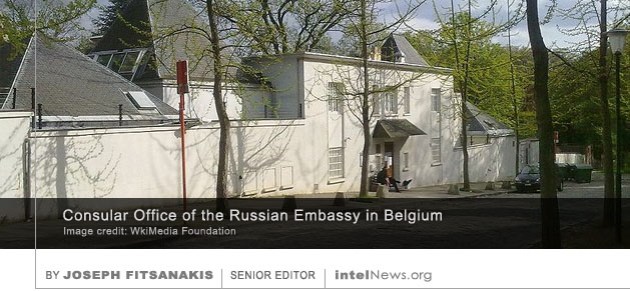
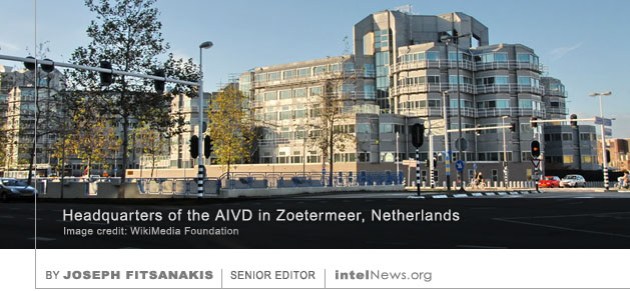
AIVD HollandAT A TIME WHEN dozens of countries are routinely expelling record numbers of Russian intelligence officers, news of the unmasking of yet another Russian spy is barely newsworthy. However, the case of Sergey Cherkasov/Victor Muller is different. That is because, unlike the vast majority of Russian spies with blown covers, he did not operate under diplomatic protection. This is not necessarily uncommon —in fact, there are probably dozens of Russian case officers operating internationally without diplomatic cover. What is unusual is that one of them has been publicly unmasked. What is more, the case offers some interesting pointers for those interested in contemporary human intelligence (HUMINT).
The Facts

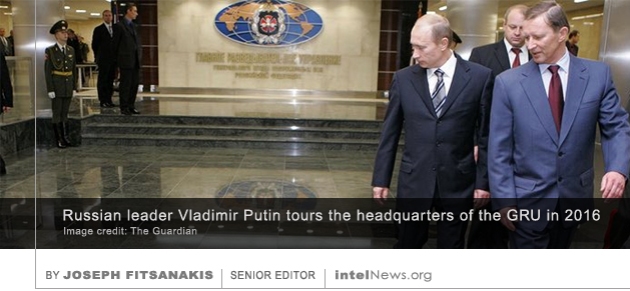
According to the Netherlands General Intelligence and Security Service (AIVD), which publicized the case last week, a man using a Brazilian passport attempted to enter Holland in April of this year. His passport had been issued under the name Victor Muller Ferreira, allegedly born to an Irish father and a Spanish-speaking mother in Niteroi (near Rio de Janeiro) on April 4, 1989. However, according to the AIVD, the man’s real name is Sergey Vladimirovich Cherkasov, a citizen of Russia, who was born on September 11, 1985. Based on the information released by Dutch intelligence, Cherkasov is an intelligence officer of the Main Directorate of the Russian Armed Forces’ General Staff, which is commonly known as the GRU.

The AIVD claims that the reason for Cherkasov’s visit to the Netherlands was to join the International Criminal Court (ICC) in The Hague, as a paid intern. He eventually planned to transition into full-time employment in the ICC, where he “would be highly valuable to the Russian intelligence services”. The AIVD reportedly notified the Dutch Immigration and Naturalization Service, which detained Cherkasov upon his arrival at Amsterdam’s Schiphol International Airport. The Dutch government declared the alleged GRU officer persona non grata and promptly expelled him back to Brazil “on the first flight out”.

Cherkasov’s Cover and Legend

Cherkasov arrived in Holland with a cover, a term that refers to a fake operational identity used for purposes of espionage. It is unlikely that his cover was natural, meaning that he is probably not Brazilian by birth —though it is possible that at least one of his parents was/is not Russian by birth. What is more likely is that Cherkasov’s cover is contractual, meaning that it was crafted especially for him by the GRU after he was hired as an intelligence officer. This likely happened as many as 10 years ago, when Cherkasov was in his early 20s. Read more of this post

Is there such a thing as female HUMINT? New research highlights understudied topic

Female Engagement TeamALTHOUGH INTELLIGENCE IS A traditionally male-dominated profession, the integration of women into the field has grown exponentially in our time. The area of human intelligence (HUMINT), i.e. the use of human handlers to extract secrets through the use of human agents, is among the areas of the profession that remain most resistant to the incorporation of women. Now new research from Germany is shedding light into the understudied topic of female approaches to HUMINT.

In an article published earlier this month in the International Journal of Intelligence and CounterIntelligence, Stephan Lau and Farina Bauer ask a number of important questions about the effective inclusion of women in HUMINT. The article is entitled “What About Her? Increasing the Actionability of HUMINT in Paternalistic Cultures by Considering Female Intelligence”. Lau is a member of the Faculty of Intelligence at the Federal University of Administrative Sciences in Berlin. Bauer, who holds a Master’s degree from the University of the Armed Forces in Munich, is a female HUMINT practitioner with Germany’s Bundeswehr (Federal Defense).

The article contains insights from Bauer’s experience as a HUMINT operative. It also shares data from surveys and interviews with 40 military HUMINT operatives in the Bundeswehr, who have served in male-dominated collection environments, such as Afghanistan, Iraq and Kosovo. A central question the authors focus on is “whether there is a gender-sensitive perspective regarding women as targets as well as females as operators in these theaters”. In attempting to answer that question, Lau and Bauer elaborate on the concept of “female intelligence collection”, namely “a gender-sensitive perspective in intelligence collection planning that not only recognizes females as targets of collection but also considers females as operatives”. This concept was partly behind the creation of female engagement teams (FETs), which have been pioneered in Afghanistan by American and other Western Special Operations Forces units in order to engage with local women.

The authors conclude that, despite the growth of FETs in the past decade, female targets in paternalistic societies remain “both untapped (i.e., not yet a standardized part of mission planning) and harder for operators to access”. Moreover, they recommend that FETs should not be the centerpiece of female intelligence collection, because it isolates women in the broader HUMINT environment and fails to combine male and female collection capabilities. They argue that “[f]emale-only teams are not the right answer to reform a male-dominated profession”. Instead, they propose the “integration of female and male operators in the same units by creating and supporting mixed teams”. These teams, they argue, would “increase the actionability of intelligence collection entities, even beyond military intelligence”.

Author: Joseph Fitsanakis | Date: 13 June 2022 | Permalink

Many see Israel behind May 22 killing of Iranian paramilitary leader in Tehran

IRGC IranA GROWING NUMBER OF security observers point to Israel as the most likely culprit behind the assassination of a leading member of the Islamic Revolutionary Guard Corps (IRGC), Iran’s powerful paramilitary force. Brigadier General Hassan Sayyad Khodaei, who was killed in broad daylight in Tehran on May 22, served as deputy director of the Quds Force, a major branch of the IRGC. The mission of the Quds Force is to carry out unconventional warfare, especially in support of IRGC operations against adversaries abroad.
Observers regularly describe the IRGC as a ‘praetorian guard’ that operates inside Iran’s governing apparatus. Today the IRGC is a military force with a command structure that is distinct from Iran’s regular Armed Forces. It maintains its own army, navy and air force, has its own paramilitary and political protection units, and oversees Iran’s nuclear program. The IRGC’s weapons development falls under the duties of the Quds Force, in which Khodaei was a leading figure. He was also known to have been closely mentored by IRGC Commander Qasem Soleimani, who was assassinated by the United States in 2020.

Kodaei was assassinated in broad daylight on May 22, as he was heading home from his office in downtown Tehran, located a few blocks from the main building of Iran’s Consultative Assembly. According to eyewitness reports, Kodaei’s vehicle was rapidly approached by two individuals riding on a motorbike. They sped away seconds after shooting Kodaei five times, killing him almost instantly. The entrance to the street where Kodaei was attacked was allegedly blocked by a white van, which also sped away following the shooting.

Israel is known for carrying out assassinations of Iranian officials using motorbikes, which can move with relative ease in the congested streets of Tehran. IntelNews regulars will recall that Israeli intelligence claimed last month to have detained and interrogated an alleged Iranian assassin named Mansour Rasouli. A video of his alleged testimony emerged, which was reportedly filmed at a Mossad safehouse somewhere in Iran. Meanwhile, Kodaei’s assassins remain at large.

Author: Joseph Fitsanakis | Date: 25 May 2022 | Permalink

West German intelligence infiltrated Adolf Eichmann trial in Israel, documents show

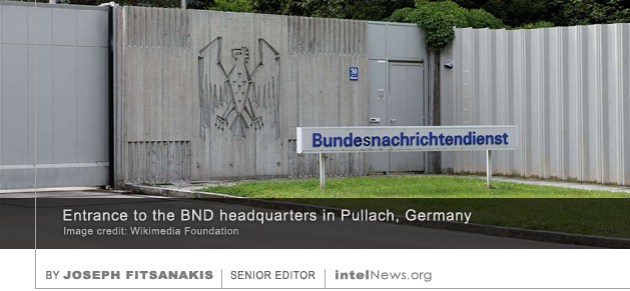
BND GermanyWEST GERMAN SPIES INFILTRATED the trial of Adolf Eichmann, one of the architects of the Holocaust, in order to limit its damage on the reputation of senior West German politicians who had a Nazi past. Eichmann was the lead author of the system of mass deportation of Jews from ghettos in Nazi-occupied Europe to extermination camps, where millions of them were brutally killed. In 1960, after years of hiding, he was captured in Argentina by agents of the Mossad, Israel’s covert-action agency, and secretly transported to Israel, where he was put to trial and eventually hanged.
Since 2011, new files on the West German response to Eichmann’s abduction and trial have been uncovered by the Independent Commission of Historians to Research the History of the Federal Intelligence Service, 1945-1968. The Independent Commission consists of professional historians, who have been granted near-complete access into the archives of Germany’s Federal Intelligence Service (BND). Known as Bundesnachrichtendienst, the BND conducts foreign intelligence, making it Germany’s equivalent of the United States Central Intelligence Agency. The project has been praised as a rare case of openness and transparency in historical research into the activities and operations of a still-functioning intelligence agency.

Led by Professor Klaus-Dietmar Henke, the Independent Commission has published 15 volumes of research on the BND. The latest release concerns (among other things) Hans Globke, a senior official in Germany’s Nazi-era Ministry of the Interior, who was eventually appointed to the Office for Jewish Affairs. From that post, Globke helped draft the legislation, known as the Nuremberg Race Laws of 1935. These laws gave legal sanctuary to the exclusion of Germany’s Jewish population from political, commercial and other social activity. The same laws were eventually used to confiscate assets belonging to Jewish German citizens.

After the war, Globke closely aligned himself with the British forces and became testified as a witness in the prosecution of senior Nazi war criminals. He rebuilt his political career, initially on the local level, and eventually as Chief of Staff to the Office of the Chancellor of West Germany. He also served as West Germany’s Secretary of State, promoting a pro-Atlanticist foreign policy that closely aligned Western Germany with the United States.

According to the latest release by the Independent Commission, Globke tasked the BND with infiltrating Eichmann’s trial, in order to limit the details exposed about the Nazi government during the trial proceedings. The primary goal of the operation, according to the new information, was to prevent even the mention of Globke’s name during Eichmann’s trial. If that was not achieved, the aim was to protect Globke’s reputation and shield the public from details about his Nazi past, especially relating to the Holocaust.

When asked about the revelation, a spokesperson for the BND refused to comment on it, saying only that “the draft results of the independent historical commission speak for themselves”. A spokesperson for the German federal government appeared to reject a call to withdraw a number of civilian medals and other honors that Globke was bestowed prior to his death. According to the spokesperson, German law does not have provisions for “posthumous withdrawal” of awards.

Author: Joseph Fitsanakis | Date: 16 May 2022 | Permalink

In rare speech, Australian intelligence chief stresses urgent need to recruit more spies

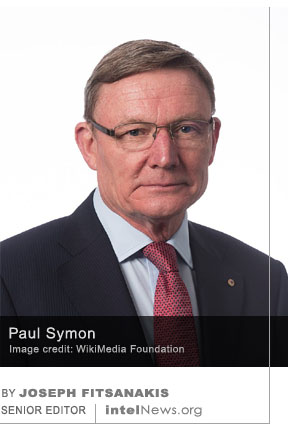
Paul SymonAUSTRALIAN INTELLIGENCE MUST recruit foreign spies with more urgency than at any time since the opening years of the Cold War, according to the head of Australia’s main foreign intelligence agency. Paul Symon, director of the Australian Secret Intelligence Service (ASIS), was speaking at a public event to mark the 70th anniversary of the organization’s history. It was a rare public speech by the head of Australia’s secretive main foreign intelligence service.


Symon’s talk was hosted in Sydney by the Lowy Institute, an independent Australian think-tank that focuses on international affairs. During his talk, which was made available afterwards on the Lowy Institute’s website, Symon spoke about a range of issues relating to Australia’s geopolitical priorities and their connection to intelligence operations. He told the audience that the primary task of ASIS, which is to recruit foreign subjects to spy on behalf of Australia, remained as crucial as ever.

He added, however, that a growing number of pressing concerns made “the need to recruit new spies” more essential than ever before. According to Symon, ASIS needs to “recruit and work with even more vigor and urgency than at any other point in our 70-year history”. In this task, China remains a strategic focus for ASIS, given its role in the region. Symon claimed there were signs that increasing numbers of Chinese state “officials [and] individuals” were “interested in a relationship” with ASIS. This was because many Chinese are becoming concerned about what he described as the rise of “an enforced monoculture” in China, and wish to stop it, said Symon.

Later in his speech, the ASIS director touched in broad terms on the challenge posed by technology on human intelligence (HUMINT) operations, in which ASIS specializes. He described these challenges as “extraordinary”, and said they resulted from an interaction between “a complex strategic environment [and] intensified counter-intelligence efforts” by Australia’s adversaries, as well as a host of “emergent and emerging technologies”. These technologies are in many ways posing “a near-existential” risk to the types of HUMINT operations carried out by ASIS, as the organization’s collection activities run the risk of becoming “increasingly discoverable”, said Symon.

Author: Joseph Fitsanakis | Date: 10 May 2022 | Permalink

Mystery blasts, fires, prompt rumors of sabotage campaign inside Russia (updated)

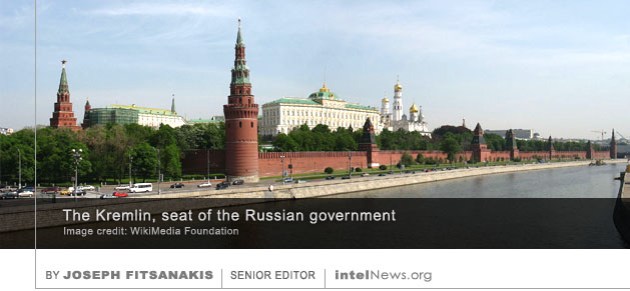
Kremlin, RussiaA SERIES OF LARGE-scale incidents of destruction, which have been occurring across Russia in recent days, are prompting speculation that the county may be experiencing a wave of attacks against its strategic infrastructure. The incidents include enormous fires at power plants, munition depots and state-owned storage facilities. The collapse of at least one railway bridge has also been reported. There are additional reports of massive wildfires raging across Siberia, which are imposing heavy demands on Russia’s emergency response infrastructure.

On April 21, a massive blaze engulfed the Central Research Institute for Air and Space Defense of the Russian Defense Ministry in Tver, a city located around 120 miles northwest of Moscow. According to Associated Press, which reported the news about the fire, the institute “was involved in the development of some of the state-of-the-art Russian weapons systems, reportedly including the Iskander missile”. By next morning, at least 17 people were believed to have died as a result of the fire.

Late last week, the Sakhalinskaya GRES-2 power station, a vast 120-megawatt coal-fired power plant in Russia’s far-eastern Sakhalin province, went up in flames, giving rise to persistent rumors of sabotage. On May 1, Russian state-owned news agencies reported that a railway bridge in the western province of Kursk, 70 miles from the Ukrainian border, had been destroyed. Analysts at the Washington-based Atlantic Council think tank claimed that the bridge had been used extensively by the Russian military to transport equipment to eastern Ukraine. Later on the same day, a cluster of fuel-oil tanks in Mytishchi, a mid-size city located northeast of Moscow, were completely destroyed by a fast-spreading fire.

On May 2, a munitions factory in Perm, a major urban center in western Siberia, was hit by a “powerful” explosion. Ukrainian government officials hinted at sabotage in social media posts, though no proof has been provided, and the Kremlin has not commented on the matter. On the following day, the Prosveshchenie publishing house warehouse in Bogorodskoye, northeast of Moscow, was destroyed by a massive fire. The warehouse belongs to Russia’s state-owned publisher of school textbooks. The fire occurred almost simultaneously as another fire engulfed a polyethylene waste storage facility in the central Siberian city of Krasnoyarsk.

Meanwhile, the sprawling forests that surround Krasnoyarsk and other Siberian urban centers are experiencing seasonal wildfires of near-unprecedented scale. Some early reports claimed that the Russian government was finding it difficult to contain these fires, because the country’s emergency response personnel has been sent to the frontlines of the war in Ukraine. But these reports were denied by Russia’s Ministry of Emergency Situations, which claimed earlier this week that the fires were mostly under control.

Author: Joseph Fitsanakis | Updated: 09 May 2022 | Research credit: M.R. | Permalink

Newly discovered cyber-espionage group spies for money using state-actor methods

Computer hackingA NEWLY DISCOVERED CYBER-espionage group appears to target the senior leadership of private corporations involved in large-scale financial transactions, but employs skills and methods that are usually associated with state-sponsored threat actors. The group has been termed “UNC3524” by the American cybersecurity firm Mandiant, which says it discovered it in December of 2019. In a detailed blog post published earlier this week, a team of cyber-security researchers at Mandiant say they have been studying the group for over two years, and have been surprised by their findings.

Given its targets, as well as the information it goes after, there is little doubt that UNC3524 is interested in financial gain. However, its operational profile differs markedly from those of other financially oriented hacker groups, according to Mandiant. Its sophisticated approach to espionage demonstrates aspects that are typically associated with government-sponsored intelligence operations. Notably, UNC3524 operatives take their time to get to know their targets, and are not in a hurry to exploit the online environments they penetrate. Mandiant reported that UNC3524 attacks can take up to 18 months to conclude. In contrast, the average financially-motivated cyber-espionage attack rarely lasts longer than three weeks.

Additionally, UNC3524 operatives make a point of maintaining an extremely stealthy and low-key online profile, and have even developed a series of novel exploitation techniques, which Mandiant has termed “QuietExit”. The latter appear to focus on exploiting Internet of Things (IoT) devices that are typically found in corporate settings, but are not protected by traditional anti-virus systems. Once they penetrate the digital environment of their target, UNC3524 operatives meticulously build sophisticated back-doors into the system, and are known to return sometimes within hours after they are detected and repelled.

Interestingly, UNC3524 operatives do not waste time on low-level employees of targeted corporations. Once inside, they go straight for executive-level targets, including those in corporate strategy and development, mergers and acquisitions, and even information security. Mandiant says a few other actors, notably Russian-linked groups like Cozy Bear, Fancy Bear, APT28 or APT29, are also known to operate with such high-level targets in mind. However, there is little other operational overlap between them and UNC3524, the blog post claims.

Author: Joseph Fitsanakis | Date: 04 May 2022 | Permalink

Mossad allegedly uncovered Iranian plot to kill Israeli, American officials abroad

Israeli consulate Istanbul TurkeyISRAEL’S MOSSAD INTELLIGENCE AGENCY allegedly foiled a plot by Iranian intelligence to send assassins abroad and kill an Israeli diplomat, an American military official and a French reporter, according to reports. The information about the alleged plot first surfaced late last week in the Iran International News Channel, a British-based Iranian news agency, which is opposed to the government in Tehran. The news agency claimed that the plot had been organized by the Quds Force, the paramilitary wing of the Islamic Revolutionary Guards Corps.

Shortly after news of the alleged plot emerged, Israeli media reported the existence of a video of an Iranian man who identifies himself as Mansour Rasouli (or Rassouli). In the video, the man claims to be a member of Unit 840, the part of the Quds Force that plans and executes operations overseas. He also claims that he was paid $150,000 to plan the assassination of an Israeli consular official in Istanbul, Turkey, as well as an American military general stationed in Turkey. A third target for assassination was a Jewish French journalist. The names of the alleged targets are not known. He adds that he had planned to carry out the assassinations with the use of networks of drug smugglers.

Rasouli then claims that the Quds Force had promised to pay him an additional $1 million following the successful conclusion of the assassinations. Toward the end of his statement, Rasouli says he had made an “error of judgment” in agreeing to participate in the operation, and promises to refrain from targeting individuals for assassination in the future. According to Iran International, Rasouli’s interview was filmed by officers of the Mossad in Turkey, where he was allegedly captured before he was able to execute the first of the planned assassinations. However, Israeli media later claimed that the Mossad officers filmed the interview in Iran, during a covert operation that resulted in the capture and interrogation of Rasouli.

IntelNews readers will recall that, in October of last year, Israel accused Iran of being behind a plot to kill Israeli citizens in Cyprus. The accusation came after the arrest of an Azeri national, who was reportedly found carrying a gun fitted with a silencer in the Cypriot capital Nicosia. A year earlier, it was reported that American intelligence agencies had uncovered an Iranian plot to kill the United States’ ambassador to South Africa, in an effort to avenge the assassination of General Qassem Soleimani by the United States in January of 2020.

Author: Joseph Fitsanakis | Date: 02 May 2022 | Permalink

Russia orders 175,000 diplomatic passports, prompting speculation about their use

Russian foreign affairs ministryTHE RUSSIAN FEDERATION HAS reportedly ordered 175,000 new diplomatic passports to be printed, prompting speculation about their possible use at a time when Western sanctions are affecting Russia’s governing elite. Diplomatic passports are travel documents that are issued to accredited diplomats and government officials, such as foreign ministry envoys and others. Pursuant to the Vienna Convention of Diplomatic Relations, holders of diplomatic passports enjoy diplomatic immunity and are typically subjected to very limited inspections by security personnel when crossing international borders.

On Wednesday, SOTA Vision, a Russian alternative news website and social media network, claimed in a report that the Ministry of Foreign Affairs of the Russian Federation had ordered nearly 175,000 diplomatic passports to be printed, at the cost of over 300 million rubles ($4 million). The report, which was translated into English by the British newspaper The Daily Mail, questioned the need for so many diplomatic passports to be printed. It noted that the Ministry of Foreign Affairs employs no more than 15,000 people, of whom only about a third spend any time abroad, and thus require diplomatic passports.

So what is the reason for the use of so many diplomatic passports? According to SOTA Vision, these may be used by members of the Russian governing and economic elite, as well as their families, to evade Western sanctions on international travel and to avoid arrest when traveling abroad. Since Russia’s invasion of Ukraine in February of this year, Russia has been subjected to the harshest sanctions by Western countries since the end of the Cold War. Additionally, employees of Russian intelligence agencies may use several thousands of these diplomatic passports for their employees to operate abroad under what is known as “official cover”. Such agencies include the Foreign Intelligence Service (SVR), the Federal Security Service (FSB) and the Federal Protective Service (FSO), SOTA Vision noted.

Author: Joseph Fitsanakis | Date: 28 April 2022 | Permalink

Australian spies helped expose secret pact between China and Solomon Islands

Honiara Solomon IslandsAUSTRALIAN INTELLIGENCE HAD A role in the mysterious disclosure of a secret memorandum about a controversial defense pact between China and the Solomon Islands, which is causing consternation in the West. Western leaders claim that the pact will turn the tiny Melanesian nation into a logistical hub for Chinese warships in a strategic region of the Pacific Ocean. The pact also stipulates a training role for Chinese police and military personnel, who are called to “assist […] in maintaining social order” in the island nation.

The Solomon Islands is an archipelago consisting of nearly 1,000 islands of various sizes in an area northwest of Vanuatu and east of Papua New Guinea. It gained its independence from Britain in the mid-1970s. Australia has historically provided security for this island nation of 700,000 inhabitants, which has no standing military. However, China has become a dominant player in Solomon Islands politics in recent years. In 2019, the government of the island nation abruptly withdrew its diplomatic recognition of Taiwan and aligned itself with Beijing.

The move sparked concerns in Malaita, the Solomons’ largest island, which is home to a sizeable Chinese community. There were demonstrations against Prime Minister Manasseh Sogavare in the capital of the Solomon Islands, Honiara (pictured). Eventually, the demonstrators attempted to storm the Parliament and depose Sogavare’s administration by force. There were also attacks on Chinese-owned businesses in the capital, as well as on a number of police stations, which were set on fire. Eventually, Australian, New Zealander, Papuan and Fijian troops restored order in downtown Honiara.

In late March, the text of a defense pact between the Solomon Islands and China appeared online. The pact centers on law enforcement and military cooperation, involving training programs and joint exercises between the two nations. Some Western nations, including New Zealand, Australia and the United States, are concerned about the possibility that China could use the agreement to build a military base in the Solomon Islands. The island nation is strategically located near Australia and New Zealand, as well as near the island of Guam, which hosts a large American military base.

On Sunday, several Australian newspapers, including The Sydney Morning Herald and The Age reported that intelligence agencies in Australia were aware of plans by the governments of China and the Solomon Islands to sign the pact. According to “[m]ultiple government and security sources”, Australian spies had known about the pact “for months”. In March, they decided to “encourage a leak from within the Solomons” in an effort to sabotage the planned deal. According to reports, the hope was that the revelation would “build domestic and international pressure to get the Solomons to change course”.

It appears, however, that the leak of the secret document was not sufficient to dissuade the government of the Solomon Islands to back away from the agreement. Solomons Prime Minister Manasseh Sogavare eventually signed the agreement with China, arguing that it would “improve the quality of lives” of his people and would “address soft and hard security threats facing the country”.

Author: Joseph Fitsanakis | Date: 25 April 2022 | Permalink

Russian sleeper agent Mikhail Vasenkov reportedly dead at 79

Mikhail VasenkovRUSSIAN DEEP-COVER SPY Mikhail Vasenkov, who was caught by authorities in the United States in 2010, and was later part of a multi-person spy-swap between Washington and Moscow, has reportedly died. Vasenkov was an officer for the Soviet-era Committee for State Security (KGB), under which he constructed his non-official cover identity. In 1976, he reportedly arrived in Lima, Peru, from Madrid, Spain. He traveled on a Uruguayan passport bearing the name “Juan Jose Lazaro Fuentes”. The forged identity had been constructed by the Soviet KGB. The spy agency had used the birth certificate of a Uruguayan child, who had died of respiratory failure in 1947.

In 1979, Lazaro applied for, and was granted, Peruvian citizenship. A few years later, he met and married Peruvian journalist Vicky Pelaez, with whom he had a son. In 1985, the Lazaros moved to New York, along with their child and a son Pelaez had from a previous relationship. The couple were arrested by the FBI in 2010, and later admitted being in the service of Russian intelligence. They were among 10 Russian non-official-cover intelligence officers, who were swapped for a number of Western-handled intelligence agents held in Russian prisons.

In January of 2020, the Russian Foreign Intelligence Service (SVR), which is one of the KGB’s successor agencies, admitted for the first time that Vasenkov had been an intelligence officer. This unusual announcement directly contradicted Vasenkov’s own claims 10 years earlier: the spy had allegedly said that he was not Russian, did not understand or speak Russian, and wanted to move to Peru.

On April 6 of this this month, the SVR announced Vasenkov’s death, saying he was 79 years old. The announcement gave no cause of death. It added that Vasenkov had served in the so-called “special reserve staff” of the organization, which refers to spies who do not operate under diplomatic cover abroad. The obituary noted that Vasenkov had “created and headed an illegal residency”, which “obtained valuable political information, that was highly appreciated” by Russian decision-makers. It also said that Vasenkov had acquired the rank of colonel in 2005.

Author: Joseph Fitsanakis | Date: 22 April 2022 | Permalink

British government phones were hacked with Pegasus spy software, group claims

NSO GroupTELEPHONE SYSTEMS BELONGING TO the British government were compromised by the Pegasus surveillance software, according to a Canadian research group. The allegation was made on Monday in an investigative report by The New Yorker, which focuses on NSO Group Technologies, an Israeli digital surveillance company based near Tel Aviv. The company is behind the development of Pegasus, which is arguably the most powerful telecommunications surveillance software available in the private sector.

As intelNews and others have previously reported, Pegasus is able to install itself on targeted telephones without requiring their users to click a link or download an application. Upon installation, the software provides the spying party with near-complete control of a targeted telephone. This includes the ability to browse through the device’s contents, such as photographs and videos, record conversations, as well as activate the telephone’s built-in microphone and camera at any time, without its user’s consent or knowledge.

According to The New Yorker, the information about the use of Pegasus software against British government telephone networks was disclosed by the Citizen Lab, a research unit of the University of Toronto’s Munk School of Global Affairs and Public Policy, which focuses on information technology, international security and human rights. The research unit said it notified the British government in 2020 and 2021 that a number of its telephone networks had been infected with the Pegasus software. The compromised networks were allegedly being used by officials in the Foreign and Commonwealth Office, as well as in 10 Downing Street, which houses the office of the prime minister.

The article claims that the compromise originated from users in the United Arab Emirates, as well as users in India, Cyprus and Jordan. This does not necessarily mean that malicious actors from these countries penetrated the British government’s telephone systems. These could be spies of third countries operating abroad; alternatively, there could be a link to unsuspecting British diplomats, whose government-issue cell phones were compromised by Pegasus in foreign countries. The Citizen Lab said it could not be sure about what kind of data may have been compromised as a result of the penetration.

NSO Group Technologies was among two Israeli firms that the US Department of Commerce placed on a sanctions list in November of 2021. According to a statement issued by the US government, the two firms engaged “in activities that [were] contrary to the national security or foreign policy interests of the United States”.

Author: Joseph Fitsanakis | Date: 19 April 2022 | Permalink

American computer programmer jailed for giving technical know-how to North Korea

North Korea PyongyangAN AMERICAN COMPUTER PROGRAMMER has been jailed for 63 months for providing “highly technical information” to North Korea, which related to cryptocurrency systems, according to United States officials. The programmer, Virgil Griffith, 39, also known as “Romanpoet”, became widely known in the early 2000s, when he began describing himself as a “disruptive technologist”. He later consulted with the Federal Bureau of Investigation and other law enforcement agencies in the area of the dark web and cryptocurrencies.

In later years, however, Griffith developed what his lawyer described as a “curiosity bordering on obsession” with North Korea. The FBI arrested Griffith in November of 2019, accusing him of deliberately providing the North Korean government with “highly technical information” relating to blockchain and cryptocurrency systems. According to US government prosecutors, Griffith committed a crime when he delivered an invited presentation at an international conference on cryptocurrencies in Pyongyang, North Korea, in April of 2019.

Prior to attending the conference, Griffith had been barred from traveling to North Korea by the United States Department of State. He managed to get there anyway and, according to US prosecutors, “advised more than 100 people” on the use of cryptocurrencies to evade banking regulations and international sanctions. Griffith should have known that many of those he spoke to were employees of the North Korean government, US prosecutors said. They argued that Griffith’s actions amounted to an illegal transfer of highly technical knowledge. By attending the conference, Griffith essentially provided services to a foreign power that is hostile to the United States, prosecutors claimed.

Griffith has been given a 63-month prison sentence, which will be followed by a 3-year supervised release. He has also been fined $100,000. As intelNews has previously reported, a United Nations report warned earlier this year that the North Korean missile program has developed rapidly in recent times, partly due to an influx of stolen cryptocurrency, which has now become “an important revenue source” for Pyongyang.

Author: Joseph Fitsanakis | Date: 13 April 2022 | Permalink

Leaked plan for China-Solomon Islands security alliance raises concerns in the Pacific

Manasseh Sogavare Solomon IslandsA LEAKED PLAN FOR a security alliance between China and the small Melanesian nation of the Solomon Islands has sparked concerns about a large-scale military buildup by regional powers in the South Pacific. The draft agreement, which was leaked online last week, appears to turn the Solomon Islands into a logistical hub for Chinese warships. It also stipulates a training role for Chinese police and military personnel, who are called to “assist […] in maintaining social order” in the island nation.

The Solomon Islands is an archipelago consisting of six major and nearly 1,000 smaller islands in an area northwest of Vanuatu and east of Papua New Guinea. It gained its independence from Britain in the mid-1970s. Australia has historically provided security for this island nation of 700,000 inhabitants, which has no standing military. However, China has become a dominant player in Solomon Islands politics in recent years. In 2019, the government of the island nation abruptly withdrew its diplomatic recognition of Taiwan and aligned itself with Beijing.

The move sparked concerns in Malaita, the Solomon Islands’ largest island, which is home to a sizeable Chinese community. There were demonstrations against Prime Minister Manasseh Sogavare (pictured) in Honiara, the capital of the Solomon Islands. Eventually, the demonstrators attempted to storm the Parliament and depose Sogavare’s administration. There were also attacks on Chinese-owned businesses in Honiara, as well as on a number of police stations, which were set on fire. Eventually, Australian, New Zealander, Papuan and Fijian troops restored order in Honiara.

Tensions have risen again in recent weeks, however, after Sogavare’s government signed a memorandum of understanding (MOU) with China. The memorandum centers on law enforcement and military cooperation, involving training programs and joint exercises between the two nations. The Solomon Islands government described the MOU as “necessary” to allow it to quell “recurring internal violence” in Honiara and elsewhere. China’s Ministry of Foreign Affairs described the MOU as an agreement that “aims to maintain the safety of people’s lives and property”. Read more of this post

FBI arrests two men who tried to influence Secret Service agents – motive unknown

Jill and Joe BidenTHE FEDERAL BUREAU OF Investigation arrested two men on Wednesday, who allegedly tried to influence four agents of the United States Secret Service with money and gifts, according to an affidavit. The men were identified on Thursday as Haider Ali, 36, and Arian Taherzadeh, 40. Both are United States citizens and residents of Washington, DC. On the same day, FBI personnel searched five apartments and a number of cars that belong to the two men.

According to the FBI, in February of 2020 the two men began posing as employees of the Department of Homeland Security (DHS). At around the same time, they began telling people they knew that they were involved in undercover investigations. After the United States Capitol attack of January 6, 2021, they told neighbors they had been tasked with uncovering the identities of participants in the attack. The FBI alleges that the two men spent thousands of dollars on buying equipment that would help them pass for DHS employees, including a black sports utility vehicle equipped with emergency lights. They had also rented several apartments in Washington, at the cost of hundreds of thousands of dollars a year.

Eventually they became friendly with four Secret Service agents, one of whom served on the protection detail of Dr. Jill Biden, the wife of President Joe Biden. They gradually began giving their Secret Service agent friends gifts, including a flat screen television, a power generator, as well as “law enforcement paraphernalia”.

The FBI has not provided a motive for the activities of the two men, saying only that the investigation into their activities is “ongoing”. According to the New York Times, Ali told witnesses he was connected to the Inter-Services Intelligence directorate, which is the primary intelligence agency of Pakistan. It is also believed that Ali’s passport contains a number of entry visas issued by Pakistani and Iranian authorities, the paper said.

The two men appeared on Thursday at a court hearing in Washington, via videoconference. They are scheduled to attend a detention hearing later today. Meanwhile, the Secret Service agents who were befriended by the two suspects have been placed on administrative leave, according to a Secret Service spokesperson. The investigation into the case continues.

Author: Joseph Fitsanakis | Date: 08 April 2022 | Permalink