Director of Pakistan’s powerful spy agency replaced following much speculation

Inter-Services Public Relations PakistanTHE DIRECTOR-GENERAL OF Pakistan’s Inter-Service Intelligence (ISI) directorate, which is one of the country’s most powerful institutions, has been replaced, following weeks of speculation. On Wednesday, a press release issued by the Pakistani military announced that Lieutenant General Faiz Hameed would step down from his post of director of ISI, and will be replaced by Lieutenant General Nadeem Ahmed Anjum. General Hameed will now assume charge of Pakistan’s elite Corps XI in Peshawar, according to the press release.

As F.M. Shakil notes in The Asia Times, General Hameed’s removal from the top post at ISI had been speculated about for some time. His leadership in the ISI was marked by the spy agency’s increasingly close relations with the Afghan Taliban, as the group prepared to take back power in Afghanistan. Hameed’s activities in Afghanistan were strongly supported by Pakistan’s Prime Minister, Imran Khan, who is believed to have fought to retain him as ISI director until the dust from the Taliban’s takeover settles in Kabul. The fact that Khan’s wish did not materialize is interesting, especially since, under Pakistani law, it is the prime minister’s office that appoints the director-general of the ISI.

Shakil suggests that Khan may have faced pressure from two fronts. First, from China, which is arguably Pakistan’s most important international ally. Beijing has been notably unhappy with the inability of the ISI to stop a string of armed attacks against Chinese workers, who are employed by the China-Pakistan Economic Corridor (CPEC), as well as other projects throughout Pakistan. These attacks have angered China, and have prompted strong calls for more security around Chinese-funded building projects in Pakistan. Beijing is believed to have asked for Hameed’s replacement as a result.

Second, the Pakistani military leadership saw Hameed’s relationship-building program with the Afghan Taliban as having gone a few steps too far. The issue is not so much the relationship-building itself —on the contrary, the Pakistani military wants to be in a position to influence Afghanistan’s new masters. But Hameed stands accused of having maneuvered too visibly. As Shakil notes, the ISI strongman visited Kabul just days after the Taliban takeover and was photographed “sipping green tea [next to Taliban leaders] with a triumphant smile”. That angered the Americans and caused some Pakistani military leaders to believe that Washington might even impose sanctions on Islamabad.

The argument, therefore, is that Hameed’s replacement pleases the Chinese, the Americans and the Pakistani military. The only side that did not get its way is that of the prime minister. Time will show what this means for the future of civilian rule in the world’s only nuclear-armed Muslim-majority nation.

Author: Joseph Fitsanakis | Date: 15 October 2021 | Permalink
Revealed: Turkey helped Iraqi intelligence capture senior Islamic State figure

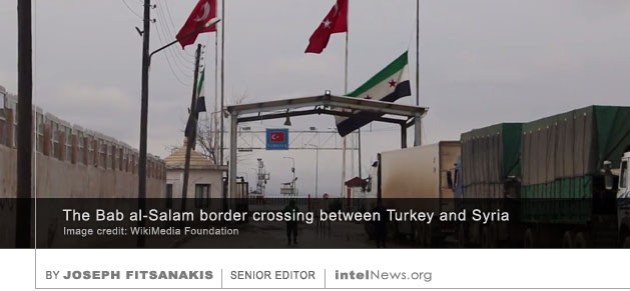
Syria–Turkey border

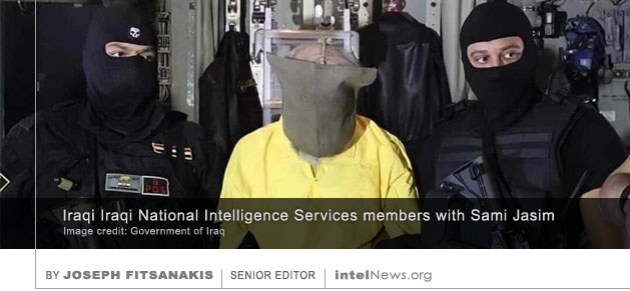
AN ELABORATE OPERATION WHICH, carried out jointly by Iraqi and Turkish intelligence, led to the arrest of one of the most senior officials of the Islamic State to be ever captured alive, according to sources. As intelNews reported on Monday, the Iraqi government announced the capture of Sami Jasim Muhammad al-Jaburi, who served as deputy to the Islamic State’s late spiritual leader, Abu Bakr al-Baghdadi.

Jasim, also known by the name Abu Asya, was the Islamic State’s treasurer during the group’s heyday, when it controlled territory equal to the size of Germany in Syria and Iraq. He survived the demise of the Islamic State’s territorial power, but continued serving in the organization’s financial arm under its current chief, Abu Ibrahim al-Hashemi al-Quraishi. The Iraqi government announced Jasim’s capture on Sunday with a brief statement, which said he had been seized in a “complex operation outside the borders” of Iraq. No further details were made available.

On Tuesday, however, the Reuters news agency reported that Jasim was arrested on Turkish soil in a joint Turkish-Iraqi intelligence operation. Citing “a senior regional security source and two Iraqi security sources”, Reuters said that Jasim had been under surveillance in northwestern Syria for several months by Iraqi and Turkish intelligence. He was reportedly arrested by Turkish intelligence shortly after crossing into Turkey, where he was lured in an operation that included participants from Iraqi intelligence and “local security forces”. Reuters notes that the phrase “local security forces” most likely refers to Turkish backed Syrian militias, who operate along the Turkish-Syrian border.

The Reuters report also points out that Jasim’s arrest may illustrates a deepening cooperation between Turkish and Iraqi intelligence against the remnants of the Islamic State that continue to operate in northwestern Syria, a region that is largely under the control of Turkey. Turkish, Iraqi and American officials who were approached by Reuters refused to comment on the report.

Author: Joseph Fitsanakis | Date: 13 October 2021 | Permalink

Iraqi intelligence claims capture of Islamic State’s finance chief in ‘complex’ operation

Sami Jasim al-Jaburi

ONE OF THE ISLAMIC State’s senior leaders, who has headed the group’s financial arm since at least 2015, was captured in a “complex operation” by Iraq’s intelligence agency, according to announcements from Baghdad. Sami Jasim Muhammad al-Jaburi, also known by the name Abu Asya, has been close to senior Sunni Islamist figures since before the Islamic State emerged as a major player in Iraq and Syria. He is believed to have first met the Islamic State’s spiritual leader, Abu Bakr al-Baghdadi, in the northern Iraqi city of Mosul in 2012.

Once the Islamic State began conquering large swathes of territory in the Middle East, and proclaimed itself the government of a self-styled emirate, Jasim was appointed treasurer. He also served as one of al-Baghdadi’s senior deputies until at least 2017. He survived the fall of the Islamic State’s proto-state, but continued serving in the organization’s financial arm under its current chief, Abdullah Qardash.

Jasim’s arrest was announced on Monday by Iraq’s Prime Minister, Mustafa al-Kadhimi, through his personal account on Twitter. According to the tweet, the Iraqi National Intelligence Services conducted “a complex external operation to capture Sami Jasim”. Notably, the Iraqi Armed Forces revealed in a follow-up tweet that Jasim had been captured outside of Iraq’s borders. But the tweet did not reveal the precise location where the Islamic State leader was captured, nor did it discuss any other aspects of the operation.

The United States government had offered a $5 million reward for information leading to Jasim’s capture. It is not known whether American intelligence agencies or troops played any role in Jasim’s capture.

Author: Joseph Fitsanakis | Date: 12 October 2021 | Permalink

US charges couple with attempting to sell secrets to unidentified foreign country

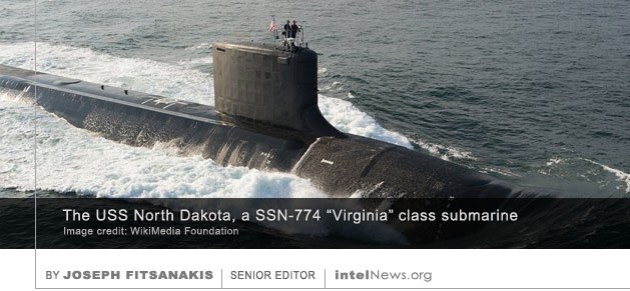
SSN-774 Virginia class submarine

AUTHORITIES IN THE UNITED States have charged a married couple with contacting a foreign power and trying to sell it military secrets, which some reports describe as “some of the United States’ most closely held”. Court documents unsealed on Sunday identify the couple as Jonathan and Diana Toebbe, of Annapolis, Maryland. The husband is reportedly a nuclear engineer who has been working on naval nuclear propulsion for at least a decade.

From 2017 until 2020, Toebbe worked for the United States military as a civilian nuclear engineer. He had a top-secret clearance and even worked for over a year out of the office of the Chief of Naval Operations —the head of the US Navy, who is typically an admiral. Toebbe reportedly left his government post in December of 2020. According to the Federal Bureau of Investigation, a few months earlier he had sent a letter to a foreign government offering military secrets in return for money.

The US government claims that, in April of 2020, Toebbe sent a letter to a foreign government with a note asking its recipient to “please forward this letter to your military intelligence agency”. The note added: “I believe this information will be of great value to your nation. This is not a hoax”. However, the recipient of the letter forwarded the letter to the FBI, which proceeded to launch a sting operation targeting Toebbe. FBI special agents contacted Toebbe pretending to be representatives of the foreign government he had tried to contact by mail.

In a series of messages he exchanged with the FBI special agents, the nuclear engineer offered to share classified information relating to nuclear submarine propulsion, in exchange for $100,000 in cryptocurrency. According to the court documents, the information related to the propulsion system of the US Navy’s SSN-774 “Virginia” class submarines, which, according to The New York Times, is among “the United States’ most closely held secrets on submarine technology”.

Notably, the FBI affidavit does not identify the country that Toebbe attempted to solicit payments from. Given the fact that the country Toebbe had in mind voluntarily shared the information with the FBI, it is possible that it may be a Western country, rather than a country with which Washington has traditionally had adversarial relations. It is also important to note that the SSN-774 class submarine was at the heart of a recent diplomatic controversy between the United States, Australia and France.

Author: Joseph Fitsanakis | Date: 11 October 2021 | Permalink

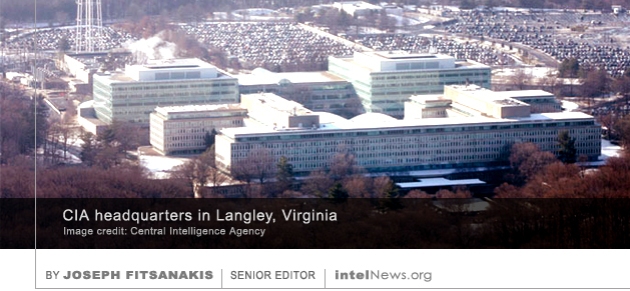
CIA asks its case officers to focus more on security in ‘unusual’ message

CIA

IN A MESSAGE DESCRIBED by observers as “unusual”, the United States Central Intelligence Agency has warned its case officers to give priority to security when recruiting spies in foreign countries. Fictional treatments of espionage work usually refer to CIA personnel as “spies”. In real-life espionage work, however, this term is actually reserved for citizens of foreign countries who are recruited by CIA case officers to work as informants.

According to The New York Times, large numbers of these foreign CIA informants have been “captured or killed” in recent years. The number is reportedly so high that the CIA’s counterintelligence mission center sent “an unusual top secret cable” last week to every CIA station around the world, drawing attention to that fact. The cable was unusual in its candor and even went so far as to relay the precise number of informants who had been captured, killed or compromised in recent times. According to the paper, the cable made specific mention of informants who were neutralized in countries such as Pakistan, Iran, China and Russia.

The top-secret cable continued by highlighting the importance of placing security at the center of the CIA’s mission, especially when recruiting new informants, said The Times. Case officers —personnel in the CIA’s Directorate of Operations, whose job is to recruit foreigners— are expected to recruit with consistency, and are promoted based on that consistency. But the top-secret cable “reminded CIA case officers to focus not just on recruiting sources, but also on security issues, including vetting informants and evading adversarial intelligence services”, according to The Times. The paper added that the language in the cable implied that CIA case officers have often underestimated the agency’s adversaries abroad.

The Times said it reached out to the CIA with questions about the top-secret memo, but “a CIA spokeswoman declined to comment”.

Author: Joseph Fitsanakis | Date: 07 October 2021 | Research credit: J.S. | Permalink

Iran denies murder plot after alleged assassin caught with gun and silencer in Cyprus

Nicosia Cyprus

ISRAEL HAS ACCUSED IRAN of being behind a plot to kill Israeli citizens in the Republic of Cyprus, following the arrest of a man who was reportedly found carrying a gun fitted with a silencer in the Cypriot capital Nicosia. The man reportedly entered Cyprus on a flight that landed at Larnaca International Airport last week. He is believed to be a 38-year-old Azeri national, who allegedly entered Cyprus using a Russian passport.

Cypriot police kept tabs on the suspected assassin as soon as he entered Cyprus, according to reports. IntelNews hears that the Israeli intelligence agency Mossad may have been behind a tip given to the Cypriots about the man’s presence on the island. In the days following his arrival, the suspect crossed several times into the Turkish-occupied northern region of Cyprus, using his Russian passport and “trying to keep a low profile”, according to Israeli media reports.

The Azeri man was eventually arrested in Nicosia, shortly after entering from northern Cyprus at the Agios Dometios checkpoint. Some local news reports suggest that he was found to be carrying a gun fitted with a silencer, and that he was planning to target a number of prominent Israeli business people who live on the island. Reports in Israel claim that the alleged assassin’s primary target was Teddy Sagi, an Israeli investor who owns online gambling platforms, as well as properties in the United Kingdom and Cyprus. He is believed to be among Israel’s richest citizens.

Iran has vehemently denied Israel’s claim that Cypriot police averted “an act of terror [that] was orchestrated by Iran against Israeli business people” in Cyprus. However, the Israeli government’s announcement did not go into details, while Israeli officials refused to confirm that Teddy Sagi was the target of the alleged operation.

Author: Joseph Fitsanakis | Date: 05 October 2021 | Permalink

Man caught with pistol and ammunition is Turkish spy, German prosecutor says

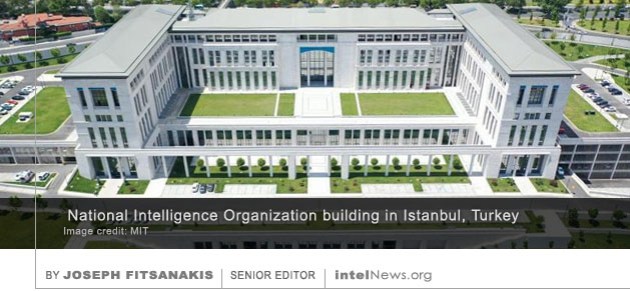
MIT Turkey

GERMAN AUTHORITIES ARE TREATING the arrest of a Turkish citizen, who was found with a pistol and 200 rounds of ammunition, “as a case of suspected espionage on behalf of the Turkish state” according to reports. The case was revealed late last week by Germany’s Federal Prosecutor General, Peter Frank, who said that the suspected spy was arrested at a hotel in the western German city of Düsseldorf during a raid that took place on September 17.

Local reports said the hotel raid was carried out by members of the Spezialeinsatzkommando (SEK), a police tactical unit, who stormed the building and used an armored vehicle to barricade its front door. They emerged from the hotel with the suspect, who has been identified in German media reports only as “Ali D.”, a Turkish citizen. He is now under investigation for collecting information on alleged supporters of the so-called Gülen movement. The Gülen movement consists of supporters of Muslim cleric Fethullah Gülen, who runs a global network of schools, charities and businesses from his home in the United States. The government of Turkey has designated Gülen’s group a terrorist organization and claims it was behind the failed 2016 coup against Turkey’s President, Recep Tayyip Erdoğan.

The Federal Prosecutor General’s office has said that Ali D. was acting “on behalf of and under the guidance” of the National Intelligence Organization (MİT), which is the state intelligence agency of Turkey. It also claims that “sufficient evidence” has emerged to establish this case as a “counterintelligence matter”. In his statement to the press, Frank said Ali D. was found in possession of a pistol, 200 rounds of ammunition and documents containing names and other personal information of alleged supporters of the Gülen movement. Some reports suggest that the police has linked this case with a suspected planned attack against Gülen supporters in Düsseldorf and Cologne.

The investigation of Ali D. has now officially been moved from the Düsseldorf Prosecutor’s office to the office of the Federal Prosecutor General.

Author: Joseph Fitsanakis | Date: 04 October 2021 | Permalink

Man killed by Belarusian KGB in shootout was US citizen, reports claim

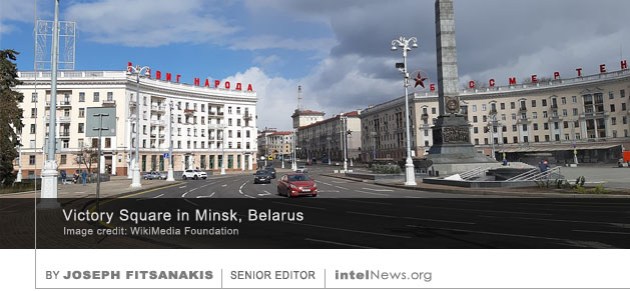
Minsk Belarus

A MAN WHO WAS killed earlier this week by the intelligence service of Belarus worked for an American software company and may have been a citizen of the United States, according to some reports. Belarusian media reported late on Tuesday that an armed man had died in a shootout in the capital Minsk, which also left an intelligence officer dead and another one wounded. The man had allegedly opened fire with a hunting rifle against members of the Belarusian state security service —known as the KGB. After the man was shot dead, his wife was reportedly taken into custody.

Late on Tuesday, state television stations aired video footage showing plainclothes KGB officers storming an apartment and coming under heavy fire from inside the premises. In a statement issued on Thursday, the KGB did not identify the man, which it described as a “31-year-old terrorist”, and said he had been “liquidated with return fire”, after resisting arrest and shooting at the KGB officers in Minsk. But some media reports cited a member of the exiled opposition, who identified the deceased as Andrei Zeltser and said he worked for the American software company Epam Systems. Other reports suggested that Zeltser was a citizen of the United States, but this has not been confirmed.

Also on Thursday, the Belarusian state-owned news agency Belta claimed that the dead man was a member of the opposition movement, which views the country’s authoritarian President, Alexander Lukashenko, as illegitimate. Later on the same day, it was reported that the KGB had arrested at least 50 people for “insulting a government official” or “inciting social hatred”. Opposition figures claimed that the arrests were connected to comments in support of Zeltser that appeared on social media.

Author: Joseph Fitsanakis | Date: 01 October 2021 | Permalink

Hamas publishes photo, name and address of Israel’s incoming security chief

Nadav Argaman

THE PALESTINIAN MILITANT GROUP Hamas has published the name, address and photograph of an individual believed to be the incoming director of Israel’s security service. Known as Shin Bet, and referred also by its Hebrew acronym Shabak, the organization is among the leading agencies of Israel’s intelligence community, which also includes the Mossad and Aman. As is the case with other intelligence agencies, Israeli media are not permitted to publicize the identity of the Shin Bet’s director without permission from the government.

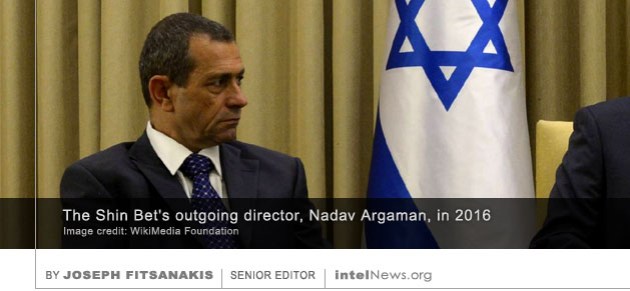
The incoming head of the Shin Bet has been referred to in Israeli media reports simply as “R”. He reportedly is in his mid-50s and he and his wife have three children. He is a graduate of Tel Aviv University, where he studied political science and philosophy, and has a Master’s degree from Harvard University in the United States. He rose through the ranks of the Shin Bet, and has been serving as the agency’s deputy director since 2018. Earlier this month, Israel’s Prime Minister, Naftali Bennett, nominated him to replace the Shin Bet’s current director, Nadav Argaman (pictured), who is set to retire in two weeks’ time.

On Sunday evening, following the outbreak of heavy clashes between Palestinians and Israeli forces in the West Bank, several pro-Hamas Palestinian websites published R’s alleged name, address and photograph, alongside the phrase “wanted criminal”. An accompanying article, published in Arabic and Hebrew, said the information about R. was “leaked by the Palestinian resistance” and warned that the senior leadership of the Shin Bet was being “monitored by us in the resistance”. The article went on to claim that R. “is on the wanted list and the arms of the resistance will pursue him”.

According to Israeli newspaper The Jerusalem Post, which published news of the leak, Israeli security forces are not concerned. An anonymous government source told Israel’s KAN news agency that, despite the official ban imposed by the state, R. is “widely known in Israel’s security sector” and the photograph of him that was published by Palestinian websites was “taken at a public event, [so] there is no cause for concern”.

Author: Joseph Fitsanakis | Date: 28 September 2021 | Permalink

New Zealand judge refuses to disclose identities in rare espionage case

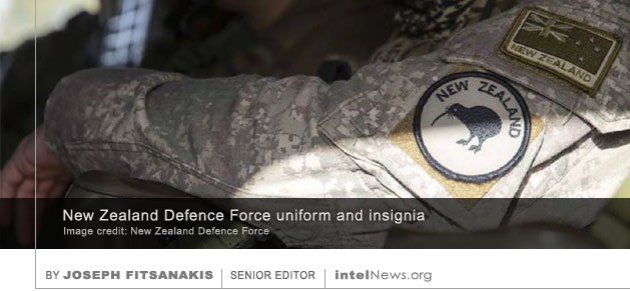
New Zealand Defence Force

A JUDGE IN NEW Zealand rejected on Monday a request by news media to lift the ban on the identity of a soldier, who was arrested nearly two years ago for allegedly spying for a foreign country. The soldier was arrested in December of 2019, and is being prosecuted under New Zealand’s 1961 Crimes Act. It is the first time in the post-Cold War era that this act has being used to prosecute someone in New Zealand.

The accused is facing a total of 17 charges, including six counts of espionage and attempted espionage, three counts of accessing a computer system for a dishonest purpose, and two counts of possessing an objectionable publication. The latter charge is believed to relate to the accused’s alleged connection with far-right and white nationalist organizations in New Zealand and possibly Australia. This claim has not been confirmed, however.

Since the arrest of the soldier, his name, as well as that of his wife and of multiple witnesses for the government, have been suppressed by the court. Importantly, the country for which the accused allegedly spied for has also been suppressed. This was done at the request of the government of New Zealand, which claims that doing otherwise could imperil “the defense and security of New Zealand”. The government also argues that naming the country for which the accused is believed to have spied could harm New Zealand’s diplomatic relations with that country.

On Monday, during a pre-trial court-martial hearing in Palmerston North, in which the suspect appeared via video-link, the chief judge in the case decided to extend the suppression of the information about the identity of those involved. The judge, Kevin Riordan, said that the name suppression would be extended at least until the next pre-trial hearing, which has not yet been scheduled. The trial was initially due to begin on October 6, but has been postponed indefinitely, due to complications arising from the use of classified evidence that the government’s lawyers intend to present during the court case.

Author: Joseph Fitsanakis | Date: 27 September 2021 | Permalink

Leaked documents show Georgian intelligence service spied on Western diplomats

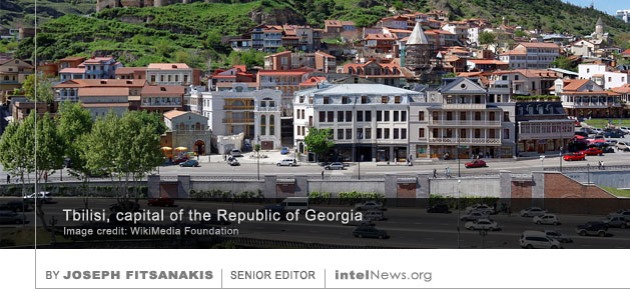
Tbilisi

THE EUROPEAN UNION HAS summoned the chief Georgian envoy to Brussels, in response to allegations that European, American and other diplomats were spied on by the Georgian security services. The allegations have emerged from an extensive collection of documents, which were released to the media by an anonymous whistleblower earlier this month.

The documents appear to confirm long-held suspicions among many in the former Soviet Republic, that the Georgian State Security Service (SSS) has been spying on members of the clergy, as well as on opposition politicians, journalists and others. But the documents also allege that the SSS has been spying on diplomats from the European Union, the United States, Israel, and other countries, who are stationed in the Georgian capital Tbilisi. Among those who have allegedly been targeted is the European Union’s ambassador to Georgia, Carl Hartzell.

The European External Action Service, which is the European Union’s foreign-policy diplomatic and foreign office, described the revelations as “a very serious matter”, and added that they have “implications in the framework of the Vienna Convention [on] Diplomatic Relations”. On Wednesday, the European Union reportedly summoned Georgia’s ambassador to Brussels, Vakhtang Makharoblishvili, in order to issue a formal complaint. Ambassador Hartzell said that the “volume and nature” of the alleged espionage went “beyond the normal activities of security services” and “raised serious questions about the relationship” between Georgia and the West.

Meanwhile, Georgia’s Prime Minister, Irakli Gharibashvili, described revelations in the leaked documents as “fabrications and falsifications”, and blamed his government’s political opponents for leaking them to the press. He also defended the conduct of the SSS, saying that the agency “conducts [only] legitimate wiretaps within the limits established by [Georgian] law”.

Author: Joseph Fitsanakis | Date: 23 September 2021 | Permalink

Venezuelan ex-spy chief captured in Madrid after two years on the run

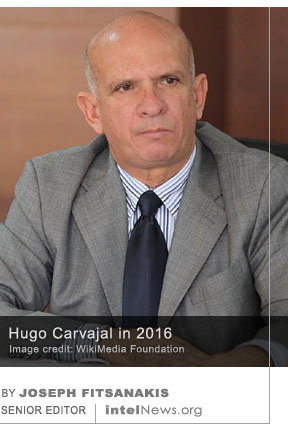
Hugo CarvajalTHE FORMER DIRECTOR OF Venezuela’s military spy agency has been captured in Madrid after two years on the run, and is now likely to be extradited to the United States, where he will face drug trafficking charges. Hugo Carvajal is a retired general and former diplomat, who was a member of the late Venezuelan President Hugo Chávez’s inner circle. From 2004 to 2011, under Chávez’s tutelage, Carvajal headed Venezuela’s Directorate General of Military Counterintelligence (DGCIM).


In 2008 the American government named Carvajal as a major facilitator of international drugs trafficking and imposed financial sanctions on his assets around the world. Washington accused Carvajal of assisting the paramilitary group known as the Revolutionary Armed Forces of Colombia (FARC) transport drugs from Latin America to Mexico, and from there to the US. Things took an interesting turn, however, when in February of 2019, Carvajal posted a video on social media in which he denounced Chávez’s successor, President Nicolás Maduro, and sided with his arch-nemesis, Juan Guaido, the President of the National Assembly of Venezuela.

In his video, Carvajal urged the Venezuelan armed forces to stop siding with Maduro and support Guaido as Venezuela’s acting president. Guaido is openly supported by the United States and dozens of other Western countries. Soon after making his announcement, Carvajal fled to Spain, where he was promptly arrested pursuant to a warrant issued by the US Department of Justice. The US then filed a formal request for the former spy chief’s extradition to America. However, amidst a series of contradictory decisions by Spanish courts, Carvajal disappeared in November of 2019. Since that time, he has been making statements on social media while remaining on the run.

All that changed on September 9, however, when Spanish police and US Drug Enforcement Administration agents forcibly entered an apartment in Madrid, and soon afterwards apprehended Carvajal. The former spy was reportedly wielding a knife until he was convinced by agents to disarm. According to media reports, it is now highly likely that Carvajal will be extradited to the United States, where he will face two choices: spend the rest of his life in prison or cooperate in a large-scale investigation of Venezuelan government officials and their connections to the FARC’s narcotics-trafficking operations.

Author: Joseph Fitsanakis | Date: 22 September 2021 | Permalink

Croatia to extradite whistleblower who alleged Dutch oil firm spent millions in bribes

Monaco

A WHISTLEBLOWER WHO CLAIMS that a major Dutch oil firm paid millions in bribes to officials in return for lucrative contracts, is to be extradited to Monaco, following his arrest in Croatia last summer. Jonathan Taylor, of Southampton, United Kingdom, was a lawyer working for SBM Offshore, a Netherlands-based group of companies that provide services to the global offshore oil and gas industry. In 2012, he leaked documents allegedly showing that SBM Offshore “paid €185 million [$217 million] in bribes in several countries between 2005 and 2011”, in return for being awarded service contracts.

But SBM Offshore accused him of extortion and claimed that he stole proprietary documents and then tried to blackmail his employer, asking for $3 million in exchange for staying silent about the alleged bribes. Following this accusation, authorities in Monaco, which hosts an SBM Offshore regional facility, issued an Interpol “red notice” for Taylor’s detention. A red notice is essentially a request to law enforcement worldwide to locate and provisionally detain a person of interest, pending a possible extradition.

In July of this year, Taylor was arrested in Dubrovnik, Croatia, where he was holidaying with his family, by local police acting on the Interpol’s red notice. Immediately following his arrest, the government of Monaco sought to have him extradited there “for questioning”, even though he had not been charged with a crime. According to Monegasque police, Taylor was wanted “for questioning to determine whether or he should be charged” with a crime.

Taylor and his lawyers deny the claims against him, which they describe as acts of retaliation for him having blown the whistle on SBM Offshore. Now, however, authorities in Monaco have summoned Taylor to appear before a magistrate, after the Supreme Court of Croatia upheld an extradition ruling that was issued by a lower court earlier this year. This means that Croatian authorities should soon be extraditing Taylor to Monaco, as per the principality’s request. However, Taylor currently remains in Croatia and he and his supporters have urged the Croatian authorities to not comply with Monaco’s extradition request.

Author: Joseph Fitsanakis | Date: 21 September 2021 | Permalink

Israel killed Iranian nuclear scientist using advanced robotic device, report claims

Mohsen Fakhrizadeh

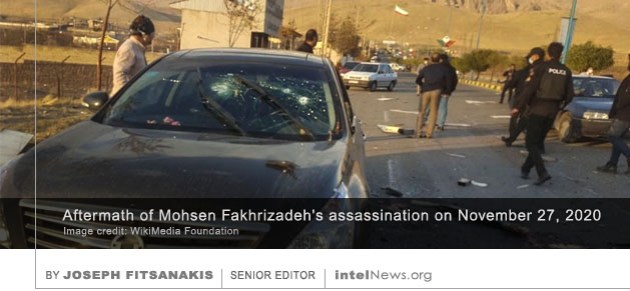
ISRAEL’S PRIMARY EXTERNAL INTELLIGENCE agency, the Mossad, assassinated the lead military scientist behind Iran’s nuclear program using a remote-controlled robot, according to a new report. Mohsen Fakhrizadeh was a brigadier general in the Islamic Revolutionary Guard Corps (IRGC), Iran’s elite paramilitary force. He was assassinated along with his wife on November 27, 2020, in an armed assault that took place in the eastern outskirts of Tehran. The attack, which lasted no more than 3 minutes, took place in broad daylight. No arrests have been made in connection with the killings.

Shortly after Fakhrizadeh’s assassination, Iranian authorities claimed that the Mossad had orchestrated his killing, and Iranian media carried reports about the alleged identities of the killers. But in February of this year, the London-based weekly newspaper The Jewish Chronicle claimed that the Mossad had killed the IRGC general using a “one-ton remote-controlled gun smuggled into Iran piece by piece over eight months”. There has been no confirmation of that report, and the details behind Fakhrizadeh’s killing remain vague.

On Saturday, however, an article by The New York Times’ Ronen Bergman and Farnaz Fassihi supported the view that the Fakhrizadeh was killed by a remote-controlled advanced robotic device. According to the new report, the apparatus had been fitted by Mossad operatives into the bed of a blue Zamyad, a popular Iranian-built Nissan pickup truck model. A Belgian-made FN MAG 7.62-mm machine gun was hidden beneath decoy construction material and a heavy tarpaulin, said the article. It repeated the The Jewish Chronicle’s claim that the device had been smuggled into Iran by Mossad operatives in pieces, over an extensive period of time.

According to Bergman and Fassihi, Fakhrizadeh’s assassins operated remotely, and there was no Mossad hit squad on the ground in Tehran when the assassination occurred. In fact, the Mossad team that installed the advanced robotic apparatus “had already left Iran” by the time the trigger was pulled. Artificial intelligence was employed to ensure that the remote sniper’s actions were successful. However, the explosives that were meant to destroy the apparatus following Fakhrizadeh’s assassination partly malfunctioned, thus allowing the Iranians to access the partly damaged vehicle, machine gun and control mechanism, said the Times.

In an article published late on Saturday, Israeli English-language newspaper The Jerusalem Post said it was in a position to “confirm the accuracy of the Times report.

Author: Joseph Fitsanakis | Date: 20 September 2021 | Permalink

Controversy over missing intelligence officer deepens constitutional crisis in Somalia

Mohamed Abdullahi FarmajoTHE SOMALI CAPITAL MOGADISHU remains tense today, after the country’s president and prime minster, who are supported by rival militias, leveled accusations at each other over an intelligence officer’s disappearance. Ikran Tahlil, 25, who works for the Somali National Intelligence and Security Agency (NISA), disappeared in June. She was reportedly last seen entering a government vehicle outsider her home in Mogadishu. The NISA said that Tahlil had been abducted and probably executed by al-Shabaab, an East African affiliate of al-Qaeda.

However, al-Shabaab, which usually relishes opportunities to kill Somali security and intelligence personnel, denied that it had anything to do with Tahlil’s disappearance. Reacting to this unexpected turn of events, the Prime Minister, Mohamed Hussein Roble, denounced the NISA and fired its Director, Fahad Yasin. According to the Prime Minister’s office, Yasin had failed to respond to an official request about Tahlil’s whereabouts.

On Wednesday, however, the country’s President, Mohamed Abdullahi Farmajo (pictured), reinstated Yasin, after claiming that the prime minister was not authorized by the Constitution to fire members of the intelligence services. Farmajo also accused the Roble of “taking reckless steps that could lead to a political and security crisis” in the volatile country. Later on Wednesday, the Office of the Prime Minister announced that Roble did not intend to abide by the president’s order, because it directly violated the constitution.

President Farmajo responded on Thursday, by announcing that the prime minister’s powers to appoint and dismiss government officials would be withdrawn until the upcoming national elections. These are scheduled to begin on October 1, and end on November 25. Once again, Prime Minister Roble said he would not abide by the president’s decision, which he described as “unlawful”. He also accused Farmajo of inciting armed conflicts in the streets of Mogadishu.

Meanwhile the president has appointed a new ad hoc commission with the task of carrying out an official inquiry into Tahlil’s disappearance. But members of the missing woman’s family said they did not trust the commission and asked instead for an investigation to be carried out by the Somali military.

Author: Joseph Fitsanakis | Date: 17 September 2021 | Permalink