Activist portrayed in movie Hotel Rwanda sues airline for alleged abduction
December 17, 2020 Leave a comment
 An anti-genocide activist, whose story was made famous in the 2004 Hollywood film Hotel Rwanda, has sued an airline company for complicity in his alleged abduction from Dubai and eventual imprisonment in Rwanda. During the Rwandan genocide of 1994, Paul Rusesabagina was the manager of the Hôtel des Mille Collines in the Rwandan capital Kigali. The hotel catered largely to Westerners, and its grounds were seen as off-limits by the brutal armed gangs that perpetrated the genocide. Therefore, Rusesabagina used his position to shelter over 1200 displaced civilians from the warring militias.
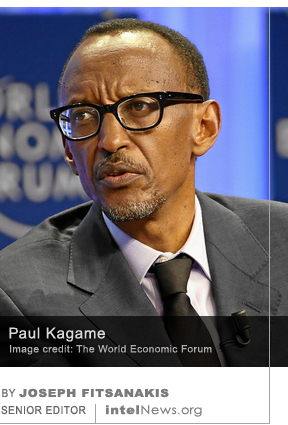
After the end of the genocide, Rusesabagina, a Hutu, became a vocal critic of Rwanda’s Tutsi president, Paul Kagame (pictured). In 1996, Rusesabagina survived an assassination attempt, after which he went into self-exile in Belgium, of which he is a citizen. Eventually he obtained permanent residency to the United States and relocated to San Antonio, Texas. He continued to voice strong criticisms of President Kagame from exile, whom he accuses of dictatorial tendencies, corruption and mismanagement.
In August 2020, Rusesabagina boarded a chartered airplane in Dubai, United Arab Emirates, which he was told would transport him to Burundi. While there, he had agreed to do a lecture tour, hosted by a Christian group. However, according to Rusesabagina, the invitation was a trap designed to lure him to Rwanda. He was allegedly bound and gagged shortly after the plane took off from Dubai. He was then transported to Kigali, where he was arrested on August 31 on an international warrant issued by the Rwandan government.
Rusesabagina has remained in prison since his arrest, charged with terrorism, murder, kidnap, arson, and forming, as well as funding, terrorist organizations. He rejects these charges and claims he was abducted and subjected to extraordinary rendition for supporting groups that oppose President Kagame’s rule. He is awaiting trial, which is scheduled to take place on January 26, 2021.
On Thursday, Rusesabagina’s lawyers filed a lawsuit in the US state of Texas, claiming that GainJet, the charter airline company whose plane was allegedly used to transport him from Dubai to Kigali, was complicit in his abduction. According to the BBC, the airline, which is registered in Greece, agreed to participate in his abduction because of its close relationship with senior Rwandan government officials. Rusesabagina’s lawyers are expected to file a similar lawsuit against GainJet in Belgium.
► Author: Joseph Fitsanakis | Date: 17 December 2020 | Permalink
 A large-scale cyberespionage attack targeting United States government computer systems, which some experts
  THE UNITED STATES DEPARTMENT of Defense has reportedly notified the Central Intelligence Agency that it plans to terminate most of the military support it provides for the spy agency’s counterterrorism operations. Some of these changes may occur as early as January, according to
  A LAWSUIT FILED IN a United States court by a Saudi former senior intelligence official, accuses Saudi Arabia’s crown prince Mohammed bin Salman of planning an illegal assassination on Canadian soil. But in a new court filing, the crown prince denies the accusation and claims that it is an attempt to distract attention from the alleged crimes carried out by the plaintiff.
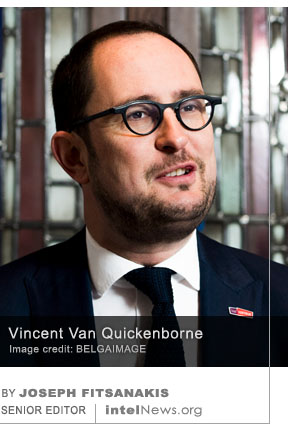 BELGIUM’S LARGEST MOSQUE has been infiltrated by Moroccan intelligence, according to the Belgian minister of justice, who allegedly consulted the country’s spy services in making that determination. The announcement has further-strained relations between the Belgian government and the country’s Muslims, which account for about 5% of the Belgian population.
 A NEW REPORT BY the United States National Academies of Sciences, Engineering, and Medicine, has found that the so-called ‘Havana Syndrome’, which afflicted American and Canadian diplomats in Cuba and China in 2016 and 2017, was likely caused by directed microwave radiation. The study, which was commissioned by the US Department of State, is the latest in a
 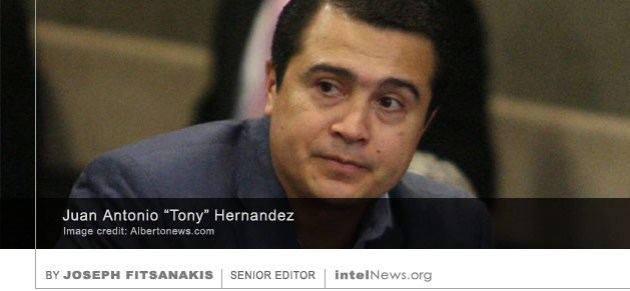 A PROPOSED MEMORANDUM OF understanding could enable the sharing of extremely sensitive intelligence between the United States and Honduras, as part of an effort by Washington to stop the impoverished Central American country from becoming a drug-trafficking stronghold. However, some in the US intelligence community are concerned that the sensitive intelligence given to the Honduran government may be passed on to the drug cartels by paid informants.
 A SYRIAN INTELLIGENCE OFFICIAL, who was denied political asylum in France due to claims he committed serious war crimes, received protection from Austria with assistance from Israel, according to a report. This was
  REPORTS IN BRITAIN AND Israel claim that Iranian authorities have visually identified the assassins who were allegedly involved in the killing of Mohsen Fakhrizadeh, a nuclear scientist believed to have led Iran’s nuclear program. Fakhrizadeh was a brigadier general in the Islamic Revolutionary Guard Corps (IRGC), Iran’s elite paramilitary force. He was accused by the United States and Israel of leading the Islamic Republic’s nuclear weapons program, whose existence Tehran strongly denies.
 A PARAMILITARY OPERATIONS OFFICER serving in the United States Central Intelligence Agency (CIA) has reportedly been killed in Somalia. This is a rare occurrence for the clandestine agency, which has lost about 140 officers in its 73-year history. The New York Times, which first
  THE DIRECTOR OF AFGHANISTAN’S main intelligence agency warned on Monday that the Taliban are for the first time resorting to using drones in order to carry out attacks against the Afghan government. Groups such as the Islamic State in Syria, and Houthi rebels in Yemen, have been using modified drones to drop makeshift bombs on enemy targets since at least 2016. But the Taliban have not previously been known to make use of such weapons.
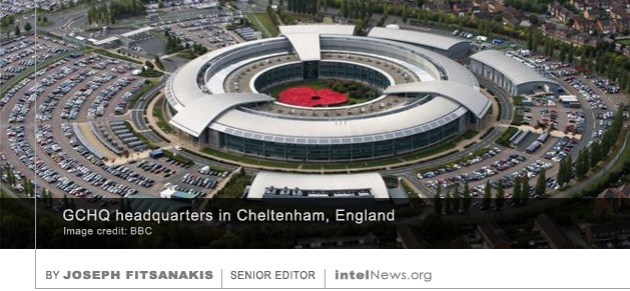 BRITAIN’S SIGNALS INTELLIGENCE AGENCY has been severely criticized in a report for undertaking a pointless “vanity project” that exceeded its allocated funds by 83 percent and needlessly cut into its operational budget. The agency, known as the Government Communications Headquarters (GCHQ) is responsible for collecting signals intelligence (SIGINT) and protecting the information systems of the British government and Armed Forces.
 THE HALF-NEPHEW OF North Korean leader Kim Jong-un, who disappeared in 2017 and has not been seen since, is in the custody of the United States Central Intelligence Agency (CIA), according to a new report. The missing man’s name is Kim Han-sol. He is the son of the late Kim Jong-nam (pictured), the eldest son of Kim Jong-il and grandson of Kim Il-Sung, who founded the Democratic People’s Republic of Korea in 1948. A critic of North Korea’s rulers, Kim lived in self-exile in the Chinese territory of Macau, and split his time between China, Singapore and Malaysia.









White House seeks to split Pentagon cybersecurity functions from signals intelligence
December 21, 2020 Leave a comment
Since that time, these two agencies, NSA and CYBERCOM, have been operated in parallel and have been led by the same director, who is always a four-star military officer. Moreover, CYBERCOM has historically relied on NSA’s impressive technical infrastructure and cyber arsenal. But there are some in government, especially those who support a more offensive US cyber posture, who have championed the view that CYBERCOM should be removed from the NSA’s command structure, and should operate as a completely separate agency. The administration of US President Donald Trump pushed this idea in 2017, but strong resistance from the NSA prevented it from materializing.
Now, however, the Trump administration appears determined to implement this proposed split, despite strong resistance from NSA’s leadership. Citing anonymous US officials, Defense One reported last week that the White House had sent Chairman of the Joint Chiefs of Staff General Mark Milley and Acting Secretary of Defense Christopher Miller documents detailing the proposed split. The two men are required to consent to the proposal before its implementation is officially authorized.
Acting Secretary Miller is believed to be in support of the move, according to several sources. However, General Milley has previously voiced support for the logic behind the existing close operational relationship between NSA and CYBERCOM. Therefore, some believe he may decide to stall on the proposal, thus waiting for the Trump administration to transition out of power. On Sunday a spokesman for Milley said that the General had “not reviewed, nor endorsed, any proposal to split CYBERCOM and NSA”.
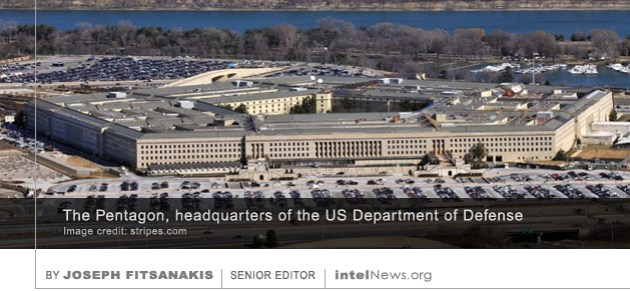
According to reports, there are some at the Pentagon who feel strongly that the decision to split CYBERCOM from NSA should be left to the incoming administration. Nevertheless, the Trump administration seems determined to demonstrate that it can enact sweeping changes in the Department of Defense, as demonstrated by its recent decision to scale down significantly America’s military footprint in Afghanistan, Iraq and Somalia.
► Author: Joseph Fitsanakis | Date: 21 December 2020 | Permalink
Filed under Expert news and commentary on intelligence, espionage, spies and spying Tagged with Christopher Miller, Mark Milley, News, NSA, United States, USCYBERCOM