French ex-spy accused of plot to assassinate Congolese politician found dead in Alps
March 28, 2019 Leave a comment
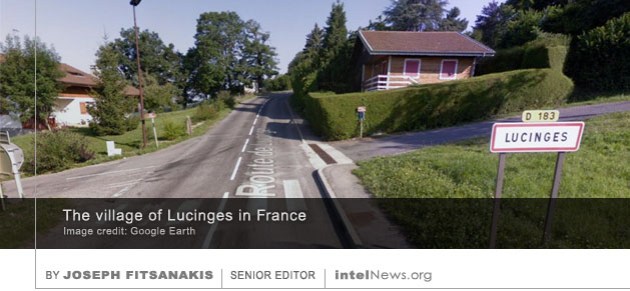 A former paramilitary officer in the French intelligence service, who was under investigation for allegedly plotting to kill a senior Congolese opposition figure, has been shot dead near a village in the French Alps. Daniel Forestier, 57, served for nearly 15 years in a paramilitary unit of the Directorate-General for External Security (DGSE) —France’s equivalent of the United States Central Intelligence Agency. After his retirement from the DGSE, he moved with this wife and two children to the alpine village of Lucinges, near Geneva, in the Auvergne-Rhône-Alpes region in southeastern France. He reportedly operated a tobacconist shop, served in the village council, and wrote spy novels in his spare time.
Last September, however, a judge placed Forestier under a pre-trial investigation for allegedly participating in a plot to kill General Ferdinand Mbahou. From 1992 to 1997 Mbahou (a.k.a. Mbaou) served as Director of Presidential Security in the Republic of the Congo. In 1997, Mbahou fled the country along with his employer, President Pascal Lissouba, who was ousted in a brutal civil war by militias loyal to Colonel Denis Sassou Nguesso of the Congolese Labor Party. From his new home in Val d’Oise, just outside of Paris, Mbahou has continued to criticize Colonel Sassou Nguesso, who is the current president of the Republic of the Congo. Forestier and another former DGSE officer, Bruno Susini, were accused of having hatched a plan to kill Mbahou. Their indictment mentioned “participation in a criminal organization” and “possession of explosives”. Forestier reportedly told the magistrate that he was a member of a group that planned to assassinate Mbahou, but that he abandoned the effort after conducting reconnaissance and realizing that the plan was “impractical”.
Forestier’s body was discovered on Wednesday “in a pool of blood” in a parking lot in Haute-Savoie, an alpine resort area on the shores of Lake Geneva. According to a police report, he had been shot five times in the chest and head in what public prosecutor Philippe Toccanier described as “a professional job”. He added that Forestier’s killing was “almost undoubtedly […] a settling of scores”.
► Author: Joseph Fitsanakis | Date: 28 March 2019 | Permalink
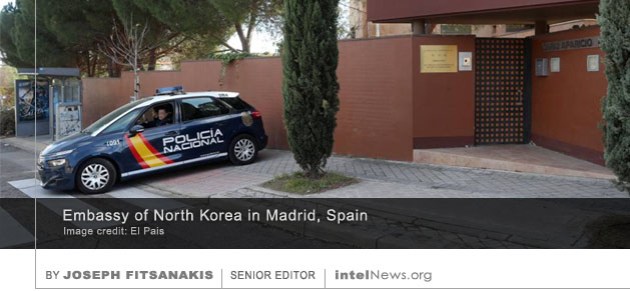 Members of a self-styled dissident group that raided North Korea’s embassy in Madrid last month reportedly approached the authorities in the United States, offering to share material taken from the embassy. The attack took place in the afternoon of February 22 in a quiet neighborhood in northern Madrid, where the North Korean embassy is located. Ten assailants, all Southeast Asian-looking men, entered the three-story building from the main gate, brandishing guns, which were later found to be fake. They tied up and gagged the embassy’s staff, as well as three North Korean architects who were visiting the facility at the time. The assailants later abandoned the building in two embassy vehicles that were later found abandoned.
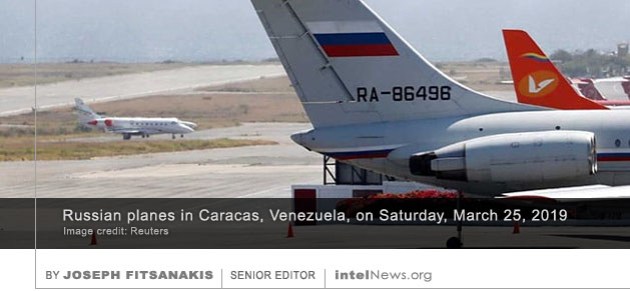 Russian media reports have confirmed that an airplane carrying 100 Russian troops arrived in Caracas on Saturday, causing tensions to rise between Washington and Moscow over the deepening crisis in Venezuela. The arrival of the Russian troops in the Venezuelan capital was first reported on Saturday morning by Venezuelan reporter Javier Mayorca, who said on Twitter that two Russian military airplanes had landed in Caracas. The reporter said that an Antonov An-124 Ruslan cargo plane belonging to the Russian Air Force could be seen on the tarmac of the Simón Bolívar International Airport in the Venezuelan capital. Another, smaller aircraft, also bearing the Russian flag on its fuselage, landed shortly afterwards, said Mayorca.
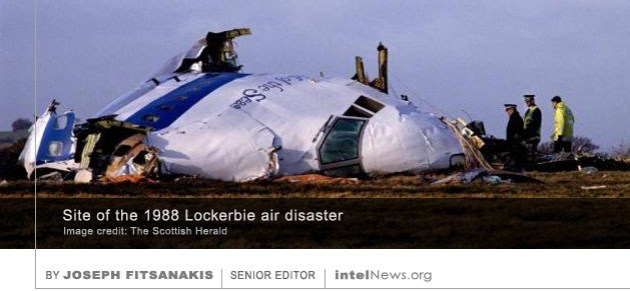 Five former officers of East Germany’s State Security Service, known commonly as the Stasi, have been questioned in Berlin over the Lockerbie air disaster at the request of British prosecutors. A total of 270 people died on December 21, 1988, when Pan Am flight 103, flying from Frankfurt to Detroit, exploded in mid-air over the Scottish village of Lockerbie. In 2001, a British court sitting in the Netherlands ruled that the bombing was carried out by
 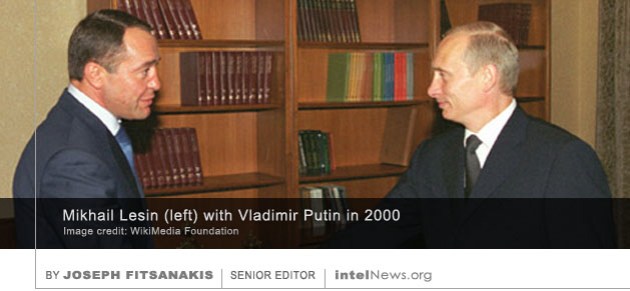 A former senior adviser to Russian President Vladimir Putin, who died allegedly by falling while intoxicated in a luxury hotel room in Washington, may in fact have been strangled to death, according to a newly released medical examination. The body of Mikhail Yuriyevich Lesin, a well-known Russian media mogul, was found in the luxury Dupont Circle Hotel on November 5, 2015. He became famous in Russia soon after the collapse of the communist system, when he founded Video International, an advertising and public-relations agency that was hired by Russian President Boris Yeltsin to run his reelection campaign in 1995.
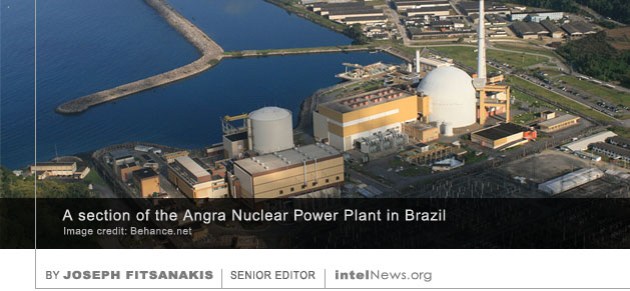 A convoy of trucks carrying nuclear fuel to one of Brazil’s nuclear plants was attacked by a heavily armed gang on Tuesday, according to police reports. The convoy was carrying uranium fuel from Resende, an industrial city in the municipality of Rio de Janeiro in southeastern Brazil. Its destination was the Angra Nuclear Power Plant in the coastal city of Angra dos Reis, which is located 100 miles south of Resende. Angra is Brazil’s sole nuclear power plant. It consists of two pressurized water reactors, Angra I and Angra II. It is owned by Eletrobras, Brazil’s state-owned power utility firm, which is also the world’s tenth largest electric utilities company.
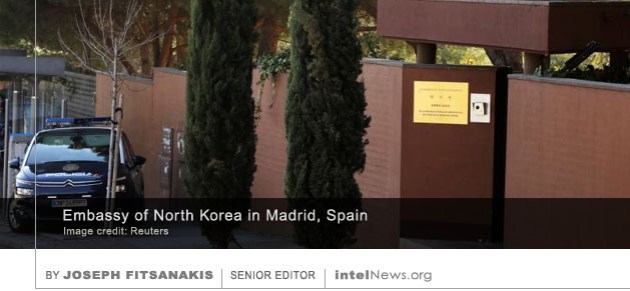 An obscure North Korean dissident group was most likely behind a violent raid on North Korea’s embassy in Madrid on February 22, which some reports have pinned on Western spy agencies, including the Central Intelligence Agency. The group, known as the Cheollima Civil Defense, is believed to be the first North Korean resistance organization to declare war on the government of Supreme Leader Kim Jong-un.
 said in English that all was fine inside the embassy. But a few minutes later, two luxury cars belonging to the North Korean embassy sped away from the building with the ten assailants inside, including the man who had earlier appeared at the front door.
 Authorities in Bosnia and Herzegovina have accused the government of Croatia of deliberately arming militant Islamists in order to damage Bosnia’s reputation and sabotage its campaign to join the European Union. The claims were aired by a Bosnian government minister on Thursday, a day after allegations of a weapons-smuggling plot by Croatia were made in the Bosnian media. On Wednesday, Zurnal, a Bosnian investigative website, alleged that the Croatian intelligence services had recruited a Bosnian national and used him to smuggle weapons and explosives into the majority Muslim country.
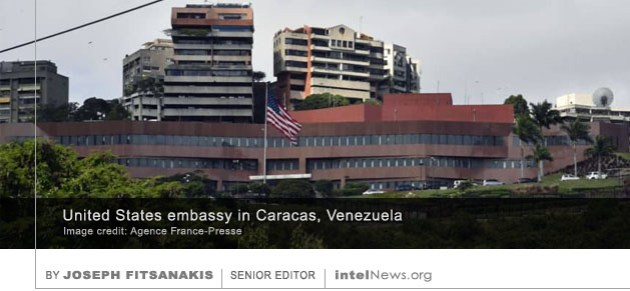 The United States said on Tuesday that it will evacuate its last few diplomats from its embassy in Caracas, as the electricity blackout in Venezuela enters its sixth day, making it the longest energy crisis in the nation’s history. Energy shortages are not new in Venezuela. The oil-rich Latin American country of 31 million people suffered two disastrous nationwide blackouts in 2009 and a third one in 2016. But the current blackout is quickly approaching the one-week mark and is believed to have caused a minimum of 20 deaths, mostly in hospitals around the country. The majority of the population currently lacks access to fuel and banking services, while there are
 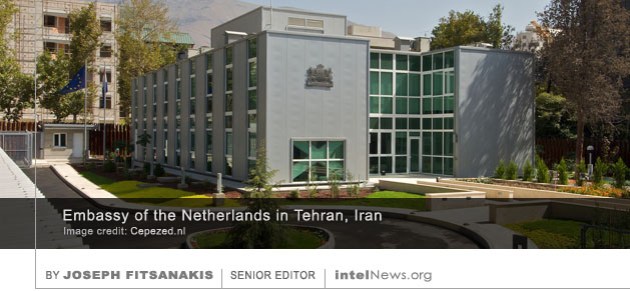 Holland said on Monday that it had recalled its ambassador from Tehran after Iran expelled two Dutch diplomats, in a deepening dispute involving the assassination of two Dutch citizens by alleged Iranian agents. In July of last year, Holland
  A computer hacking group with links to the North Korean government has a wider reach and is more sophisticated than was initially believed, according to the computer security firm McAfee. The group, dubbed Lazarus by cybersecurity experts, is believed to be connected with Guardians of Peace, the hacker team that orchestrated the 2014 attacks on Sony Pictures Entertainment. The company drew the ire of the North Korean government for producing The Interview, a black comedy based on a fictional attempt by two Americans to assassinate North Korean leader Kim Jong-un. Known collectively as ‘the Sony Pictures hack’, the attacks included the compromise of internal documents and unreleased copies of films produced by Sony, as well as personal attacks on Sony executives and members of their families. There were also attempts to damage Sony’s digital infrastructure, which cost the company an undisclosed amount in damages, believed to be in the millions of dollars.
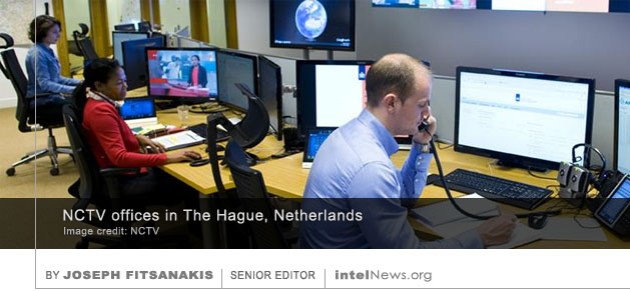 Holland’s chief counterterrorism agency has warned that, despite losing its territories in the Middle East, the Islamic State continues to recruit operatives and is ready to launch attacks in the West “at a moment’s notice”. The warning is contained in a report published last week by the Dutch National Coordinator of Counterterrorism and Security (NCTV). Established in 2005 as the Dutch National Coordinator for Counterterrorism, and renamed in 2012, the NCTV works under Holland’s Justice and Security Minister. It is responsible for analyzing terrorism threats and assessing the country’s domestic terrorism threat level.
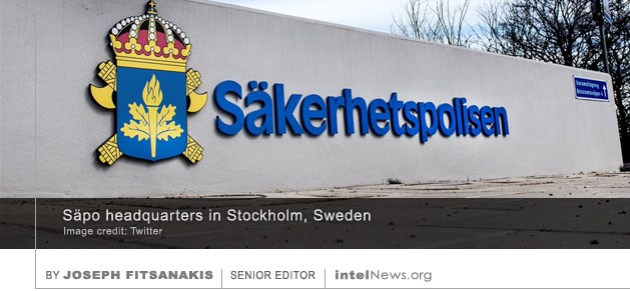 The Swedish public prosecutor’s office has confirmed media reports that a second espionage-related arrest took place in Stockholm this week. The latest arrest came just 24 hours after a man was arrested in the Swedish capital on Tuesday, allegedly for spying on behalf of Russia. As intelNews
 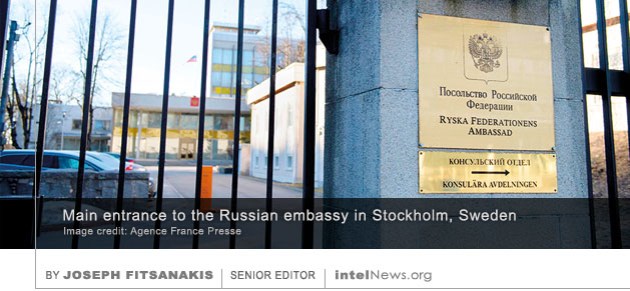 Authorities in Sweden have announced the arrest of a man who is accused of spying for Russia. The man was reportedly apprehended while meeting with a Russian diplomat in central Stockholm. The alleged spy, who has not been identified in media reports, is believed to be working for an unnamed technology company in Sweden. A report by Swedish police said that the man is working “in a field that is known to be of interest to the intelligence services of foreign powers”.






 intelNews.org
Russian diplomat involved in espionage leaves Sweden after ‘unusual’ delay
April 1, 2019 1 Comment
Dmitrievski was reportedly arrested on the evening of February 26, while meeting his alleged Russian handler in a downtown area of the Swedish capital. Both Dmitrievski and his alleged handler were detained by officers of the Swedish Security Service, known as SÄPO. Swedish authorities later said that Dmitrievski’s alleged handler was a member of staff of the Russian embassy in Stockholm and had diplomatic immunity. SÄPO added that the Russian diplomat was believed to be a Russian intelligence officer who worked under diplomatic cover. The Russian man’s diplomatic status granted him immunity, so Swedish authorities were unable to file espionage charges against him. However, the Swedish Foreign Affairs Ministry summoned the Russian ambassador to file a protest, while the alleged intelligence officer was told to leave the country.
Surprisingly, however, Moscow did not recall the diplomat, as expected, and no further reports were issued about the incident. Then on March 28, the Swedish daily Dagens Nyheter named the Russian diplomat as Yevgeny Umerenko. Later that day, the Associated Press news agency said that it had seen “an intelligence report from a European service” that identified Dmitrievski’s Russian handler as Yevgeny Umerenko. The Associated Press described Umerenko as a “Line X officer” —a Soviet-era classification referring to case officers specializing in technological espionage. Western intelligence agencies had apparently been monitoring Umerenko’s activities ever since he had a similar role at the Russian embassy in Berlin, immediately before being transferred to Stockholm.
In its report, the Associated Press said that Moscow had finally recalled Umerenko from its embassy in Sweden, and that he was back in Russia. The news agency added it spoke to Anna Lundbladh, a spokeswoman for Sweden’s Ministry for Foreign Affairs, who confirmed that Umerenko had left Sweden, but went on to say that the Swedish government would “not discuss this matter in further detail”.
► Author: Joseph Fitsanakis | Date: 01 April 2019 | Permalink
Filed under Expert news and commentary on intelligence, espionage, spies and spying Tagged with counterintelligence, diplomatic expulsions, Kristian Dmitrievski, Line X, News, Russia, Russian embassy in Sweden, Stockholm (Sweden), Sweden, Yevgeny Umerenko