US reportedly considering airstrikes against pro-ISIS groups in the Philippines
August 9, 2017 1 Comment
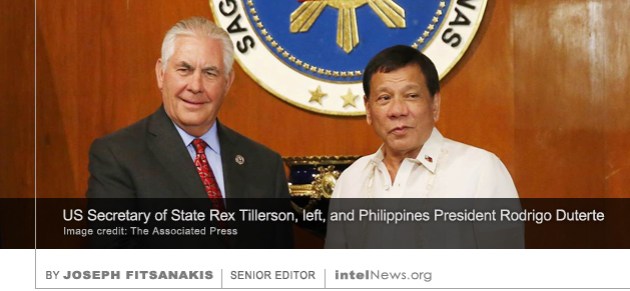 The United States is reportedly weighing plans to launch airstrikes in the Philippines, against militant groups that are affiliated with the Islamic State of Iraq and Syria. However, some American officials are skeptical about reports of possible airstrikes, while Philippine government officials claim no such action is necessary. For more than 40 years, the Philippine army has been fighting a counterinsurgency campaign against secessionist Moros in the country’s southwest. The region is home to most of the Philippines’ Muslim population, which constitutes around 6 percent of the country’s overall population. In recent years, some Muslim secessionist groups, including the most formidable, Abu Sayyaf, have pledged allegiance to the Islamic State of Iraq and Syria, known as ISIS.
For about 15 years, a small contingent of US troops has assisted the Philippine military in its war against Muslim militants. Known as Joint Special Operations Task Force Trident, the small group of US soldiers performs a low-key advisory role in the Philippine military’s counterinsurgency campaign. The American military presence in the Philippines is not a ‘named operation’, which means that its funding from the Pentagon is relatively small and its range of activities remains limited. But this week’s visit to Manila by the US Secretary of State Rex Tillerson prompted rumors that Washington may be considering naming the Task Force Trident operation, and possibly increasing the scope of its activities to include airstrikes against Abu Sayyaf. The American news network NBC said on Tuesday that the US is considering launching an offensive air campaign against ISIS, “as part of [a new] collective self-defense” treaty with Manila. Citing two unnamed US defense officials, NBC said that the air campaign could be officially announced as early as this week.
But the network also said that another US official cautioned that a new collective self-defense agreement between the US the Philippines would not necessarily have to include provisions for an offensive air campaign. Typically, self-defense agreements between Washington and allied countries that are not members of the North Atlantic Treaty Organization are “more about intelligence sharing than offensive US strikes”, said the official. Meanwhile, Philippine government officials denied on Tuesday that Manila had requested air support from Washington in its war against Abu Sayyaf. The island country’s Secretary of Defense, Delfin Lorenzana, told reporters that “there was no need” for US airstrikes in the Philippines. The US Pentagon did not comment on the NBC report.
► Author: Joseph Fitsanakis | Date: 09 August 2017 | Permalink
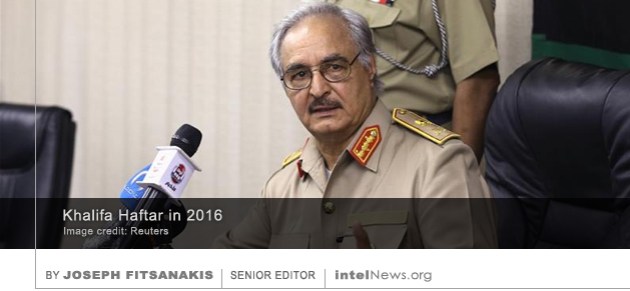 Israel is secretly providing military assistance to Khalifa Haftar, commander of the Libyan National Army, one of the factions in the Libyan Civil War, according to a British-based publication. Libya has remained in a state of war since 2011, when a popular uprising backed by the West and its allies led to the demise of the country’s dictator, Colonel Muammar Gaddafi. Currently the strongest faction in the ongoing Libyan Civil War is the eastern-based Tobruk-led Government, which is affiliated with the Libyan National Army (LNA). The commander of the LNA is Field Marshal Khalifa Haftar, an old adversary of Colonel Gaddafi, who lived in the United States under Washington’s protection for several decades before returning to Libya in 2011 to launch his military campaign.
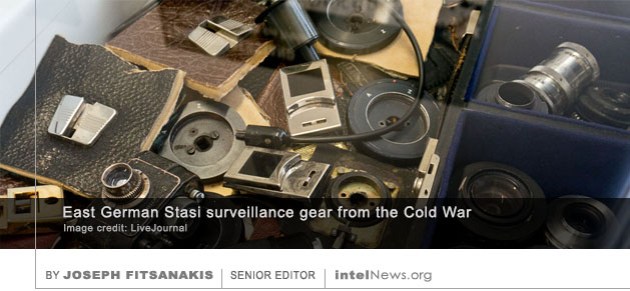 State-sponsored industrial espionage aimed at stealing foreign technical secrets may boost a country’s technological sector in the short run, but ultimately stifles it, according to the first study on the subject. The study is based on over 150,000 declassified documents belonging to the East German Ministry for State Security, known as Stasi. The now-defunct intelligence agency of communist-era East Germany was known for its extensive networks of informants, which focused intensely on acquiring technical secrets from abroad.
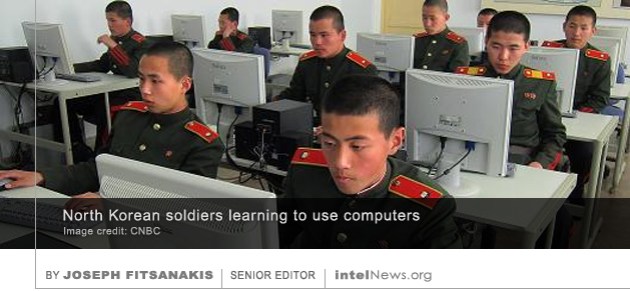 North Korea’s intelligence establishment has shifted its attention from spying for political gain to spying for commercial advantage –primarily to secure funds for the cash-strapped country, according to a new report. Since the 1990s, the Democratic People’s Republic of Korea (DPRK) has used computer hacking in order to steal political and military secrets from its rivals. But there is increasing evidence that Pyongyang is now deploying armies of computer hackers in order to steal cash from foreign financial institutions and internet-based firms. This is the conclusion of a new report by the Financial Security Institute of South Korea, an agency that was set up by Seoul to safeguard the stability of the country’s financial sector.
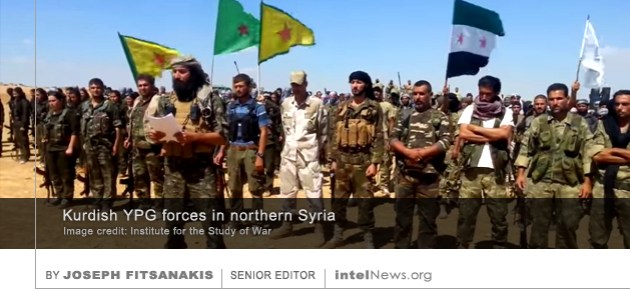 Dozens of Western European and American citizens are participating in the ongoing takeover of Raqqa, the de facto capital of the Islamic State in Syria, despite being prohibited from doing so by their own governments, according to recent news reports. Much has been written about foreign fighters who enter Iraq and Syria in order to join the ranks of the Islamic State, the Sunni militant group that previously went by the name Islamic State of Iraq and Syria (ISIS). But relatively little attention has been paid to the thousands of foreign fighters who have traveled to the region to join the war against ISIS.
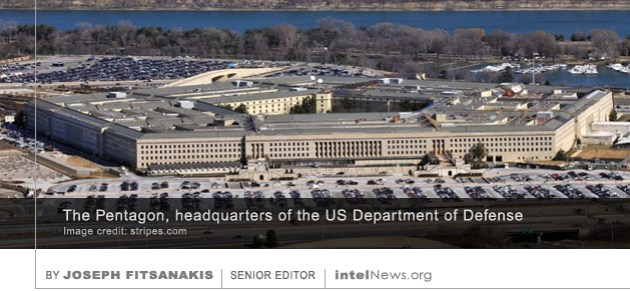 The White House will soon announce its decision to strengthen the United States Cyber Command and separate cyber war operations from intelligence functions, according to insider reports. For many decades, the National Security Agency has been in charge of protecting America’s cyber network and combating online threats. But in 2009, the Administration of US President Barack Obama established a brand new Cyber Command, proposing that the online environment represented a new theater of war. Since that time, the US Department of Defense has been campaigning in favor of strengthening the new Cyber Command and completely removing it from the patronage of the NSA –despite the fact that the latter is also a Pentagon agency.
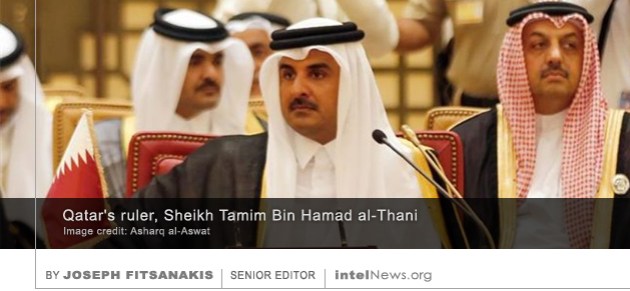 American officials appear to confirm Qatar’s allegations that its news media were hacked by its Gulf adversaries, who then used the fake news posted by hackers to launch a massive campaign against it. Tensions between Qatar and other Muslim countries have risen since late May, when the country’s state-controlled news agency appeared to publish an incendiary
 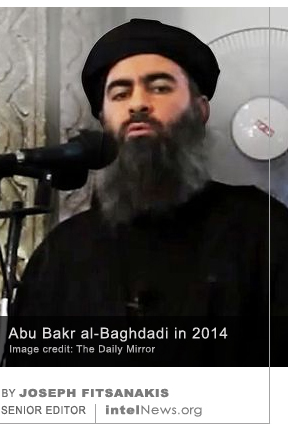 A senior Iraqi intelligence official has rejected assurances given by Russia that Abu Bakr al-Baghdadi, the founder and leader of the Islamic State, is dead, insisting instead that the Iraqi-born cleric is alive in Syria. In mid- June, Russia’s Ministry of Defense said that, according to its sources, al-Baghdadi
 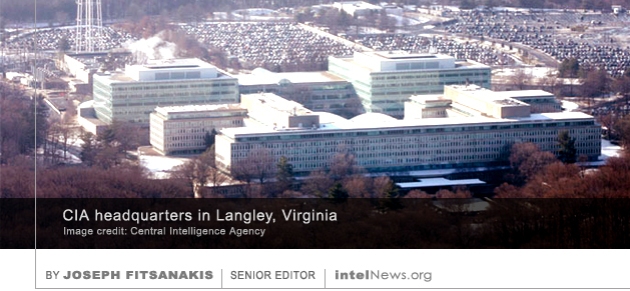 A contractor for the United States Central Intelligence Agency has complained in an interview that no action has been taken in the seven years since he revealed a “billion-dollar fraud” and “catastrophic intelligence failure” within the Agency’s ranks. John Reidy argues that his case illustrates the unreasonable delay that impedes investigations by whistleblowers like him inside the CIA. Individuals like him, he argues, are forced to seek justice through leaks to the media, something which could be avoided if the CIA’s Office of the Inspector General addressed concerns more promptly.
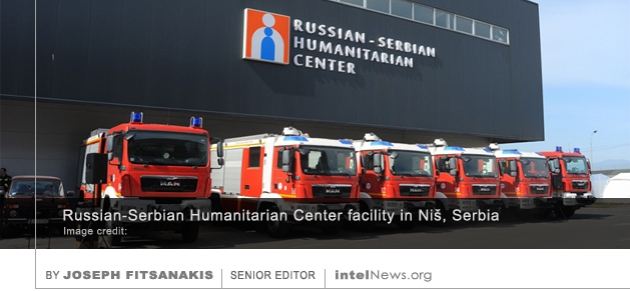 Staff at a Russian disaster relief center in southern Serbia have rejected claims by American officials that the facility operates as an espionage arm of Moscow’s foreign policy in the Balkans. The Russian-Serbian Humanitarian Center was built in 2012, at a cost of nearly $40 million, following an agreement between Belgrade and Moscow. Its
  Russia is planning to expel approximately 30 American diplomats from its territory, and seize buildings and property belonging to the United States Department of State, according to Russian media reports. The expulsions will be in response to the expulsion last December of 35 Russian diplomats stationed in the US by the administration of President Barack Obama. In addition to expelling the diplomats, Washington also reclaimed two “recreational facilities” (in reality intelligence outposts) that were used by the Russians in New York and Maryland. The White House said that the expulsions were ordered in response to alleged efforts by Russia to interfere in the 2016 US presidential election.
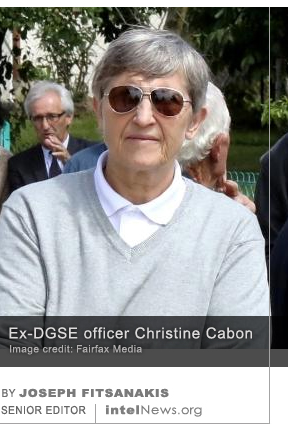 A French spy who infiltrated the environmentalist group Greenpeace and in 1985 helped bomb the organization’s flagship, the Rainbow Warrior, has spoken to the media for the first time. The British-based activist organization had purchased the trawler from the British government in 1977 and used it to carry out maritime research and other operations. In July 1985, the Rainbow Warrior, captained by the American environmental activist Peter Wilcox, was docked at the port of Auckland, New Zealand. It was being prepared to lead a flotilla of vessels to the French Polynesian atoll of Mororoa, in order to try to stop a planned nuclear test by the French military.
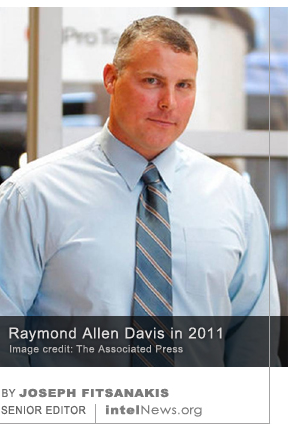 A former contractor for the United States Central Intelligence Agency, who was released from a Pakistani prison in 2011 despite being implicated in a double murder there, says he was freed with the help of senior Pakistani officials. Raymond Allen Davis was a CIA contractor posted in the US consulate in Pakistan’s Punjabi capital, Lahore, which is also the country’s second-largest city. It has been
  A lengthy parliamentary report on American intelligence activities in Germany was presented last week in Berlin, but was condemned by opposition parties as insufficient and incomplete, prompting calls for a new investigation. The parliamentary probe was initiated in 2013, following a series of






 intelNews.org
Cold War files show CIA support for guerrilla warfare inside USSR (Part I)
August 10, 2017 3 Comments
The role of the CIA in funding and helping to organize anti-Soviet groups inside the USSR has been known for decades. But the recently released documents, unearthed by Russian-language service of Latvian state television, shed light into the CIA’s early understanding of the identity, strength and operations of these groups. They also contain new information about the background and structure of underground anti-Soviet groups like the Forest Brothers in Latvia.
The first declassified CIA document that contains information on anti-Soviet resistance in Latvia is dated November 29, 1949, and is titled “The Organization of the Underground Resistance Movement in Eastern Europe”. It was soon followed by two other documents, entitled “Latvian Resistance to Russian Occupation” and “Request for [Support] to the Latvian Resistance Movement”. The latter document was produced in mid-1950, after the CIA was able to establish contact with anti-Soviet Latvian expatriates living in Germany and Sweden. From these contacts, the CIA was able to determine that active (and possibly armed) resistance to the Soviet Red Army in Latvia was limited to approximately 5,000 individuals, many of whom conducted periodic guerrilla attacks against Soviet troops or installations. However, the CIA report said that, as of 1950, the majority of these armed guerrillas remained dormant, “waiting for a more opportune moment” to return to action. The CIA memorandum also stated that clandestine radio communication existed between the leadership of Latvia’s anti-Soviet underground in Riga and exile Latvian communities in Sweden.
Note: Part II of this report can be found here.
► Author: Joseph Fitsanakis | Date: 10 August 2017 | Permalink
Filed under Expert news and commentary on intelligence, espionage, spies and spying Tagged with CIA, Cold War, covert action, declassification, Forest Brothers, history, Latvia, News, United States, USSR, ZRLYNCH