Trump chief of staff’s phone was breached for nearly a year, say sources
October 9, 2017 4 Comments
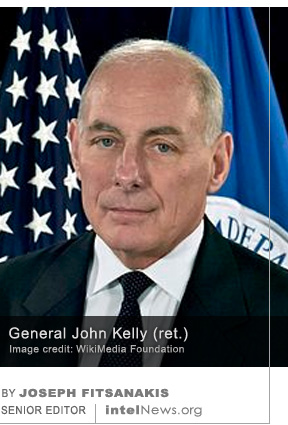 The personal cell phone of the White House Chief of Staff John Kelly (photo) was compromised by persons unknown and may have been bugged for nearly a year, according to United States government officials. General Kelly retired from the US Marine Corps in 2016, after serving as chief of the US Pentagon’s Southern Command, where he supervised American military operations in Latin America and the Caribbean. Soon afterwards, he was appointed by US President Donald Trump to lead the Department of Homeland Security, which he joined in January of 2017. Six months later, however, he replaced Reince Priebus, who resigned abruptly from the post of White House Chief of Staff, citing differences over management style with the Trump administration.
According to the online news outlet Politico, the breach of Kelly’s personal phone was discovered last summer, after the retired general sought the advice of the White House’s technical support staff. Kelly told the technical experts that his phone’s operating system had been malfunctioning for several months and that software updates seemed to make the problem worse. Once the breach was discovered, White House staff summarized the findings of the probe into Kelly’s phone in a one-page memorandum. Three people who read the document spoke anonymously to Politico. The news outlet said that, according to the White House memorandum, it is unclear how and when Kelly’s phone was breached. There is also no information in the document about how much and what kind of information was compromised throughout the duration of the breach. Politico cited a White House spokesman who claimed that the chief of staff used his personal phone sparsely and never for government business.
However, depending on the level of the breach, hackers could have used the compromised phone to listen in to Kelly’s private conversations —in and out of the White House— even when the phone was not in use but simply turned on. It follows that if the breach of Kelly’s phone was orchestrated by a foreign government, the magnitude of the compromise may be substantial. Politico reports that digital forensics experts are now reviewing Kelly’s travels in the past year, as part of a widening investigation into the breach. Meanwhile, the general has been issued a new phone for his personal use.
► Author: Joseph Fitsanakis | Date: 10 October 2017 | Permalink
 Germany’s two most senior intelligence officials have dismissed suggestions by European officials and leaders, including the president of France, to create a Europe-wide intelligence agency. The numerous deadly attacks carried out by Islamic State supporters across Europe in recent years have given rise to calls from various quarters for the establishment of a new intelligence service that would combine resources from every member-state of the European Union. Last month, the European Union’s Commissioner for Migration, Home Affairs and Citizenship, Dimitris Avramopoulos,
 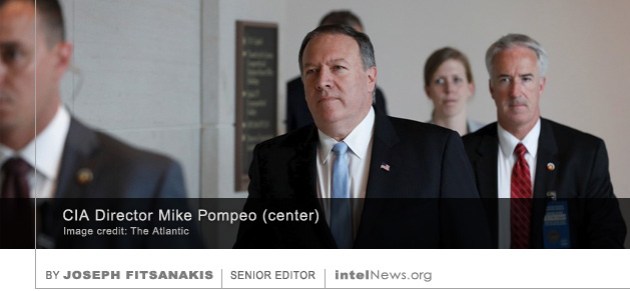 The man appointed by President Donald Trump to lead the United States Central Intelligence Agency has outlined his plans to promote more aggressive intelligence operations and combat what he described as “red tape” in the agency’s culture. Mike Pompeo, a former aerospace and oil executive, who is a member of the conservative Tea Party movement, assumed the directorship of the CIA in January of this year. He succeeded John Brennan, a career CIA officer, who has been an outspoken critic of the Trump administration’s attitude to intelligence since he left office in January.
 The seizure earlier this year of a North Korean ship secretly carrying thousands of weapons for use by the Egyptian military has revealed the scale of one of Pyongyang’s most profitable money-making ventures: global arms sales. Experts say that the North Korean state continues to supply thousands of tons of Cold-War-era conventional weapons to countries such as Eritrea, Cuba, Burma and Iran, as well as to some American allies, including as Egypt. There is also evidence that at least two non-state militant organizations, including the Lebanon-based group Hezbollah, are among Pyongyang’s customers. The latter take advantage of North Korea’s vast arsenal of weapons produced in the 1960s and 1970s, which are being sold on the international arms market at very low prices.
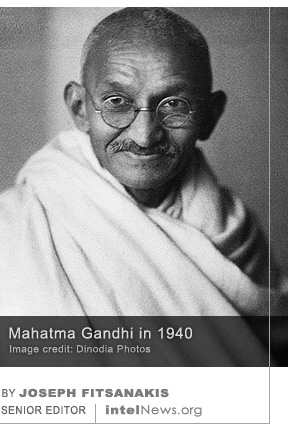 A researcher is seeking access to a potentially revealing classified telegram sent by a United States diplomat who witnessed the assassination of Indian leader Mahatma Gandhi in 1948. Gandhi, the leader of the Indian movement for independence, and a towering civil rights figure of the 20th century, was assassinated on January 30, 1948, as he was about to hold a prayer meeting in downtown New Delhi. His assassin, Nathuram Vinayak Godse, was a member of a Hindu nationalist paramilitary group, who blamed Gandhi for the bloody partition of India. He and a co-conspirator, Narayan Apte, were arrested for Gandhi’s murder and put to death in 1949.
 A senior German intelligence official has warned that foreign powers, including Russia, could try to shape the outcome of talks by German parties to form a governing coalition, following last week’s national elections. The elections resulted in a major shakeup of Germany’s political landscape, as Chancellor Angela Merkel’s Christian Democratic Union lost nearly 10 percentage points compared to its 2013 election result. It is now forced to seek the participation of other conservative or centrist political parties in a broad governing alliance. Meanwhile, the far-right Alternative for Germany (AfD) won 12.6 percent, propelling it to third place and giving it 91 seats in the Bundestag. The AfD result marks the first time since 1945 that a German far-right party has managed to secure parliamentary representation.
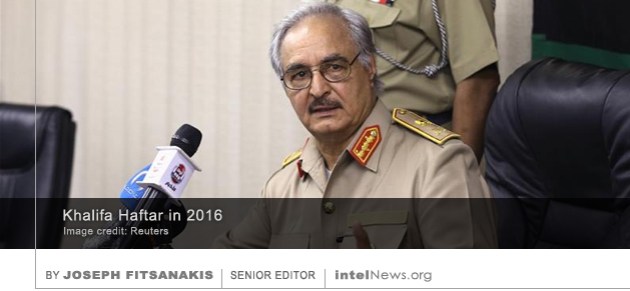 Libya’s most powerful warlord, who was an asset of the United States Central Intelligence Agency before entering the Libyan Civil War, ordered his troops to commit war crimes, according to two American legal experts. Libya has remained in a state of war since 2011, when a popular uprising backed by the West and its allies led to the demise of the country’s dictator, Colonel Muammar Gaddafi. Currently the strongest faction in the ongoing Libyan Civil War is the eastern-based Tobruk-led Government, which is affiliated with the Libyan National Army (LNA). The commander of the LNA is Field Marshal Khalifa Haftar, an old adversary of Colonel Gaddafi, who lived in the United States under Washington’s protection for several decades before returning to Libya in 2011 to launch his military campaign.
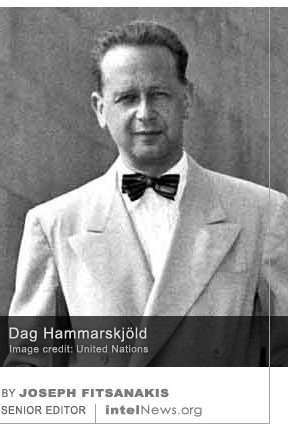 A deliberate attack by another aircraft may have caused the plane crash that killed the United Nations Secretary General in 1961, according to a report commissioned by the intergovernmental organization. On September 17, 1961, a Douglas DC-6 transport aircraft carrying United Nations Secretary General Dag Hammarskjöld crashed in the British-administered territory of Northern Rhodesia (now Zambia). The crash killed everyone onboard. At the time of his death, Hammarskjöld was flying to the Congo’s mineral-rich Katanga region to meet European-supported chieftains who in 1960 had seceded from the nationalist government of Congolese Prime Minister Patrice Lumumba. Ironically, Lumumba had been
 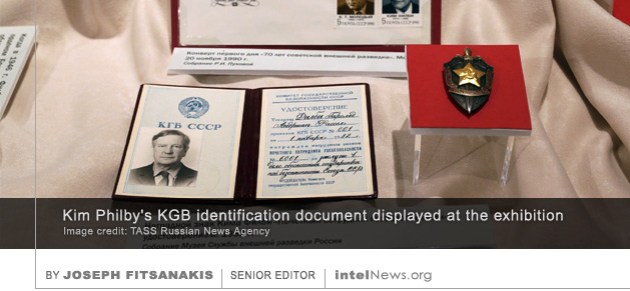 The life of Kim Philby, one of the Cold War’s most recognizable espionage figures, is the subject of a new exhibition that opened last week in Moscow. Items displayed at the exhibition include secret documents stolen by Philby and passed to his Soviet handlers during his three decades in the service of Soviet intelligence. While working as a senior member of British intelligence, Harold Adrian Russell Philby, known as ‘Kim’ to his friends, spied on behalf of the Soviet NKVD and KGB. His espionage lasted from about 1933 until 1963, when he secretly defected to the USSR from his home in Beirut, Lebanon. Philby’s defection sent ripples of shock across Western intelligence and is often seen as one of the most dramatic incidents of the Cold War.
 The world’s largest building materials manufacturer, LafargeHolcim, which is headquartered in France and Switzerland, allegedly bribed the Islamic State to keep its factory working in Syria, according to court witnesses. The company specializes in the manufacture of building materials such as cement, concrete and various byproducts. It was formed in 2015 by a merger of France-based Lafarge and Swiss-based Holcim, and currently employs an estimated 120,000 employees in nearly 100 countries around the world.
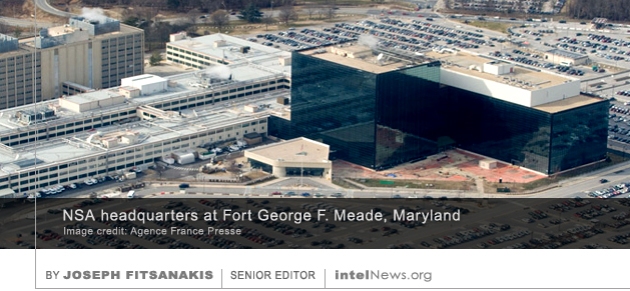 Representatives from the United States National Security Agency (NSA) withdrew a proposal to introduce new global industry standards for data encryption, after encountering prolonged skepticism by experts representing other Western countries. Some observers have interpreted this development as indicative of the damaged relationship between the NSA and its Western counterparts following revelations by American defector Edward Snowden.
 A group of cyber spies with close links to the Iranian government is becoming increasingly competent and adept, and could soon bring down entire computer networks, according to a leading cyber security firm. The California-based cyber security company FireEye said that it has been monitoring the operations of the mysterious group of cyber spies since 2013. The company, whose clients include Sony Pictures, JP Morgan Chase and Target, said that the Iranian group appears to be especially interested in gathering secrets from aviation, aerospace and petrochemical companies.
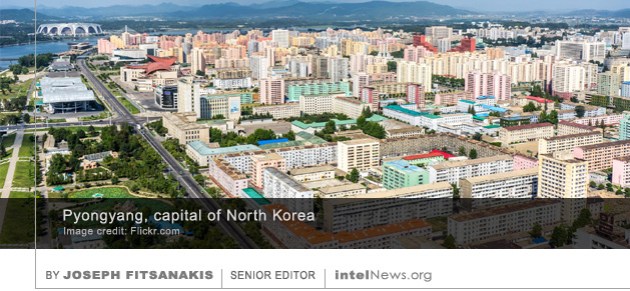 Australia rejected a secret request by the United States Central Intelligence Agency to open an embassy in North Korea, which the Americans hoped to use as a base from where to collect intelligence on the communist state.
 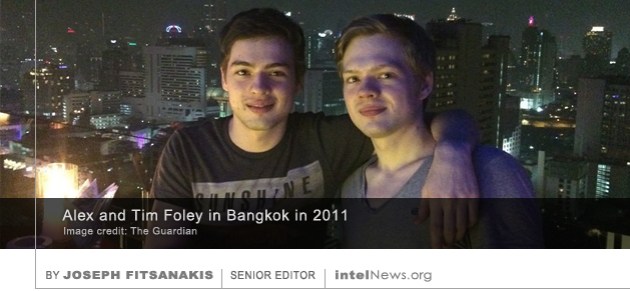 The sons of a Russian couple, who fraudulently acquired Canadian citizenship before being arrested for espionage in the United States, are seeking to reinstate their Canadian citizenship, which was annulled when their parents were found to be Russian spies. Tim and Alex Vavilov are the sons of Donald Heathfield and Tracey Foley, a married couple arrested in 2010 under Operation GHOST STORIES —a counterintelligence program run by the US Federal Bureau of Investigation (FBI). Following their arrest, their sons, who allegedly grew up thinking their parents were Canadian, were told that their parents were in fact Russian citizens and that their real names were Andrei Bezrukov and Elena Vavilova. Their English-sounding names and Canadian passports had been forged in the late 1980s by the KGB, the Soviet Union’s primary external intelligence agency.








Major symposium on Dutch double spy Mata Hari to take place in London
October 10, 2017 1 Comment
On October 28, an international symposium will take place at City University, one of 28 colleges and research centers that make up the University of London. Entitled “The Legacy of Mata Hari: Women and Transgression”, the symposium will bring together historians, museum curators, as well as intelligence and military experts who have spent decades studying the story of Mata Hari. They include her biographers from Holland, historians from the British Foreign and Commonwealth Office, German and French military intelligence historians, as well as a representative from the Spy Museum in Washington, DC. The symposium’s host and keynote speaker is Dr Julie Wheelwright, Lecturer in Creative Writing (non-fiction) and director of the Master’s program in Creative Writing at City University. Dr Wheelwright is considered one of the world’s foremost specialists on Mata Hari and is author of the 1992 book The Fatal Lover: Mata Hari and the Myth of Women in Espionage.
The organizers of the symposium say that recently unearthed personal letters by leading figures in Mata Hari’s life, as well as newly declassified government documents, present researchers with a unique opportunity to reassess the Dutch double spy’s character, motives and legacy. Another purpose of the symposium will be to explore the reality and stereotypes of the use of female sexuality in espionage, the role of women in war and intelligence, as well as the historical contribution of women spies in World War I. Several other events are planned on the occasion of the centenary of Mata Hari’s death across Europe, including a major new exhibition about her in her home down of Leeuwarden in Holland’s Fries Museum, which is scheduled to open later this month.
► Author: Joseph Fitsanakis | Date: 10 October 2017 | Permalink
Filed under Expert news and commentary on intelligence, espionage, spies and spying Tagged with conferences, espionage, history, Julie Wheelwright, Mata Hari, News, World War I