 Saturday’s suicide bombing, which killed over 50 and injured dozens at a wedding in Gaziantep, Turkey, was without doubt the work of the Islamic State. It was yet another attempt by the militant Sunni group to discourage the Kurds from confronting it in battle, by pointing to the deadly consequences. It was also fueled by the desire for vengeance against a population that has consistently resisted the Islamic State’s ideology. Additionally, if confirmed, the use of a child as a suicide bomber by the Islamic State may form a pattern of operational activity that can lead to broader conclusions about the current state of the organization.
It has become increasingly clear in the past two years that the armed Kurdish groups in northern Syria and Iraq, as well as Kurdish peshmerga units based in Turkey, are some of the most formidable opponents of militant Jihadists on the ground. By bombing soft targets inside Turkey, the Islamic State is sending a message to the Kurds that armed opposition on the ground will carry a heavy cost at home. Contrary to initial impressions, there was nothing special about the particular wedding ceremony that was targeted on Saturday. Any wedding would have been suitable for the Islamic State’s purpose. In fact, the randomness of the attack increases its shock value by demonstrating to the local population that any activity can be attacked, even if it does not involve notables. Additionally, the specific choice of a wedding magnifies the brutality of the attack, by targeting a young couple on what is typically the happiest day of their lives. The high concentration of children among the casualties may indicate that the bomber was given specific operational instructions to attack younger participants. The clear warning here is that the disruption will leave nothing untouched –including something as ‘off-limits’ as a couple on their wedding day, or groups of children– if the Kurds continue to fight the Islamic State.
Moreover, the Islamic State is trying to widen the already deep division between the Turkish state and the Kurds, by exposing the inability of the government in Ankara to protect its Kurdish population from attacks. The Kurds already resent Turkey’s ‘soft policy’ on the Islamic State. They and the rest of the world can see that Ankara has typically viewed the government of Bashar al-Assad in Damascus as far more threatening than the continuing rise of Islamist fundamentalism. Since the failed July 15 coup, the Turkish state has begun to revise its soft stance on the Islamic State, but this comes too late to pacify the country’s infuriated Kurdish population. This latest attack will only intensify the deep anger felt by the Kurds against the Turkish state.
Initial reports indicate the possible use of a child or a teenager to carry out the Gaziantep bombing. These may or may not be accurate. They could easily be an attempt by the Kurds to further-incense international public opinion against the Islamic State. If the reports are accurate, they do not necessarily represent some sort of break from the traditional tactics of the Islamic State. According to the group’s war-fighting doctrine, there is no differentiation between men and children when it comes to what it sees as the defense of Sunni religious doctrine. Every Muslim, regardless of race, gender, or age, is required to engage in holy war. Indeed, the Islamic State has deployed children before, in warfare, executions and suicide bombings against both hard and soft targets. However, even though the use of a child to carry out the Gaziantep bombing is not in itself unique, or particularly important, it matters if it forms part of a broader pattern. If it is verified that ISIS is increasingly using children in suicide bombings, or in warfare, it may signify two things: first, that the organization is finding it difficult to recruit able-bodied men for missions. Second, that adult ISIS recruits are becoming scarcer, so the organization is trying to preserve them for decisive battles.
It may be, of course, that a child or younger teenager was selected in order to avoid security profiling by the Kurds. Still, the use of children in warfare or suicide missions can result in a large degree of unpredictability. Children may be relatively easy targets for recruiters, for the obvious reason that they are young and impressionable. Their reality can therefore be effectively altered by fantastical tales of the supernatural, which the Islamic State is very skilled at. However, children are not necessarily very dependable in war, or terrorism. They can be easily frightened, can change their mind at the last minute, and they do not stay calm under pressure. There are several recent examples of children or teenagers who were recruited for suicide operations but surrendered after changing their mind.
Ultimately, shocking massacres such as Saturday’s attack in Gaziantep cannot be prevented. They can only be limited through careful police and intelligence work. In the case of Turkey, however, this will be difficult. The country’s police, intelligence and military structures have been significantly weakened following the failed July 15 coup. Thousands of government officials, police officers, intelligence and military personnel have been fired, demoted or imprisoned. The state, which is becoming increasingly synonymous with the President Recep Tayyip Erdoğan’s AKP party, is too preoccupied with preserving its own stability to concentrate on combating the terrorist spillover from Syria.
► Author: Joseph Fitsanakis | Date: 23 August 2016 | Permalink
 The intelligence agency of the Czech Republic has accused Russian spy services of waging a “war of information” aimed at destabilizing the eastern European country. The agency has also warned that Russia continues to maintain a large intelligence presence in the Czech Republic, 25 years after the country, which was formerly known as Czechoslovakia, exited the Soviet sphere of influence and joined the European Union (EU) and the North Atlantic Treaty Organization (NATO).
 One of the men caught burglarizing the offices of the United States Democratic Party in 1972, a ploy that led to the resignation of President Richard Nixon, was an agent of the Central Intelligence Agency, according to a newly declassified document. The revelation is included in a narrative history of the Watergate scandal, produced over 40 years ago by the CIA to assess its own role in the affair. It recounts the events of the early morning hours of June 17, 1972, when a security guard saw five men dressed in black breaking into the headquarters of the Democratic National Committee at the Watergate office complex in Washington, DC. When the five men were arrested by police, it was discovered that one of them was connected with the Committee for the Re-Election of the President, a fundraising organization set up by US President Richard Nixon. The remaining four burglars had CIA contacts. They included E. Howard Hunt, a retired CIA operations officer who in 1961 had played a leading role in the failed Bay of Pigs invasion. It was eventually discovered that the burglary had been authorized by President Nixon himself, as part of a broader program to sabotage his political opponents.
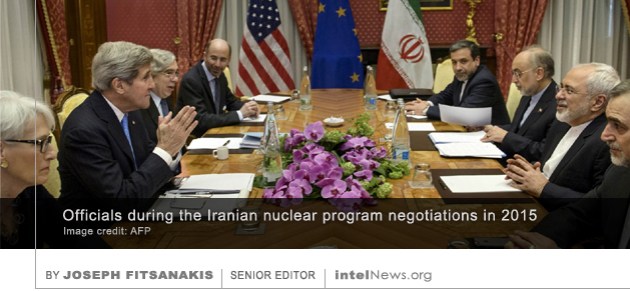 Iranian officials have confirmed reports from earlier this month that a member of the country’s team of nuclear negotiators has been arrested for engaging in espionage for a foreign country. But there are conflicting details about the case in Iranian media reports. Rumors about the identity of the individual began to circulate on August 16, after the office of the Iranian prosecutor announced that a dual national with Iranian citizenship had been arrested for spying on Tehran for a foreign intelligence service. The individual was not named, but some reports connected him with Britain’s Secret Intelligence Service, known as MI6.
 The White House has no plans to release an American former military analyst who spied for the government of Cuba, according to an official letter sent to a member of the United States Congress. The denial came weeks after some media reports in Miami and Cuba suggested that Washington was examining a request by Havana to release
 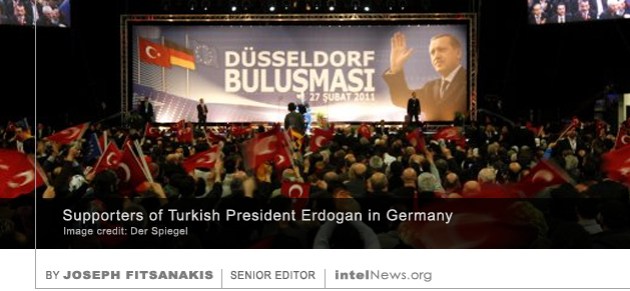 The Turkish intelligence service currently employs more operatives in Germany than the East German spy agency did at the height of the Cold War, according to a German expert on espionage. The comment was made following the disclosure that Turkey maintains close to 6,000 informants and other intelligence operatives in Germany. An unnamed German security official told German newspaper Die Welt on Monday that the informants are operational throughout Germany and are handled by Turkey’s National Intelligence Organization, known as MİT.
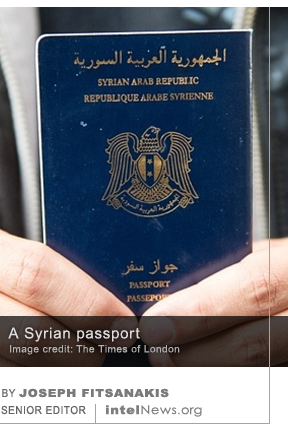 Fake Syrian passports designed for use by members of the Islamic State trying to enter Europe have been found in refugee camps in Greece during an investigation by the law enforcement agency of the European Union (EU). Officials from Europol, the EU agency that coordinates intelligence operations against organized crime across EU-member-states, said that the fake travel documents were found during a fact-finding mission in Greek refugee camps. The mission was part of a larger investigation into the production and use of forged passports by the Islamic State, the Sunni militant group that is also known as the Islamic State of Iraq and Syria (ISIS).
 The Turkish government has sent an official request to German intelligence for assistance in cracking down on the members of the so-called Gülen movement, which Ankara claims is behind July’s failed coup plot. The movement consists of supporters of Muslim cleric Fethullah Gülen, who runs a global network of schools, charities and businesses from his home in the United States. The government of Turkey has designated Gülen’s group a terrorist organization and claims it has stealthily infiltrated state institutions since the 1980s. The administration of Turkish President Recep Tayyip Erdoğan accuses Gülen’s supporters of orchestrating the July 15 coup that included an armed attack on the country’s parliament and the murder of over 200 people across Turkey.
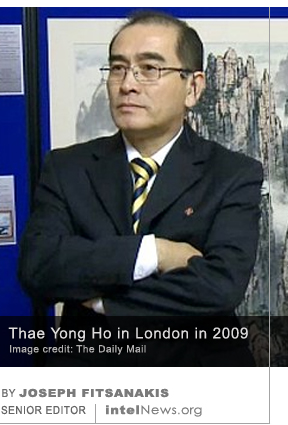 A high-ranking North Korean diplomat, who defected with his wife and children in London, and is now in South Korea, is from a privileged family with a long revolutionary pedigree in North Korean politics. South Korea’s Ministry of Unification confirmed on Wednesday that Thae Yong-Ho, the second-in-command at the North Korean embassy in the United Kingdom, had defected with his wife and children and had been given political asylum in South Korea. As intelNews
 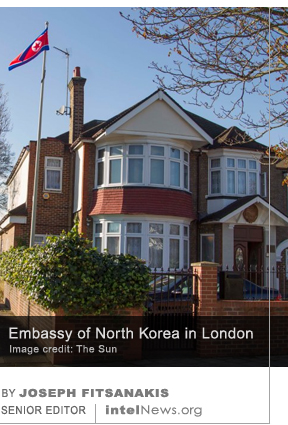 A senior member of North Korea’s diplomatic representation in the United Kingdom, who is considered one of his country’s leading specialists in Western European affairs, has reportedly defected “to a third country” with his family. The alleged defection was first
 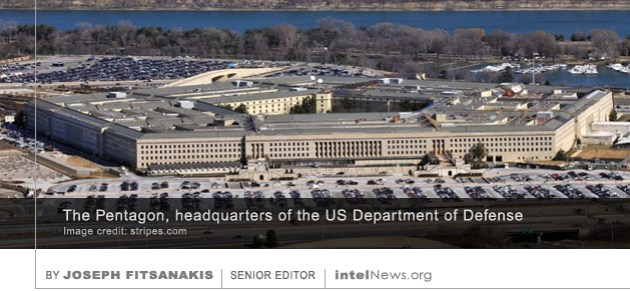 The United States Department of Defense has released details of an agreement with a private intelligence contractor, which experts believe involves the provision of services to American Special Forces working clandestinely inside Syria. The
 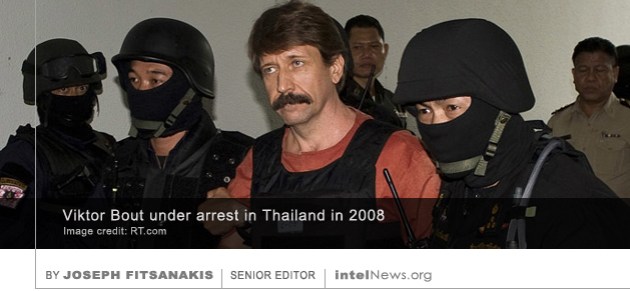 The wife of Viktor Bout, the imprisoned Russian arms dealer dubbed ‘the merchant of death’, said he rejected an offer by his American captors who asked him to testify against a senior Russian government official. Born in Soviet Tajikistan, Bout was a former translator for the Soviet military. After the end of the Cold War, he set up several low-profile international air transport companies and used them to transfer large shipments of weapons that fueled wars in Africa, Asia, Latin America and Europe. He made millions in the process and acquired international notoriety, which inspired the Hollywood blockbuster Lord of War. But his business ventures ceased in 2008, when he was
 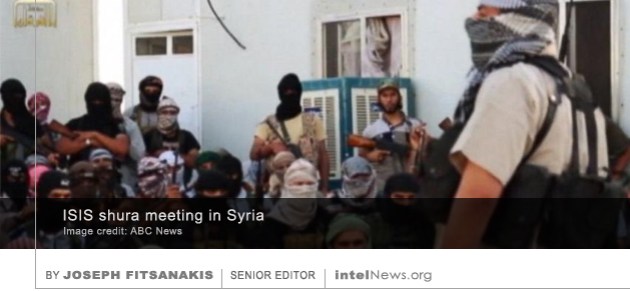 The Islamic State has set up a secretive intelligence agency whose task is to set up sleeper cells abroad and has already sent “hundreds of operatives” to Europe and Asia, according to information emerging from interrogations of suspects. According to The New York Times, the information about the intelligence agency comes from “thousands of pages” of intelligence files from American, French, Belgian, Austrian and German agencies. The documents include information from interviews with captured members or defectors from the Islamic State, which is otherwise known as the Islamic State in Iraq and Syria (ISIS).
 Authorities in Iran have admitted that they executed a former scientist for the country’s nuclear program, who claimed that he was abducted by the United States after disappearing from Iran for a year. Shahram Amiri worked for the Atomic Energy Organization of Iran, the government body that is responsible for operating and regulating the country’s nuclear installations. But in the summer of 2009, while on a religious pilgrimage to the Saudi Arabian city of Mecca, Amiri disappeared. Iranian authorities








FBI warns against alleged Russian campaign to destabilize US elections
September 7, 2016 2 Comments
According to The Post, the FBI and other US intelligence agencies have “no definitive proof” that Moscow is attempting to promote public distrust in American political institutions. But there are strong indications that have made this topic “a priority” for intelligence officials from the FBI, the Department of Homeland Security, the National Security Agency and the Central Intelligence Agency, said the paper. These indications include the hack of the computer systems at the Democratic National Committee, the official governing body of the US Democratic Party, which was revealed in June. The hack resulted in the disclosure of over 20,000 internal emails and led to the resignation of Debbie Wasserman-Schultz, the DNC’s Chairwoman. According to The Post, the hack is “not yet officially ascribed by the US government to Russia”, but US intelligence officials are convinced that Moscow was behind it.
The DNC hack prompted the FBI to send a so-called “flash alert” to US election officials in July, urging them to remain vigilant against “attempts to penetrate election systems”, which have been detected in several states, according to the report. The unprecedented FBI alert did not expressly name Russia as a national-security threat, nor did it give details of electoral sabotage. But it urged state election officials to “be on the lookout for intrusions into their election systems”. Citing unnamed intelligence officials, The Post said that the investigation into alleged Russian operations against the US Presidential election is being coordinated by James Clapper, the US Director of National Intelligence.
► Author: Joseph Fitsanakis | Date: 07 August 2016 | Permalink
Filed under Expert news and commentary on intelligence, espionage, spies and spying Tagged with FBI, James R. Clapper, News, psyops, Russia, sabotage, United States