Portugal court rules to extradite ex-CIA officer wanted in Italy for kidnapping
January 18, 2016 Leave a comment
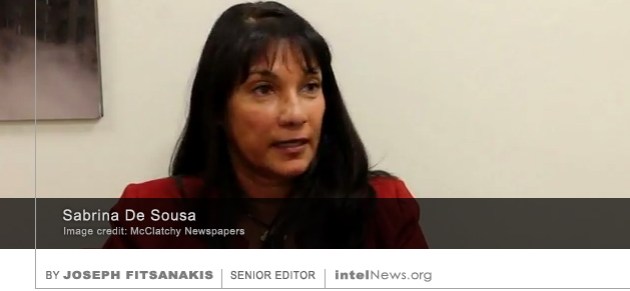 A court in Portugal has ruled to extradite a former officer of the United States Central Intelligence Agency to Italy, where she faces charges of kidnapping a man as part of a secret operation. Sabrina De Sousa, 59, was an accredited diplomat stationed at the US consulate in Milan, Italy, in 2003, when a CIA team kidnapped Hassan Mustafa Osama Nasr from a Milan street in broad daylight. Nasr, who goes by the nickname Abu Omar, is a former member of Egyptian militant group al-Gama’a al-Islamiyya, and was believed by the CIA to have links to al-Qaeda. Soon after his abduction, Nasr was renditioned to Egypt, where he says he was brutally tortured, raped, and held illegally for years before being released without charge.
Upon Nasr’s release from prison, Italian authorities prosecuted the CIA team that abducted him. They were able to trace the American operatives through the substantial trail of evidence that they left behind, including telephone records and bill invoices in luxury hotels in Milan and elsewhere. In 2009, De Sousa was among 22 CIA officers convicted in absentia in an Italian court for their alleged involvement in Nasr’s abduction. Since the convictions were announced, the US government has not signaled a desire to extradite those convicted to Italy to serve prison sentences. However, those convicted are now classified as international fugitives and risk arrest by Interpol and other law enforcement agencies, upon exiting US territory.
De Sousa was arrested at the Portela Airport in Lisbon, Portugal, in October of last year. She spent two nights in jail before being released. However, her passport was seized by Portuguese authorities until they decided whether to extradite her to Italy to face her conviction. The Reuters news agency said on Friday that De Sousa would “be surrendered to Italian authorities” so that she could be informed of the Italian court’s decision to convict her in 2009. The news agency was reportedly told by a Portuguese court official that De Sousa would have to travel to Italy in order to be given official notice of her conviction, as well as the sentence, according to European legal conventions. Following that, she would have to return to Portugal to serve her sentence. Her lawyer said, however, that De Sousa planned to challenge her conviction at the Supreme Court of Cassation, Italy’s highest court of appeal.
► Author: Joseph Fitsanakis | Date: 18 January 2016 | Permalink
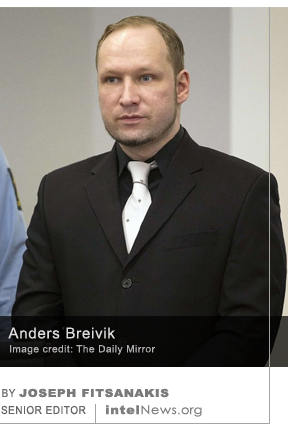 Police in Germany caught Anders Breivik with ammunition and weapon parts in 2009, two years before he killed nearly 80 people in Norway, but did not arrest him and failed to notify Norwegian police, according to a new documentary. Breivik is a jailed far-right terrorist, who in 2011 single-handedly perpetrated two terrorist attacks that killed 8 people in Norwegian capital Oslo and another 69 on the island of Utøya. During his trial, he said he killed his victims, most of whom were participants at a Norwegian Labor Party summer camp, in order to protest against “multi-culturalism” and “Islamization” in Norway. The attack, which included the use of a car bomb and semi-automatic weapons, is considered the deadliest terrorist incident in Norway’s history since World War II.
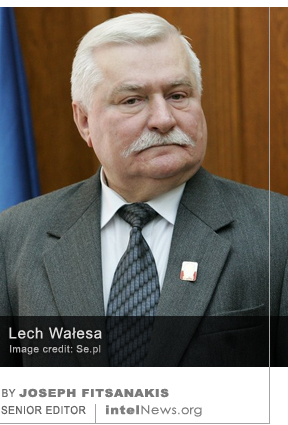 Poland’s first post-communist president, Lech Wałęsa, has denied allegations that he was secretly a communist spy and has called for a public debate so he can respond to his critics. In 1980, when Poland was still under communist rule, Wałęsa was among the founders of Solidarność (Solidarity), the communist bloc’s first independent trade union. After winning the Nobel Peace Prize in 1983, Wałęsa intensified his criticism of Poland’s communist government. In 1990, following the end of communist rule, Wałęsa, was elected Poland’s president by receiving nearly 75% of the vote in a nationwide election. After stepping down from the presidency, in 1995, Wałęsa officially retired from politics and is today considered a major Polish and Eastern European statesman.
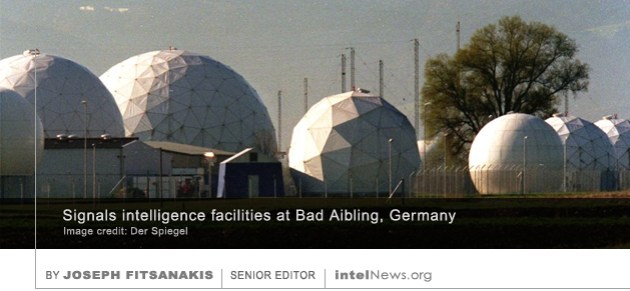 Cooperation on surveillance between German and American intelligence agencies has reportedly resumed following a row between the two countries that was caused by reports that the United States had spied on the German government. In 2014, Berlin
  Russia’s official envoy to Afghanistan has said that Moscow is now working with the Afghan Taliban in order to stop the growth of the Islamic State in the region. Many Taliban fighters are direct descendants of the Afghan and Pakistani Pashtuns who fought the Soviet Red Army in the 1980s, when the USSR invaded Afghanistan and fought a bloody decade-long war there. But the militant group, which today continues to control much of Afghanistan, despite a prolonged American-led military effort to defeat it, is now being challenged by the Islamic State. Known also as the Islamic State in Iraq and Syria (ISIS), the group enjoys growing popularity in Afghanistan, and some tribal warlords have already declared their allegiance to it. In contrast, the leadership of the Taliban has rejected the legitimacy of ISIS and refused to recognize its leader, Abu Bakr al-Baghdadi, as the caliph of all Sunni Muslims. According to Sunni doctrine, a caliph is the recognized political and religious successor to Muhammad, Islam’s prophet, and thus commands the Muslim ummah, or community.
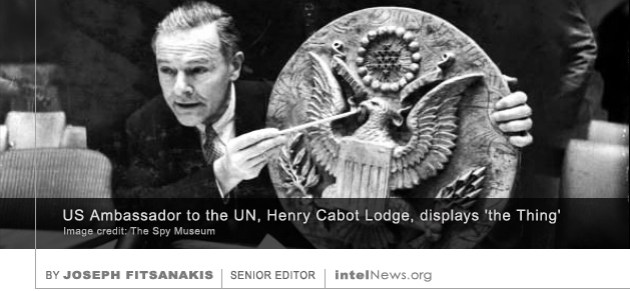 A tightly knit group of Dutch technical experts helped American spies bug foreign embassies at the height of the Cold War, new research has shown. The research, carried out by Dutch intelligence expert Cees Wiebes and journalist Maurits Martijn, has brought to light a previously unknown operation, codenamed EASY CHAIR. Initiated in secret in 1952, the operation was a collaboration between the United States Central Intelligence Agency and a small Dutch technology company called the Nederlands Radar Proefstation (Dutch Radar Research Station).
 American intelligence agencies spied on Israeli Prime Minister Benjamin Netanyahu during the negotiations between the United States and Iran over the Islamic Republic’s nuclear program, according to officials. Tehran entered a deal, referred to as ‘the Geneva pact’, following drawn-out negotiations with a group of nations that came to be known as P5+1, representing the five permanent members of the United Nations Security Council plus Germany. The government of Israel, however, strongly criticized the negotiations. Prime Minister Netanyahu called the pact a “historic mistake” that would enable “the most dangerous regime in the world” to get closer to “attaining the most dangerous weapon in the world”. Israel’s strong reaction, which included open criticism of US President Barack Obama, caused some in the US to
 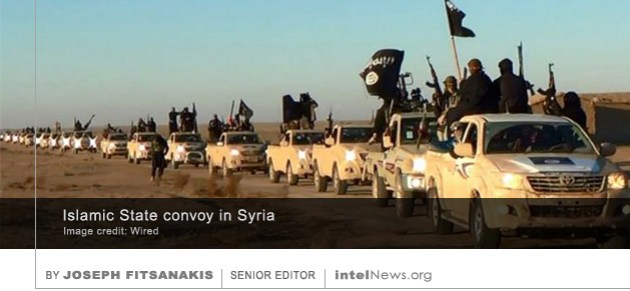 Much emphasis has been given to the Islamic State’s Western recruits, but there is almost nothing known about Westerners fighting against the Islamic State in Iraq and Syria. Last week, an investigative website published the first substantial study on the subject, focusing on volunteers who are citizens of the United States. Entitled “The Other Foreign Fighters”, the study focuses on those Americans who have voluntarily traveled to the Middle East to take up arms against the group, which is also known as the Islamic State in Iraq and Syria (ISIS). It was authored by Nathan Patin, an independent researcher who often publishes his work through Bellingcat, a website specializing in open-source investigations.
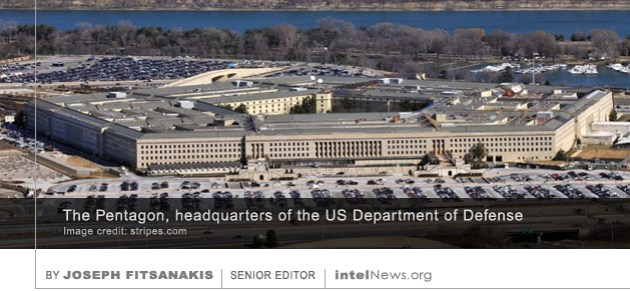 The United States Department of Defense has been secretly sharing intelligence with the Syrian government of President Bashar al-Assad without authorization by the White House, according to an American journalist. Officially, the US government is opposed to the Assad regime in Damascus and has repeatedly stated that peace in Syria can only be achieved if the Assad family leaves power. But in a report published yesterday in The London Review of Books, the veteran American investigative journalist Seymour Hersh claims that America’s military leadership has been secretly aiding the Assad family’s efforts to defeat Islamist groups in Syria.
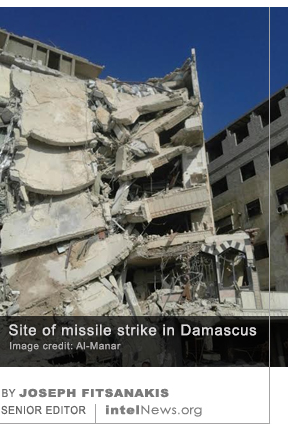 Israel has refused comment following the death of a senior official of Lebanese militant group Hezbollah, who was killed on Saturday in a missile strike in Syria. Samir Kuntar (also spelled Qantar) was a Druze who joined the Syrian-backed, Lebanese-based, Palestine Liberation Front (later Popular Front for the Liberation of Palestine – General Command) at a young age. In 1979, Kuntar was jailed for an attack on an apartment block in Israel’s northern coastal town of Nahariya, which resulted in the death of four Israeli civilians and two of the attackers. However, he was freed after nearly three decades in prison in exchange for the bodies of two Israel Defense Force soldiers, who had been captured and executed by Hezbollah in 2006.
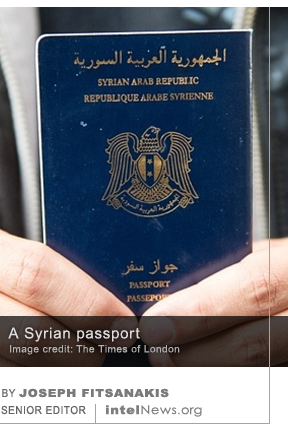 The Islamic State in Iraq and Syria (ISIS) is now able to produce authentic-looking Syrian passports using machines that are typically available only to governments, according to an American intelligence report. The report was accessed by the New York-based station ABC News, which
 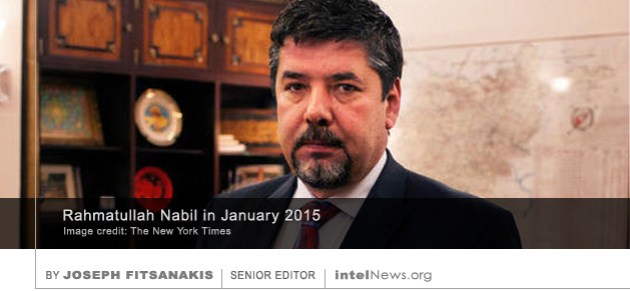 The bleak landscape of Afghan national politics became even bleaker on Thursday, after the sudden resignation of the country’s spy chief, allegedly due to “disagreements” with the government in Kabul. Rahmatullah Nabil led Afghanistan’s National Directorate of Security (NDS) from 2010 to 2012 before returning to the post in 2013, while his predecessor, Asadullah Khalid, recovered from injuries suffered from an unsuccessful assassination attempt against him by the Taliban. But on Thursday afternoon, Nabil
  The man who masterminded November’s Islamist attacks in Paris was based in Athens, and last January managed to escape arrest during a joint Greek-Belgian police operation aimed at capturing him. Moroccan-born Abdelhamid Abaaoud, who had lived in Brussels for years, died in a gun battle with French police on November 18, just days after the multiple attacks in Paris that killed 130 people and injured hundreds. It is believed that the perpetrators of the attacks, who were based in Belgium, were guided and directed by Abaaoud. He, however, was not based in Belgium, but in Athens, Greece. It was from there that he directed the Islamist cells, mostly by phone, according to the BBC.






 intelNews.org
Long-awaited British report to blame Kremlin for ex-KGB spy’s death
January 21, 2016 2 Comments
A public inquiry into the death of Litvinenko, ordered by the British state, has taken over six months to conclude. In the process, the judge in charge, Sir Robert Owen, has heard from 62 witnesses. The latter include members of the Secret Intelligence Service, known commonly as MI6, for which the late Russian former spy worked after his arrival in Britain. The release of the inquiry’s report is expected this week. But British media have quoted unnamed “government sources” as saying that the long-awaited document will point to the Russian state as the instigator, planner and execution of Litvinenko’s death. One source was quoted as saying that the report will identify “a clear line of command” and that “it will be very clear that the orders came from the Kremlin”.
It is not believed, however, that the report will point to Russian President Vladimir Putin as having had a role in the former spy’s murder. Nevertheless, there is speculation in London and Moscow about the British government’s possible response to the inquiry’s report. One unnamed source told the British press that the report’s findings would place Whitehall “in a difficult position”, given London’s current cooperation with Russia in Syria. However, the government of British Prime Minister David Cameron is expected to face renewed pressure from the public and from opposition parties to take action against Russia, should it be confirmed this week that the Kremlin was indeed behind Litvinenko’s killing.
► Author: Joseph Fitsanakis | Date: 21 January 2016 | Permalink
Filed under Expert news and commentary on intelligence, espionage, spies and spying Tagged with Alexander Litvinenko, KGB, News, poisoning, Russia, Sir Robert Owen, suspicious deaths, UK