Study: Who are the Americans fighting against ISIS in Iraq and Syria?
December 28, 2015 Leave a comment
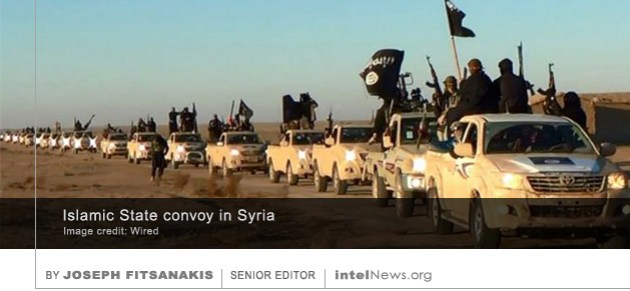 Much emphasis has been given to the Islamic State’s Western recruits, but there is almost nothing known about Westerners fighting against the Islamic State in Iraq and Syria. Last week, an investigative website published the first substantial study on the subject, focusing on volunteers who are citizens of the United States. Entitled “The Other Foreign Fighters”, the study focuses on those Americans who have voluntarily traveled to the Middle East to take up arms against the group, which is also known as the Islamic State in Iraq and Syria (ISIS). It was authored by Nathan Patin, an independent researcher who often publishes his work through Bellingcat, a website specializing in open-source investigations.
Patin reports that there are roughly 200 Americans who have either entered or attempted to enter Syria and Iraq in efforts to battle ISIS. Of those, at least 108 have spent time the region and enlisted in the various militias and armed groups that are fighting ISIS. Based on open sources, Patin claims that at least two thirds of the Americans fighting ISIS have previously served in the US Armed Forces, mostly in the Marine Corps and Army. Almost all of them are in their 20s and 30s and one of them is female. The majority have spent between one and four months on the battlefield in Iraq, Syria, or both. However, almost a third had little or no military experience prior to joining the war against ISIS. They included Keith Broomfield, 36, who died earlier this year while fighting ISIS in Kobani, Syria.
Almost half of the Americans tracked by Patin have fought for the People’s Protection Units (YPG), a Kurdish group that serves as the armed wing of the Kurdistan Workers’ Party (PKK) in northern Syria. Others have enlisted in the peshmerga forces of the Patriotic Union of Kurdistan (PUK) in Iraq, as well as in an assortment of Christian militias, including the Nineveh Plains Protection Units and the Dwekh Nawsha. There are major questions about the legality of the American volunteers’ actions, according to American law. The US Department of State does not include the YPG or the PUK in its official list of foreign terrorist organizations. But the PKK, which cooperates with both groups, is designated by Washington as a terrorist outfit. It is important to note, however that the Bellingcat study does not cover the legality of the American volunteers’ actions in Iraq and Syria. Finally, it is worth pointing out that almost nothing is known about several hundred Westerners from countries other than the US, who are also fighting against ISIS in the region. They include citizens of Finland, Greece, Italy, Spain, Sweden, Switzerland, and many other countries.
► Author: Joseph Fitsanakis | Date: 28 December 2015 | Permalink
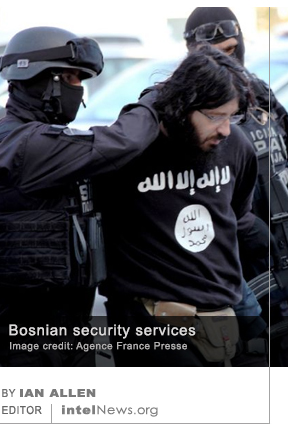 Authorities in Bosnia and Herzegovina have announced the arrest of several people on suspicion of having direct links with the Islamic State and other militant groups fighting in Iraq and Syria. At least 11 people were arrested by police in simultaneous raids at a number of locations on Tuesday, including businesses and private homes, across the Bosnian capital Sarajevo. A police spokeswoman said the eleven men had been charged with having links to terrorist groups, financing terrorist groups, or inciting and helping organize criminal acts. A number of them were also charged with recruiting young men and women to join militant groups in Syria and Iraq, she said.
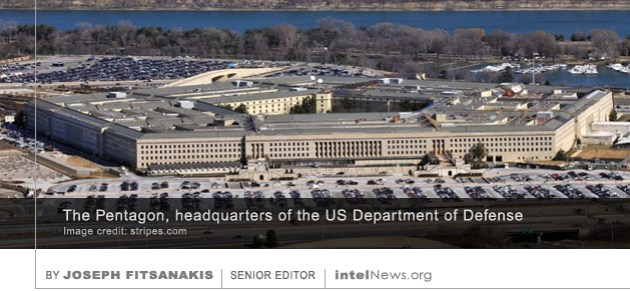 The United States Department of Defense has been secretly sharing intelligence with the Syrian government of President Bashar al-Assad without authorization by the White House, according to an American journalist. Officially, the US government is opposed to the Assad regime in Damascus and has repeatedly stated that peace in Syria can only be achieved if the Assad family leaves power. But in a report published yesterday in The London Review of Books, the veteran American investigative journalist Seymour Hersh claims that America’s military leadership has been secretly aiding the Assad family’s efforts to defeat Islamist groups in Syria.
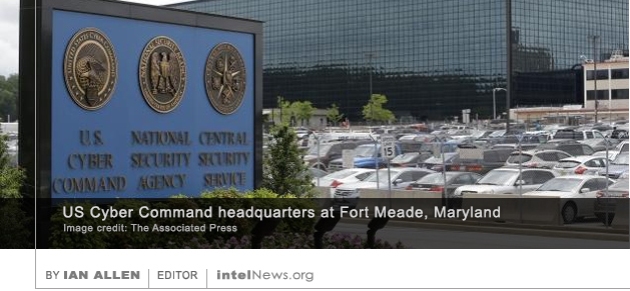 Following a request from the White House, the United States Department of Defense is putting together options to launch offensive cyber operations of an unprecedented scale against the Islamic State. The White House
 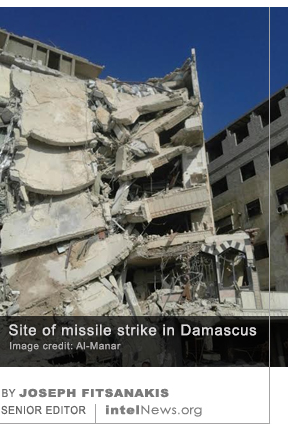 Israel has refused comment following the death of a senior official of Lebanese militant group Hezbollah, who was killed on Saturday in a missile strike in Syria. Samir Kuntar (also spelled Qantar) was a Druze who joined the Syrian-backed, Lebanese-based, Palestine Liberation Front (later Popular Front for the Liberation of Palestine – General Command) at a young age. In 1979, Kuntar was jailed for an attack on an apartment block in Israel’s northern coastal town of Nahariya, which resulted in the death of four Israeli civilians and two of the attackers. However, he was freed after nearly three decades in prison in exchange for the bodies of two Israel Defense Force soldiers, who had been captured and executed by Hezbollah in 2006.
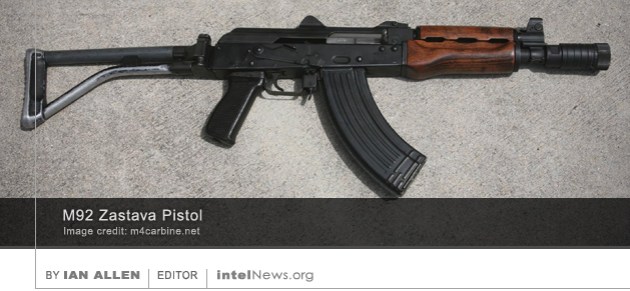 One of the guns used by Islamist militants to attack locations in downtown Paris on November 13 was purchased legally through a dealer in the United States, according to a report by the Associated Press. Investigators have confirmed that several of the weapons used in the attack, which killed 130 and injured hundreds more, were manufactured in Serbia. Most are slightly modified versions of the Soviet-era AK-47, known in the West as “shortened Kalashnikov”. All were produced in a weapons factory called Zastava, which is located in the city of Kragujevac, in central Serbia. They were made in the 1980s and sold within the former Yugoslavia.
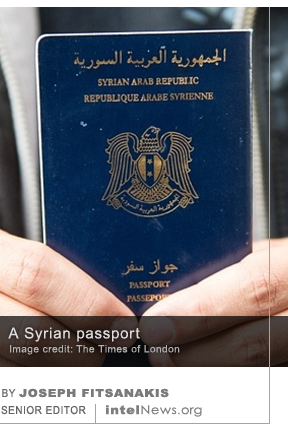 The Islamic State in Iraq and Syria (ISIS) is now able to produce authentic-looking Syrian passports using machines that are typically available only to governments, according to an American intelligence report. The report was accessed by the New York-based station ABC News, which
 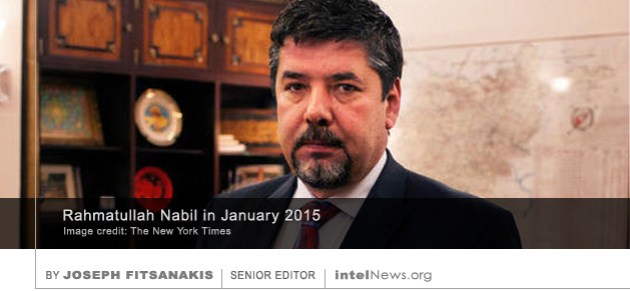 The bleak landscape of Afghan national politics became even bleaker on Thursday, after the sudden resignation of the country’s spy chief, allegedly due to “disagreements” with the government in Kabul. Rahmatullah Nabil led Afghanistan’s National Directorate of Security (NDS) from 2010 to 2012 before returning to the post in 2013, while his predecessor, Asadullah Khalid, recovered from injuries suffered from an unsuccessful assassination attempt against him by the Taliban. But on Thursday afternoon, Nabil
  The man who masterminded November’s Islamist attacks in Paris was based in Athens, and last January managed to escape arrest during a joint Greek-Belgian police operation aimed at capturing him. Moroccan-born Abdelhamid Abaaoud, who had lived in Brussels for years, died in a gun battle with French police on November 18, just days after the multiple attacks in Paris that killed 130 people and injured hundreds. It is believed that the perpetrators of the attacks, who were based in Belgium, were guided and directed by Abaaoud. He, however, was not based in Belgium, but in Athens, Greece. It was from there that he directed the Islamist cells, mostly by phone, according to the BBC.
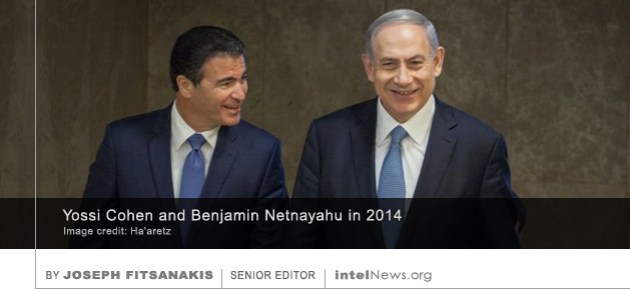 Monday brought an end to weeks of speculation in Israel, as Prime Minister Benjamin Netanyahu appointed the new director of the Mossad, the Jewish state’s national intelligence agency. At a hastily announced press conference in Jerusalem, Netanyahu
 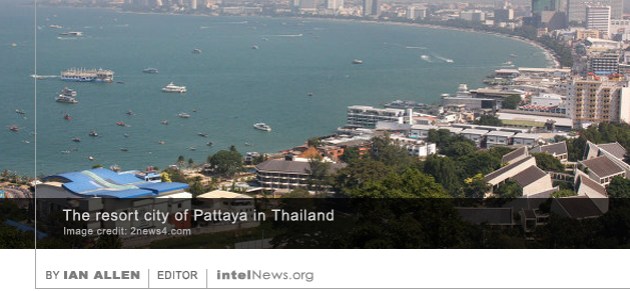 Russian intelligence officials have warned authorities in Thailand that the Islamic State is planning to strike at Russian targets in the Southeast Asian country. Thai authorities received the warning in a memorandum dated November 27, 2015, which came from the Russian Federal Security Service (FSB). The document, marked ‘urgent’, warned of a series of coordinated attacks against Russian-related businesses and facilities in several cities across Thailand. Several Thai news sites, as well as CNN in the United States,
  A report by Germany’s primary intelligence agency warns that internal power struggles and broader geopolitical changes are turning the Kingdom of Saudi Arabia into a major source of regional instability. The
 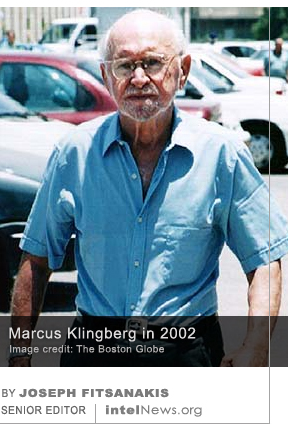 Marcus Klingberg, who is believed to be the highest-ranking Soviet spy ever caught in Israel, and whose arrest in 1983 prompted one of the largest espionage scandals in the Jewish state’s history, has died in Paris. Born Avraham Marek Klingberg in 1918, Klingberg left his native Poland following the joint German-Soviet invasion of 1939. Fearing persecution by the Germans due to his Jewish background, and being a committed communist, he joined the Soviet Red Army and served in the eastern front until 1941, when he was injured. He then received a degree in epidemiology from the Belarusian State University in Minsk, before returning to Poland at the end of World War II, where he met and married Adjia Eisman, a survivor of the Warsaw Ghetto uprising. Together they moved to Sweden, from where they emigrated to Israeli in 1948. It is believed that Klingberg was recruited by the Soviet KGB while in Sweden, and that he moved to Israel after being asked to do so by his Soviet handlers –though he himself always denied it.







We had no asset in Saddam’s inner circle, says ex-CIA deputy director
December 29, 2015 by Ian Allen 3 Comments
Morell spoke at the Aspen Institute earlier this month, and once again offered a public apology to former United States Secretary of State Colin Powell for the CIA’s erroneous estimates on Iraq. He was referring to the Agency’s claims prior to the 2003 US invasion that Iraq maintained an active weapons-of-mass-destruction (WMD) program. The claims formed the basis of Powell’s February 2003 speech during a meeting of the United Nations Security Council, in which he claimed that the regime of Iraqi President Saddam Hussein had “biological weapons and the capability to rapidly produce […] many more.” There was no question, said Morell, that Powell’s reputation “was tarnished” as a result of the speech, and that a public apology was in order. The same apology, said Morell, applied “to every single American.”
The retired intelligence official went on to say that the main cause of the CIA’s erroneous assessment of Iraq’s WMD program was that the Agency had failed to penetrate the highest echelons of the Hussein regime. “We were not able to come up with the right answer [because] we didn’t do our fundamental job of penetrating [Hussein’s] inner circles with a human asset,” said Morell. As a result, there was “no information to give to the [CIA] analyst to say ‘here’s what this guy is up to’,” he added. The author of The Great War of Our Time, went on to suggest that the CIA’s failure to penetrate the inner circle of the Iraqi government prior to 2003 was “quite frankly a national security failure.”
► Author: Ian Allen | Date: 29 December 2015 | Permalink
Filed under Expert news and commentary on intelligence, espionage, spies and spying Tagged with book news and reviews, CIA, HUMINT, intelligence analysis, Iraq War, Michael J. Morell, News, United States