US Secretary of Defense ‘not aware’ of Israel spying on America

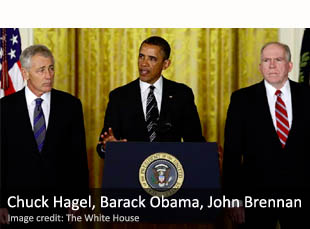
By JOSEPH FITSANAKIS | intelNews.orgChuck Hagel, Barack Obama, John Brennan
The supreme official of the United States Department of Defense has said he is “unaware of the facts” behind recent media reports that Israel is aggressively spying on America. Chuck Hagel, a former Republican Senator who assumed the leadership of the Pentagon in 2013, is on a three-day official visit to Israel, where he is scheduled to hold meetings with Israeli military and security officials. He was responding to a question posed by an Israeli reporter about allegations, made by American newsmagazine Newsweek on Tuesday, that Israel’s spies “have gone too far” in targeting American interests. In an article published in Newsweek last week, veteran intelligence correspondent Jeff Stein quoted Congressional staffers as saying that America’s Jewish allies had “crossed red lines” in their efforts to steal secrets from the United States. According to Stein, that was reportedly relayed to US lawmakers in classified briefings on Capitol Hill by officials from the Federal Bureau of Investigation, the Department of Homeland Security, the Department of State, as well as the National Counterintelligence Directorate. In a subsequent piece, Stein revealed that Israeli intelligence tried to spy on US Vice President Al Gore during an official state visit to Jerusalem 16 years ago. The effort was allegedly aborted after a US Secret Service agent caught an Israeli spy trying to enter the Vice President’s hotel room through a ceiling vent. But American officials have so far remained silent on the matter. When asked about it a press conference in Tel Aviv, Hagel said he had “heard of the report” but was “not aware of any facts that would substantiate the report”. He was standing beside Israel’s Minister of Defense, Moshe Yaalon, who also responded to the journalist’s question by reminding his audience that he served as Director of Israel’s Military Intelligence Directorate in the late 1990s. In that capacity, he said, he was “not allowed to spy in the United States whatsoever”. Read more of this post

Some spy-related nonfiction books for the summer

BooksBy I. ALLEN AND J. FITSANAKIS | intelNews.org
It has been well established ever since we launched IntelNews, nearly six years ago, that readers of this blog are a well-read lot. The subject of books regularly comes up in our conversations with our readers, who often ask us for our personal spy-related book recommendations. We have several, but we thought we would suggest some recently published nonfiction for the summer that is now upon us. Our first suggestion is Dr. Kristie Macrakis’ fascinating new work entitled Prisoners, Lovers, and Spies: The Story of Invisible Ink from Herodotus to al-Qaeda, published by Yale University Press. Macrakis, an internationally recognized historian, is Professor in the School of History, Technology and Society at Georgia Tech, where she teaches classes in science and espionage. She is most known for two books on East German intelligence during the Cold War, the most recent of which was East German Foreign Intelligence (Routledge, 2010). In the book, the author displays her knowledge of both science and intelligence, in explaining how civilizations throughout history have used a variety of ingredients to hide written notes, ranging from citrus juices to cobalt, and even urine and semen. Her examples span the centuries as she highlights the role of secret writing in the American Revolution, the two World Wars, as well as the West’s current confrontation with al-Qaeda. The book is loaded with chemical terminology but it is written with the non-expert in mind and will be enjoyed by all those with a serious historical interest in intelligence. Another book we recommend is Glenn Greenwald’s No Place to Hide: Edward Snowden, the NSA, and the US Surveillance State (Metropolitan Books). Greenwald was the first journalist that the American intelligence contractor contacted when he decided to defect. Snowden’s actions have divided America, and we are aware that this includes this blog’s readership. But Greenwald’s account will be of interest to intelligence observers no matter where they stand on the issue. The author describes how he first heard from Snowden, via email in December of 2012, when he was a writer for Britain’s Guardian newspaper. He then tells the interesting story of his trip to Hong Kong to meet Snowden, which he undertook along with documentary filmmaker Laura Poitras. Greenwald’s style comes across as somewhat self-righteous at times, but the account offered in his book is crucial in helping intelligence observers piece together the story of Snowden’s defection, as well as the importance of his disclosures. One final nonfiction spy-related book to consider is The Good Spy: The Life and Death of Robert Ames (Crown Publishers), by American Pulitzer Prize-winning author and columnist Kai Bird. Read more of this post
US hesitant to share Boko Haram intel with Nigerian government

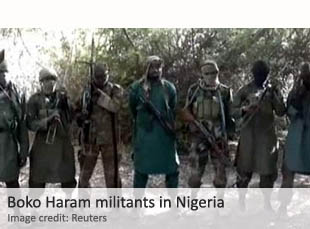
Boko Haram militantsBy JOSEPH FITSANAKIS | intelNews.org
United States military officials said on Tuesday that the Pentagon is not “at this point” sharing intelligence on the Boko Haram militant group with the Nigerian government. Last month, members of the armed group, which campaigns for an Islamist state in predominantly Muslim northern Nigeria, abducted at least 200 teenage girls from a boarding school in Chibok, a primarily Christian village located in the northeast of the country. Since then, the group’s leader, Abubakar Shekau, has threatened to kill or sell the girls as slaves unless the government of Nigeria releases Boko Haram prisoners. In the past week, the US has become directly involved in the search for the missing girls. On Monday, the US Department of Defense deployed fixed-wing aircraft on a variety of intelligence, surveillance and reconnaissance missions concentrating on Boko Haram strongholds in the northeast of the country, near Nigeria’s border with Cameroon. Meanwhile, 30 American advisers from the Federal Bureau of Investigation, Defense Intelligence Agency, and Department of State, are already in Nigerian capital Abuja, assisting in the search for the kidnap victims. American media has reported that the US Department of State is now sharing commercial satellite imagery with the Nigerian government in the context of the search. However, the Pentagon said that it is not “at this point […] sharing raw intelligence data” on Boko Haram with the Nigerian government. Speaking to reporters on Tuesday, Army Colonel Steve Warren, a spokesman for the US Department of Defense, refused to discuss the precise reasons why the Pentagon is withholding intelligence data from the Nigerian military. There is speculation, however, that the decision may be related to fears in Washington that the notoriously corrupt Nigerian military may have been infiltrated by Boko Haram members and sympathizers. Read more of this post

Israel sends top intel official to US to complain about spy claims

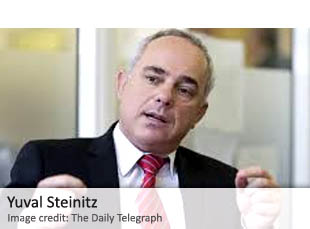
Yuval SteinitzBy JOSEPH FITSANAKIS | intelNews.org
A senior Israeli intelligence official will be meeting with the head of the United States Senate Intelligence Committee today to complain about reports in the media that Israel spies aggressively on American targets. The Israeli government reacted angrily last week to claims by Newsweek magazine’s intelligence correspondent Jeff Stein that Israeli spies were aggressively trying to steal American secrets. Stein quoted Congressional staffers saying that America’s Jewish allies had “crossed red lines” in their efforts to steal secrets from the United States. One staffer told Newsweek that Congress members had been briefed by American intelligence officials about Israeli espionage operations against the United States that were “very sobering […], alarming, even terrifying”. The Israeli embassy in Washington reacted angrily to Newsweek’s revelations, condemning what it called “outrageous, false allegations […] being directed against Israel”. Stein, however, did not back down. In a follow-up article published last Thursday, he quoted US intelligence officials and Congressional insiders who said Israel had been “caught carrying out aggressive espionage operations against American targets for decades”. The article included an allegation that Israeli intelligence tried to spy on US Vice President Al Gore during an official state visit to Jerusalem 16 years ago. The effort was allegedly aborted after a US Secret Service agent caught an Israeli spy trying to enter the Vice President’s hotel room through a ceiling vent. In other instances, Israeli intelligence operatives have allegedly tried to entice American officials visiting Israel with drugs and prostitutes. Stein reports that the Federal Bureau of Investigation, America’s primary counterintelligence agency, regularly summons Israeli diplomats stationed in Washington “for a scolding” after uncovering Israeli espionage operations on American soil. Such “scolding” sessions have taken place “dozens of times” since 9/11, says Stein, citing a former senior FBI official. Read more of this post

Pattern of leaks suggests Snowden ‘may have been a Russian spy’

Edward SnowdenBy JOSEPH FITSANAKIS | intelNews.org
It has been nearly a year since British newspaper The Guardian unveiled the identity of American defector Edward Snowden, whom Pentagon Papers leaker Daniel Ellsberg has called the source of the most significant leak in the history of the United States. The case of Snowden, a former computer technician for the United States Intelligence Community, who is currently under Russian protection, continues to divide Americans. His defenders see him as a heroic whistleblower who sacrificed his comfortable life and promising career in order to expose the government’s encroachment into the private lives of American citizens. His detractors want him to account for stealing nearly 2 million classified documents and sharing American secrets with Moscow. Last January, American lawmakers with senior positions in Congressional intelligence committees expressed strong views that Snowden was working with Russian intelligence prior to his defection. Last Friday, American investigative journalist Edward Jay Epstein appeared to side with Snowden’s detractors. Writing in The Wall Street Journal, Epstein opined that the narrative of Snowden acting alone to bravely expose “the evils of government surveillance” was likely created by Snowden himself. But this popular whistleblowing narrative, said Epstein, is “at best incomplete [and] at worst fodder for the naïve”. The veteran journalist argued that Snowden’s heroic image seems to suffer when one considers his sleuthing actions prior to his defection. Specifically, the American defector left for Hong Cong, and eventually Russia, after having broken into at least 24 carefully compartmentalized areas of electronically stored classified intelligence inside the NSA. To do so, the computer expert had to consciously borrow, steal or forge multiple entry passwords. Once he had gained access to the compartmentalized systems, he planted “spiders”, stealthy intelligence-collection programs that looked for specifically targeted data to steal. This, says Epstein, is how Snowden managed to acquire 1.7 million documents from the Kunia Regional SIGINT Operations Center on the island of Hawaii, where he was stationed. What is interesting, argues Epstein, is that only “a minute fraction” of the documents stolen by Snowden were related to domestic surveillance by American government agencies. The journalist quotes General Martin Dempsey, Chairman of the Joint Chiefs of Staff, who said last March that the vast majority of the documents sought out by Snowden were related to America’s military capabilities. Read more of this post

Efforts to restore US-German intelligence cooperation collapse

Angela Merkel and Barack ObamaBy JOSEPH FITSANAKIS | intelNews.org
Negotiations aimed at restoring the intelligence relationship between America and Germany, following revelations last year that Washington spied on the communications of German leaders, collapsed before German Chancellor Angela Merkel met US President Barack Obama last week. The two leaders had planned to make a public statement during Mrs. Merkel’s official visit to Washington last Friday, announcing a new intelligence agreement between their respective countries. But the announcement was never made, as Ukraine dominated the political agenda. IntelNews readers will recall the dramatic way in which Germany and the United States fell out in October of last year, after American intelligence defector Edward Snowden revealed an invasive intelligence-gathering operation by the US National Security Agency (NSA). The program targeted the private communications of senior German officials, including those of Mrs. Merkel, for nearly a decade. The New York Times said last week that the collapse of the bilateral intelligence negotiations between Washington and Berlin prompted “bitter recriminations on both sides” about who was responsible for their failure. It appears that German officials insisted on drafting a “no-spy” agreement between the two countries, which would prevent them from conducting espionage operations on each other’s territory. American officials, however, rejected the proposal, arguing it would create a precedent that every other European and Asian American ally, including France, Britain, Japan, South Korea, and others, would wish to replicate. Earlier this year, President Obama assured the German side that the NSA would never again target the communications of Chancellor Merkel. But German officials noted that the President said nothing about targeting other senior German officials, nor did he mention anything about the NSA’s other operations on German soil. Read more of this post

Analysis: Russia’s policy in Ukraine part of wider anti-NATO plan

Marina KaljurandBy IAN ALLEN | intelNews.org
Russia’s tactical maneuvering in Ukraine is part of a wider strategy of pushing back Western influence from former Soviet territories, according to East European and Western officials. That is the conclusion in a lead article in the latest issue of Time magazine, which quotes several eponymous sources, including John McLaughlin, former director of the Central Intelligence Agency, and Marina Kaljurand, Estonia’s ambassador to Washington. She tells the newsmagazine that Russia’s meddling in Ukraine forms part of a carefully organized and well-funded strategy that involves “overt and covert” operations throughout Eastern Europe, the Caucasus and Central Asia. Kaljurand says the operations include “a range of Cold War espionage tools”, such as planted agents, citizen groups funded by the Kremlin, as well as recruitment of intelligence assets. The aim, she argues, is to “restore in one form or another the power of the Russian Federation in the lands where Russian people live”. Western officials quoted in the Time article seem to agree that the strategy has a long-term, wider goal, which is “to undermine and roll back Western power” in former Soviet lands. Currently, Russian push-back operations are not only underway in Ukraine, but also in Latvia, where nearly half of the population consists of ethnic Russians, as well as in Estonia, where one in four citizens is Russian in origin. As in all former Soviet republics, many ethnic Russians in Estonia are members of the Coordination Council of Russian Compatriots, a group that is coordinated, guided, and often funded, by the Russian embassy in the country. In a recent report, the Estonian Internal Security Service said the Russian embassy in Tallinn is “guiding the Russian-speaking population […] by using influence operations inherited from the KGB”. IntelNews regulars will recall the case of Herman Simm, the high-level official at the Estonian Ministry of Defense, who once headed the country’s National Security Authority. He was arrested in 2008 and later convicted for —among other things— giving classified North Atlantic Treaty Organization (NATO) material to Russia. Two years later, Estonia had been subjected to a sustained cyberattack after its government removed a statue commemorating the Soviet military contribution to World War II from downtown Tallinn. Read more of this post

Israel reacts angrily to claims it spies on the United States

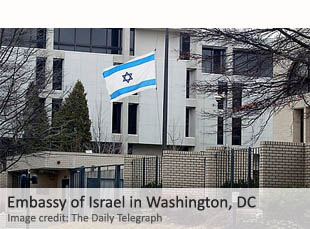
Embassy of Israel in Washington, DCBy JOSEPH FITSANAKIS | intelNews.org
The government of Israel has reacted angrily to claims in the press that its spies are aggressively trying to steal American secrets. Tel Aviv instructed its embassy in Washington, DC, to “strongly protest” allegations, made by American newsmagazine Newsweek on Tuesday, that Israel’s spies “have gone too far” in targeting American interests. In an article published in Newsweek Tuesday, veteran intelligence correspondent Jeff Stein quoted Congressional staffers as saying that America’s Jewish allies had “crossed red lines” in their efforts to steal secrets from the United States. That was reportedly relayed to US lawmakers in classified briefings on Capitol Hill by officials from the Federal Bureau of Investigation, the Department of Homeland Security, the Department of State, as well as the National Counterintelligence Directorate. At the closed-door briefings, members of the US House of Representatives Foreign Affairs and Judiciary committees were told that Israel’s espionage operations against US interests were both “unrivaled and unseemly” and had reached levels far higher than similar activities by other allied countries, such as Britain or Japan. One Congressional staffer told Stein that “no other country continues to cross the line on espionage like the Israelis do”. Another staffer, who was present during one of the classified briefings, described the information given to lawmakers as “very sobering […], alarming, even terrifying”. The Newsweek article reported that Tel Aviv’s main intelligence goal in America is to acquire inside information on US technical projects and industrial secrets. It added that this is done through Israel’s trade missions or through Israeli companies that work in collaboration with American firms. In other cases, Israeli intelligence operatives work directly out of the Israeli embassy in Washington. However, Aaron Sagui, a spokesman at the Israeli embassy in Washington, reacted angrily to Newsweek’s revelations, condemning what he called “outrageous, false allegations [that] are being directed against Israel”. He added that “Israel doesn’t conduct espionage operations in the United States, period”. Read more of this post

Germans kidnapped in Ukraine had ‘intelligence connections’

Map of UkraineBy IAN ALLEN | intelNews.org
Four German military observers, who were kidnapped in Ukraine by pro-Russian separatists, are members of a military agency that has intelligence contacts, but are not themselves spies, according to a leading German newspaper. The German observers were abducted along with several other Western military officials on April 25, in the eastern Ukrainian city of Sloviansk. They were participating in a military verification mission organized by the Organization for Security and Cooperation in Europe (OSCE). At the time of the abduction, one pro-Russian separatist leader, Vyacheslav Ponomarev, said his group had decided to detain the OSCE monitors due to “credible information” that they were spies for the North Atlantic Treaty Organization (NATO). The OSCE strongly denied the accusation that its monitors were intelligence operatives, saying that the kidnappers’ claims were aimed at damaging the reputation of the organization. With nearly 60 signatories to its charter, the OSCE has operated since 1975 with the aim of securing peace across the European continent. It regularly supplies military observers to investigate what it terms “uncommon military operations” in nations that formally invite their presence, as Ukraine did last month. On Monday, German newspaper Süddeutsche Zeitung said that, although the four German OSCE observers are not employees of German intelligence agencies, they do maintain “certain connections” with Germany’s Federal Intelligence Service, known as Bundesnachrichtendienst, or BND. The Munich-based broadsheet claimed that the inspectors, who had been given diplomatic status during their deployment in Ukraine, are not members of staff at the BND or MAD, Germany’s Military Counterintelligence Service. However, they are employed at the Verification Center of the Bundeswehr —Germany’s federal armed forces. The mission of the Center, which is based in the town of Geilenkirchen, in Germany’s North Rhine-Westphalia, is to verify compliance with weapons control agreements signed between Germany and other countries. Read more of this post

Is Texas Army base home to secret CIA weapons facility?

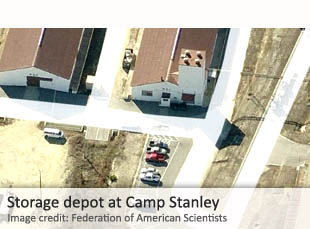
Camp StanleyBy JOSEPH FITSANAKIS | intelNews.org
Observers of the Central Intelligence Agency know that the Agency maintains two widely acknowledged facilities inside the United States —both in the state of Virginia. One is its headquarters in Langley. The other is inside the Armed Forces Experimental Training Activity, known more commonly as Camp Peary, located near Williamsburg, where officers of the CIA’s National Clandestine Service are allegedly trained. However, for many decades researchers have speculated that the Agency maintains a third facility, which it uses to stockpile and distribute weapons around the world. The facility has been referred to in declassified documents as the “Midwest Depot”. It is said that billions of dollars of untraceable weapons have been dispatched from the “Midwest Depot” to CIA-supported groups such as Brigade 2506, which conducted the 1961 Bay of Pigs invasion. Other paramilitary groups said to have received weapons from the CIA’s “Midwest Depot” include the Honduras-based Contras, who fought the Sandinistas government in 1980s’ Nicaragua, Angola’s UNITA anti-communist group, as well as the Sunni mujahedeen who fought the Soviet Red Army in Afghanistan. Now the location of this mysterious depot may have been unearthed thanks to Allen Thomson, a retired CIA analyst. In a 73-page research paper, Thomson concludes that the location of the “Midwest Depot” is actually in Texas. The paper has been published (.pdf) on the website of the Federation of American Scientists’ Intelligence Resource Program, which maintains an extensive archive on topics of current interest to intelligence researchers. Based on what The New York Times calls “a mosaic of documentation”, Thomson claims that the CIA’s “Midwest Depot” is located inside Camp Stanley, located north of San Antonio, Texas. The latter is officially indexed as a US Army weapons depot. But Thomson says the depot is in fact commanded by the CIA. His paper highlights an explicit reference made to Texas in a memo drafted in 1986 by Colonel Oliver North, who was eventually convicted in connection with the Iran-Contra scandal. In it, North states that the CIA would transport missiles headed for Iran from a military facility to its “Midwest Depot, Texas”. Read more of this post

Ukraine expels Russian diplomat for ‘spying activities’

Embassy of Russia in KievBy JOSEPH FITSANAKIS | intelNews.org
The Ukrainian government has issued an expulsion order for an unidentified Russian diplomat, who was detained on Wednesday for allegedly engaging in “spying activities”. On Thursday, Ukrainian government officials announced that a Russian naval attaché stationed in Ukrainian capital Kiev had been declared persona non grata (an unwelcome individual) for “engaging in acts incompatible with his diplomatic status”. The phrase is used in the international legal vernacular to describe an accredited diplomat engaging in intelligence operations abroad without the consent of his or her host nation. The Ukrainian Ministry of Foreign Affairs told reporters that the attaché had been found to “engage in spying activities”. Initially, ministry officials did not specify the nature of the Russian diplomat’s alleged spying activities. Later, however, in response to a question by a journalist, Ukrainian government representatives said that the diplomat was collecting intelligence on military and political cooperation between Ukraine and the North Atlantic Treaty Organization. At a separate public briefing, Maryna Ostapenko, spokeswoman for the SBU, Ukraine’s counterintelligence agency, said the Russian diplomat was in fact an accredited intelligence officer, who was detained “while committing spying activities” on April 30. She told reporters that the diplomat was “caught red-handed receiving classified material from his source”. Ostapenko later described the source as an unidentified colonel in the armed forces of Ukraine. A press release by the Ukrainian Ministry of Foreign Affairs said that the diplomat had been ordered to “leave the territory of the country [of Ukraine] as soon as possible”. There has been no immediate response from the Kremlin. Read more of this post

Are America’s most senior military intel officers being forced out?

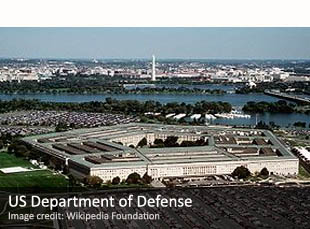
The US Department of DefenseBy IAN ALLEN | intelNews.org
There are rumors that the two most senior military intelligence officers in the United States, who have announced their intention to step down in the coming months, are being forced out by the White House. Lieutenant General Michael T. Flynn, who directs the Defense Intelligence Agency, and his Deputy Director, David R. Shedd, both said on Wednesday that they intend to quit their jobs before the end of the summer. The Department of Defense said later on Wednesday that the two officials had been scheduled to step down “for some time” and that the leadership of the DoD “appreciates the service of these two dedicated and professional leaders”. But the announcement does not change the fact that America’s two leading military intelligence administrators have suddenly decided to quit their jobs. Shedd entered his current post in 2010, while Flynn rose to the DIA’s top position in 2012. If he does indeed step down in the coming months, he will be doing so at least a year before he was officially scheduled to depart from the DIA. The Washington Post claimed on Wednesday that Flynn “faced pressure” to step down, from senior US government officials, including James R. Clapper, Director of National Intelligence. According to the paper, Clapper, whose main job is to coordinate the activities of America’s intelligence agencies, approached Flynn several weeks ago and told him that the administration of US President Barack Obama had decided that “a leadership change was necessary” at the DIA. As the so-called “global war on terrorism” has been winding down, the DIA has been faced with calls for significant changes in both operations and scope. The latter have included plans to expand the agency’s human intelligence operations abroad, as was seen in the Pentagon’s recent effort to launch a new intelligence agency, called Defense Clandestine Service. But in late 2012 the US Senate blocked the plan, citing gross mismanagement of the Pentagon’s existing intelligence operations. The failed plan had been strongly supported by both Flynn and Shedd, who had vowed to increase the DIA’s intelligence-collection operations abroad, and had campaigned in favor of turning the agency’s attention to locations other than Iraq and Afghanistan. Read more of this post

Former director of Venezuelan spy agency shot dead in Caracas

Eliézer OtaizaBy JOSEPH FITSANAKIS | intelNews.org
The former director of Venezuela’s primary intelligence agency has been found shot dead. Venezuelan officials said Eliézer Otaiza was shot dead sometime in the early hours of Saturday morning in Baruta, a suburb in the outskirts of capital Caracas. His bullet-ridden vehicle was later found abandoned in another part of the same barrio. Venezuela’s Minister of the Interior, Miguel Rodriguez Torres, told reporters on Tuesday that Otaiza’s body was discovered on Saturday, but that it took nearly two days for him to be identified due to the absence of identification documents on the body. At the time of his assassination, Otaiza headed the Libertador Bolivarian Municipality in Caracas which numbers over two million residents. Earlier in his career, however, Otaiza led an elite unit of the personal guard corps of Venezuelan President Hugo Chavez. The latter also appointed him director of the National Directorate of Intelligence and Prevention Services (DISIP), later renamed Bolivarian Intelligence Service, which is today Venezuela’s foremost intelligence organization. Otaiza was known as a stalwart supporter of Venezuela’s populist president, even in the early 1990s, when Chavez was still in opposition. In February of 1992, when Chavez led a failed military coup aimed at ousting President Carlos Andres Perez, Otaiza had been unable to participate on account of his absence from Venezuela. But he played a leading role in another pro-Chavez military mutiny in November of that year, when he led a small military force attempting to storm the Miraflores presidential palace in Caracas. He was shot several times in the chest but survived thanks to a bulletproof vest he was wearing. Venezuelan government media said Otaiza played “an important part in the events leading to the Bolivarian revolution”, and remained a strong supporter of Chavez throughout the president’s life. Read more of this post

US ‘quietly expanding’ intelligence presence in war-torn Iraq

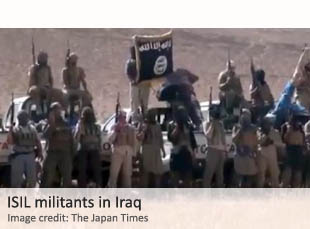
ISIL militants in IraqBy JOSEPH FITSANAKIS | intelNews.org
The United States is “quietly expanding” its intelligence operations in Iraq in response to the worsening security situation in the country, according to American government sources. The Reuters news agency reports that US officials have been holding a series of “urgent meetings” in Washington and Iraqi capital Baghdad. The meetings center on finding ways to contain the growing destabilization in the Middle Easter country, which the US occupied from 2003 to 2011. The news agency cited one former and two current US government officials in claiming that a “high-level Pentagon team” is already in Iraq holding successive consultations with Iraqi military and intelligence figures. Many of the conversations in these meetings are believed to center on the activities of the Islamic State of Iraq and the Levant (ISIL), a Sunni militant group that has been ideologically aligned with al-Qaeda for most of its existence. Founded in response to the US invasion of Iraq, ISIL became informally known as “al-Qaeda in Iraq” until 2014, when al-Qaeda officially severed all ties to the group, following a bitter power struggle. According to Reuters’ sources, the pressure for the US to respond to the worsening situation in Iraq comes mostly from the Pentagon. But it is unclear whether the White House will continue to intensify American involvement in the country, said the source, adding that Washington’s intelligence presence in Iraq is now “more than before, but not really a lot”. The news agency cited another US government source, who said that a second group of “senior US policy officials”, known as the “Deputies Committee”, has been meeting in Washington to discuss possible responses to the deteriorating security situation in Iraq. Read more of this post

Article sheds light on life of legendary Israeli spy Jacob Cohen

Jacob “Yakuba” CohenBy IAN ALLEN | intelNews.org
Within the ranks of the Israeli intelligence community, Jacob “Yakuba” Cohen is considered a legend. An intelligence officer for the Israel Defense Forces, the Mossad, and finally for Shin Bet, Cohen remains a deeply mysterious figure in the history of Israeli intelligence. Now a new article, published in Israel Defense magazine, which includes parts of a testimony Cohen allegedly gave to a close friend in the years before his death, sheds light on the life and times of one of the 20th century’s most enigmatic intelligence operatives. Cohen was born in 1924 in a predominantly Jewish neighborhood of central Jerusalem. His family, however, had Persian origins, and he spent most of his childhood fraternizing with the Arab populations of nearby neighborhoods and villages. In the late 1930s, Cohen joined the Haganah, a violent paramilitary force set up by nationalist Jews to resist the formation of the British Mandate for Palestine. Cohen eventually entered the ranks of the Palmach, a special-forces outfit of the Haganah, which also conducted intelligence operations. Cohen’s asset, which eventually made him a good fit for Israeli intelligence, was his ability to assimilate into Arab society. He spoke fluent Arabic and was able to observe Arab Muslim cultural conventions and religious practices, regularly attending Mosque services. Soon after the establishment of the state of Israel, Cohen assumed the cover of Jamil Mohammad Rushdi, a Syrian Arab, and moved to Lebanon, where he worked as a taxi driver, regularly transporting customers from Lebanese capital Beirut to Tripoli, Syria, and back. Israeli intelligence historians credit Cohen’s stint in Lebanon as having been instrumental in laying the infrastructure that enabled the eventual creation in Arab countries of Israeli intelligence networks consisting of long-term sleeper agents and other non-official-cover operatives. After Israel’s Sinai campaign of 1956, Cohen was tasked with interrogating thousands of Egyptian prisoners of war. Read more of this post