An assessment of Russia’s espionage network in Switzerland
July 5, 2022 4 Comments
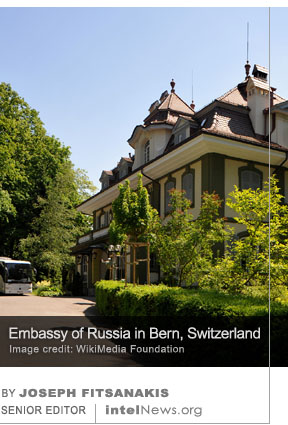 SINCE LATE FEBRUARY, WHEN Russian troops invaded Ukraine, over 500 Russian diplomats have been expelled from Western countries. Even former Russian allies have contributed to the growing list of expulsions —most recently Bulgaria, which ousted a near-unprecedented 70 Russian diplomats last week, citing espionage concerns. Amidst that sea of expulsions, Switzerland remains an island. It is among the few European countries that have yet to officially expel Russian diplomats. Abiding by its centuries-old policy of neutrality, it has resisted calls to take sides in the intelligence war between the West and Russia.
“No-Questions-Asked” Approach to Espionage
Russia has been able to take advantage of Switzerland’s neutrality policy since February. Instead of returning to Moscow, at least some of the expelled Russian diplomats have been reposted to Switzerland. They continue to operate there under a “no-questions-asked” policy, which has prevailed since the days of the Cold War. For this and other reasons (i.e. proximity to prime intelligence targets, safety, advanced telecommunications systems), Switzerland has been a major intelligence hub for decades. According to the Nachrichtendienst des Bundes (NDB), Switzerland’s Federal Intelligence Service, the past few years have witnessed higher levels of activity by foreign intelligence services than any other period since the Cold War.
Russia’s Intelligence Presence in Switzerland
During that time, Russia has been able to build a pan-European espionage hub in the small alpine state. That is the conclusion of a report by Jonas Roth, which was published last week in the Neue Zürcher Zeitung (NZZ), Switzerland’s newspaper of record. The report, entitled “So Spioniert Russland in der Schweiz” (“How Russian spies operate in Switzerland”), features commentary by several experts and government officials. One source tells Roth that, despite the intense diplomatic pressure Russia has faced globally since February, its espionage structures in Swiss cities like Geneva and Bern “are still intact”.
How many Russian intelligence officers are currently operating in Switzerland? According to the report, at least a third of Russia’s 220-strong diplomatic presence in the country consists of intelligence officers. These 70 or so intelligence officers represent all three of Russia’s primary intelligence agencies, namely the Foreign Intelligence Service (SVR), the Main Directorate of the Armed Forces’ General Staff (GRU), and the Federal Security Service (FSB). Officers from these agencies handle an unknown number of informants and agents; these are Swiss or third-country nationals, who provide the Russians with intelligence on a regular basis. Special activities are carried out by Russian intelligence personnel who travel to Switzerland on an ad hoc basis. Read more of this post
 IN THE OPENING STAGES of the Russian invasion of Ukraine, there was a widespread
  related legislation” with Western standards, as well as aligning them with NATO standards, so that Ukrainian cyber-warfare units can make use of advanced technologies and systems. Could it be, therefore, that Ukraine has improved its cyber-security posture enough to be able to defend itself against relentless Russian cyber-attacks?
 RUSSIANS ARE AWARE OF the phrase “there is no such thing as a former chekist”. The term “chekist” dates from the Bolshevik-era All-Russian Extraordinary Commission (VChK, pronounced “cheka”), which was formed in 1917 as the first Soviet-era state security agency. By the 1940s, intelligence posts had come to be seen as life-long relationships between chekists and the Soviet government, which continued even after one’s retirement. In
  with reference to three Russian intelligence agencies, all of which trace their origins to the Soviet-era Cheka —namely the Foreign Intelligence Service (SVR), the Federal Security Service (FSB), and the Federal Protective Service (FSO).
 AT A TIME WHEN dozens of countries are routinely expelling
  Naturalization Service, which detained Cherkasov upon his arrival at Amsterdam’s Schiphol International Airport. The Dutch government declared the alleged GRU officer persona non grata and promptly expelled him back to Brazil “on the first flight out”.
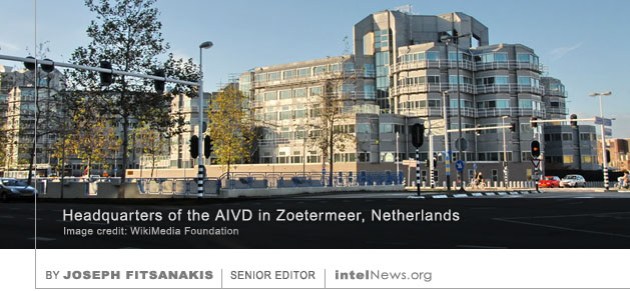
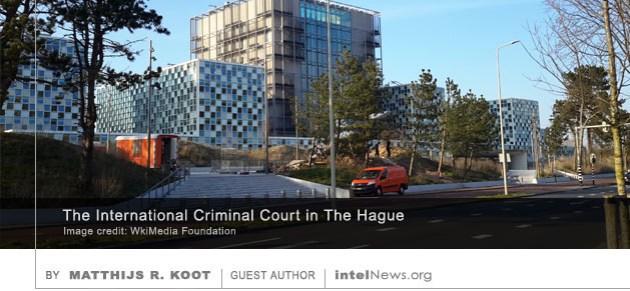 ON JUNE 16, THE Dutch General Intelligence and Security Service (AIVD)
 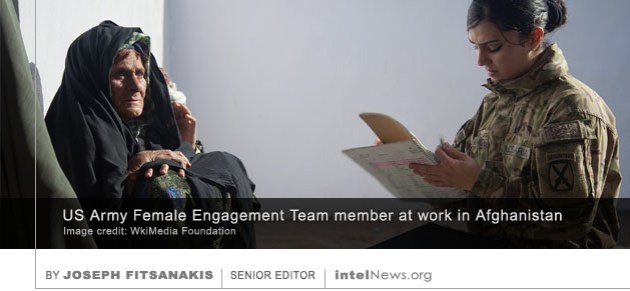 ALTHOUGH INTELLIGENCE IS A traditionally male-dominated profession, the integration of women into the field has grown exponentially in our time. The area of human intelligence (HUMINT), i.e. the use of human handlers to extract secrets through the use of human agents, is among the areas of the profession that remain most resistant to the incorporation of women. Now new research from Germany is shedding light into the understudied topic of female approaches to HUMINT.
 A GROWING NUMBER OF security observers point to Israel as the most likely culprit behind the assassination of a leading member of the Islamic Revolutionary Guard Corps (IRGC), Iran’s powerful paramilitary force. Brigadier General Hassan Sayyad Khodaei, who was killed in broad daylight in Tehran on May 22, served as deputy director of the Quds Force, a major branch of the IRGC. The mission of the Quds Force is to carry out unconventional warfare, especially in support of IRGC operations against adversaries abroad.
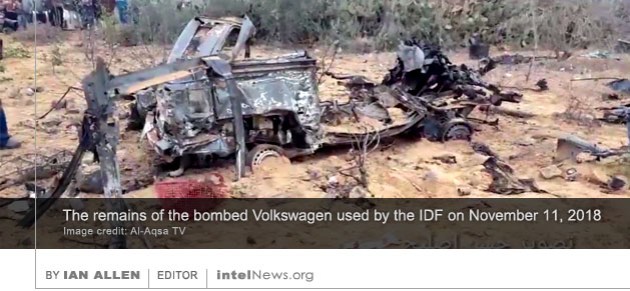 IN A RARE MOVE, Israel released the identity last weekend of a special operations officer who was killed by Islamic Hamas during a 2018 covert mission in the Gaza Strip. As intelNews
 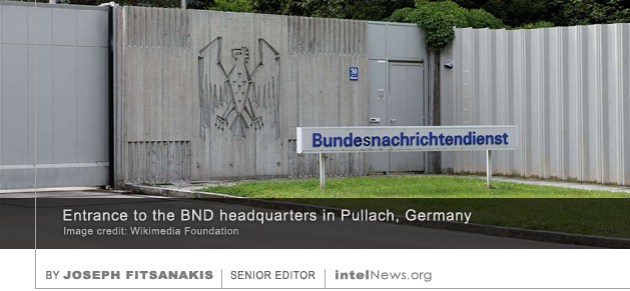 WEST GERMAN SPIES INFILTRATED the trial of Adolf Eichmann, one of the architects of the Holocaust, in order to limit its damage on the reputation of senior West German politicians who had a Nazi past. Eichmann was the lead author of the system of mass deportation of Jews from ghettos in Nazi-occupied Europe to extermination camps, where millions of them were brutally killed. In 1960, after years of hiding, he was captured in Argentina by agents of the Mossad, Israel’s covert-action agency, and secretly transported to Israel, where he was put to trial and eventually hanged.
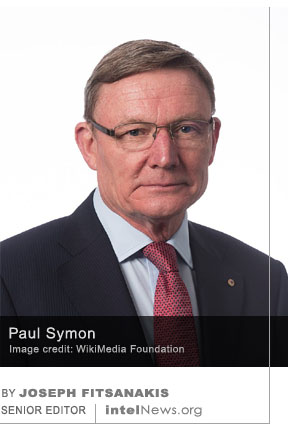 AUSTRALIAN INTELLIGENCE MUST recruit foreign spies with more urgency than at any time since the opening years of the Cold War, according to the head of Australia’s main foreign intelligence agency. Paul Symon, director of the Australian Secret Intelligence Service (ASIS), was speaking at a public event to mark the 70th anniversary of the organization’s history. It was a rare public speech by the head of Australia’s secretive main foreign intelligence service.
 A NEWLY DISCOVERED CYBER-espionage group appears to target the senior leadership of private corporations involved in large-scale financial transactions, but employs skills and methods that are usually associated with state-sponsored threat actors. The group has been termed “UNC3524” by the American cybersecurity firm Mandiant, which says it discovered it in December of 2019. In a detailed
  RUSSIAN STATE COMPANIES, BUSINESSES and individuals are being targeted in an unprecedented wave of attacks by digital assailants, according to observers, who say they are surprised by its ferocity. Since February of this year, hackers have accessed the personal financial data of pro-Kremlin oligarchs, stolen millions of internal emails stored on Russian government severs, and defaced high-profile websites across the nation. The Washington Post, which
 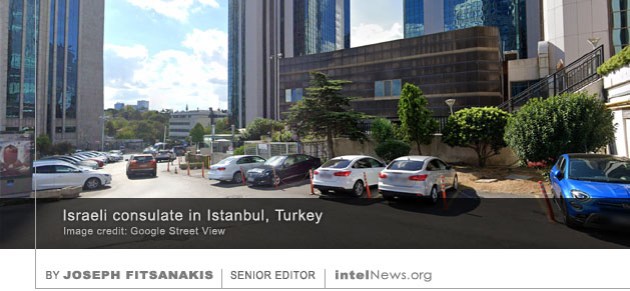 ISRAEL’S MOSSAD INTELLIGENCE AGENCY allegedly foiled a plot by Iranian intelligence to send assassins abroad and kill an Israeli diplomat, an American military official and a French reporter, according to reports. The information about the alleged plot first surfaced late last week in the Iran International News Channel, a British-based Iranian news agency, which is opposed to the government in Tehran. The news agency claimed that the plot had been organized by the Quds Force, the paramilitary wing of the Islamic Revolutionary Guards Corps.






 intelNews.org
The secret behind al-Shabaab’s longevity: A formidable spy wing
July 11, 2022 by Joseph Fitsanakis 1 Comment
What accounts for al-Shabaab’s endurance? According to a recent article by researcher Zakarie Ahmed Nor kheyre, the secret rests with the group’s sophisticated intelligence wing, the Amniyat. Nor kheyre’s article, entitled “The Evolution of the Al-Shabaab Jihadist Intelligence Structure”, was published on Friday in the peer-reviewed journal Intelligence and National Security. The author argues that counter-terrorism researchers have been focusing on al-Shabaab’s operational, logistical and financial capabilities, to the detriment of its formidable intelligence wing. The latter, Nor kheyre claims, has been a priority of al-Shabaab for years, and is today more efficient that the Somali federal government’s own intelligence agency, the National Intelligence and Security Agency (NISA). He quotes one Somali insider who exclaims that “without Amniyat, al-Shabaab would be nothing”. Read more of this post
Filed under Expert news and commentary on intelligence, espionage, spies and spying Tagged with Africa, al-Shabaab, Amniyat (al-Shabaab), Analysis, Somalia, terrorism