Spanish high court broadens illegal wiretap probe to include senior politicians

Luis BárcenasA court in Spain has begun to examine the findings of a long-running probe into an illegal network that spied on people in return for payments, which almost certainly implicates senior figures in the former governing party. The probe focuses on what is known in Spain as the Gürtel case, which is described by observers as one of the most extensive corruption scandals in Spanish political history. It centers on an extensive network of tax evasion, bribery and money laundering, which brought together leading business executives, criminal kingpins, and senior politicians from Spain’s conservative Popular Party (PP).

In May of 2018, Spain’s highest criminal court, the Audiencia Nacional, ruled that senior PP officials had enriched themselves with kickbacks and bribes, and had laundered the money with assistance from the criminal underworld. The scandal effectively brought an end to the government of conservative Prime Minister Mariano Rajoy later that year, and has virtually annihilated the once robust electoral popularity of the PP.

IntelNews has followed a series of scandals linked to the Gürtel case, notably a case involving José Manuel Villarejo, a 67-year-old former police chief, who was arrested in November of 2017 for carrying out illegal wiretaps, and remains in custody. According to Spanish prosecutors, Villarejo was in charge of an illicit information-collection enterprise that violated the privacy of hundreds of unsuspecting citizens. The latter were targeted by corporate competitors and individual wealthy clients. Many of Villarejo’s targets were eventually blackmailed by the recipients of information collected by the former police chief and his network.

Now a new side of the Gürtel case is about to emerge, as the Audiencia Nacional has unsealed a probe that sheds further light into Operation KITCHEN. This refers to an espionage effort connected to the Gürtel case, which targeted Luis Bárcenas, a senator and party treasurer of Spain’s conservative Partido Popular. Bárcenas had in his possession bookkeeping documents that shed light on a secret system for recording illicit funds in possession of PP administrators and senior party figures —for which Bárcenas was eventually given a 33-year prison sentence that he is currently serving.

Once senior government executives were notified by advisors that Bárcenas had these documents, and that he may be planning to share them with the authorities in order to secure a lighter prison sentence for himself, they allegedly set up an espionage operation aimed at preventing Bárcenas’ documents from ending up in the hands of the authorities. Villarejo was allegedly in charge of the espionage operation, which is how Operation KITCHEN connects with the broader Gürtel case. The probe of Operation KITCHEN was unsealed on Monday by Audiencia Nacional Judge Manuel García Castellón. A new series of prosecutions is now expected to take place in the coming weeks, in connection to Operation KITCHEN, which will almost certainly involve leading PP figures.

Author: Ian Allen | Date: 09 September 2020 | Permalink

US troops remain in Russian-dominated Syria with no clear goal, say insiders

Free Syrian ArmyAmerican forces remain in Syria without a clear goal in sight, as the conflict there nears its 10-year anniversary, and with Russia having emerged as the principal guarantor of security in the war-torn country, according to insiders. In an article published last week, Newsweek said American and American-supported Syrian officials feel disillusioned about America’s goals in the country. The website cited an anonymous senior United States intelligence official who described the US military mission there as “a clusterf**k”.

Officially, the goal of the US Department of Defense’s mission in Syria is to “ensure the enduring defeat” of the Islamic State. On the political level, the US seeks the removal of Syrian President Bashar al-Assad and the departure of all Iranian and Iranian-backed forces from the country. Last year, however, US President Donald Trump seemed to suddenly change the Pentagon’s mission, by telling reporters that the US military was in Syria only to secure access to the oil and natural gas fields that lay in the country’s northeast. He repeated that statement in August of this year.

This goal appears to have been adopted by the Pentagon as its new mission. Currently what remains of the US military presence in Syria is concentrated around a cluster of oil and gas fields in the northeastern part of the country. Sources told Newsweek that the US troops feel “stranded” and “forgotten” in Syria, and are virtually surrounded by numerically dominant Russian and Iranian forces. US allies in the area are shifting their alliances and looking to Russia, seeing Washington as a non-dependable actor.

Meanwhile, Moscow and Tehran have assumed leading roles in bringing rival forces to the table, while also fighting what is left of the Islamic State. Several meetings between representatives from rival factions, including the Assad government, pro-Turkish militias, and the opposition Syrian Democratic Forces, have taken place under Russian tutelage in the past year. The US has not participated in these negotiations, said Newsweek.

► Author: Ian Allen | Date: 08 September 2020 | Permalink

COVID-19 prompts spy agencies’ mission shift that is ‘reminiscent of the space race’

COVID-19 coronavirusThe worldwide competition to invent a vaccine that can curtail the spread of COVID-19 has prompted a mission shift in major intelligence agencies around the world, which is “reminiscent of the space race”, according to The New York Times. In an article published on Saturday, the paper cited “interviews with current and former intelligence officials and others tracking the espionage efforts”, who suggest that the mission shift observed in spy agencies worldwide has been among the fastest in history.
According to The New York Times, “every major spy service around the globe is trying to find out what everyone else is up to” in coronavirus research, and “to steal information about vaccine research”. Much of this biomedical espionage is taking place in international bodies, such as the United Nations and the World Health Organization (WHO), where spies try to access useful data from rival countries. The paper said that the Central Intelligence Agency and other Western spy agencies are closely watching their rivals, including Chinese and Russian operatives, inside the WHO.

Meanwhile, the Federal Bureau of Investigation is “has moved to protect [American] universities and corporations doing the most advanced work” on the virus, including the University of North Carolina (UNC). The paper said that UNC’s Epidemiology Department came under a sustained attack by foreign hackers recently, as have major American pharmaceutical research companies, including Gilead Sciences, Novavax and Moderna. In other cases, foreign spies have tried to gain physical proximity to biomedical researchers. According to The Times, part of the reason why the administration of US President Donald Trump decided to shut down the Chinese consulate in Huston in July, was because it believed Chinese spies had used it as a base from where to make contacts with American biomedical researchers.

Officially, America’s stance on the coronavirus espionage race is purely defensive. But, according to The Times, American spy agencies are also trying to find out what Russian, Chinese and Iranian scientists have in their possession, in an attempt to see if is stolen. As they do that, “they could encounter information on those countries’ research and collect it”, said the paper.

Author: Joseph Fitsanakis | Date: 07 September 2020 | Permalink

Belarus strongman Lukashenko replaces intelligence leadership, as protests continue

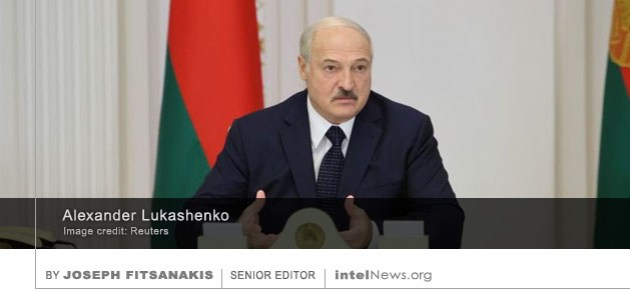
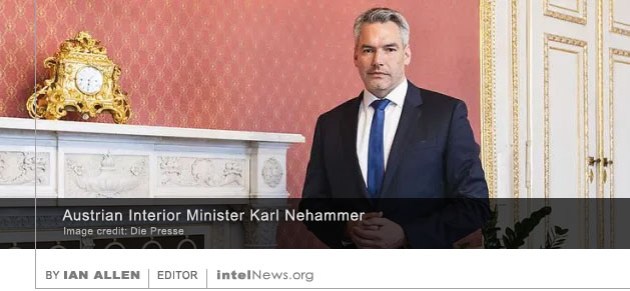
Alexander LukashenkoBelarusian President Alexander Lukashenko (pictured) replaced the heads of the intelligence service and other security bodies on Thursday, as he continues to face the most serious challenge to his 26-year rule. Mass protests have been held in urban centers since last month, when Lukashenko claimed victory with over 80 percent of the vote in the presidential elections, and returned to office for a record sixth term.
Over 7,000 people have been arrested by the authorities in recent weeks for participating in anti-government demonstrations, which Lukashenko blames on the North Atlantic Treaty Organization and “the European Union states bordering Belarus”. Regional observers point to the Belarusian military and security services as holding the key to what will transpire in former Soviet republic during the coming months. It is believed that, if the Armed Forces and the security services continue to stand by Lukashenko, the Belarusian strongman is unlikely to leave office.

In a surprise move on Thursday, the Belarusian president reshuffled the country’s intelligence and security leadership, including the head of the State Security Council (the highest national security decision-making body in Belarus) and the director of the State Security Service, known as KGB. Former Defense Minister General Andrei Ravkov, who has headed the State Security Council since January of this year, stepped down and was replaced by Valery Vakulchik, who until recently served director of the KGB. His post in the KGB was filled by Ivan Tertel, a KGB career official, who most recently served as chairman of Belarus’ financial investigative force, known as the State Control Committee. In an equally surprising move, the mayor of Minsk, Anatoly Sivak, was named deputy prime minister.

The reshuffle has been interpreted as by regional observers as an attempt by Lukashenko to surround himself with some of his most trusted apparatchiks, as rumors abound about possible divisions in the country’s military and intelligence services. Meanwhile, the Belarussian strongman is scheduled to meet with the Russian Prime Minister Mikhail Mishustin and a delegation of senior Russian intelligence officials in the coming days.

Author: Joseph Fitsanakis | Date: 04 September 2020 | Permalink

Austria to press charges on man caught spying for Turkish intelligence service

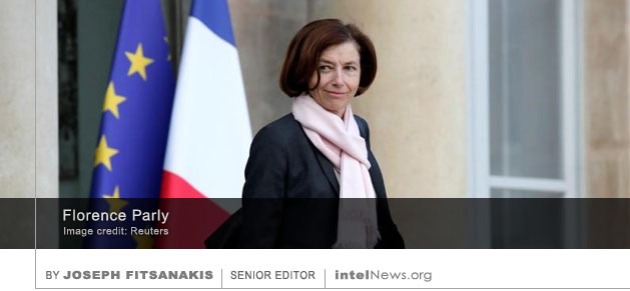
Karl NehammerThere were angry exchanges between Austrian and Turkish officials on Tuesday, after the Austrian government announced it would press charges against an individual allegedly caught spying for Turkish intelligence. The charges were announced on Tuesday morning local time by Austria’s Interior Minister Karl Nehammer (pictured), during a press conference in the Austrian capital Vienna.
During the press conference, Nehammer said the Austrian government wished to send “a clear message to the Turkish Republic: Turkish espionage and interference by Turkey in the civil liberties [of Austrian citizens] have no place in Austria”. Additionally, the Austrian official said his government would “work at the European level to make sure that Turkey does not interfere in the internal affairs of European Union states”. Vienna had already notified Horst Seehofer, president of the European Council, of the espionage case, said Nehammer.

It is believed that the alleged Turkish spy was uncovered by Austrian authorities after a large political protest that took place in Vienna last June, which resulted in violent clashes between pro-Kurdish and pro-Turkish demonstrators. The protesters were members of pro-Kurdish organizations in Vienna, but were confronted by pro-Turkish demonstrators, which resulted in the whole rally descending into violent street clashes. An investigation by Austrian police determined that many of the pro-Turkish demonstrators were affiliated with a far-right Turkish group known as the Grey Wolves.

According to the Austrian Interior Ministry, however, it was also found that Turkey’s National Intelligence Organization, known as MİT, helped organize the Grey Wolves group that confronted the pro-Kurdish rally. Among the Grey Wolves rioters, say Austrian officials, was a man who had been “recruited” by the MİT to spy on pro-Kurdish activists or critics of Turkish President Recep Tayyip Erdoğan. Nehammer said the alleged spy already confessed to working for Turkish intelligence.

In response to Nehammer’s statements, the Turkish government accused Austria’s national leadership of harboring an “anti-Turkey obsession”. Turkish Foreign Ministry spokesman Hami Aksoy told reporters in Ankara that the Austrian government should “top chasing artificial agenda with shallow and domestic political calculations over Turkey, and act with […] seriousness, common sense, and sincere cooperation”.

Author: Ian Allen | Date: 02 September 2020 | Permalink

French lieutenant-colonel serving with NATO arrested for spying for Russia

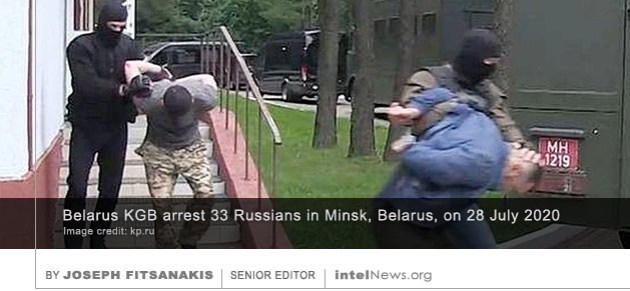
Florence ParlyFrench authorities are reportedly investigating a senior military officer, who is serving with the North Atlantic Treaty Organization in Italy, for spying on behalf of Russia, according to a news report from France. On Sunday, France’s Minister of the Armed Forces, Florence Parly (pictured), gave a press conference in Paris, during which she provided limited information about the ongoing investigation. Parly said she could confirm that “a senior officer” in the French military was undergoing “legal proceedings” relating to a “security breach”. She refused to provide specific details on the case.
Later on Sunday, however, French radio station Europe 1 reported that the military officer was a lieutenant-colonel who is currently serving at a NATO facility in Italy. The officer is believed to speak Russian and is considered a specialist on Russian military affairs, said the station. It added that French authorities began investigating him after he was spotted in Italy with a man who was later identified as an intelligence officer with the Main Directorate of the General Staff of the Russian Armed Forces, known commonly as GRU. According to Europe 1, the French military officer was arrested by the General Directorate for Internal Security (DGSI), France’s counterintelligence and counterterrorism agency.

At the time of his arrest, the unnamed man was making preparations to return to his NATO post in Italy, after holidaying in France, according to the radio station’s report. He is currently in detention in the French capital on suspicion of having supplied classified military documents to Russian intelligence. Europe 1 cited an unnamed source who said the officer would be prosecuted for “collecting [and] sharing information with a foreign power” that “harms the fundamental interests of the [French] nation” and “harms national defense”.

Author: Joseph Fitsanakis | Date: 31 August 2020 | Permalink

Putin says US and Ukrainian intelligence ‘lured’ Russian mercenaries into Belarus

Belarus KGBRussian President Vladimir Putin said in an interview that a group of Russian paramilitary contractors, who were arrested in Belarus last month, were lured there as part of a joint American-Ukrainian spy operation. On July 29, Belarussian secret services announced the arrest of 33 Russian citizens, who were employees of Wagner Group, a private Russian military company that some believe operates as a private paramilitary wing of the Russian Armed Forces.
The Investigative Committee, Belarus’ primary investigating authority, determined that the 33 had entered the country as part of a 200-strong group of Russians working for Wagner, in order to destabilize the country in the run-up to the presidential election. The election resulted in the return to office of Belarus’ authoritarian leader, Alexander Lukashenko, for a record sixth term. According to Belarussian state television, the 33 Russians were found in possession of Sudanese currency and a Sudanese smartphone card. Sudan is believed to be one of Wagner Group’s most active areas of operation, and in the past the company has used Belarus as a transit center from which it coordinates its operations in the African continent.

On Thursday, however, Russian President Vladimir Putin claimed that the 33 Russians were arrested as part of a joint American-Ukrainian intelligence operation, which lured the Wagner employees into Belarus. Speaking to state-owned Rossiya 24 television, Putin said the alleged operation was “carried out jointly by Ukrainian and American special services. The Russians, he said, had been hired “for absolutely legal work in Latin America and the Middle East” by an employer who “dragged them into Belarus”. The men were then “presented as a ‘strike force’ to destabilize [Belarus] during the presidential campaign”, said the Russian strongman.

Putin’s statement follows reports earlier this month in the Russian media, which claim that the 33 Russians were given forged passports as part of the alleged joint American-Ukrainian operation, in order to enable them to leave Russia undetected. However, neither the Russian media nor the Russian leader have provided evidence for these claims. Meanwhile Belarus expelled 32 of the 33 Russians a few days following their arrest. One remains in prison in the Belarussian capital Minsk.

Author: Joseph Fitsanakis | Date: 28 August 2020 | Permalink

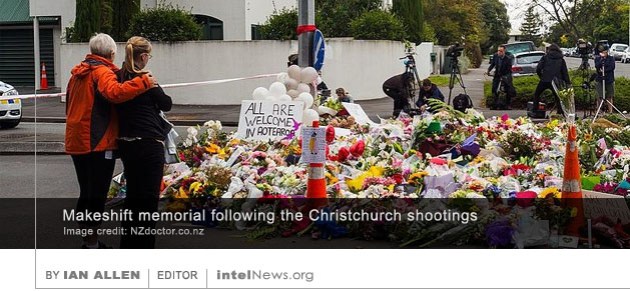
Christchurch shooter used commercial drone to spy on targets, court told

Christchurch shootingAn Australian far-right militant, who killed 51 people at two mosques in New Zealand in 2019, used a commercial drone to spy on his targets and plan his attack months in advance, according to newly released information. On March 15, 2019, Brenton Tarrant killed a total of 51 people at the Al Noor and Linwood mosques, in the city of Christchurch. Using an AR-15 rifle, Tarrant, 29, shot his victims one by one, before being stopped by police as he was on his way to a third mosque in the area.

Shockingly, Tarrant livestreamed the killings on Facebook from a GoPro camera he had previously attached to a helmet he wore during the attack. The livestream lasted for over 17 minutes, until Facebook moderators terminated the broadcast. The attack marked the worst mass murder in the history of New Zealand, and led to several new pieces of legislation, including strict gun control policies, which have since come into effect. Meanwhile, a manifesto that Tarrant wrote while planning his attack, titled “The Great Replacement”, has become wildly popular among neo-Nazi and other far-right circles worldwide.

According to revelations made public during Tarrant’s trial this week, the 29-year-old far-right militant planned his attacks for months, using sophisticated technology at every opportunity in the process. The prosecutors told the court that Tarrant made use of a commercially available drone to film the grounds of at least one of the mosques, which he later attacked. He allegedly used the drone footage to study the entry and exit points of the building and to carefully map his arrival and departure. He also made use of Internet applications and databases to study maps and the buildings themselves, as well as visuals of the insides of the mosques, prior to launching his attack. According to the prosecutors, Tarrant also studied Islamic religious customs and practices so as to ensure that the mosques would be packed with worshipers when he launched his armed assault.

According to the Australian Financial Review, which published this information, the use of technology by Tarrant to plan his attack was previously unknown to the public. It was revealed earlier this week in court, as prosecutors discussed it openly for the first time. Yesterday Tarrant was sentenced to life in prison without parole, becoming the first person in the history of New Zealand to receive such a sentence. Tarrant reportedly showed no emotion during the court proceedings.

Author: Ian Allen | Date: 27 August 2020 | Permalink

Danish military spy chief ‘relieved of duty’ following whistleblower revelations

Lars FindsenThe director of Denmark’s military intelligence service has been “relieved of duty for the time being”, following a series of whistleblower revelations, according to the country’s Ministry of Defense. Little is known about the precise nature of the revelations, but they are believed to relate to large-scale intelligence collection of information belonging to Danish citizens, which the spy agency is prohibited from accessing.
The news was revealed on Monday by the Danish Oversight Board, known as TET, which is responsible for supervising the work of Denmark’s intelligence agencies. The TET said that “whistleblower complaints” had revealed information that pointed to improper intelligence collection practices by the Danish Defense Intelligence Service (FE, or DDIS in English). Moreover, when confronted by the TET, the DDIS “withheld key information” about its collection practices and even gave “incorrect information relating to the collection and disclosure of information”, according to the watchdog.

The press release by the TET said that the DDIS had carried out “operational activities” that violated Danish law and violated the privacy of Danish citizens. It also said that the illegal “operational activities” had taken place “for as many as six years”. However, the watchdog added that, given the “classified content” of the intelligence service’s mission and activities, it could “not provide further information to the public”. It is believed, however, that the controversy involves a system of mass surveillance of telecommunications, which somehow collected information exchanged domestically between Danish citizens, or between them and foreign nationals. The DDIS is forbidden by law to spy on the domestic activities of Danes.

The Danish Ministry of Defense announced on Monday that DDIS Director Lars Findsen, had been “relieved of duty for the time being”, while officials investigated a multi-volume report produced by TET investigators about the alleged improprieties by the spy agency. The ministry added that two more senior DDIS officials had been placed on leave, but said they could not be named for reasons of national security.

Author: Joseph Fitsanakis | Date: 26 August 2020 | Permalink

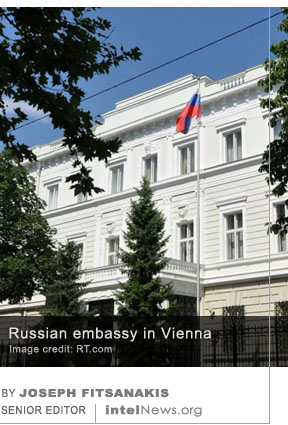
Russia expels Austrian diplomat in tit-for-tat move involving espionage claims

Russian embassy in AustriaRussia has expelled a diplomat stationed at the Austrian embassy in Moscow, just hours after the Austrian Ministry of Foreign Affairs expelled a Russian diplomat from Austria, allegedly for engaging in espionage. Austrian officials reportedly gave the unnamed Russian diplomat until Tuesday, September 1, to leave Austrian soil, in a move that surprised observers, given the close relations between Austria and Russia in recent years.
The Russian diplomat is accused by the Austrian authorities of engaging in “behavior that violated the Vienna Convention on Diplomatic Relations”. The Austrian Ministry of Foreign Affairs did not elaborate on the accusations against the diplomat, and refused to name him. However, the Vienna-based Kronen Zeitung newspaper, said on Monday that the Russian diplomat had carried out “industrial espionage” for several years. According to the paper, the Russian had recruited an Austrian citizen who worked for a technology firm to spy for Moscow. Austrian authorities arrested the man, who promptly identified the Russian diplomat as handler. The paper also said that, according to some sources, the man turned himself in to the authorities.

Later on Monday, the Russian Foreign Ministry summoned Johannes Aigner, Austria’s ambassador to Russia, and “strongly protested the unjustified course of action to cancel the accreditation of a Russian diplomat and order him to leave Austrian soil”. Moscow said in a statement its decision to expel an Austrian diplomat was “guided by the principle of reciprocity”. It is not known at this time how this incident will affect bilateral relations between Russia and Austria, which have been among Moscow’s warmest with a Western country in recent years.

Author: Joseph Fitsanakis | Date: 25 August 2020 | Permalink

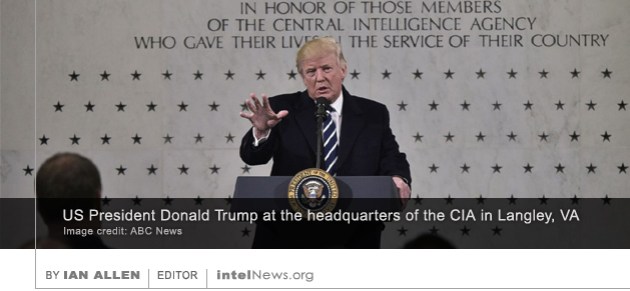
Republican ex-intelligence officials launch high-profile campaign against Trump

Trump CIAA group of former United States senior intelligence and national security officials, who support the Republican Party, launched today a campaign to deny Donald Trump a second term as president. Calling itself Former Republican National Security Officials for Biden, the group launched its high-profile campaign with a full-time ad in the business broadsheet The Wall Street Journal.
The ad is signed by 73 members and supporters of the Republican Party, who served in senior intelligence and national security posts under presidents Donald Trump, George W. Bush, George H.W. Bush, and Ronald Reagan. The list of signatories includes former Air Force Secretary Mike Donley, former National Counterterrorism Center Director Michael Leiter, former Director of National Intelligence John Negroponte, and former Central Intelligence Agency (CIA) Director General Michael Hayden. William Webster, who served as director of the Federal Bureau of Investigation and the CIA, and Elizabeth Neumann, former assistant secretary of Homeland Security, also signed the ad.

The text of the ad accuses the US president of corruption and lambasts him for lacking “the character and competence to lead this nation” in a time of crisis. It argues that Trump is “unfit to serve as president” because he “solicited foreign influence”, “disparaged [the US] armed forces, intelligence agencies, and diplomats”, and “imperiled America’s security”. In these and other ways, says the Republican group, Trump has “demonstrated that he is dangerously unfit to serve another term”.

This development highlights the contentious and at times downright adversarial relationship that has existed between the White House and parts of the United States Intelligence Community during Trump’s presidency. At the same time, such a high-profile effort by established intelligence and national security figures to deny the US president a second term in office, could be used by the Trump campaign as evidence of his crusade against what his supporters refer to as the ‘deep state’. The term refers to a purported network of unelected interests that resist the president’s efforts to implement his political agenda.

Author: Ian Allen | Date: 21 August 2020 | Permalink

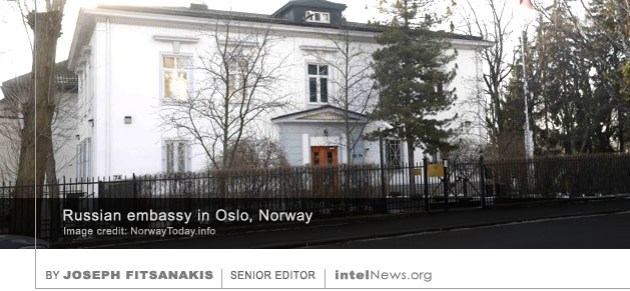
Norway expels Russian diplomat in espionage case involving Norwegian citizen

Russian embassy OsloThe government of Norway expelled a Russian diplomat on Wednesday, accusing him of committing espionage in a case that involves a Norwegian citizen, who has been arrested on charges of spying for Russia. Meanwhile local media named the Norwegian citizen involved in the case, while the Russian diplomat was also named yesterday in media reports.
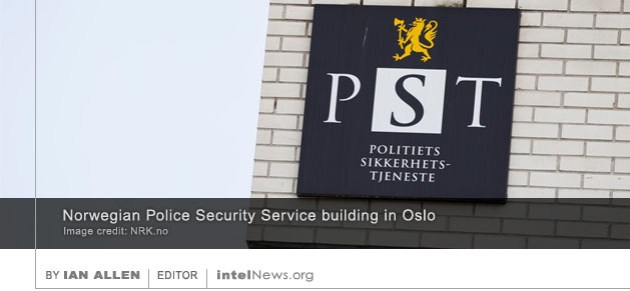
As intelNews reported yesterday, a Norwegian citizen was arrested on Saturday, reportedly after he met with a Russian intelligence officer in an Oslo restaurant. The arrest of was announced on Monday by the Norwegian Police Security Service (PST), Norway’s counterintelligence agency. Norwegian authorities said the man had “access to information that would be of interest to foreign nations” through his work in the private sector.

On Wednesday, Norwegian media identified the man as Dr. Harsharn Singh Tathgar, a 50-year-old naturalized Norwegian citizen, who was born in India. Tathgar reportedly received his PhD in 2001 from the Norwegian University of Science and Technology in Trondheim, after completing research on the properties of nickel and magnesium in the department of Materials Technology. According to the PST, Tathgar has admitted sharing restricted information with the Russian diplomat. According to the judge who remanded Tathgar in custody on Monday, the Indian-born Norwegian man received from the Russians monetary compensation for his services that was “not insignificant”. It is also believed that Tathgar met his alleged Russian handler several times in the past year, or even longer.

The Russian diplomat was not arrested along with Tathgar, because he holds diplomatic immunity. However, he now appears to have been declared persona non grata in Norway. Representatives from Norway’s Ministry of Foreign Affairs told reporters on Wednesday the Norwegian government had “informed the Russian ambassador that one of his employees is unwanted in Norway and has been asked to leave the country”. The diplomat has been named as Aleksandr Stekolshchikov. He reportedly served as Deputy Trade Representative at the Russian embassy in Oslo. He now stands accused by the Norwegian government of engaging in “activities that are not in accordance with his role and status as a diplomat”. He has been given until the end of the week to leave the country.

Meanwhile, the Russian embassy in Oslo has filed a complaint with Norwegian authorities, claiming that a bag Stekolshchikov was carrying when he was confronted by the PST was illegally searched, despite his diplomatic status. The Russians also claim Stekolshchikov was “unjustly detained” by the PST following “a meeting with a Norwegian citizen”. Moscow is now accusing the Norwegian Foreign Ministry of violating the diplomatic status of its embassy personnel. Oslo has denied these accusations.

Author: Joseph Fitsanakis | Date: 20 August 2020 | Permalink

Norway arrests man for espionage that harmed ‘fundamental national interests’

Norway Police Security ServiceAuthorities in Norway will not release the name of a man who was arrested on Saturday, reportedly after he met with a Russian intelligence officer in Oslo. The arrest of the unnamed man, who is a Norwegian citizen, was announced on Monday by the Norwegian Police Security Service, Norway’s counterintelligence agency.
A prosecutor for the agency, Line Nyvoll Nygaard, told reporters that the man was observed by counterintelligence officers as he met with the alleged Russian intelligence officer at a restaurant. Little information is known about him. He is said to be in his 50s. According to Nygaard, he is believed to have “access to information that would be of interest to foreign nations” through his work.

The case is thought to be of significance, given that Norway’s Prime Minister, Erna Solberg, was notified about it over the weekend. According to reports in the Norwegian media, the case is about industrial espionage. The man is believed to be working, or to have worked, for DNV GL, a major provider of technical advice and services for energy companies around the world. The company is also a major force in the global shipping industry as an accredited registrar, meaning that it is licensed to classify and categorize ships.

According to Nygaard, the espionage case is significant enough to pose “a major threat to the core national interests of Norway”. The government will seek the maximum prison penalty of 15 years, she said. The man is currently being detained and will soon be facing a custody trial that is expected to take place in secret.

Author: Ian Allen | Date: 19 August 2020 | Permalink

Researchers find lost interview of MI6 officer who helped plan 1953 coup in Iran

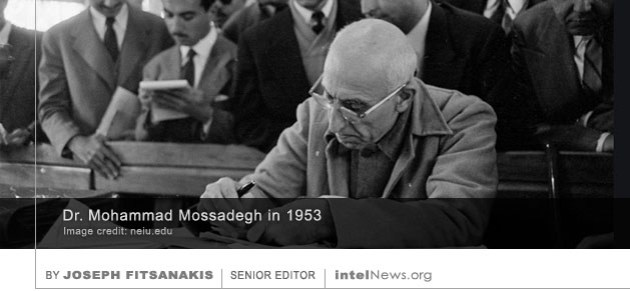
Mohammad MossadeghBritish researchers have found a lost interview by a senior British intelligence officer who led the joint Anglo-American coup in Iran in 1953. The coup overthrew the democratically elected government of Prime Minister Dr. Mohammad Mossadegh and reinstalled the shah (king) of Iran, Mohammad Reza Pahlavi, a close Western ally. London was alarmed by Dr. Mossadegh’s decision to nationalize the Anglo-Iranian Oil Company (later renamed to British Petroleum, or BP), which would deny Britain its lucrative stake in the Middle Eastern energy market. The British also viewed Dr. Mossadegh as being too close to the Soviet Union.
In 1952, when Iran severed diplomatic relations with Britain, London intensified its efforts to convince the United States that overthrowing the Iranian government was imperative to keep communism out of the region. Until then, British plans for a coup had been led by Norman Darbyshire, who headed the Persia station of the Secret Intelligence Service, known as MI6. With American help, Darbyshire continued his plotting from Cyprus, where he had relocated after having been expelled from Tehran by the Iranian government. He died in 1993. But in 1985 he gave an interview to Granada, a British production company, for a television documentary titled “End of Empire: Iran”. Because Darbyshire refused to speak in front of the camera, the producers of the documentary ended up not using his interview.

Recently, however, a team of researchers found the interview and the associated transcript while researching archival material for a new documentary on the overthrow of Mossadegh. The documentary, titled “Coup 53”, is scheduled for release this coming Wednesday, which marks the 67th anniversary of the coup. On Monday, the Security Archive at George Washington University released the typewritten transcript of Darbyshire’s interview. It describes how British intelligence worked systematically over several years to convince the United States to support the coup plans, and that British spies also found it difficult to secure the support of a reluctant Shah Pahlavi.

According to Darbyshire, MI6 and the CIA tried to bribe Iranian parliamentarians, offering them money in exchange for defecting from Dr. Mossadegh’s party, thus eliminating its parliamentary majority. When that effort failed, the spies approached the Iranian military and proposed plans for a coup. In his interview, the late MI6 spy claims that the coup cost the British government £700,000. “I know because I spent it”, he says. He also claims that much of that money was smuggled into Iran in cash, concealed inside “biscuit tins”.

Author: Joseph Fitsanakis | Date: 18 August 2020 | Permalink

Israel intel official says Bahrain and Oman could follow UAE in normalizing relations

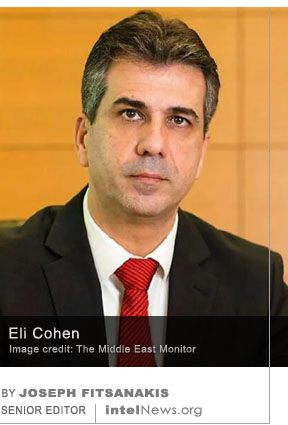
Eli CohenIsrael’s minister of intelligence has said Bahrain and Oman could follow the United Arab Emirates in establishing diplomatic relations with Israel, following last week’s historic announcement. Israel said on Thursday that the UAE had agreed to establish formal diplomatic relations with the Jewish state, in return for Israel’s pledge to cancel its planned annexation of parts of the West Bank. The agreement, which was sponsored by Washington, makes the UAE only the third Arab country to establish formal diplomatic relations with Israel, after Egypt in 1979 and Jordan in 1994.

The announcement was greeted with enthusiasm and skepticism, with some observers claiming it could reshape Middle East politics, and others warning it could bring Palestinian factions closer to Iran. But on Sunday, Eli Cohen, Israel’s Minister of Intelligence and member of the country’s Security Cabinet, said the agreement between Israel and the UAE was likely to be the first of several similar deals. Speaking on Israel Army Radio, Cohen said that “additional agreements” would follow “in the wake of this agreement”, and that “Bahrain and Oman are definitely on the agenda”. The two Gulf countries are close allies of the United States and Saudi Arabia, which is one of Iran’s strongest regional rivals. In official statements issued on Thursday, Bahrain and Oman praised the normalization of relations between the UAE and Iran, but did not speak to whether they were contemplating following in the UAE’s footsteps. Meanwhile, the government of Kuwait said in an official statement last week that its position toward Israel remained unchanged, signaling that a change of status in its treatment of the Jewish state was not on the horizon.

Cohen also told Israel Army Radio that, in his assessment, “there is a chance that already in the coming year there will be [agreements between Israel and] Muslim countries in Africa […] chief among them Sudan”. In recent years, Israeli Prime Minister Benjamin Netanyahu has met with Omani and Sudanese leaders. The Israeli prime minister said last week he expected “more countries will be joining us in the peace circle”, adding that the Israel-UAE agreement signaled “a historic change which advances peace with the Arab world and will eventually advance a real, sober and secure peace with the Palestinians”. There are many critics of this view, especially among Netanyahu’s own voter base, which was highly supportive of his prior pledges that Israel would annex parts of the West Bank.

Author: Joseph Fitsanakis | Date: 17 August 2020 | Permalink



