Opinion: Mishandled analysis of 1982 Tyre attack had implications for US, France
November 19, 2020 2 Comments

BETWEEN 1982 AND 1983, 450 defense personnel and civilians from Israel, the United States and France were killed in Lebanon as a result of four consecutive terrorist attacks conducted by Hezbollah. For years, questions have been raised whether these attacks could have been prevented.
In 2000, a senior Israel Security Agency (ISA) official wrote a report on the huge explosion in the Israeli compound in Tyre, Lebanon, in 1982. Based on the available intelligence, he reached a firm conclusion: it was a suicide bombing by a Shiite terrorist inside a booby-trapped vehicle, and not a gas balloon explosion, as was officially claimed. Requests to publish the new report with the recent conclusions were denied by ISA senior officials, for reasons that remain unknown. This prompted questions and strong doubts among counterterrorism experts and the Israeli the public, about whether the initial report from 1982 was actually a serious mistake of judgement, or even a cover-up.
Twenty years later, in November 2020, an investigative article was published in Israel by Ronen Bergman, which shed light on new details indicating a high probability that the attack in Tyre was a Hezbollah terrorist attack and not a result of an explosion of gas balloons. The article stated that in 1982 Israeli authorities, especially the ISA, were not ready to admit that their intelligence missed the attack and did not stop it in time. As a result, lessons were not learned regarding the immediate need to strengthen the security of foreign compounds in Lebanon against possible threats from Hezbollah. In 1983 Hezbollah used the same modus operandi of car bombs to attack US and French forces in Beirut and later the —then new— Israeli compound of Tyre.
 THE HALF-NEPHEW OF North Korean leader Kim Jong-un, who disappeared in 2017 and has not been seen since, is in the custody of the United States Central Intelligence Agency (CIA), according to a new report. The missing man’s name is Kim Han-sol. He is the son of the late Kim Jong-nam (pictured), the eldest son of Kim Jong-il and grandson of Kim Il-Sung, who founded the Democratic People’s Republic of Korea in 1948. A critic of North Korea’s rulers, Kim lived in self-exile in the Chinese territory of Macau, and split his time between China, Singapore and Malaysia.


 AUSTRIAN GOVERNMENT OFFICIALS SIGNALED on Thursday the beginning of a major overhaul of the country’s intelligence community, in response to this week’s terrorist attack in Vienna, which killed four people. Another 20 people were wounded by a lone gunman, who used an automatic weapon to spread panic in the Austrian capital before he was shot dead by Austrian police.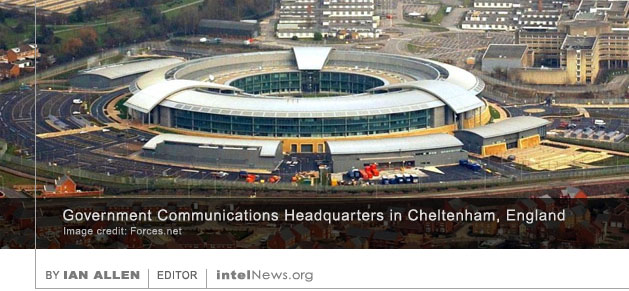


 THE SOVIET UNION INFLICTED incalculable damage to West German spy agencies —and by extension to their American patrons— by recruiting dozens of former Nazis who populated the ranks of West German intelligence after World War II. These are the preliminary conclusions of a study into the topic by Danny Orbach, a lecturer in history at Hebrew University in Jerusalem, which relies on recently declassified documents from American and German intelligence agencies.








British SIGINT agency criticized for ‘vanity project’ that went 83% over budget
November 20, 2020 by Joseph Fitsanakis Leave a comment
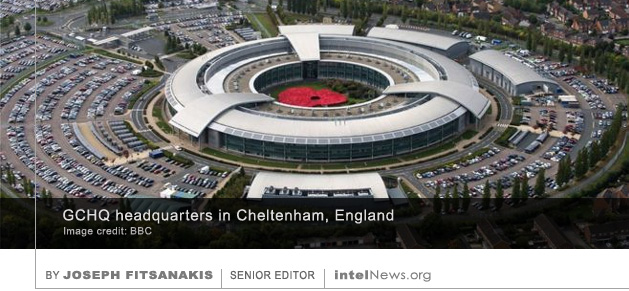
In 2015, the country’s Conservative government announced the establishment of the National Cyber Security Centre (NCSC), under the GCHQ, whose mission would be to protect Britain from cyber-espionage, cyber-terrorism and cyber-sabotage, among other cyber-security goals. Soon after the announcement was made, the then-Chancellor of the Exchequer, George Osborne, appointed a planning committee whose chief priority was to decide where to house the NCSC. The decision was made to house it in London, rather than the GCHQ’s Cheltenham base in southwestern England, so as to place it in close proximity to government and business centers.
But the planning committee rejected an initial plan to house the NCSC in Canary Wharf, one of London’s primary business districts, located on the Isle of Dogs. The reasons were that Canary Wharf is not close to the Palace of Westminster —Britain’s seat of government— and that Canary Wharf would be “very unpopular” with NCSC personnel. Instead, the committee chose Nova South, a luxury building situated near London’s Victoria station, which is one of the world’s most expensive urban areas. The government’s National Security Adviser, Mark Lyall Grant, rejected the Nova South option, arguing it would be too costly without adding any real benefits to the NCSC’s operations. But in May of 2016 Osborne overruled Grant’s decision and unilaterally decided to house the NCSC at Nova South.
Now a report (.pdf) from the British Parliament’s Intelligence and Security Committee has described Osborne’s role in the decision-making process as “highly unsatisfactory”, and his choice to house the NCSC at Nova South as “unacceptable”. According to the report, Osborne viewed the NCSC’s location as “a pet project” that prioritized image over cost and operational effectiveness. The result was that the NCSC housing project “considerably over-shot the funds originally allocated”, by over 80 percent. What is worse, according to the report, the money shortfall has been affecting the GCHQ’s operational budget by nearly £3 million ($4 million) a year since 2016.
► Author: Joseph Fitsanakis | Date: 20 November 2020 | Permalink
Filed under Expert news and commentary on intelligence, espionage, spies and spying Tagged with GCHQ, intelligence funding, National Cyber Security Centre (UK), News, UK