April 8, 2020
by Joseph Fitsanakis
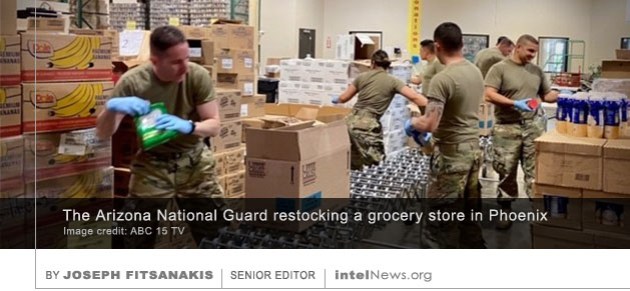 The food supply chain in the United States has so far been able to endure the pressures caused by SARS-CoV-2. Grocery stores across the nation remain generally well-stocked, even if in some cases (like in Nevada and Arizona), the National Guard has been brought in to help with restocking. Shortages in certain types of foods, such as canned soup or pasta, are the result of unprecedented demand, rather than a breakdown in the food supply chain. Overall, therefore, there are no signs of systematic food shortages across the nation. However, disruptions —some of them severe— are likely to be experienced in the coming weeks.
COVID-19 IMPACT ON FARMS
Disruptions are likely to be felt first in the area of fresh produce, for two reasons. First, because large agricultural facilities are beginning to experience major shortages in personnel, as seasonal farmworkers —most of them from Central and South America— are unable to travel north due to the cessation of international travel in the Americas. Second, because —just like medical personnel across the country— agricultural workers are facing severe shortages in personal protective equipment (PPE), which is essential for keeping them healthy in a pandemic. Until now, major  COVID-19 outbreaks have been occurring in densely populated urban centers. But as the disease continues to spread, it is only a matter of time before the virus reaches rural farming areas and enters farms, which are the beginning of the food supply chain. Many automated agricultural facilities, such as grain and soybean operations in the American Midwest, do not require large numbers of human laborers, and will thus suffer little disruption from the spread of the pandemic. However, this is not the case with fruits and vegetables, such as tomatoes or grapes, which require human pickers to extract them. The progression of the disease in rural regions of Florida and California, which produce over 20% of total US agricultural value, will be a critical factor. As an illustration, is worth pointing out that two farms in California supply over 85% of all carrots in the US market. If COVID-19 affects the production and distribution capacity of global producers of fresh fruits and vegetables, like the Florida-based Fresh Del Monte Produce, the ramifications are likely to be felt across the world for more than a year.
AGRICULTURAL DISRUPTIONS IN WESTERN EUROPE
Western Europe, which is ahead of the US in the spread of the disease, is already experiencing unprecedented disruptions in agricultural production. The closing of international borders has prevented millions of seasonal farmworkers from Eastern Europe, whom agricultural facilities in Western Europe rely on to pick fruits and vegetables each year, from traveling west. Italy and Britain hav e begun issuing calls for unemployed workers to form “land armies” and volunteer to pick produce in farms. The French government has called “for hairdressers, waiters, florists and others temporarily unable to work” due to the pandemic “to head to the nation’s fields and start picking”. And in Germany, the authorities have launched a website that solicits volunteers to work in farms across the nation. However, as only 16,000 have volunteered so far, the German government is now working on a plan to allow undocumented immigrants to make up the remaining 284,000 farmworkers that are needed to salvage this year’s crop.
DISRUPTION IN THE GLOBAL FOOD EXPORT SYSTEM
It is unrealistic to expect that these glitches will not eventually make their way to the US. Moreover, just like Western Europe, the US relies heavily on imported foods. The global nature of the pandemic is also beginning to cause major disruptions in food exports, as air and ship cargo dwindles dramatically. Already, the shortage of refrigerated containers used to transport meat and other food supplies from China to North America has prompted a drop in imports of over 25%. Meanwhile, India, which is the world’s largest exporter of rice, has completely halted exports due to logistical problems and labor shortages caused by the pandemic. The world’s second and third largest exporters of rice, Thailand and Vietnam, are likely to soon follow suit. Kazakhstan, which is among the world’s largest exporters of wheat flour, has now banned all exports of that product. Brazil, the largest exporter of coffee, sugar and soybeans in the world, has warned that it is facing an unprecedented shortage of farmworkers, truck drivers, and even spare parts for farm equipment. And Russia, which is the world’s largest exporter of wheat, has said that it will soon be forced to severely restrict exports for the same reasons as Brazil. These developments prompted the United Nations Food and Agriculture Organization to warn last week that food shortages, coupled with growing trade barriers between nations, “will create extreme volatility” in global food supply. Read more of this post
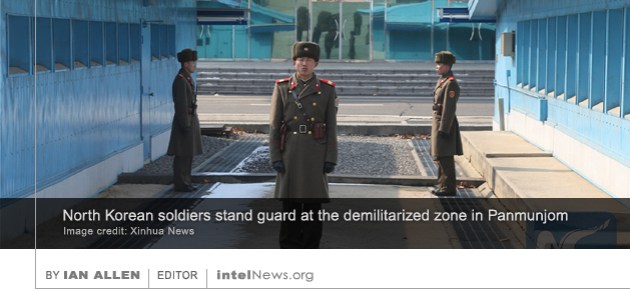 Officials in South Korea and China have cast doubt on rumors circulating in recent days that North Korean Supreme Leader Kim Jong-un may be dead or close to dying. The rumors about Kim’s demise began to circulate on April 15, when the North Korean leader failed to participate at an official ceremony held to mark the birthday of his grandfather. Known as the Day of the Sun —a public holiday in North Korea— the annual event commemorates the birth of the country’s founder, Kim il-Sung.
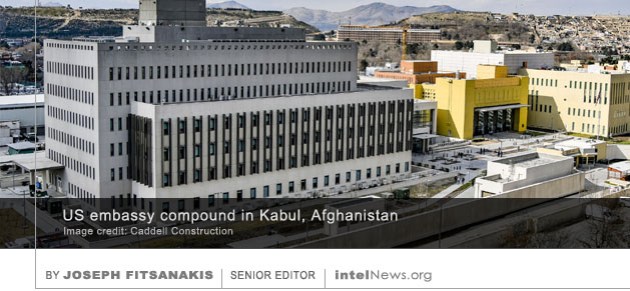 The White House is considering a plan to pull back Central Intelligence Agency officers from stations across Afghanistan, in a last-ditch effort to boost prospects for a peace deal with the Taliban. Plans for the peace deal were announced in February by representatives of the US and the Pashtun-based Sunni group, which has waged an Islamist insurgency against the US-supported government in Kabul since 2001.
 Extremist groups around the world are capitalizing on the novel coronavirus pandemic to rally their members around a common cause and spread chaos and violence, according to a new report. In an
  The United States Department of Defense’s top general has said that “the weight of evidence” gathered by Western spy agencies points to COVID-19 having “natural” origins, but this is not yet conclusive. Ever since the emergence of the novel coronavirus, prominent scientists have
  The United States Department of Defense has barred its employees from using Zoom, a popular video teleconferencing application, due to concerns that foreign spies may be using the software to collect intelligence. The Pentagon made the announcement less than a day after the US Senate advised its members to refrain from using Zoom. The video teleconferencing software is owned by Zoom Video Communications, Inc., a NASDAQ-trading software firm headquartered in Jan Jose, California. It has become popular in recent weeks, due to the increasing reliance on telework resulting from the effects of the COVID-19 pandemic.
 British intelligence agencies are advising policymakers that China will become “more assertive” after the world emerges from the coronavirus pandemic, while some government officials are urging a re-examination of London’s relationship with Beijing.
 The United States Department of State has designated a Russian white supremacist organization a Specially Designated Global Terrorist (SDGT) group. This
 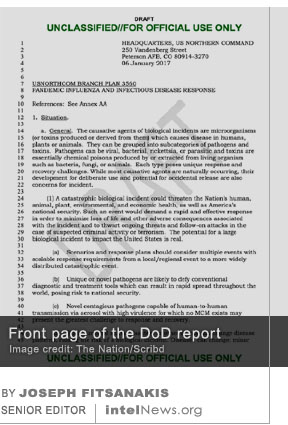 A United States Department of Defense report warned about the danger of a global crisis caused by a “novel respiratory disease”. The existence of the 2017 study adds to the mounting skepticism about President Donald Trump’s
  The intelligence agencies of Israel are playing an increasingly important role in the Jewish state’s effort to combat the effects of the novel coronavirus pandemic in its territory. Israel’s intelligence agencies are known to be very secretive, but the government has gone out of its way to
 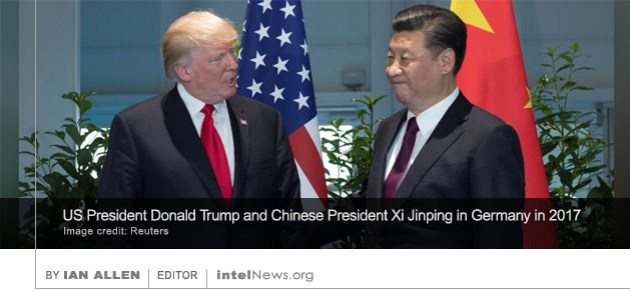 The United States Intelligence Community has concluded that the Chinese government intentionally withheld and even fabricated crucial data about infections and deaths from COVID-19, according to reports. Consequently, the official numbers relating to the novel coronavirus outbreak in China allegedly represent a considerable under-reporting of both total cases and total deaths.
 The National Operations Center of the United States Department of Homeland Security (DHS) is relocating to an emergency facility after a member of its staff tested positive for COVID-19, the illness caused by the novel coronavirus. The information was
  The government of Saudi Arabia may be exploiting a decades-old tracking system embedded in the global mobile telecommu- nications network in order to spy on its citizens as they travel abroad, a report suggests. The report was
  The administration of United States President Donald Trump is considering the possibility of expelling from the country dozens of Chinese diplomats, journalists, and others, who are believed to be undercover spies. The expulsions relate to a spiraling information war between Washington and Beijing, which has erupted in recent weeks as a result of the COVID-19 pandemic.






 intelNews.org
Belgian spy agencies say radical groups trying to exploit COVID-19 to sow chaos
April 23, 2020 by Joseph Fitsanakis 1 Comment
The report (pdf) was published on Wednesday on the website of the State Security Service (VSSE), Belgium’s primary civilian intelligence agency. The agency said it co-authored the report with the General Intelligence and Security Service (GISS), which is the main military intelligence service of Belgium. The document warns that political extremists are spreading disinformation —some of it produced and distributed online by foreign intelligence agencies— that propagates unfounded conspiracy theories. The disinformation is designed to turn groups of people against each other, undermine the state and spread hatred against medical experts.
Among the most active distributors of disinformation is the Brussels page of the worldwide anarchist website Indymedia, says the report. Earlier this month, posts on the page urged Belgians to commit acts of violence targeting police officers, and to sabotage infrastructure such as telecommunications, which can disrupt the work of first responders and other emergency workers. Posts on the page also urged readers to act quickly “while law enforcement is busy” with the pandemic.
Groups from the far-right are also active in spreading race-themed disinformation online, according to the VSSE/GISS report. For example, a white nationalist group calling itself the Knights of Flanders has been promoting conspiracy theories that connect COVID-19 with flu vaccines. Other groups have posted information claiming that Muslims have been instructed by religious figures to “cough in the faces of infidels”. Some far-right groups are claiming that personal protective equipment is deliberately being made scarce as part of a secret government plan to intimidate the population and exterminate elderly people.
Finally, a small number of —mostly far-right— groups is spreading messages that criticize Western responses to the coronavirus pandemic and praise the Russian government’s efforts to combat the disease. Among them is a new organization known as “Squadra Europa”, which has branches in several European countries, including Belgium, said the report.
► Author: Joseph Fitsanakis | Date: 23 April 2020 | Permalink
Filed under Expert news and commentary on intelligence, espionage, spies and spying Tagged with anarchism, Coronavirus, COVID-19, disinformation, GISS (Belgium), News, propaganda, rightwing extremism, VSSE (Belgium)