Austrian court finds unnamed retired Army colonel guilty of spying for Russia
June 11, 2020 Leave a comment
 A court in Austria has found a retired Army colonel guilty of providing classified military information to Russia, following a closed-door trial. Interestingly, the alleged spy’s name has not been made public. Some Austrian media have been referring to him as “Martin M.”.
The retired colonel was arrested in November of 2018, reportedly after having recently retired following a long military career. Austria’s Defense Ministry said at the time that the arrest came after a tip given to the Austrian government by an unnamed European intelligence agency from a “friendly country”. Martin M. reportedly served in peacekeeping missions in the Golan Heights and Cyprus before being posted at one of the Austrian Armed Forces’ two headquarters, located in the western city of Salzburg. It was around that time, say prosecutors, that the unnamed man began spying for Russia. Starting in 1992, he was in regular contact with his Russian handler, who was known to him only as “Yuri”.
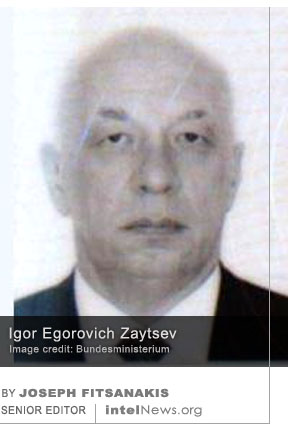
“Yuri” was later identified by Austrian authorities as Igor Egorovich Zaytsev, who is allegedly an intelligence officer for the Main Directorate of the General Staff of the Russian Armed Forces. Known as GRU, the organization is Russia’s primary military-intelligence agency. The Austrian government has issued an international arrest warrant for a Zaytsev.
Zaytsev reportedly trained Martin M. in the use of “sophisticated equipment”, according to the Austrian prosecutor, which he used to communicate classified information to Moscow. He is thought to have given Russia information on a range of weapons systems used by the Austrian Army and Air Force, as well as the personal details of high-ranking officers in the Austrian Armed Forces. Austrian media initially reported that the alleged spy was paid nearly $350,000 for his services to Moscow.
During his trial, Martin M. reportedly admitted that he had received payments form the Russians to provide information. But he claimed that the information he gave them was already publicly available. His legal team compared his role to that of a “foreign correspondent” for a news service. The court, however, did not accept that argument and on Tuesday sentenced Martin M. to three years in prison.
Soon after his sentencing, the defendant was released on parole, after the court counted the 18 months he has served behind bars since his arrest as part of his prison sentence. His legal team said they plan to appeal the sentence.
► Author: Joseph Fitsanakis | Date: 11 May 2020 | Permalink
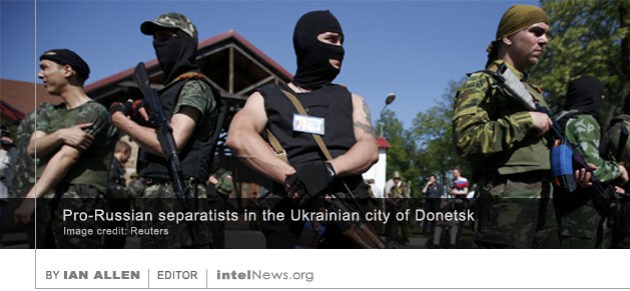 Members of neo-Nazi groups in Germany attended paramilitary training camps in Russia, which were organized by a group that the United States has designated a global terrorist organization, but which the Russian government has not banned. If true, these claims add further credence to the view that Russian far-right groups are becoming increasingly central in the worldwide network of racially motivated radical organizations.
 Moscow has reacted angrily to the Czech government’s decision to expel two Russian diplomats from the country, in response to allegations that the Kremlin plotted to assassinate three outspoken Czech politicians using a deadly poison. Russian officials pledged to respond in kind to Prague’s “indecent and unworthy deed”.
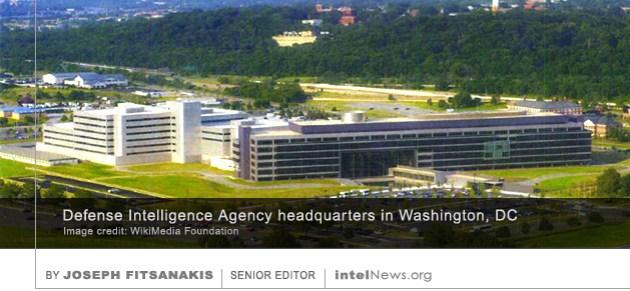 The United States Defense Intelligence Agency, a Pentagon organization tasked with collecting foreign military secrets, has rejected reports that it is spying on protestors inside the country. However, it confirmed that it has set up an “internal coordination group” to respond to “requests for information” by the Department of Defense. This development follows reports that some DIA employees communicated their concerns about being asked to spy domestically to the organization’s director last week.
 • State-level espionage on EU a ‘very high threat’ says report. The most successful attempts of espionage at a top EU institution are state sponsored, according to an
 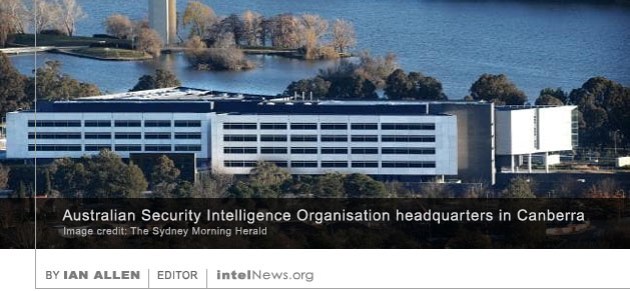 • Australian spy agency seeks expanded powers. The Australian Security Intelligence Organisation (ASIO) says it needs
 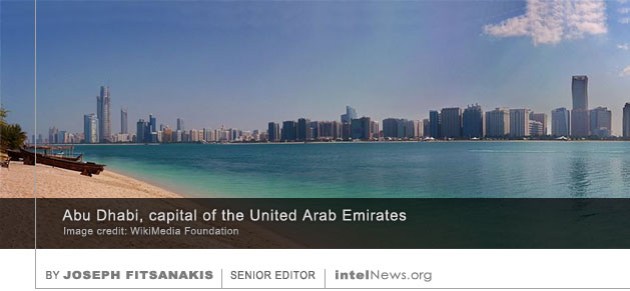 The embassy of the United States in the United Arab Emirates declined free COVID-19 testing kits for its staff, because of concerns that the private labs offering the kits had ties to China, according to a new report. The testing kits were offered by a testing facility that was set up in March in Abu Dhabi, which is the capital of the oil-rich UAE —a close American ally in the Middle East.
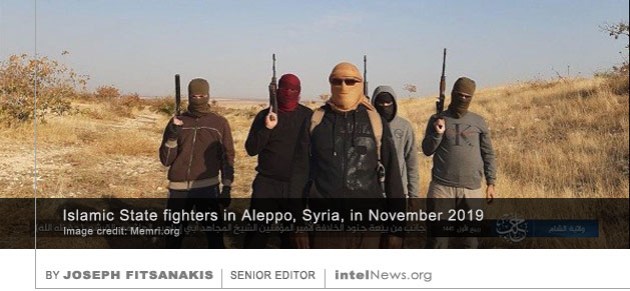 In a recent video message, the new head of the Islamic State calls COVID-19 a “great torment” from God against unbelievers, and vows that “not a single day will pass without bloodshed” due to attacks by his forces. The 39-minute video is entitled “The Crusaders Will Know Who Will Win in the End”, and began to circulate on the popular messaging application Telegram last Thursday.
 The former president of Argentina, Mauricio Macri, has been indicted as part of a widening investigation into a domestic spying program, which allegedly targeted opposition politicians, journalists and other public figures. The alleged espionage took place between 2015 and 2019, when Macri occupied the country’s highest office.
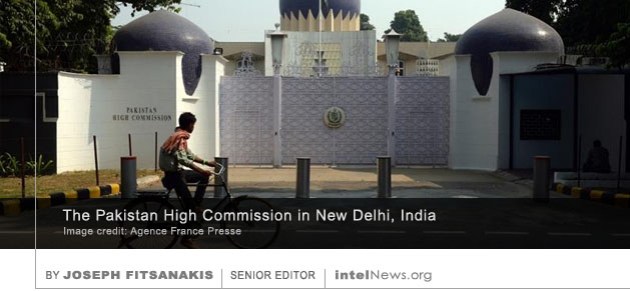 India has expelled two officials at the High Commission of Pakistan in New Delhi, after they were allegedly caught with fake Indian identity papers while trying to acquire classified documents. But the Pakistani government has rejected the allegations and subsequent expulsions as “a part of persistent anti-Pakistan propaganda” from India, and said the two officials were tortured while under detention by Indian authorities.
 •
•  •
• 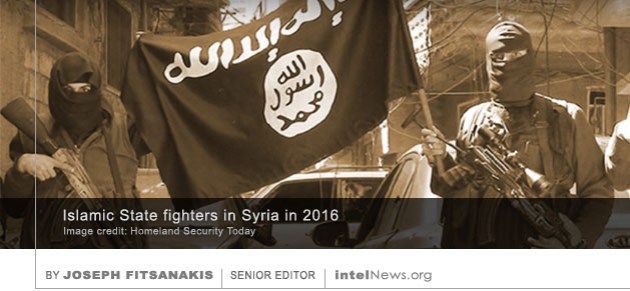 As the Islamic State continues to transfer its activities online due to the coronavirus pandemic, the group has published the first issue of a new cybersecurity magazine, aimed at helping its members evade surveillance. The Islamic State, known previously as the Islamic State of Iraq and Syria, has always been active online. But the COVID-19 pandemic has prompted it to
  The United States has alleged that the Russian military flew over a dozen unmarked aircraft to Libya, in an attempt to provide air support for Russian mercenaries who are fighting in Tripoli. If true, this development marks a major escalation of Russia’s military intervention in the Libyan civil war.








News you may have missed #904
June 13, 2020 by Ian Allen Leave a comment
• Britain’s SIGINT agency sees workload spike amid COVID-19 vaccine hunt. Britain is one of the leading countries developing a COVID-19 vaccine with Oxford University and Imperial College London at the forefront, along with Sinovac in China. Whoever develops it first will reap billions from global sales, making research information highly valuable. This is having a major impact on the workload of the Government Communications Headquarters (GCHQ), its director, Jeremy Fleming, said last week.
• Indian IT firm spied on politicians and Investors around the world. New Delhi-based BellTroX InfoTech offered its hacking services to help clients spy on more than 10,000 email accounts over a period of seven years. During that time, the firm targeted government officials in Europe, gambling tycoons in the Bahamas, and well-known investors in the United States including private equity giant KKR and short seller Muddy Waters, according to three former employees, outside researchers, and a trail of online evidence.
Filed under Expert news and commentary on intelligence, espionage, spies and spying Tagged with 0 Britain's SIGINT agency sees workload spike amid COVID-19 vaccine hunt, 0 Indian IT firm spied on politicians and Investors around the world, 0 UN report says Afghan Taliban still maintain ties with al-Qaida, Afghanistan, al-Qaeda, BellTroX InfoTech, Coronavirus, COVID-19, GCHQ, news you may have missed