Tunisia suspects espionage after Belarusians are caught with several passports
July 4, 2019 1 Comment
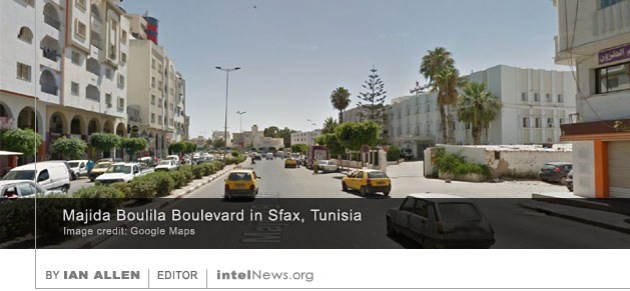 Tunisian authorities are investigating two Belarusian men who were found to be in possession of several forged passports and electronic surveillance equipment. The two men were reportedly arrested on Tuesday in Sfax, Tunisia’s second most populous city, which is located on the Mediterranean coast. It is worth noting that Sfax was also the home of Mohamed Zaouari, the 49-year-old Hamas avition engineer who was shot dead in December 2016 by a group of assailants using gun silencers. Hamas claims that he was Zaouari was killed by Israel’s Mossad intelligence agency.
Tunis Afrique Presse, a private news agency headquartered in Tunis, said on Monday that the two Belarusians arrived in Sfax in early June, and checked into a hotel using Belarusian passports. They reportedly attracted the attention of the hotel staff, because Sfax is not a noted tourist destination and attracts few of the foreigners who visit the North African country. Hotel staff alerted the authorities after the two Belarusians forbade anyone, including hotel cleaning staff, to enter their room. Tunisian security officers then monitored the two Belarusians for two weeks before entering their room and searching their belongings, after receiving permission from their superiors. The search reportedly produced several forged passports from Ukraine, the Maldives and Poland, as well as SIM cards and electronic surveillance equipment. At a press conference in Sfax on Monday, Mourad Turki, a court official, said that the Tunisian Prosecutor’s Office decided to issue an arrest warrant for the two Belarusians. An investigation has been launched, he said.
Tunisia and Belarus do not have active diplomatic relations. There have been several high-level meetings between Tunisian and Belarusian officials in recent years, but diplomatic relations between the two countries have remained stagnant. Belsat TV, a Belarusian news network based in Poland, contacted the Belarusian Ministry of Foreign Affairs but a spokesman refused to comment on the cases of the two men. The United States-based Radio Free Europe was told by a government official in Minsk that the Belarusian government is looking into the matter.
► Author: Ian Allen | Date: 04 July 2019 | Permalink
 An Islamic State militant who blew himself up in the Philippines last week was probably history’s first-ever Filipino suicide bomber, according to police officials. The man was one of two militants who
  In a rare public appearance, the director of the Mossad spy agency said that the Middle East is witnessing a historic shift of alliances as many Arab states are forming tacit pacts with Israel against Iran and its proxies. Yosef “Yossi” Cohen
 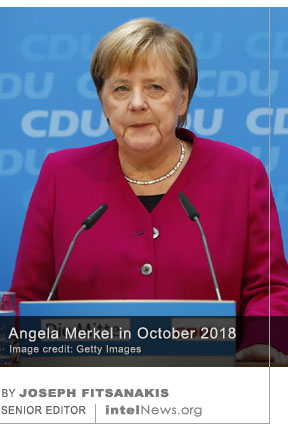 Foreign intelligence agencies are allegedly trying to acquire the medical file of German Chancellor Angela Merkel after she was seen trembling uncontrollably in public twice in as many weeks. Reports about foreign spy interest in Merkel’s health emerged in German and British newspapers last weekend, after the German chancellor was seen trembling during high-level meetings earlier this month. The first incident took place during an official meeting with Ukrainian President Volodymyr Zelensky on June 18. The German Chancellery said Merkel had suffered from dehydration and “felt like herself again after drinking a few cups of water”. But the tremors were back again on June 27 during the German leader’s visit to Japan for the G20 Summit.
 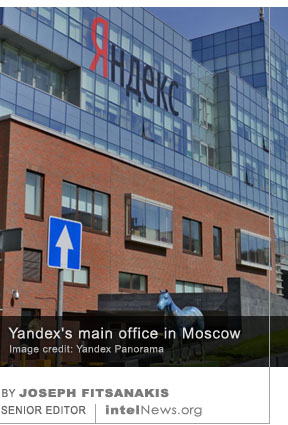 Hackers used a malware described by experts as the “crown jewel” of cyber-espionage tools to hack into Russia’s version of Google, in an effort to breach user accounts, according to the Reuters news agency. The hackers targeted Yandex (Яндекс), a Moscow-headquartered company that operates as the Russian version of Google. Yandex is the largest technology venture company in the Russian Federation and the fifth most popular search engine in the world. It also provides services such as mapping and email in Russia and several other countries in Central Asia and the Middle East. It claims that it serves more than 150 million monthly users worldwide.
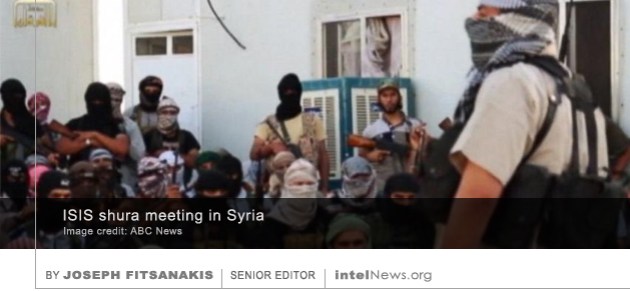 The Islamic State is capable of make a sudden comeback in the Middle East that could be “faster and even more devastating” than 2014, when the group quickly conquered territory the size of Britain, according to a new report from the Institute for the Study of War (ISW). The Washington-based think-tank’s report is based on the most recent data about the presence in the Middle East of the militant Islamist group, which is also known as the Islamic State of Iraq and Syria. The 76-page
  The younger sister of North Korea’s Supreme Leader Kim Jong-un appears to have been promoted to the number two position in the country’s ruling apparatus, according to a South Korean intelligence assessment. Until recently, Kim Yo-jong (pictured), 30, was Director of the Propaganda and Agitation Department of the ruling Workers’ Party of Korea (WPK). She also served as an alternate member of the Political Bureau, which is the highest decision-making body within the WPK.
 Iranian state media announced on Sunday the arrest of 16 officials in the country’s Ministry of Petroleum, allegedly for sabotaging Iranian energy policy. It is not known whether these arrests are in any way connected with Tehran’s announcement last week that it had dismantled “one of the most complicated” espionage operations by the United States Central Intelligence Agency in several countries. According to the state-owned Fars News Agency, the 16 officials were arrested over the weekend in synchronized pre-dawn raids. All of them had managerial positions in Iran’s oil industry —including in the areas of exploration, production and distribution of Iran’s oil and petrochemical products inside the country as well as abroad.
 It is not at all clear that the Islamic State and its leader, Abu Bakr al-Baghdadi, who claimed responsibility of the Sri Lanka bombings in April, had foreknowledge of the attacks, according to a top official. The militant Sunni group claimed it was behind the nine suicide blasts that targeted Catholic churches and five-star hotels in Sri Lanka’s western and eastern coastal regions on April 21. The near-simultaneous bombings killed 258 people and injured over 500. They are believed to constitute the bloodiest terrorist attack in the country’s history. Interestingly, many questioned the authenticity of the Islamic State’s claim of responsibility, which came a full two days following the deadly blasts. The group typically issues statements immediately following attacks by its followers around the world. The 48-hour delay in the case of the Sri Lanka bombings, therefore, was deemed “uncharacteristic” by some experts.
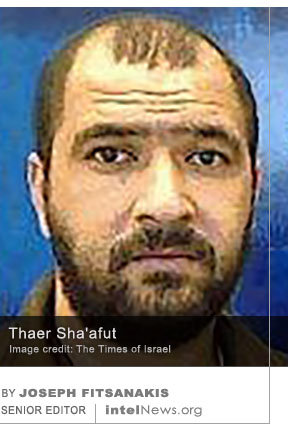 Israeli authorities announced on Thursday the arrest of a deep-cover intelligence operative who allegedly attempted to establish a base for Iranian intelligence in Israel and the West Bank, according to news reports from Israel. Shin Bet, Israel’s domestic security and counterintelligence agency,
 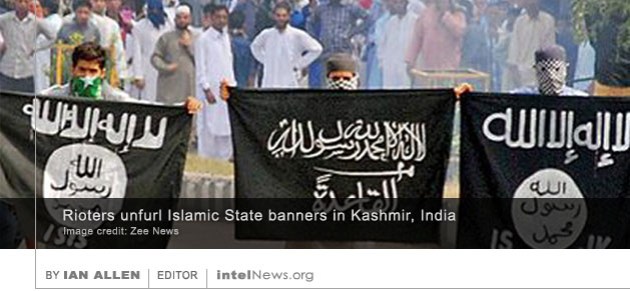 Indian counterterrorism officials have alleged in court that four members of the Islamic State in Indian-administered Kashmir were guided by a handler from Pakistan. The court case involves four young men from Jammu and Kashmir who were arrested last November on terrorism charges. Court documents filed recently identify the four as members of the Islamic State. This development is significant because Indian officials have until recently dismissed as overstated claims that the Islamic State is present in Kashmir. The unfurling of Islamic State banners by anti-government rioters is a regular phenomenon in Indian Kashmir. But government officials dismiss those who wave such banners as impressionable youth who have no access to weaponry or logistical support from the Islamic State. Last November’s arrests, however, highlighted the fact that the Islamic State does in fact have an armed presence on the ground in India.
 A senior Iranian security official said on Monday that Tehran had dismantled “one of the most complicated” espionage operations by the United States Central Intelligence Agency, leading to “arrests and confessions” of suspects in several countries. The announcement was made by Ali Shamkhani (pictured), secretary of the Supreme National Security Council of Iran, the Islamic Republic’s highest security decision-making body, which is chaired by the country’s president.
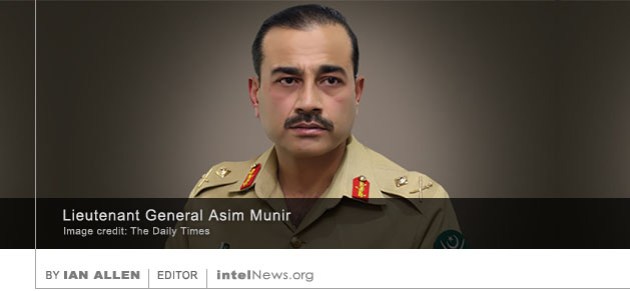 In a surprising move the Pakistani military has dismissed the head of the powerful Inter-Services Intelligence (ISI) spy agency just eight months after appointing him to that position. The decision was announced on Sunday in a brief statement by the Inter-Services Public Relations, the public-relations wing of the Pakistan Armed Forces. The statement said that Lieutenant General Asim Munir had stepped down from his post as director of ISI and would take over as commander of the Gujranwala Corps in Punjab, Pakistan’s second-largest province. The statement did not explain the reasons for the reshuffle; the latter came as a surprise, as ISI directors typically serve for at least three years in that post. General Munir’s tenure
 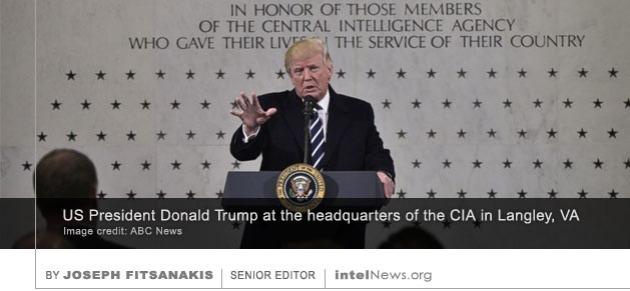 United States President Donald Trump said on Tuesday that he would not allow American intelligence agencies to use spies against North Korea, raising eyebrows in Washington, before appearing to backtrack a day later. The American president was speaking to reporters at the White House on Tuesday, when he was asked about a report that appeared in The Wall Street Journal that day. According to the






 intelNews.org
US Intelligence Community insiders express frustration with restructuring process
July 5, 2019 by Joseph Fitsanakis Leave a comment
But the effort has not been successful, according to Politico, which cited “nearly a dozen current and former officials” in several different agencies of the US Intelligence Community. These officials “either witnessed the restructuring firsthand or are familiar with the project”, said Politico. They described the results of the restructuring as “a coordination nightmare”, which complicated long-established linear chains of command and ended up “slowing down projects and turnaround time”. They accuse McKinsey of applying formulaic communication models to agency directorates and units with very unique cultures and methods of operation, effectively hindering decision-making processes at agencies such as the National Security Agency, the Central Intelligence Agency and the Office of the Director of National Intelligence. In one example, CIA analysts and operations officers, who have traditionally worked without regular face-to-face interaction, were placed side-by-side in so-called mission centers. This move “made missions more muddled” and generated “frustration” on both sides, said Politico. The resulting mayhem has left many intelligence employees “dismayed […], demoralized and less effective”, said the officials. They also warned that bureaucratic changes that delay response times may negatively affect intelligence collection and counterintelligence, and might even cost lives.
Spokespersons and some former officials from several intelligence agencies did not appear to share the criticisms of McKinsey’s work, said Politico. They argued that it was “too early to judge the results” of the restructuring and downplayed the role that the firm played in the process. In most cases, the latter was led by senior officials from within the intelligence agencies, they said. They added that the restructuring is “a work in progress” and that senior administration have in fact observed “a number of positive early returns” resulting from the restructuring process. Politico said it contacted McKinsey, but was told that the company has a policy of not discussing publicly its contractual obligations or performance.
► Author: Joseph Fitsanakis | Date: 05 July 2019 | Permalink
Filed under Expert news and commentary on intelligence, espionage, spies and spying Tagged with bureaucracy, intelligence cooperation, McKinsey and Co., News, private sector, United States