French commandos kill senior al-Qaeda leader in Mali
March 4, 2016 Leave a comment
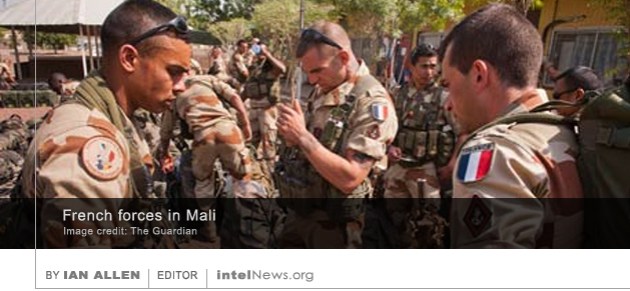 French troops have reportedly killed a Spanish citizen who was a senior commander of al-Qaeda in the Islamic Maghreb (AQIM), one of the most prolific al-Qaeda-linked groups in Africa. The Spaniard, Abu al-Nur al-Andalusi, 35, was from Melilla, a coastal Spanish enclave in northern Africa, which borders Morocco. Since 2014, al-Nur had operated as a military leader of AQIM, an armed Islamist group that aims to create a caliphate in northern Africa. AQIM emerged in the 1990s out of the brutal Algerian Civil War, which pitted the country’s secular but authoritarian government against a host of Islamist groups, including the Armed Islamic Group, known as GIA. In 1998 a band of GIA members left the group in protest against its indiscriminate killing of civilians, and formed a separate organization, which called itself Salafist Group for Preaching and Combat. In2007 the group renamed itself AQIM and pledged allegiance to al-Qaeda’s co-founder Osama bin Laden.
Al-Nur was reportedly in charge of a brigade of around two dozen AQIM fighters —most of them Algerians and Moroccans, with the addition of some Libyans. These fighters had been operating in the inhospitable desert north of the Malian city of Timbuktu. Some believe that Al-Nur helped coordinate AQIM’s attacks against Western targets in Mali and Burkina Faso in recent months. Moreover, al-Nur’s brigade has been linked to a daring attack against members of a United Nations peacekeeping force in Mali a few months ago.
Citing sources from Mali, Spanish intelligence expert Salvador Burguet said on Wednesday that al-Nur had been killed in a raid by a team of French commandos. Burguet, who directs the Spanish-based private intelligence company AICS, said the French troops specifically targeted an al-Qaeda meeting held by senior commanders of the organization in northern Mali. But he added that it is not known at this time whether al-Nur was the only AQIM militant killed in the attack. The Reuters news agency, which reported on the story, said it was able to corroborate al-Nur’s death by speaking to two unnamed “security officials in Mali”.
French forces were deployed in Mali in 2003, ostensibly to prevent the rapid rise of Islamist militancy following the collapse of the Libyan government of Muammar al-Gaddafi and the influx of weapons into the area. After the French military deployment, AQIM activities in the country receded. However, scattered groups of AQIM continue to operate in rural areas, and Paris maintains a force of nearly 4,000 troops throughout the country. Reuters said it contacted the French Department of Defense and Spain’s Ministry of Foreign Affairs, but both agencies declined comment on the Spaniard’s reputed death.
► Author: Ian Allen | Date: 04 March 2016 | Permalink
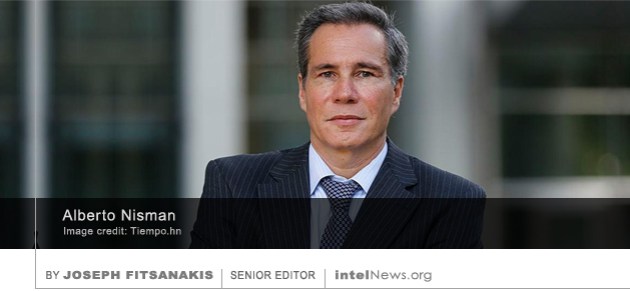 An Argentine former senior intelligence official has claimed in court testimony that the administration of President Cristina Fernández de Kirchner murdered a state prosecutor who had accused senior officials of having colluded with Iran to bomb Israeli targets in Buenos Aires. In January 2015, the prosecutor, Alberto Nisman, prompted international headlines by launching a criminal complaint against President Kirchner and several other notable personalities of Argentine political life. Nisman accused them of having colluded with the government of Iran to obstruct an investigation into the bombings of the Israeli embassy and a Jewish cultural center in Buenos Aires in the mid-1990s. A dozen people died in the bombing of the embassy, while another 85 were killed two years later, when the Asociación Mutual Israelita Argentina community center in the Argentine capital was bombed. Nisman was
 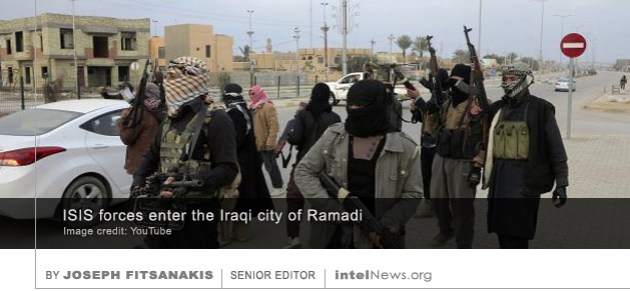 The leading lawmaker in the United States Congressional intelligence committee has accused the Department of Defense of resisting his efforts to investigate claims that intelligence products on the Islamic State were manipulated. Representative Devin Nunes (R-Ca.), who chairs the US House of Representatives Permanent Select Committee on Intelligence, said last week that he and his staffers were experiencing a “lack of cooperation” from the military during the course of an official probe into intelligence products. Nunes was referring to
 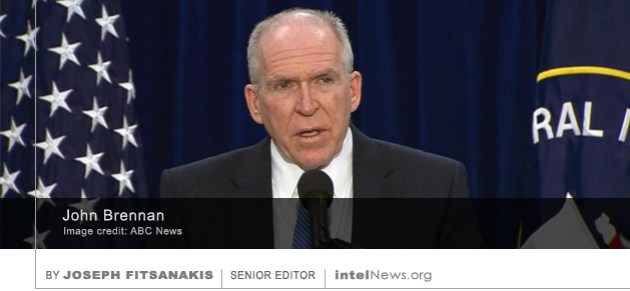 Russia is being “very aggressive” toward the United States, but cooperation on counter-terrorism between Moscow and Washington is “highly active” despite the differences between them, according to the director of the United States Central Intelligence Agency. John Brennan, a longtime CIA career officer, who has led the Agency for nearly three years,
 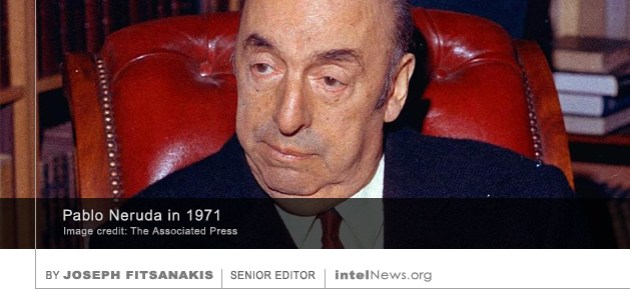 Two teams of international experts will examine the exhumed remains of Chilean Nobel Laureate poet Pablo Neruda, who some say was deliberately injected with poison by the Chilean intelligence services. The literary icon died on September 23, 1973, less than two weeks after a coup d’état, led by General Augusto Pinochet, toppled the democratically elected government of Salvador Allende, a Marxist who was a close friend of Neruda. The death of the internationally acclaimed poet, who was 69 at the time, was officially attributed to prostate cancer and the effects of acute mental stress caused by the military coup. In 2013, however, an
 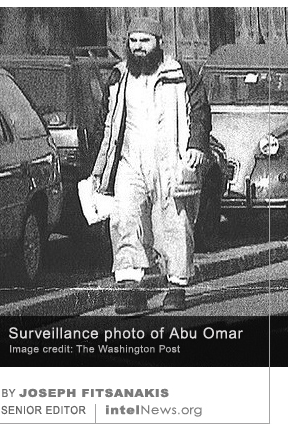 Europe’s highest human rights court has ruled against Italy in the case of an Egyptian man who was abducted from Milan in 2003 by the United States Central Intelligence Agency. Hassan Mustafa Osama Nasr, known as Abu Omar, is a former member of al-Gama’a al-Islamiyya, an Islamist group founded in the 1970s, which aimed to overthrow the Egyptian government and replace it with an Islamic regime. Members of the group have been implicated in the assassination of Egyptian President Anwar Sadat in 1981, as well as in numerous attacks on tourist facilities in Egypt in the 1990s. Once al-Gama’a al-Islamiyya was declared illegal in Egypt, Italian authorities offered Nasr political asylum, after he successfully argued that he would be subject to torture if arrested in Egypt.
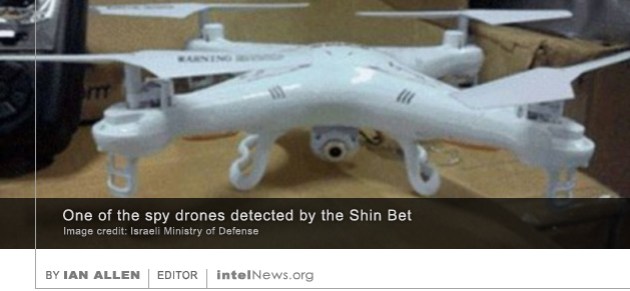 Authorities in Israel said on Sunday that they foiled a plan to smuggle dozens of spy drones from Israel into the Gaza Strip. The Israeli Ministry of Defense said in a statement late on Sunday that the drones had been detected by members of the Shin Bet, Israel’s security police. The incident reportedly took place at Kerem Shalom, a major border crossing in to Gaza, a Palestinian enclave that is controlled by Hamas. The Defense Ministry statement also said that Sunday’s incident was only the latest in a string of recent attempts to smuggle spy drones into Gaza, all of which had been stopped by the Shin Bet since January.
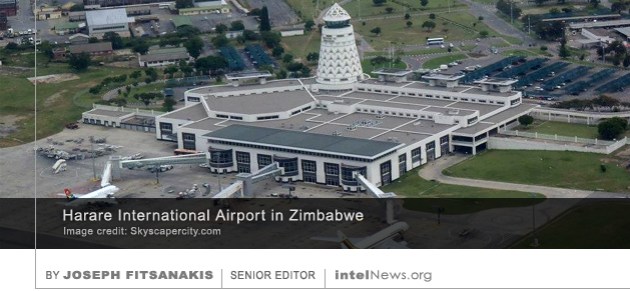 An American-registered airplane carrying large quantities of cash on behalf of a South African bank was impounded by authorities in Zimbabwe after a dead body was found on board. Zimbabwean media said police was notified after human blood was seen dripping from the plane’s cargo area during an emergency refueling stop. Authorities
 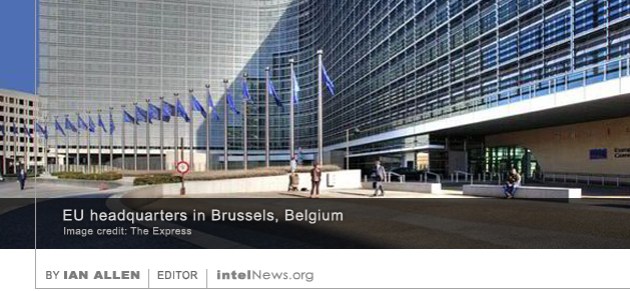 A debate on information security measures in the European Union was prompted last week after some officials voiced concerns that the proceedings of a closed-door meeting were secretly monitored by Israel. The meeting took place on January 15 as part of regular proceedings by the EU’s Political and Security Committee (PSC). The main item on the agenda was the EU’s Middle Eastern policy. According to some meeting participants, Israeli diplomats appeared to be aware of a statement discussed during the PSC meeting “in real time”, which prompted a wider debate on EU information security policies.
 Syrian and American media are reporting that Russian engineers, employed by a Moscow-based contractor with close ties to Russian President Vladimir Putin, are working at a Syrian gas plant under the control of the Islamic State. The facility in question is the so-called Tuweinan gas plant, which is located in central Syria, approximately 60 miles (40 kilometers) southwest of the city of Raqqa. The Islamic State declared Raqqa its capital shortly after occupying it, in June 2013, and the city has since served as the militant group’s administrative headquarters. The nearby Tuweinan gas plant is believed to be the largest of its kind in Syria. In 2013, it was occupied by an alliance of factions operating under the banner of the Al-Nusra Front, the primary al-Qaeda affiliate in Syria. But in early 2014, Islamic State forces took control of the plant following a military offensive against Al-Nusra.
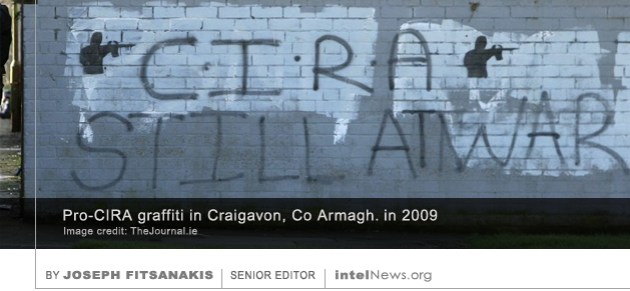 A leading dissident republican group in Ireland has claimed responsibility for a bloody attack in Dublin, which was carried out last week by a group of masked assailants disguised as police and carrying AK-47 assault rifles. Police said that the carefully planned attack involved at least six people wearing SWAT-style police uniforms, at least one of whom was disguised as a woman. The assailants
  Documents acquired through Denmark’s freedom of information act appear to show that the United States deployed an airplane, which had previously been used to rendition terrorism detainees, in an attempt to capture the American defector Edward Snowden. Snowden, a computer expert for the United States Central Intelligence Agency and the National Security Agency, is currently living in Russia, where he defected in June 2013, after initially fleeing to Hong Kong with millions of stolen US government documents in his possession. A few weeks ago, Danish news website Denfri.dk
 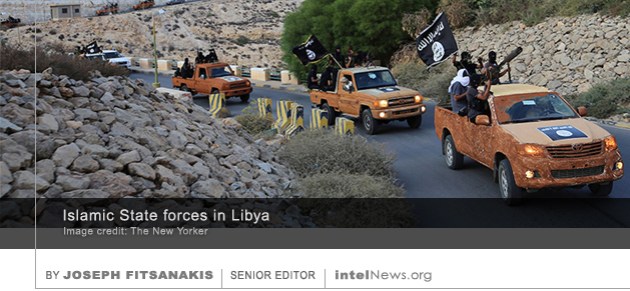 Senior members of the Islamic State are moving from Syria and Iraq to Libya, according to a Libyan intelligence official who spoke to the BBC. Since 2014 and the outbreak of the Second Libyan Civil War, the North African country has been engulfed in a multipolar struggle for dominance between rival armed groups and alliances. Among them is Libya Dawn, a loose coalition of former al-Qaeda-linked militants, ethnic Berbers, members of the pro-Egypt Muslim Brotherhood, as well as the al-Shorooq Force, an Islamist militia from Libya’s northwestern coastal city of Misrata. Libya Dawn troops have been engaged in ground-combat against Islamic State forces, which currently control Libya’s north-central coastal region.
 A Korean resident of Japan, who was arrested in South Korea for credit card fraud, was allegedly a handler of North Korean sleeper agents operating in South Korea, Japan and China, according to police in Seoul. Pak Chae Hun, 49, was arrested on Tuesday at his home in Seoul by officers of the Public Security Bureau of the Metropolitan Police Department. A statement issued by South Korean police said Pak was until recently an associate professor at Korea University, a higher-education institution based in the Japanese capital Tokyo. The University is funded directly by the government of North Korea through Chongryon, a pro-Pyongyang organization otherwise known as the General Association of Korean Residents in Japan. The group represents tens of thousands of ethnic Koreans living in Japan, who are ideologically affiliated with Pyongyang.






 intelNews.org
Frank Terpil, CIA operative who defected to Cuba, dies
March 7, 2016 by Ian Allen 1 Comment
Terpil managed to leave the US and reappeared in Lebanon in 1980, shortly before a court in New York sentenced him in absentia to five decades in prison for conspiring to smuggle 10,000 submachine guns to African warlords, including Uganda’s dictator Idi Amin. As agents of various countries started to zero in on Terpil’s Lebanon hideout, he disappeared again and resurfaced in 1981 in Havana, Cuba. Shortly afterwards, Cuba’s General Intelligence Directorate hired him as an operative under the operational alias CURIEL. Since that time, Terpil has been repeatedly mentioned as having played a part in Cuban intelligence operations around the world, but rarely gave interviews. He appeared again in 2014, however, in a documentary entitled “Mad Dog: Inside the Secret World of Muammar Gaddafi”. The film was made by British company Fresh One Productions on behalf of Showtime, an American premium cable and satellite television network. In the documentary, Terpil admitted that he helped the Libyan dictator “eliminate” his opponents —most of them Libyan exiles living abroad.
British newspaper The Observer, which published news or Terpil’s death, said the former CIA operative’s legal status in Cuba “was never quite clear”. He had allegedly expressed concerns in recent months that the rapprochement between Washington and Havana could threaten his sanctuary in the Caribbean island. His Cuban wife told The Observer that complications from diabetes had caused his legs to be amputated in recent months. She told the paper that Terpil “died peacefully” on March 1, of heart failure.
► Author: Ian Allen | Date: 07 March 2016 | Permalink
Filed under Expert news and commentary on intelligence, espionage, spies and spying Tagged with CIA, Cuba, CURIEL, defectors, Frank Terpil, General Intelligence Directorate (Cuba), obituaries