News you may have missed #0289

  • UK spies worry about human rights lawsuits. Intelligence officers at Britain’s MI5 and MI6 are allegedly being diverted from counter-terrorism work to sift through thousands of documents relating to former terrorism detainees, who are suing the security services for breaching their human rights. The article makes it look like it is the torture victims’ fault for pursuing their rights. But in reality, MI5 and MI6 should have known better than to allow and participate in extralegal torture.
  • Bangladesh arrests alleged Burmese spies. Bangladesh coast guards have arrested eight citizens of Myanmar on suspicion of spying. Photographs of Bangladesh Navy warships and security installations were found in their possession, according to the country’s police chief.

Spanish intelligence probe ‘financial attacks’

CNI seal

CNI seal

By IAN ALLEN | intelNews.org |
Spain’s primary intelligence agency is actively probing alleged links between speculative moves in world financial markets and a series of editorials in “the Anglo-Saxon media”, which Madrid says have sought to undermine market confidence in Spain’s economy. Spanish newspaper El Pais says the Centro Nacional de Inteligencia (CNI) has been asked by Spain’s government to investigate whether “there is something more behind the campaign” to destabilize the Spanish economy, which, if successful, would add tremendously to the financial challenges currently facing the Eurozone. The El Pais article hints at suspicions among many in the European Union that countries not currently participating in the Euro common currency zone may be trying to subvert the Euro through a series of well-timed media reports questioning the financial stability of the European Union. Read more of this post

News you may have missed #0288

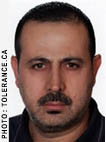
Answers to questions about al-Mabhouh’s assassination

Mahmoud al-Mabhouh

Al-Mabhouh

By JOSEPH FITSANAKIS | intelNews.org |
The intelNews email inbox is literally bulging with messages about the recent assassination of Mahmoud al-Mabhouh, the co-founder of Hamas’ military wing, who was found dead in Dubai last month. Here are brief answers to a selection of readers’ questions. Q. Is there any doubt that Mossad was behind the assassination? A. Almost none. By no means was Israel al-Mabhouh’s sole enemy. In fact, his killing caused little distress among Fatah’s leadership, and at least two Palestinians are believed to have assisted in the assassination. Nevertheless, the operation has all the hallmarks of a state-sponsored action, something particularly evident in the sophisticated travel documentation forgery involved. Moreover, the tactics of the hit squad, its composition, as well as its methods, point almost directly to the Mossad.  Q. Were those passports real, or not? If not, who are the people in the photos? The eleven known members of the hit squad utilized British, Irish, German, and one French (the squad leader) passports. Read more of this post

News you may have missed #0287

  • India still trying to get access to Headley. Congratulations to The New York Times, for managing to publish a feature-length article about the constant requests by Indian intelligence officials to interrogate David C. Headley, currently held in a US prison, without probing why the US is refusing to facilitate these requests. The American-born Headley was arrested in October for having links to Islamic extremist group Lashkar-e-Taiba. There are rumors in India and Pakistan that Headley is in fact a renegade CIA informant.
  • Spanish double agent sentenced to 12 years. Roberto Flórez García, a former employee of Spain’s National Intelligence Center (CNI), was arrested in September for giving classified documents to Russian intelligence, via Petr Melnikov, political attaché at the Russian Embassy in Madrid. This was Spain’s first treason conviction since returning to democracy in 1978 after decades of military dictatorship.

Bookmark and Share

CIA declassifies controversial submarine recovery project

Glomar Explorer

Glomar Explorer

By IAN ALLEN | intelNews.org |
I have written before about the CIA’s controversial 1974 project to recover a Soviet submarine that had sunk in 1968, in 17,000 feet of water, about 750 miles northwest of Hawaii. The project involved the infamous ship Hughes Glomar Explorer and was led by CIA agent Christopher Fitzgerald, who died last year. But the CIA recovery team nearly caused a nuclear explosion when the submarine split while being raised, and its body hit the ocean floor. Now the CIA has for the first time declassified a substantial document relating to the project, codenamed AZORIAN. The document is a lengthy article first published in 1985 in the mostly classified CIA research journal Studies in Intelligence, written by an unnamed CIA team member who participated in the recovery effort. Read more of this post

UK special forces chief trying to prevent book publication

SAS seal

SAS seal

By JOSEPH FITSANAKIS | intelNews.org |
The director of Britain’s Special Forces is actively trying to stop the publication of a new book that sheds unprecedented light on the elite combat group’s operations in Iraq. The official, whose name cannot be revealed for security reasons, has said that the book, authored by BBC journalist Mark Urban, will negatively impact the operational effectiveness of the Special Air Service (SAS) and other UK Special Forces units. The official’s objections have come to overshadow a compromise struck earlier this month between Mr. Urban’s publishers and the UK Ministry of Defence. Following four months of negotiations, the Ministry reportedly decided that the book “would not compromise the operational effectiveness of the SAS”. Read more of this post

News you may have missed #0286 (Internet edition)

  • Email trojan targeted at US .gov, .mil accounts. A Trojan-containing email, which is spoofed so that it appears to have been sent by the US National Intelligence Council, appears to have been directed solely at US government and military email accounts.
  • Analysis: Smuggling secret information through VOIP. Voice over Internet Protocol (VOIP) systems use a series of protocols to essentially create an open, unmediated link between two computers. VOIP applications also provide a way to make sure the packets are ordered quickly and correctly. And that’s a goldmine for anyone trying to send hidden messages.
  • ACLU concerned about Google-NSA partnership. Google corporation has turned to the US National Security Agency for assistance in warding off cyberattacks. But the American Civil Liberties Union is among several organizations that view the partnership as “troubling”.

Bookmark and Share

How many government informants are there in China?

Kailu County

Kailu County

By JOSEPH FITSANAKIS | intelNews.org |
The interest of intelligence observers was stirred last week by a rare revelation made by a Chinese regional police official, who said that his bureau employs one in every 33 local residents as an informant. Speaking to Xinhua News Agency, Liu Xingchen, deputy public security bureau director for Inner Mongolia’s Kailu County, said his force employed 12,093 informants out of approximately 400,000 inhabitants. The informants’ task, he said, was to provide government with intelligence, to weed out “non-harmonious elements”, and to uncover “all sorts of information that might destabilize society”. Some reports note that, when applied nationwide, these statistics point to the possible existence of “at least 39 million informants”, a number that represents 3 per cent of China’s population and “lays bare the enormous scale of China’s surveillance network”. Such extrapolations, however, are risky for a number of reasons. Read more of this post

News you may have missed #0286

  • More on CIA spies working for corporations. Author Eamon Javers provides more information about his new book, in which he examines the increasing phenomenon of CIA agents working for private corporations on the side.
  • Rio Tinto spy controversy thickens. Anglo-Australian mining company Rio Tinto says it is “extremely worried” about four of its staff, who were arrested last July by Chinese authorities and have now been formally charged with espionage.
  • Court keeps White House spy emails secret. Two weeks ago, US President Barack Obama declared in his State of the Union address that “it’s time to require lobbyists to disclose each contact they make on behalf of a client with my administration or Congress”. This does not appear to apply to telecommunication industry lobbyists, who campaigned in favor of facilitating warrantless communications interception through the National Security Agency’s STELLAR WIND program.

Bookmark and Share

News you may have missed #0285

  • Canadian government resists release of Cold-War-era files. Canadian journalists are fighting for the release of Cold-War-era government files on Tommy Douglas, a prominent social democratic politician idolized in Canada for his central role in establishing the country’s public health care system. But the government argues that releasing the files would imperil national security and compromise contemporary spy sources and methods.
  • NPR launches series on confidential informants. Informants are often considered a vital crime fighting tool; but what happens if those informants go astray? Washington-based National Public Radio is launching a special investigation into this controversial subject.
  • CIA returns to US university campuses. American anthropologist David Price explains that the US intelligence community is gradually re-establishing its academic recruitment network, which was shattered in the 1970s.

Bookmark and Share

Did missing Polish intel officer defect to Russia?

Stefan Zielonka

Stefan Zielonka

By JOSEPH FITSANAKIS | intelNews.org |
We have been keeping an eye on the mysterious case of Stefan Zielonka, a senior SIGINT officer with Poland’s Military Intelligence Services (SWW), who disappeared without trace in early May of 2009. The seriousness of Zielonka’s disappearance stems from his extensive knowledge of Polish undercover intelligence networks operating overseas, including names and contacts of illegals –i.e. agents operating without diplomatic cover. Consequently, Polish intelligence officials have expressed fears that, if Zielonka defected, or was kidnapped by foreign intelligence agents, “much of the country’s intelligence network could be compromised”. The possibility that Zielonka actually defected increased after it became known that his wife and young child also disappeared. In December, a report in Poland’s Dziennik Gazeta Prawna claimed that the signals intelligence officer’s mysterious disappearance is connected with a “trail leading to the Far East”, with “all clues lead[ing] to China”. Earlier this week, however, Russian weekly Argumenti Niedieli suggested that Zielonka was in fact recruited by Russian military intelligence. Read more of this post

News you may have missed #0284

  • Real IRA faction killed MI5 informant, says Irish police. The Gardai have concluded that a Real IRA faction executed Denis Donaldson, a former Sinn Fein official who turned informer for MI5 and the Police Service of Northern Ireland. Last year, the Real IRA took responsibility for the 2007 killing.
  • NATO spy station up for sale. A Canadian NATO spy station in Nova Scotia that operated between 1983 and 2006 is for sale for US$1.4 million. It appears that the site’s current owner, who doesn’t want to be identified, bought it from the Canadian Defense Department after the base was closed down.
  • Analysis on the Binyam Mohamed disclosures and UK-US spy cooperation. This analysis, by Michael Clarke, director of Britain’s Royal United Services Institute, is probably the best synopsis of the meaning of the recent court order to disclose Binyam Mohamed’s torture records, which has complicated US-UK spy relations.

Bookmark and Share

Israeli minister in handshake debacle with Saudi spy chief

Danny Ayalon

Danny Ayalon

By IAN ALLEN | intelNews.org |
Much has been made of an episode in the recent Munich Security Conference, in which Israel’s deputy foreign minister shook hands with Saudi Arabia’s former intelligence director. As is often the case in international conferences involving high-level participants from Israel and Muslim states, organizers at the Munich Security Conference went out of their way to ensure that Egyptian, Saudi, and –lately– Turkish government representatives were not to meet in the same seminars with Israeli officials. Participants were surprised, however, to see Saudi Arabia’s former intelligence chief, Prince Turki bin Faisal al-Saud, present in a seminar that featured a panel contribution by Israeli deputy Foreign Minister Danny Ayalon. During the remarks session, Ayalon expressed dissatisfaction with the Muslim participants’ insistence to stay clear of the Israeli delegation, to which Turki al-Faisal responded with reference to Israel’s recent diplomatic spat with the Turkish government. Read more of this post

Three women among al-Mabhouh assassins, says journal

Mahmoud al-Mabhouh

Al-Mabhouh

By JOSEPH FITSANAKIS | intelNews.org |
Three women were among ten members of a Mossad assassination team that killed a top Hamas official last month in Dubai, according to Intelligence Online. The Paris-based, subscription-only website also said that all members of the Israeli assassination squad that killed Mahmoud al-Mabhouh used European passports to enter the United Arab Emirates. Earlier this week, Dubai police announced that the team consisted of seven people, at least four of whom had used fraudulent Irish passports to enter the Emirates. According to Intelligence Online, one female member of the Mossad hit-team played a central role in the operation, by dressing herself in a generic hotel uniform before knocking on the door of al-Mabhouh’s room at the luxury Al-Bustan Rotana Hotel. Read more of this post