Italian police seize largest amphetamines shipment ever found, bearing ISIS markings
July 2, 2020 Leave a comment
 Police in Italy have announced the seizure of the largest shipment of amphetamines in counter-narcotics history, containing drugs believed to have been manufactured by the Islamic State in Syria. The drugs shipment was intercepted at the port of Salerno, located south of Naples in southwestern Italy.
Italian police announced on Wednesday that it had made “the largest seizure of amphetamines in the world”, both in terms of quantity and street value. The latter is estimated at approximately $1 billion. Drug traffickers are rarely known to transport such large volumes of drugs in a single shipment, due to the risk of capture by the authorities. However, the lack of supply in Europe due to the coronavirus pandemic has prompted suppliers to take unusual risks, according to experts.
The amphetamines —approximately 84 million tablets— were found hidden inside three containers filled with paper cylinders. More pills had been placed inside the hollow parts of agricultural machinery products, according to police. The confiscated tablets are marked with the logo for the drug Captagon, which is better known by its generic name, Fenethylline. Captagon was a popular drug in the Middle East in the 1990s, and today amphetamines produced by the Islamic State bear its logo, according to the United States Drug Enforcement Administration.
The drug is regularly given to Islamic State volunteers prior to battles and terrorist attacks, in order to help reduce their inhibitions, including susceptibility to fear, and to prevent them from feeling physical pain. Security agencies in the Middle East refer to the substance as “the jihad drug”. It is particularly prevalent in Syria, which has become the global leader in the production of illicit amphetamines in the past decade.
Italian police said the shipment was most likely intended for distribution by “a consortium of criminal groups”, who would then traffic the substance to illicit markets across Europe. It would be unthinkable for a single distributor to be able to afford a $1 billion single purchase, according to officials. The largest buyer among these distributors was probably the Camorra —the organized crime syndicate based in the region of Naples. The Camorra has international links through which it can channel the illicit drugs in much larger volumes than other crime syndicates, according to experts.
Asked about the clues that led to the seizure of the amphetamines, a spokesman for the Italian police said the force knew when the shipment was coming in, due to “ongoing investigations we have with the Camorra”. He added, “we intercepted phone calls and members, so we knew what to expect”.
► Author: Joseph Fitsanakis | Date: 02 July 2020 | Permalink
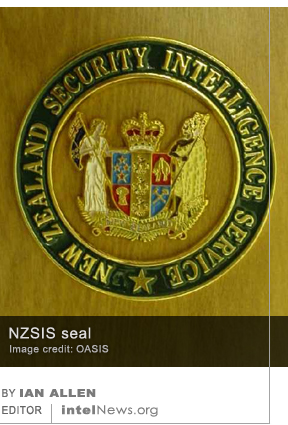 The spy agency of New Zealand broke into at least three foreign embassies in Wellington at the request of the United States and Britain, according to an investigative report by the country’s public radio broadcaster. Radio New Zealand reported on Tuesday that the highly controversial break-ins targeted the Indian High Commission and the Iranian Embassy in the late 1980s and early 1990s. A few years earlier, the New Zealand spy agency had allegedly broken into the Czechoslovakian embassy in Wellington.
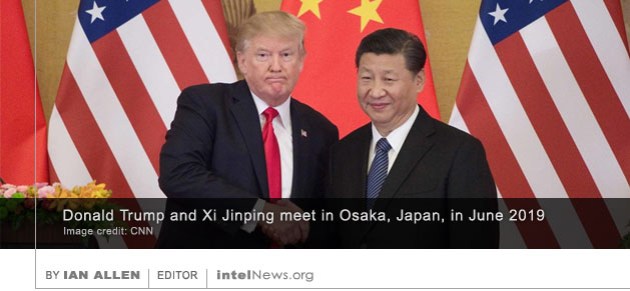 A
A 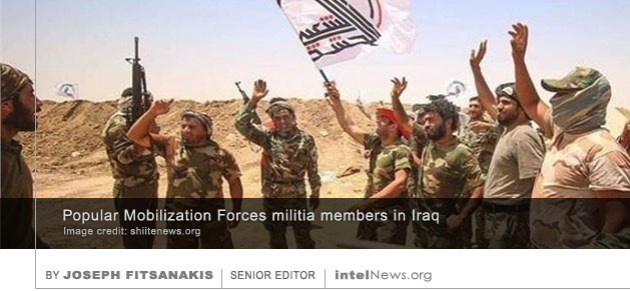 There was growing tension in Iraq over the weekend, as the government in Baghdad announced it had arrested over a dozen members of a powerful Shi’a militia backed by Iran. The arrests marked the first time that the Shi’a dominated Iraqi government moved to curtail the growing power of these heavily armed groups, which some say are threatening the cohesion of the country’s fragile state institutions.
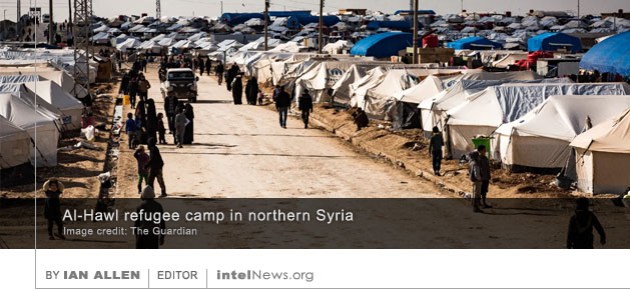 • South African intelligence concerned about spread of insurgency in Mozambique. This is the first public
 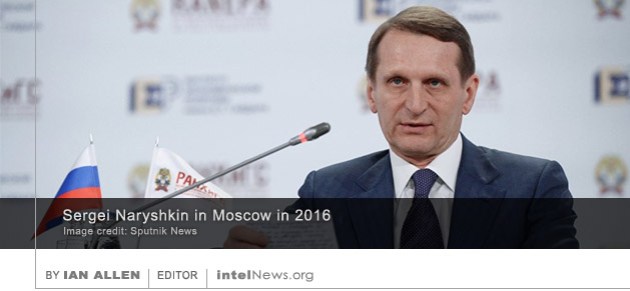 • Russian spy chief in rare interview with the BBC. In an exclusive
  Authorities in the United States have formally charged an American soldier for helping a secretive neo-Nazi organization plan a terrorist attack on his own unit. Meanwhile, a government fusion center has warned law enforcement agencies that extremists may be planning violent acts in the Washington DC area.
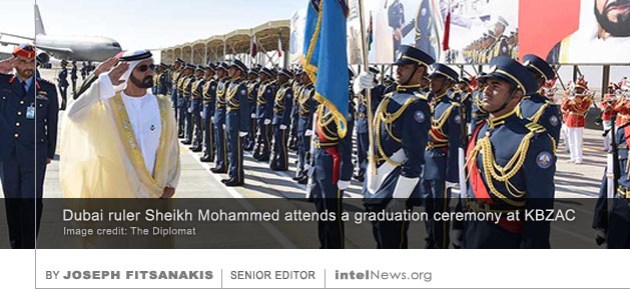 The United Arab Emirates, one of the United States’ closest Arab allies, is training Syrian intelligence and military officers and is giving financial aid to government-owned civilian facilities in Damascus, a report claims. The UAE broke off diplomatic relations with Damascus at the beginning of the Syrian civil war in 2011. But relations between the two countries were restored in 2018, when the oil kingdom reopened its embassy in the Syrian capital.
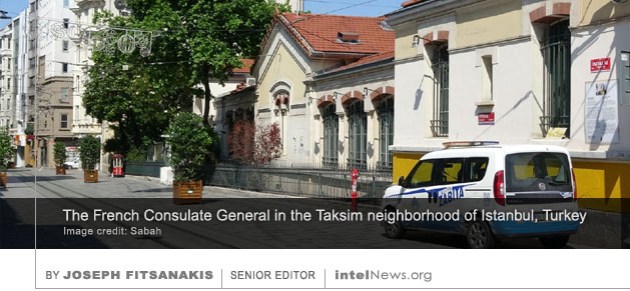 Four men have been arrested by Turkish authorities in Istanbul, allegedly for being members of a spy ring operated by an agent who collected information on extremist groups for France’s external spy agency. The arrests were reported on Tuesday by a newspaper with close links to the Turkish government. It is worth noting, however, that the reports have not been confirmed by Turkish officials. If true, the incident points to further deterioration in the relations between the two nations, which are members of the North Atlantic Treaty Organization.
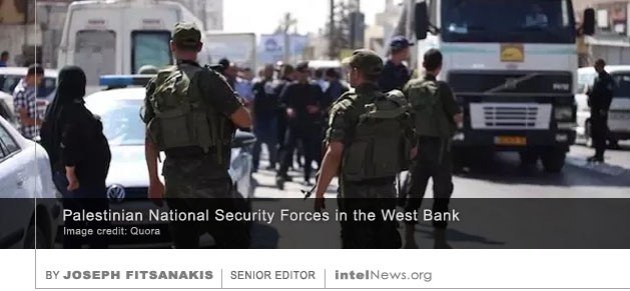 A leaked report produced by analysts at Israel’s Ministry of Intelligence urges the government to annex occupied territories in the West Bank as soon as possible, in case Donald Trump loses the upcoming United States presidential elections in November. The report advises the Israeli government that it “should not expect” a widespread outbreak of violence in the streets. It also forecasts that “a wave of diplomatic protests” will gradually give its place to acceptance, as “the international system acclimates itself to annexation”.
 The general
 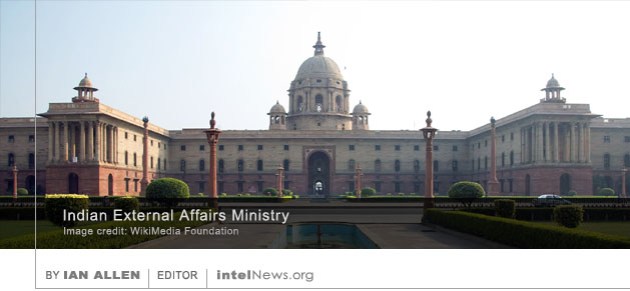 • Pakistan releases two Indian diplomats. Pakistan has
  • Turkish court jails US consulate employee for terrorism offenses. A Turkish employee of the US consulate in Istanbul has been
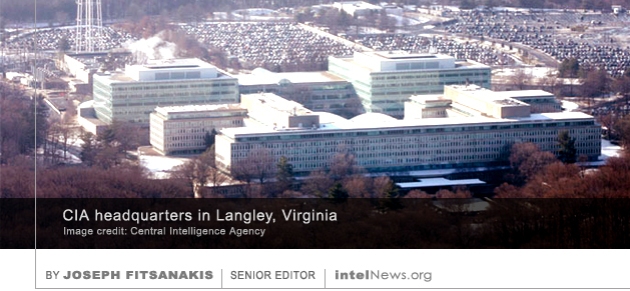
 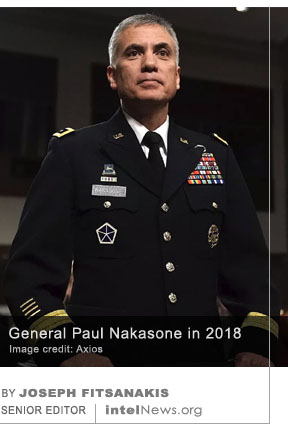 The director of America’s largest spy agency claims in a signed affidavit that a forthcoming book by John Bolton, President Donald Trump’s former national security adviser, would critically compromise intelligence secrets if published. Bolton served in that capacity from April 2018 until September 2019. His memoir of his time as President Trump’s national security advisor, titled








As debate centers on Afghanistan, Russian forces challenge US troops in Syria
July 3, 2020 by Joseph Fitsanakis 3 Comments
Some experts suggest, however, that Russia’s growing involvement in Afghanistan may be part of a wider effort by Moscow to test the limits of American military presence in Asia. This can be seen as a predictable response by the Russians, given that US President Donald Trump has repeatedly indicated he is not a fan of substantial American military involvement abroad. According to a new report by Politico, Russia’s challenge can be observed, not only in Afghanistan, but also in Syria, where American and Russian troops have been present in the same battlespace for over five years now.
In the past, the two militaries have kept open lines of communication to ensure that they stay clear from each other, thus avoiding a major escalation between the two nuclear-armed nations. Consequently, despite supporting opposing sides in the war, Russian and American troops have not directly challenged each other, with very few exceptions. Presently Russian forces continue to support of the Syrian President, Bashar al-Assad, while several hundred US forces are working closely with Kurdish fighters, who control territory in eastern Syria.
Despite the pullout of most American troops from the region in the past two years, the US maintains a force of nearly 1,000 soldiers in the Deir al-Zour region of eastern Syria. These are closely coordinating with Kurdish peshmerga, whose primary tasks include guarding the region’s lucrative oil fields, thus starving the government of President al-Assad of a major source of revenue. In the past, Russian troops have rarely ventured in the Kurdish-controlled region, in full knowledge of the US military presence there. Lately, however, brushes between American and Russian troops in Deir al-Zour have been “increasingly frequent”, according to Politico, which cited “two current US officials and one former US official” in its report. Read more of this post
Filed under Expert news and commentary on intelligence, espionage, spies and spying Tagged with Afghanistan, Deir al-Zour (Syria), News, Russia, Syria, United States