Dutch counterterrorism report sees rise in Islamist recruitment in the West
March 4, 2019 Leave a comment
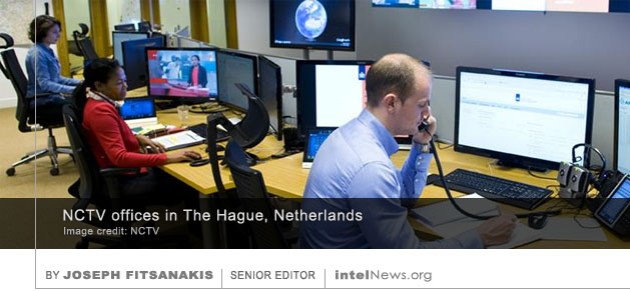 Holland’s chief counterterrorism agency has warned that, despite losing its territories in the Middle East, the Islamic State continues to recruit operatives and is ready to launch attacks in the West “at a moment’s notice”. The warning is contained in a report published last week by the Dutch National Coordinator of Counterterrorism and Security (NCTV). Established in 2005 as the Dutch National Coordinator for Counterterrorism, and renamed in 2012, the NCTV works under Holland’s Justice and Security Minister. It is responsible for analyzing terrorism threats and assessing the country’s domestic terrorism threat level.
In its most recent report (.pdf), entitled Terrorist Threat Assessment Netherlands, the NCTV warns that it is not only the Islamic State (known also as Islamic State of Iraq and Syria, or ISIS) that remains highly active, but also al-Qaeda. The two groups are riding a wave of Salafist Muslim extremism that appears to be on the rise throughout Europe, says the report. ISIS, in particular, continues to engage in extensive recruitment drives in the West, which take place mostly through the dissemination of propaganda material online. There is also a proliferation of an underground recruitment movement in conservative Muslim schools and mosques across the West, says the report (.pdf).
But the most serious short-term threat to European and North American security, according to the NCTV document, comes from so-called returnees, citizens of European countries who joined the Islamic State in Syria and Iraq and are now returning —or trying to return— to their home states in the West. The majority of these men and women remain faithful to the idea of the caliphate despite the failure of their efforts in the Middle East. There is a risk that, upon their return to the West, they will connect with existing —and growing— Salafist underground networks there, and remain active in radical circles. The report also notes that both ISIS and al-Qaeda are showing increasing interest in developing chemical and biological weapons for use against civilian and military targets.
► Author: Joseph Fitsanakis | Date: 04 March 2019 | Permalink
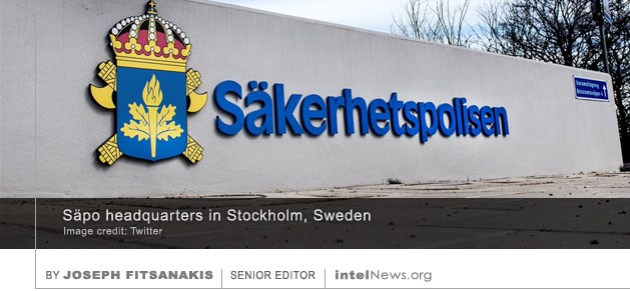 The Swedish public prosecutor’s office has confirmed media reports that a second espionage-related arrest took place in Stockholm this week. The latest arrest came just 24 hours after a man was arrested in the Swedish capital on Tuesday, allegedly for spying on behalf of Russia. As intelNews
 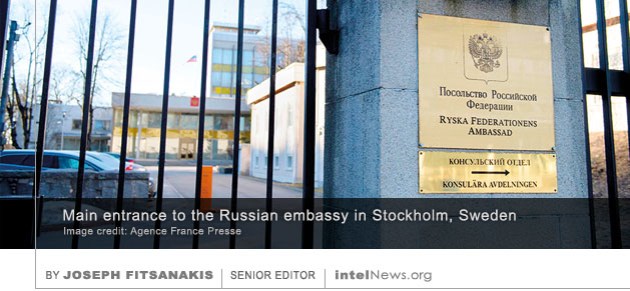 Authorities in Sweden have announced the arrest of a man who is accused of spying for Russia. The man was reportedly apprehended while meeting with a Russian diplomat in central Stockholm. The alleged spy, who has not been identified in media reports, is believed to be working for an unnamed technology company in Sweden. A report by Swedish police said that the man is working “in a field that is known to be of interest to the intelligence services of foreign powers”.
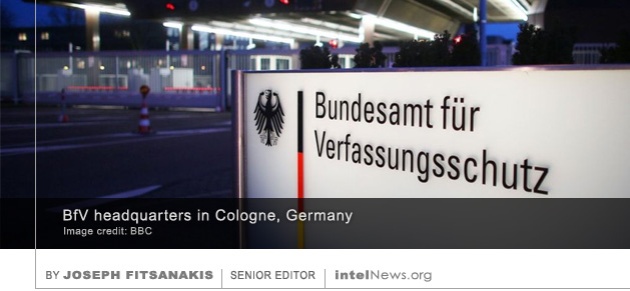 Germany’s largest far-right party, Alternative for Germany, has won a lawsuit against the country’s domestic intelligence agency, which is now barred from collecting intelligence on the group’s activities. Known by its German initials AfD, which stand for Alternative für Deutschland, the party was founded in 2013 on an anti-immigration, Eurosceptic, German-nationalist, and in some cases
 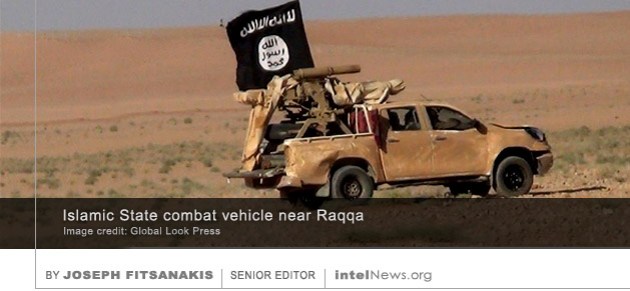 Intelligence officials warn that Iraq’s fragile stability may be at risk, following reports that as many as a thousand armed Islamic State fighters have entered Iraq from Syria in recent weeks. The organization calling itself the Islamic State (known also as the Islamic State of Iraq an Syria, or ISIS) is on its last legs in Baghouz, a Syrian village located on the banks of the Euphrates River near the Syrian-Iraqi border. Its fighters are
  The former director of Pakistan’s powerful intelligence agency has been stripped of his military pension and associated benefits for co-authoring a controversial book about intelligence with his Indian counterpart. Lieutenant General Asad Durrani (ret.) served as director-general of Pakistan’s Directorate for Military Intelligence between 1988 and 1989. From 1990 to 1992 he was director of the Inter-Services Intelligence Directorate, which is arguably Pakistan’s most powerful government institution. Durrani, 78, has been severely criticized in some Pakistani nationalist circles for co-authoring a book entitled The Spy Chronicles: RAW, ISI and the Illusion of Peace, with his Indian counterpart, A.S. Daulat. Daulat, 79, headed India’s Research and Analysis Wing from 1999 to 2000.
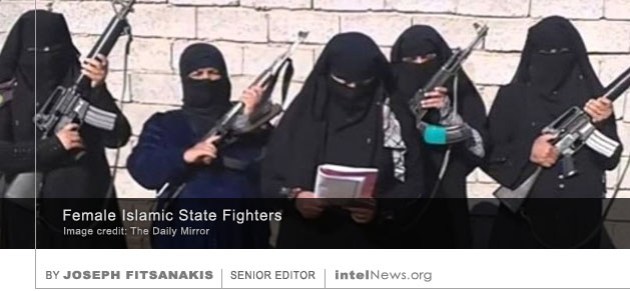 The role of women inside the Islamic State is growing, as the Sunni militant group is transmuting into an underground organization, according to a Harvard University terrorism expert. Since its meteoric rise in Iraq and Syria, the Islamic State has been known for advocating for strict segregation between men and women. In the early stages of the group’s emergence, combat roles were exclusively performed by men, while women’s roles were limited to childbearing and housework. But according to Vera Mironova, Visiting Scholar in the Economics Department at Harvard University, and former Associate of the International Security Program at Harvard’s Belfer Center, the Islamic State’s policy on gender roles is shifting rapidly.
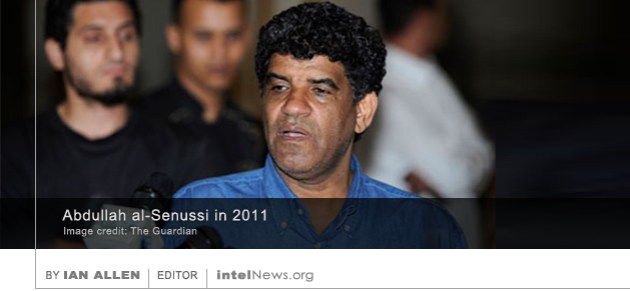 A senior intelligence advisor to Libya’s late ruler Muammar al-Gaddafi has reportedly told French investigators that the Libyan government gave $8 million to the election campaign of France’s ex-President Nicolas Sarkozy. Sarkozy’s 30-year political legacy has been marred by a series of financial scandals, for which he is currently under investigation. In March of last year, the former French president issued strong denials of accusations that he accepted an illicit multi-million monetary donation from Gaddafi during his 2007 campaign for the presidency. During a 20-minute television interview, Sarkozy described the investigation into the allegations that he acted as an agent of influence for Libya as “a waste of time”, arguing that it was over an alleged donation of less than $45,000, which represented a tiny fraction of his campaign budget.
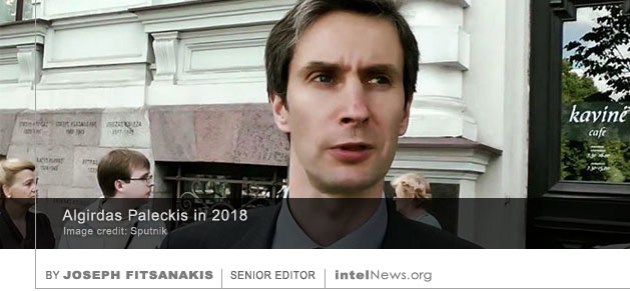 A growing number of individuals are in custody in Lithuania, as the Baltic state continues a probe into an alleged Russian espionage ring whose members reportedly included a former diplomat and member of one of the country’s most revered political families. On Tuesday, government prosecutors
 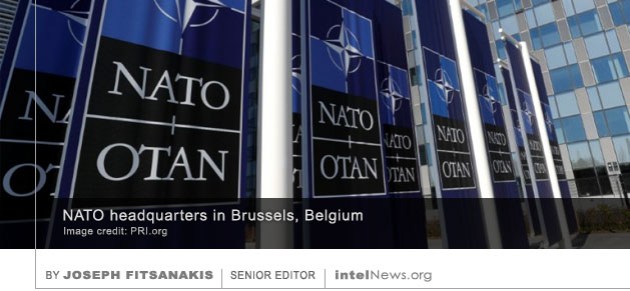 A senior counterintelligence official in Belgium’s external intelligence service is under house arrest on suspicion of sharing classified documents with Russian spies, according to a Belgian newspaper. Additionally, the chief of the agency’s counterintelligence directorate has been barred from his office while an internal investigation is underway on allegations that he illegally destroyed government documents. These allegations surfaced last Thursday in a leading article in De Morgen, a Flemish-language daily based in Brussels.
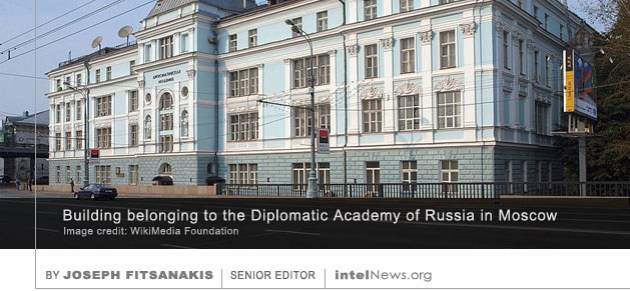 An investigative website has linked a graduate of an elite intelligence academy in Moscow with the attempted assassination of a Russian former double spy in Britain last year. Reports last year identified Dr. Alexander Yevgenyevich Mishkin (cover name ‘Alexander Petrov’) and Colonel Anatoliy Chepiga (cover name ‘Ruslan Boshirov’) as the two men that tried to kill Sergei Skripal in the English town of Salisbury in March 2018. Skripal, a former officer in Russia’s military intelligence service, the GRU, was resettled in Salisbury in 2010, after spending several years in a Russian prison for spying on behalf of Britain. But he and his daughter Yulia almost died last March, after they were
 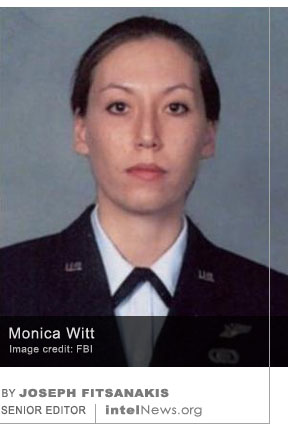 An American intelligence officer, who held the highest level of security clearance for over a decade, defected to Iran in 2012 and has been spying against the United States ever since, it was revealed yesterday. Monica Witt, 39, was a counterintelligence officer for the United States Air Force from 1997 until 2008, specializing in the Middle East. Throughout her career, she was deployed by the US military to the Middle East on several occasions, in order to carry out counterintelligence missions the details of which remain classified to this day.
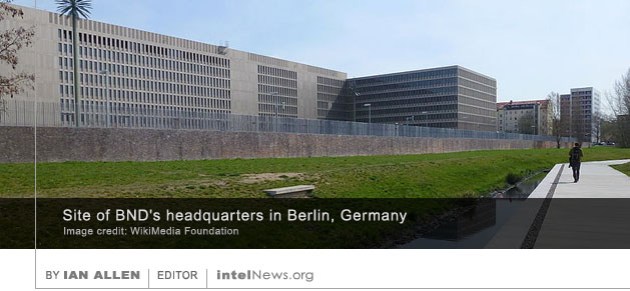 The chancellor of Germany has officially inaugurated the largest headquarters of any spy agency in the world. Last Friday, Angela Merkel led the public ceremony that marked the opening of the Zentrale des Bundesnachrichtendienstes, which is the new headquarters of the German Federal Intelligence Service. Known by the initials BND, the agency operates as Germany’s primary foreign intelligence service. It employs close to 7,000 people in more than 300 locations around the world, and its annual budget is approximately €1 billion ($1.13 billion).
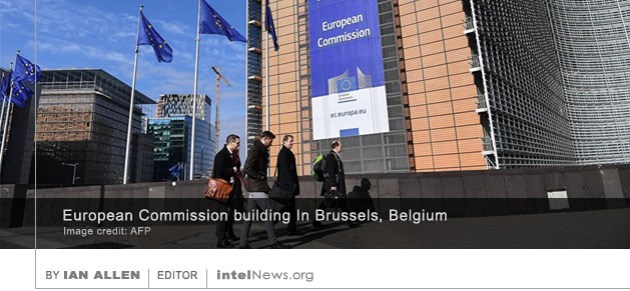 The European Union’s diplomatic agency has warned officials who are active in Belgium to watch out for “hundreds of spies” from various foreign countries, according to a German news report. The report appeared last weekend in Germany’s Welt am Sonntag newspaper, which cited a report from the European External Action Service (EEAS). Based in Brussels, the EEAS operates as the European Union’s diplomatic agency and is headed by Federica Mogherini, an Italian former government minister who has been serving as the European Union’s High Representative for Foreign Affairs and Security Policy since 2014.







North Korea-linked hackers growing in reach and sophistication, McAfee warns
March 5, 2019 by Joseph Fitsanakis 2 Comments
In February of last year, the computer security software company McAfee said that Lazarus was behind an ongoing campaign targeting global banks and bitcoin users. On Sunday, the California-based firm said that Lazarus was responsible for what its experts call Operation SHARPSHOOTER, a widespread effort to compromise key industries across several continents. Speaking at the RSA IT security conference in San Francisco, McAfee experts said that SHARPSHOOTER began as early as September of 2017, and that it was first detected in December of 2018. By that time, said McAfee, around 80 firms and organizations had been targeted by Lazarus. But in recent months, it has become clear that SHARPSHOOTER is “more extensive in complexity, scope and duration” than previously thought, according to McAfee experts. They added that they drew this conclusion based on “command-and-control serve code” data that was made available to them by an unnamed “government entity”. This is the type of forensic data that is customarily seized by government agencies and is rarely made available to cybersecurity researchers in the private sector, said the McAfee representatives. This “non-typical access” afforded McAfee technical experts “a rare opportunity” to examine “the inner workings [of Lazarus’] cyberattack infrastructure”, they added.
As a result, the company’s “confidence levels are now much higher” that Lazarus is targeting key agencies and industries, including government organizations involved with national defense, energy and critical infrastructure. Most of Lazarus’ targets are in the United States, Germany and Turkey. But smaller attacks have been detected in Asia and Africa, in countries such as the Philippines and Namibia. Many attacks begin with so-called ‘spearphishing’ attempts, which target particular employees of agencies or firms. These attacks center on emails that are “masked as extremely convincing job recruitments”. The emails contain links to Microsoft Word or Adobe PDF files on popular file-sharing platforms like DropBox, which are infected with malware, said McAfee.
► Author: Joseph Fitsanakis | Date: 05 March 2019 | Permalink
Filed under Expert news and commentary on intelligence, espionage, spies and spying Tagged with Guardians of Peace, Lazarus, McAfee, News, North Korea, Operation SHARPSHOOTER, RSA Conference, Sony Pictures hack