Montenegro says “nationalists from Russia” planned to kill prime minister

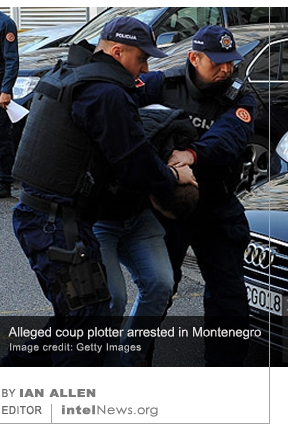
MontenegroAuthorities in the former Yugoslav Republic of Montenegro say that “nationalists from Russia” and Serbia were behind a failed plot to kill the country’s prime minister and spark a pro-Russian coup in the country. As intelNews reported last week, the coup allegations surfaced on October 16, after 20 Serbians and Montenegrins were arrested by authorities for allegedly planning a military coup against the government of Montenegro. The arrests took place on election day, as Montenegrins were voting across the Balkan country of 650,000 people.
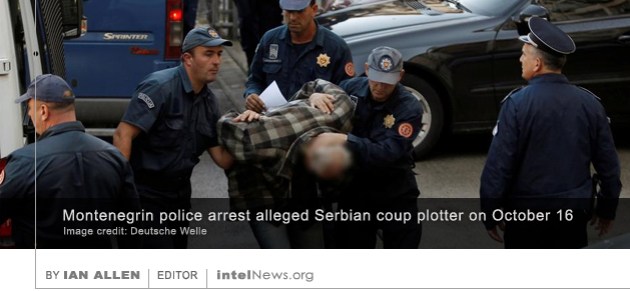
On Sunday, at a press conference in Montenegro’s capital and largest city, Podgorica, the country’s Chief Special Prosecutor, Milivoje Katnić, reiterated claims that the failed coup aimed to prevent the reelection of Prime Minister Milo Đukanović, whose push for Montenegro to join the North Atlantic Treaty Organization has prompted strong objections from Moscow. Katnić told journalists that the plotters had hired a “long-distance sharpshooter” who was “a professional killer”, for the task of killing Đukanović. After killing the Prime Minister, the plotters had planned to storm the parliament and prompt a pro-Russian coup in the former Yugoslav Republic, said the special prosecutor. He added that authorities had confiscated weapons, military uniforms and nearly $140,000 in cash that were found in the possession of the alleged coup plotters.

Asked about the fate of the 20 alleged coup plotters, Katnić said that 14 of them remained in custody in Podgorica, while six others had been extradited to Serbia. The Serbian government of Prime Minister Vučić has accepted Montenegro’s allegations that the coup was hatched in Serbia and has offered to help investigate alleged links between the plotters and the Russian state. However, said Katnić, his team of investigators had no evidence of direct involvement by Russia in the alleged coup plot. But, he said, “two nationalists from Russia”, whom he did not name, were among the leaders of the plot. In a press statement, Katnić’s office said that other coup plotters in addition to the 20 men arrested, remained at large, having escaped from Serbia. They could now be in Russia, he said. Moscow has not responded to the claims by the Montenegrin authorities.

Author: Ian Allen | Date: 07 November 2016 | Permalink

Political tension rises in Serbia amidst espionage allegations

Montenegro coupA weapons cache that was found buried last week near the apartment of Serbia’s prime minister has fuelled tensions in the Balkan country, amid rumors that a failed coup in neighboring Montenegro was planned in Serbia by Russian spies. Serbian authorities announced the discovery of the stockpile on October 29; it included ammunition, hand grenades and a portable missile launcher and was located near the residence of Prime Minister Aleksandar Vučić. The government later said that the weapons find dated back to the Balkan wars of the 1990s and was not connected with  at Vučić’s administration. But politics in the country remain tense, following allegations made earlier in October that Russian intelligence agents used Serbia as a base to plan a military coup in Montenegro.
The coup allegations surfaced on October 16, after 20 Serbians and Montenegrins were arrested by Montenegrin authorities for allegedly planning a military coup against the government. The arrests took place on election day, as Montenegrins were voting across the country of 650,000 people. According to media reports, the failed coup aimed to prevent the reelection of Prime Minister Milo Đukanović, who is pushing for Montenegro to join the North Atlantic Treaty Organization. Đukanović, who was eventually reelected, claimed that the coup plotters were supported by Russia. Moscow has raised strong objections to the possibility of Montenegro joining NATO. A few days later, Serbian Prime Minister Vučić appeared to substantiate Đukanović’s allegations. According to Vučić, the Serbs who were arrested in Montenegro had hatched their coup plot in Serbia, assisted by Russian intelligence. Vučić added that he would not allow Serbia to “act as the puppet of world powers”, a comment that was clearly directed at Moscow.

However, Serbian authorities made no arrests following the October 16 developments in Montenegro, despite much media attention in Belgrade. Shortly prior to the alleged failed coup in Montenegro, Nikolai Patrushev, former director of the Russian Federal Security Service (FSB) and current secretary of Russia’s Security Council, visited the Serbian capital. There were rumors that he returned to Moscow with three Russian intelligence officers who had been caught engaging in espionage by Serbian counterintelligence. Meanwhile, some Serbian newspapers alleged last week that an official in the Ministry of Justice and Public Administration had been arrested for selling classified information to the United States Central Intelligence Agency. Meanwhile, Russian and Byelorussian troops arrived in Serbia this week to hold joint military exercises with their Serbian counterparts, codenamed Slavic Brotherhood.

Author: Ian Allen | Date: 03 November 2016 | Permalink

Swiss court reopens probe of alleged espionage by Kazakh agents

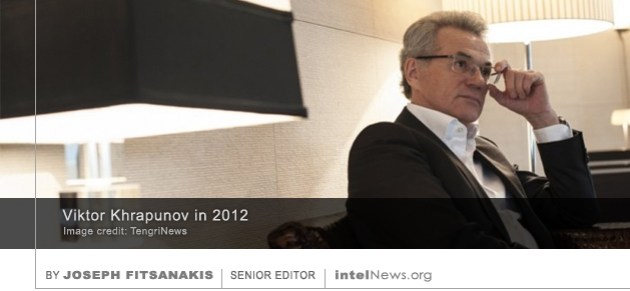
Viktor KhrapunovA Swiss court has reopened an investigation of alleged espionage activities by agents of the government of Kazakhstan against a high-profile political exile living in Switzerland. The case, which dates to 2014, centers on Viktor Khrapunov, a former senior Kazakh government official, who has been living in Geneva since 2008. In the years immediately following the dissolution of the Soviet Union, Khrapunov served as Kazakhstan’s Minister for Energy and Coal, a post that was later renamed to Minister of Energy and Natural Resources. After 1997, he was appointed mayor of Almaty, Kazakhstan’s largest city, which is inhabited by 10 percent of the country’s population. But by 2006, Khrapunov had fallen out with the government of Kazakhstan’s authoritarian President Nursultan Nazarbayev. The government claimed that Khrapunov was embroiled in a series of fraudulent real-estate schemes and that he laundered large sums of money for his own personal use.
In 2008, a chartered airplane carrying Khrapunov and his wife landed in Switzerland, reportedly with a millions of dollars in cash, fine jewelry and antiques onboard. The Khrapunovs were granted asylum in the small alpine country and have since lived in the Lake Geneva area. In 2012, the government of Kazakhstan requested that Khrapunov be placed on Interpol’s list of wanted persons. Khrapunov himself dismissed the charges against him as politically motivated and blasted Nazarbayev as “a third-world dictator”.

In early 2014, the Swiss Attorney General’s office opened an investigation into allegations by Khrapunov that he had been followed around by Kazakh intelligence officers, had an electronic tracker covertly installed in his car, and had his computers hacked by Kazakh spies. The case was closed in March of this year, after Swiss authorities said they did not have enough evidence to confirm the precise identity of the perpetrators, two of whom were reportedly holders of British passports. On Monday, however, the Federal Criminal Court in the Swiss city of Bellinzona ordered that the case be reopened, after allegations by Khrapunov that the espionage against him continues.

Kazakh authorities have been regularly accused by European governments of conducting aggressive espionage and intimidation operations targeting exiled adversaries of President Nazarbayev. Last year, Kazakhstan’s former spy chief and a former presidential bodyguard were acquitted after a lengthy trial in Austria after a co-defendant in their double-murder trial, who was also the Kazakh president’s former son-in-law, was found dead in his Vienna cell.

Author: Joseph Fitsanakis | Date: 01 November 2016 | Permalink

Mystery death of Putin’s ex-adviser in DC was accident, say US authorities

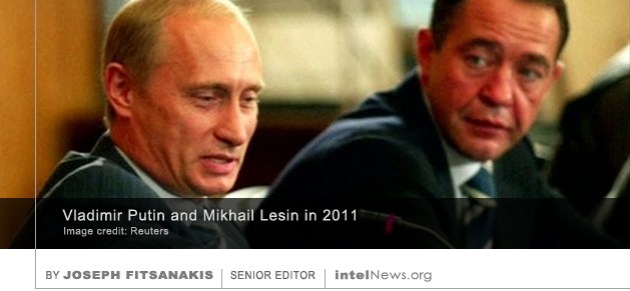
Mikhail LesinThe mysterious death in Washington, DC, of a former senior adviser to Russian President Vladimir Putin, who had fallen out with the Russian president, was the result of an accident, US authorities have concluded after a year-long investigation. The body of Mikhail Yuriyevich Lesin, a well-known Russian media mogul, was found in the luxury Dupont Circle Hotel on November 5, 2015. According to reports, his body bore considerable injuries on his torso and limbs. Some unconfirmed updates suggested that Lesin had died from several “blunt force injuries to the head”. But United States authorities refused to speculate on the cause of Lesin’s death and opened an official investigation into the matter.
Lesin became famous in Russia soon after the collapse of the communist system, when he founded Video International, an advertising and public-relations agency that was hired by Russian President Boris Yeltsin in 1995 to run his reelection campaign. Yeltsin’s electoral success was partly attributed to the well-tailored media message projected by Lesin’s company. The media magnate was rewarded by Yeltsin, who offered him influential government posts, including that of director of Russia’s state-owned news agency Novosti. Meanwhile, Lesin became a media personality and frequently gave interviews espousing a free-enterprise model for the Russian media industry. But soon after Vladimir Putin’s ascendance to the presidency, Lesin saw the writing on the wall and began advocating for increased government regulation of media and telecommunications conglomerates. In 1999, Putin made him Minister of Press, Broadcasting and Mass Communications, a post he held for nearly six years, until 2004. In 2006, Lesin was awarded the Order for Merit to the Fatherland, one of the most prestigious civilian decorations in Russia.

But in late 2009, Putin abruptly fired Lesin from his post in the Kremlin’s Media Advisory Commission, allegedly because the media mogul had developed close contacts with Russian organized crime. Lesin’s ties with Putin’s inner circle were further strained in 2014, when he resigned from his position as head of Gazprom Media, after he clashed with pro-Putin executives on the board. Last November, when Lesin’s body was found in his hotel room by a member of the staff, some suggested that he may have been killed by the Kremlin. But On Friday, the Metropolitan Police Department of Washington, DC, in cooperation with the US Attorney’s Office for the District of Columbia, said that Lesin’s death had been the result of injuries “induced by falls”, which came after “days of excessive consumption of alcohol”. The two agencies said that the Federal Bureau of Investigation, which had assisted in the investigation into Lesin’s death, concurred with the results. Consequently, the investigation is now closed, they said. The Kremlin, the Russian embassy in Washington, and the FBI, have not commented on the case.

Author: Joseph Fitsanakis | Date: 31 October 2016 | Permalink

NSA contractor accused of spying stole real names of US undercover officers

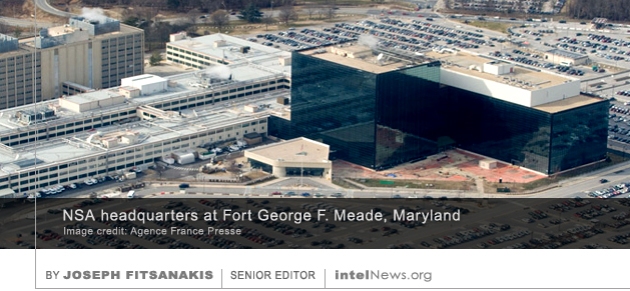
NSAClassified information stolen by a United States federal contractor, who was charged with espionage last month, includes the true identities of American intelligence officers posted in undercover assignments abroad, according to court documents. In August of this year, Harold Thomas Martin III, was arrested by the Federal Bureau of Investigation on charges of stealing government property and illegally removing classified material. Martin, 51, served as a US Navy officer for over a decade, where he acquired a top secret clearance and specialized in cyber security. At the time of his arrest earlier this year, he was working for Booz Allen Hamilton, one of the largest federal contractors in the US. Some media reports said Martin was a member of the National Security Agency’s Office of Tailored Access Operations, described by observers as an elite “hacker army” tasked with conducting offensive cyber espionage against foreign targets.
Last week, after prosecutors alleged that the information Martin removed from the NSA was the equivalent of 500 million pages, a judge in the US state of Maryland ruled that the accused might flee if he is released on bail. Soon afterwards, Martin’s legal team filed a motion asking the judge to reconsider his decision to deny him bail. That prompted a new filing by the prosecution, which was delivered to the court on Thursday. The document alleges that the information found in Martin’s home and car includes “numerous names” of American intelligence officers who currently “operate under cover outside the US”. The court filing adds that Martin’s removal of the documents from secure government facilities constitutes “a security breach that risks exposure of American intelligence operations” and “could endanger the lives” of undercover intelligence officers and their agents abroad.

It is alleged that Martin told the FBI he never shared classified information with anyone, and that he removed it from his office at the NSA in order to deepen his expertise on his subject. His legal team argues that Martin suffers from a mental condition that compels him to be a hoarder. But prosecutors for the government argue in court documents that Martin appears to have communicated via the Internet with Russian speakers, and that he was learning Russian at the time of his arrest. The case is expected to be tried later this year.

Author: Joseph Fitsanakis | Date: 28 October 2016 | Permalink

French citizens killed in Malta plane crash were intelligence officers

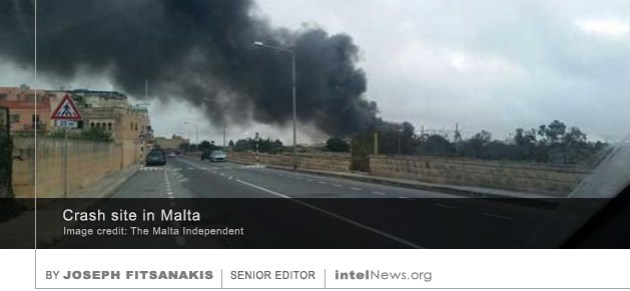
MaltaDespite initial denials, it appears that at least three of the five French citizens who were killed in an airplane crash in Malta earlier this week were employees of the country’s external intelligence agency. The crash happened in the early hours of Monday near the village of Luqa in southern Malta. Early reports identified that the plane as a light aircraft and was carrying five French citizens when it crashed, shortly after taking off from the nearby Malta International Airport. Initial statements from Maltese and French government officials said the plane was on a local flight route and had not been scheduled to land outside of the Mediterranean island. The five passengers were identified in press statements as “customs officers” who were conducting a joint project with their Maltese counterparts.

Subsequent reports in the French media, however, said that at least three of the five French passengers who perished in the crash were officers of the General Directorate for External Security, France’s external intelligence agency, which goes by the initials DGSE. It is also believed that the airplane was registered in the United States and was operated by a Luxembourg-based company. Reports from Libya state that the plane’s mission is “shrouded in mystery”. Some articles suggest that it was heading to the city of Misrata in northern Libya, or that it may have been conducting a reconnaissance operation over the Mediterranean, aimed at gathering intelligence on smuggling activities originating from Libya.

The French intelligence services are known to be active on the ground in Libya, where several Sunni Islamist groups, including the Islamic State, control territory. In July of this year, Paris acknowledged for the first time that it had Special Forces and intelligence operatives in Libya, after three DGSE officers were killed in a helicopter crash in the North African country. The latest air crash was not preceded by an explosion, according to French media. The French government has launched an investigation into the incident.

Author: Joseph Fitsanakis | Date: 27 October 2016 | Permalink

Dozens of Turkish diplomats apply for asylum in Germany following July coup

Embassy of Turkey in BerlinAt least 35 Turkish nationals with diplomatic passports have applied for political asylum in Germany following last July’s failed military coup in Turkey, according to German authorities. The administration of Turkish President Recep Tayyip Erdoğan accuses members of the so-called Gülen movement of orchestrating the coup, which included an armed attack on the country’s parliament and the murder of over 200 people across Turkey. The Gülen movement consists of supporters of Muslim cleric Fethullah Gülen, who runs a global network of schools, charities and businesses from his home in the United States. The government of Turkey has designated Gülen’s group a terrorist organization and claims its members have stealthily infiltrated state institutions since the 1980s.
Since the end of the failed coup, the Turkish state has initiated a nationwide political crackdown directed at alleged supporters of the coup. An estimated 100,000 people have been fired from their jobs, while hundreds of thousands have been demoted, censured or warned. Another 32,000 are believed to be in prison charged with supporting the failed coup or with being members of the Gülen network. Many of those targeted in the crackdown belong to the country’s diplomatic corps. It is believed that the 35 Turkish holders of diplomatic passports members of the country’s diplomatic community who were stationed abroad when the coup took place and are now hesitant to return to their home country for fear of being arrested.

On Monday, German Interior Ministry spokesman Johannes Dimroth told reporters in Berlin that the Turkish nationals had filed applications for asylum with Germany’s Federal Office for Migration and Refugees, known as BAMF. He added that the number of 35 asylum seekers included diplomats’ family members, who are also carriers of diplomatic passports. He did not specify whether the asylum seekers had been based in Germany prior to the July 15 coup. In response to a question from a reporter, Dimroth said that 35 was “not an absolute and final figure” and that it could change in the coming weeks. When asked about the reasons given by the asylum seekers for their applications, Dimroth refused to speculate. The Turkish Ministry of Foreign Affairs and the Turkish embassy in Berlin did not respond to questions on the matter.

Author: Joseph Fitsanakis | Date: 25 October 2016 | Permalink

Russia accuses UK of deliberately delaying visas for its diplomats in London

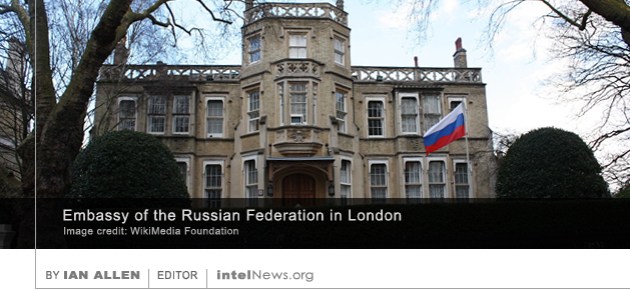
Russian embassy LondonRussia’s ambassador to the United Kingdom has accused the British Foreign Office of deliberately delaying the issuance of visas for its diplomatic officials who have been assigned to join the Russian embassy in London. Alexander Yakovenko, Russia’s former Deputy Minister of Foreign Affairs, who has been heading the Russian embassy in London since 2011, said last week that the size of his staff was “shrinking” to unprecedented numbers. The reason, said Yakovenko, was that the government in London appeared to be following a systematic policy of delaying visa requests for Russian diplomats assigned to serve in London.
“As our people return home or go on to other postings, visas for their replacements are not being issued”, said Yakovenko. Consequently, the Russian embassy’s personnel numbers were shrinking, and would shrink even further unless the issue was resolved by Whitehall, he said. The Russian ambassador added that his embassy did not understand “the strategy of this country on visa issues”, implying that London was following a deliberate plan to prevent Russian diplomats from staffing the embassy. But the British Foreign Office responded on Saturday that it was not following a deliberate policy of delaying the issuance of visas for Russian diplomats. The BBC quoted a Foreign Office spokesman who said that the British government had “made it clear to the Russians that the queues [for visa issuances] need to be cleared on both sides”. The comment implies that London’s stance may be a response to efforts by Moscow to reduce the size of the British diplomatic core stationed in the Russian capital.

Bilateral relations between Britain and Russia have suffered since 2006, when the murder of former Russian intelligence officer Alexander Litvinenko in London prompted Whitehall to expel four Russian diplomats stationed there. The Russian involvement in Ukraine and Syria has further strained relations between Moscow and London in recent years. In August of 2015, the Russian Embassy accused the British government of “effectively expelling” four of its diplomats from London by refusing to grant them visas for more than three months.

Author: Ian Allen | Date: 24 October 2016 | Permalink

Members of far-right group arrested in Kansas face WMD terrorism charges

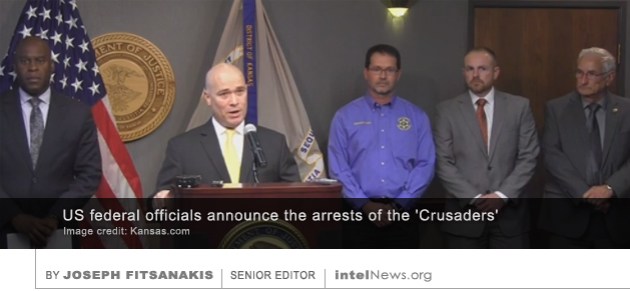
Federal arrestsFederal authorities in the United States have charged three men with conspiring to use a weapon of mass destruction with the intention of blowing up an apartment complex in a predominantly Muslim neighborhood in Kansas. The men, Patrick Eugene Stein, Curtis Allen and Gavin Wright, who called themselves ‘the Crusaders’, allegedly wanted to spark a religious war between Christians and Muslims in the United States. They were arrested last week in simultaneous raids conducted by the Federal Bureau of Investigation, after they obtained guns and chemicals for making bombs. According to the US Department of Justice, the terrorism suspects planned to build a device similar to the ammonium nitrate-based bomb used by Timothy McVeigh in 1995 to blow up the Alfred P. Murrah Federal Building in Oklahoma City.

Recordings of telephone conversations between members of the ‘Crusaders’ reveal their desire to use the attack to entice militia groups across America to take up arms against the government. They also expressed a desire to “wake people up” and turn Americans against Islam and Muslims. It appears that the three men began planning their attack in early 2016. By early summer, they had selected as their primary target an apartment complex housing many Muslim immigrants from Somalia, located in Garden City, Kansas. According to court documents, the group planned to detonate explosives hidden inside cars parked across from the two main entrances to the apartment building. Knowing that one of the apartments is used as a makeshift mosque by the residents of the complex, the ‘Crusaders’ allegedly planned to detonate the bombs during the traditional Muslim prayer time on a Friday. The goal, according to the indictment, was to kill as many people as possible.

But the FBI had been monitoring the group after receiving a tip-off by a man who said he had attended the ‘Crusaders’ planning meetings and was concerned about their violent intentions. The FBI promptly put together a sting operation, in which FBI agents posing as far-right militants offered to sell the group guns. Soon afterwards, the girlfriend of Curtis Allen, one of the ‘Crusaders’, contacted the authorities saying her boyfriend had physically abused her. She then showed police officers a room in her house where Allen had reportedly stored weapons and chemicals for manufacturing explosives. Realizing that the militant group was close to launching a strike, the FBI decided to move in and arrest its members last week. All of them are currently being held without bail and face life in prison if convicted.

Author: Joseph Fitsanakis | Date: 20 October 2016 | Permalink

Holland suspends its ambassador to China due to suspected honey trap

Holland Embassy in ChinaThe Dutch government has suspended its ambassador to China and has launched an official investigation into an alleged secret relationship between the ambassador and a female Chinese employee at the Dutch embassy. The ambassador, Ron Keller, is a career diplomat and senior member of the Dutch foreign service corps, who has served in Russia and Turkey among other international posts. He assumed duties as Holland’s ambassador to China in late 2015. In December of that year, he arrived in Beijing and took command of one of the largest Dutch embassies in the world.

Last weekend, however, Dutch newspaper De Telegraaf reported that Keller had been suspended from his post after it was alleged that he had a secret affair with an employee at the embassy. The employee, whose name has not been released, is reportedly a female Chinese national. Her position at the embassy is not known, but is thought to be of a clerical nature. Foreign diplomats stationed in China —whether married or single— are routinely warned to avoid having intimate relationships with Chinese nationals due to concerns that the latter may be in the service of Chinese intelligence. Some refer to this practice as a ‘honey trap’.  In 2011, Taiwan suffered its most serious espionage case in over half a century when it was revealed that the director of the Taiwanese military’s Office of Communications and Information fell for a “tall, beautiful and chic” Chinese female operative, who held an Australian passport, but later turned out to be a Chinese intelligence officer. In 2014, a leaked British military report warned United Kingdom government officials of attempts by Chinese intelligence services to compromise them using sexual entrapment.

De Telegraaf said it contacted the Dutch Ministry of Foreign Affairs about Keller’s suspension. In a statement, the ministry confirmed the diplomat’s suspension but said that it could not comment on the case. The newspaper reported that Keller is currently back in Holland and that his return to Beijing in an official capacity is not likely.

Author: Joseph Fitsanakis | Date: 19 October 2016 | Permalink

Mossad had prior knowledge of Six-Day War plans, says Israeli ex-spy chief

first-post-hIsrael’s intelligence services had access to recordings of secret talks between Arab heads of state in 1965, which helped the Jewish state win the Six-Day War, according to the former director of the country’s Military Intelligence Directorate. The brief but important conflict, which is also known as the Third Arab-Israeli War, broke out on June 5, 1967, when the Egyptian, Syrian and Jordanian armies attacked Israel. But within hours the Jewish state had managed to decimate the assailants’ air forces, and went on to deliver fatal blows to its adversaries. By the end of the war, Israel’s territory had increased threefold and Israeli troops were in control of the West Bank, the Gaza Strip and the Sinai Peninsula, among other areas.

But according to Major General Shlomo Gazit, who directed Israel’s Military Intelligence Directorate in the 1970s, Israel’s victory was sealed in September 1965. At that time, a conference of Arab heads of state was held in Casablanca, Morocco, with the participation of senior Arab military commanders and intelligence chiefs. The centerpiece of the conference was a secret meeting where preparations were made for a war with the Jewish state. Participants discussed plans for setting up a joint Arab military command to coordinate the war and shared insights on the strength and state of readiness of their respective militaries.

Major General Gazit told the Israeli newspaper Yedioth Ahronoth that Morocco’s King Hassan II, who was mistrustful of his fellow Arab heads of state, invited the Israeli intelligence services to monitor the conference. Speaking to Yedioth Ahronoth’s military correspondent Ronen Bergman, Gazit said that a team of spies from the Mossad, Israel’s external intelligence service, and the Shin Bet, its domestic equivalent, arrived in Casablanca prior to the start of the conference. Acting on the King’s orders, Moroccan authorities designated an entire floor in the luxury hotel where the conference was held for the use of the Israelis. After the conference ended, King Hassan gave the Mossad copies of secret recordings of all closed-door meetings. These were promptly transcribed and translated into Hebrew by the Research Unit of Israel’s Military Intelligence Directorate, said Gazit.

According to the former spy chief, these transcripts produced “massive amounts of intelligence”. They were combined with other sources of information and crucially helped Israel anticipate the Six-Day War. Thanks to these recordings, said Gazit, Israel “was in full knowledge of how unprepared [the Arab forces] were for war”, especially the Egyptian forces, which were “in a terrible shape”. Israeli military commanders were thus certain that the Jewish state would prevail in an armed conflict with its Arab neighbors.

The public disclosure of the fact that the Mossad had access to the content of the secret negotiations between Arab leaders in 1965 is not new. Bergman and his fellow author Shlomo Nakdimon revealed it in a 2015 article about the broader intelligence relationship between Israel and Morocco in the 1960s and 1970s. But the latest revelation highlights the significance of the secret recordings for Israel’s military posture during the Six-Day War. Indeed, Bergman reports that, after the end of the war, Meir Amit, who was the then director of the Mossad, drafted a letter to Israel’s Prime Minster Levi Eshkol, in which he described the Casablanca operation as “one of the greatest moments of Israeli intelligence”.

Author: Joseph Fitsanakis | Date: 17 October 2016 | Permalink

NSA contractor charged with spying removed both electronic and printed files

NSAA United States federal contractor, who was charged with espionage after he was found to have stolen classified documents, was able to remove both electronic and printed files from his office at the National Security Agency, according to a report. The man was identified by The New York Times last week as Harold Thomas Martin III, a 51-year-old employee of Booz Allen Hamilton, one of the largest federal contractors in the US. Last August, agents of the Federal Bureau of Investigation raided Martin’s house in Maryland and arrested him on charges of stealing government property and illegally removing classified material.

In reporting on the disclosure earlier this week, we noted that the FBI found classified information “on a variety of electronic devices that Martin had stored —though apparently not hidden— in his house and car”. It turns out, however, that at least some of the classified files in Martin’s possession were in printed format. According to The Washington Post, which revealed this information on Wednesday, this means that Martin extracted the information from his office at the NSA “the old-fashioned way, by walking out of the workplace with printed-out papers he had hidden”. The paper cites unnamed US government officials who claim that Martin was repeatedly able to walk out the front door of the NSA with what one anonymous congressional aide described as “a whole bunch of stuff”. The paper alleged that printed classified material found in Martin’s possession amounts to “thousands of pages”.

It appears that Martin extracted most of the documents before the fall of 2013, when the NSA and other US intelligence agencies imposed strict security controls on data access following the defection of Edward Snowden, another federal contractor who worked for the NSA and is today living in Russia. But the revelation will undoubtedly raise further questions about the ability of US intelligence agencies to scrutinize the activities of hundreds of thousands of employees who have access to classified information. The Post notes that the NSA and other US intelligence agencies do not employ universal searches of personnel that enter or exit government facilities. Instead they prefer random checks for reasons of convenience and to foster a sense of trust among employees. That, however, may change if more cases like those of Snowden and Martin become known.

Author: Joseph Fitsanakis | Date: 14 October 2016 | Permalink

US files espionage charges against military contractors with Turkish ties

PentagonIn a development that is expected to contribute to the downward spiral in Turkish-American relations, the United States government has reportedly filed espionage charges against three Department of Defense contractors with Turkish background. The three are believed to have been charged with transferring US military secrets abroad and are currently in prison.

A statement published by the US Pentagon said that the group consists of two men and a woman, all of whom are of Turkish background. Two of them are naturalized American citizens. They are listed as owners of a company that conducts research in military technology and has contracted for many years with the US Pentagon. All contracts were allegedly won following competitive bids and can only be awarded to bidders who are in possession of US citizenship and top security clearances. According to Turkey’s pro-government English-language newspaper, Daily Sabah, the three contractors have helped develop and manufacture parts for missile-launching systems used on American warplanes. They have also worked on several generations of grenade launchers used by the US military.

But on Sunday, the three contractors were arrested in simultaneous raids and charged with “funneling military secrets out of the country”, according to Sabah. The paper said the US government decided to arrest the three once it became known that some hardware parts related to the Pentagon bids handled by their company were being illegally manufactured in Turkey. There is no information in the Pentagon’s press release on whether the top-secret military components were also shared with the Turkish government. Relations between Washington and Ankara, two North Atlantic Treaty Organization member-states, have suffered since the failed July 15 military coup in Turkey. Many in the administration of Turkish President Recep Tayyip Erdoğan blame Washington for the coup and for allegedly shielding the man behind it, the Islamic cleric Muhammed Fethullah Gülen, who lives in the US state of Pennsylvania.

Author: Joseph Fitsanakis | Date: 12 October 2016 | Permalink

Danish court halts sales of book written by former spy boss (updated)

Jakob Scharf's "Ten Years With the PET"

Jakob Scharf’s “Ten Years With the PET”

A court in Denmark has issued an injunction that prevents retail outlets from selling a book written by the former director of the country’s domestic intelligence agency. Titled Seven Years with the PET, the book is based on a series of interviews with Jakob Scharf, who directed Denmark’s Police Intelligence Service (PET) from 2007 to 2013. The book was scheduled for general release in bookstores across the country on October 17 by its publisher, People’s Press. By the end of the first week of October, the Copenhagen-based publisher had already supplied 5,000 copies of the book to 40 bookstores across Denmark, and several copies had already found their way into the hands of readers.

But last Friday night, the PET filed a request for an injunction to be placed on retail sales of the book, arguing that its pages might contain information pertaining to state secrets. The injunction was granted by a court in Copenhagen overnight, and communicated in the early hours of Saturday morning to the publisher, two online retailers and over 40 bookstores. The PET is listed as the requester of the injunction, and a rarely used ‘state secrets’ clause is given as justification for the urgent measure. On Saturday, the current director of the PET, Finn Borch Andersen, spoke to Denmark’s TV2 channel about the injunction. He told the television station that his agency filed the injunction after commercials appeared on television, advertising the book as “an exposure of PET operations”. He added that PET personnel “are currently reading” the book and that the agency will ask for the injunction to be lifted if no sensitive information is found.

But on Monday, Danish newspaper Politiken said it would defy the court injunction and publish excerpts of Scharf’s book. Speaking on the same day, the paper’s editor-in-chief, Christian Jensen, dismissed the ban, which he said “directly attacks the fundamental liberties on which our open society and free press depends”. Politiken had been scheduled to serialize Scharf’s book and was among the recipients of the court injunction.

The PET made headlines in 2012, after it was revealed that one of its double agents, Morten Storm, successfully infiltrated al-Qaeda in the Arabian Peninsula (AQAP). The revelation caused controversy in Denmark because of Storm’s admission that he broke domestic and international law in the course of his activities, and led to a pledge by the country’s justice minister to impose more governmental control over the PET. Scharf, who led the agency from 2007 to 2013, was head of the organization after Denmark became targeted by Islamist extremists, following the publication in 2005 of cartoons depicting the Prophet Muhammad. The latter is considered sacrilegious by literalist Muslims, including organizations that espouse militant versions of Islam.

Update Oct. 11, 2016, 12:35 GMT: It appears that Politiken proceeded to publish nearly the entire book on Sunday and Monday. The PET has just announced that it will withdraw its injunction request against the publication of the book, because it cannot be practically enforced at this point.

Author: Joseph Fitsanakis | Date: 11 October 2016 | Permalink

Arrested contractor may have worked for NSA’s elite cyber spy unit

NSAA United States federal contractor, who remains in detention following his arrest last summer for stealing classified documents, may have worked for an elite cyber espionage unit of the National Security Agency. The man was identified by The New York Times last week as Harold Thomas Martin III, a 51-year-old employee of Booz Allen Hamilton, one of the largest federal contractors in the US. The paper said that, prior to joining Booz Allen Hamilton, Martin served as a US Navy officer for over a decade, where he specialized in cyber security and acquired a top secret clearance. But last August, agents of the Federal Bureau of Investigation raided Martin’s house in Maryland and arrested him on charges of stealing government property and illegally removing classified material.

Media reports suggest that the FBI discovered significant quantities of classified information, some of it dating back to 2006, on a variety of electronic devices that Martin had stored —though apparently not hidden— in his house and car. Another interesting aspect of the case is that there is no proof at this point that Martin actually shared the classified information with a third party. There is some speculation that he may be behind a disclosure of a collection of NSA hacking tools, which were leaked in August of this year by a previously unknown group calling itself “the Shadow Brokers”. But some speculate that Martin may have taken the classified material home so he could write his dissertation for the PhD he is currently undertaking at the University of Maryland’s Information Systems program.

A few days ago, The Daily Beast quoted an unnamed former colleague of Martin who said that the NSA contractor was a member of one of the agency’s elite cyber spy units. The existence of the secretive unit, which is known as the NSA’s Office of Tailored Access Operations, was revealed in June 2013 by veteran NSA watcher Matthew M. Aid. Writing in Foreign Policy, Aid cited “a number of highly confidential sources” in alleging that the NSA maintained a substantial “hacker army” tasked with conducting offensive cyber espionage against foreign targets. More information on NSA’s TAO was provided in January 2014 by German newsmagazine Der Spiegel. If The Daily Beast’s allegations about Martin are accurate, they would explain why anonymous government sources told The Washington Post last week that some of the documents Martin took home “could be expected to cause exceptionally grave damage to the national security of the United States”. The case also highlights the constant tension between security and the privatization of intelligence, which was also a major parameter in the case of Edward Snowden, another Booz Allen Hamilton contractor who defected to Russia in 2013.

Meanwhile, Martin remains in detention. If he is convicted, he will face up to 11 years behind bars.

Author: Joseph Fitsanakis | Date: 10 October 2016 | Permalink