Hersh: Pakistanis gave CIA permission to kill bin Laden
May 11, 2015 2 Comments
 By JOSEPH FITSANAKIS | intelNews.org
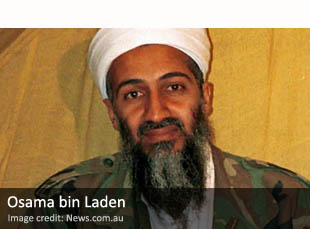
Journalist Seymour Hersh has cited senior American intelligence officials in claiming that the killing of Osama bin Laden was a joint operation between the United States and Pakistan. In a lengthy article published over the weekend in The London Review of Books, the veteran investigative reporter suggests that Pakistan had kept the al-Qaeda founder in prison for several years in the city of Abbottabad. Pakistan’s Inter-Services Intelligence Directorate —known commonly as ISI— had planned to turn bin Laden over to the US in its own time, in a quid-pro-quo move. But the Pakistanis’ plan had to be scrapped when bin Laden’s hideout was betrayed to the Central Intelligence Agency by a former ISI officer, says Hersh. His assertion agrees with previous accounts of the US raid against bin Laden, offered by security expert R.J. Hillhouse in 2011, and earlier this year by Lt. Gen. Asad Durrani, who led the ISI from 1990 to 1992.
The unnamed sources behind Hersh’s claims are an American “retired senior intelligence official” who was privy to early intelligence concerning bin Laden’s compound in Pakistan. Hersh also cites “information from inside Pakistan”, as well as two other sources from America, who have been “longtime consultants to the [US] Special Operations Command”.
The initial tip about bin Laden’s whereabouts came to the CIA in the form of a ‘walk-in’ —a term used to denote someone who voluntarily contacts an intelligence outpost, usually by simply walking into an embassy or consulate and asking to speak to the intelligence officer on duty. Hersh says the walk-in was a former high official in the ISI, who told the Agency’s Islamabad station that he could lead them to the al-Qaeda founder’s location. The retired official was successfully polygraphed and was eventually able to claim the $25 million reward offered by the US Department of State for bin Laden’s head. He and his family are now living in the Washington, DC, area, says Hersh.
The walk-in told the CIA that the compound in Abbottabad where bin Laden was living was “not an armed enclave”, as Langley had initially assumed. Instead it was a prison and was under the complete control of the ISI. The latter had managed to capture bin Laden in the Hindu Kush Mountains in 2006, by paying off some of the local tribesmen who were sheltering him. Hersh also reiterates information previously reported by intelNews, namely that the government of Saudi Arabia had entered into an agreement with Islamabad to finance the construction and maintenance of bin Laden’s prison-compound in Abbottabad.
According to Hersh, the US government eventually informed Pakistan that it had uncovered and was incessantly monitoring bin Laden’s location. Along with threats, Washington offered the ISI commanders, who were in charge of bin Laden’s security, “under-the-table personal incentives” to agree to stand aside during a US raid on the compound. Under the final agreement, struck at the end of January 2011, the Americans promised to send in a small force that would kill bin Laden, thus sparing Islamabad and Riyadh the embarrassment of the al-Qaeda founder speaking out about his previously close relations with both governments. The Pakistanis even provided the CIA with accurate architectural diagrams of the compound. Accordingly, when the US forces went into Abbottabad in May of that year, “they knew where the target was —third floor, second door on the right”, says the retired US intelligence official quoted by Hersh.
The veteran journalist adds that the American planners of the operation knew well that bin Laden had been held in virtual isolation from the outside world for years, and that he was not “running a command center for al-Qaeda operations” from Abbottabad, as the White House later claimed. Consequently, the stories about “garbage bags full of computers and storage devices” that the US Navy SEALs brought back from the compound were false. Some of the SEALs took with them some books and papers found in bin Laden’s bedroom. But most of the material that was eventually acquired by the CIA was voluntarily provided to the Americans by the Pakistanis, who took control of the compound immediately after the SEALs left and eventually razed it.










 intelNews.org
Pakistani doctor who helped CIA find bin Laden will stay in jail, says Islamabad
January 19, 2017 by Joseph Fitsanakis 1 Comment
A Pakistani doctor who helped the United States find al-Qaeda founder Osama bin Laden in 2011 will remain in prison, despite calls by Washington to have him released, according to a government official in Islamabad. Dr Shakil Afridi was arrested in 2011, soon after bin Laden was killed during a Central Intelligence Agency operation in a residential compound in the city of Abbottabad, located 70 miles north of the Pakistani capital. In the weeks following the CIA raid, it emerged that a team of local doctors and nurses had helped the American agency in its efforts to confirm bin Laden’s presence in the compound. The team of nearly 20 healthcare workers participated in a fake vaccination scheme carried out in Abbottabad, whose true purpose was to collect DNA samples from residents of the compound where the CIA believed bin Laden was hiding.
In February 2012, the then CIA Director, Leon Panetta, publicly admitted that the vaccination scheme had been funded by the CIA. By that time, Pakistani authorities had fired 17 healthcare workers who had participated in the CIA scheme and arrested its head, Dr. Afridi. Prior to his arrest, Dr. Afridi was employed as a surgeon by the government of the Khyber Agency, a Federally Administrated Tribal Area along Pakistan’s border with Afghanistan. Bizarrely, Dr. Afridi was arrested for having alleged links with an Islamist group that operates in the region, known as Lashkar-e-Islam. In 2012, he was given a 33-year sentence for having links with terrorist groups. When his conviction was quashed in 2013, the doctor was ordered to remain in prison, and faced new charges, this time for alleged medical malpractice, which, according to the prosecution, resulted in the death of one of his patients.
Many American officials believe that the real reason for Dr. Afridi’s arrest is his collaboration with the CIA. In May of last year, Donald Trump said that, if elected US president, he would make Pakistan free Dr. Afridi, saying characteristically that he could achieve that “within two minutes”. But his comments prompted a strong response from Islamabad. On Tuesday, Pakistan’s Minister for Law and Justice, Zahid Hamid, reiterated that Dr. Afridi would not be freed just because Washington wishes it. Speaking in response to a question from a member of the Pakistani Parliament’s upper house, Hamid said that Dr. Afridi “worked against [Pakistani] law and our national interest” and would face a trial, as planned, despite Trump’s pre-election pledge. There was no comment yesterday from the US president-elect’s team.
► Author: Joseph Fitsanakis | Date: 19 January 2017 | Permalink
Filed under Expert news and commentary on intelligence, espionage, spies and spying Tagged with Abbottabad (Pakistan), CIA, News, Pakistan, Shakil Afridi, United States