Wikileaks publishes major RAND intelligence study

By IAN ALLEN| intelNews.org |
Wikileaks, the public website that anonymously publishes leaks of sensitive documents, has aired a major US government study on intelligence and counterinsurgency operations in Iraq and Afghanistan. The study, titled Intelligence Operations and Metrics in Iraq and Afghanistan, was initially published on a confidential basis in November of 2008 by the Research and Development (RAND) Corporation, the research arm of the US Pentagon. Originally prepared for the Pentagon’s Joint Forces Command, the 318-page study is described by Wikileaks as the “Pentagon Papers” of the Iraq and Afghanistan wars. The RAND Corporation report findings are reportedly not as interesting as the “candid and revealing interview quotes” scattered throughout the document, which represent the views on the wars of nearly 300 intelligence officers and diplomats from the US, Britain and the Netherlands. Read more of this post

US Special Forces already stationed in Pakistan, article reveals

By IAN ALLEN| intelNews.org |
American and Pakistani military officials have disclosed to The New York Times what defense and intelligence analysts have suspected for quite some time: namely that US military forces are already secretly operating in Pakistan. The officials, who spoke “on condition of anonymity”, confirmed [article reprinted in The International Herald Tribune] that more than 70 US “military advisers […] and technical specialists” are helping Pakistan’s armed forces fight the Taliban and al-Qaeda in the remote areas bordering Afghanistan. Predictably, the US advisers, who have been stationed in Pakistan since the summer of 2008, include “communications experts and other specialists”. The latter allegedly do not participate in ground combat, but routinely provide Pakistani commandos and specialist units with intelligence data. Read more of this post
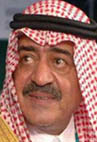

Saudi spy chief brokers secret Afghan-Taliban talks

Prince Muqrin

Prince Muqrin

By JOSEPH FITSANAKIS| intelNews.org |
British daily The Independent reports that the Afghan government of President Hamid Karzai is now involved for the first time in direct secret talks with the Taliban. The negotiations are mediated by Prince Muqrin bin Abdulaziz Al Saud, a senior member of the Saudi Royal family, who heads Saudi Arabia’s main intelligence directorate, the Re’asat Al Istikhbarat Al A’amah (a.k.a. General Intelligence Presidency, GIP). Prince Muqrin, who knew Osama bin Laden personally in the 1970s and 1980s, has supervised the negotiations since last December, when envoys of the Afghan government and the Taliban insurgency met in the Kingdom during the Muslim observance of Ramadan. Read more of this post

UK Air Force deploys world’s most advanced spy plane

By IAN ALLEN | intelNews.org |
Britain’s Royal Air Force (RAF) has announced the official deployment of what it describes as “the most advanced long-range, airborne surveillance system of its kind in the world”. The aircraft-based system is called ASTOR (Airborne Stand-Off Radar) and is installed on Raytheon’s Sentinel R1 jets. The ASTOR radar is reportedly so advanced that it can detect target movement over “thousands of square miles, looking deep into valleys, picking out well-used enemy routes and mapping vehicle activity”, and can even perform during bad weather at night. What is more, the twin-engine aircraft can do all that while flying up to 7.5 miles above ground level, thus staying clear of any engagement by most air-defense systems, including surface-to-air missiles. Read more of this post

Analysis: US may lose its most important base in Afghan war

Bakiyev

Bakiyev

By JOSEPH FITSANAKIS | intelNews.org |
US Pentagon officials routinely describe the US Air Force base in Manas, Kyrgyzstan, as “hugely important”. It became even more so in 2005, after the government of Uzbekistan shut down the US Air Force base in Karshi-Khanabad, under Russian pressure. Since then, the Manas airbase has become the “primary logistics hub” for the US military’s Operation Enduring Freedom in Afghanistan, as it offers US forces a vital northern supply line to Afghanistan “in the face of ongoing insurgent attacks along the Khyber Pass route through Pakistan”. Pentagon officials were therefore stunned when Kyrgyz President Kurmanbek Bakiyev announced last Tuesday that his government “has made the decision on ending the term for the American base on the territory of Kyrgyzstan and in the near future, this decision will be announced”. Read more of this post

Taliban Information Minister arrested in Peshawar

Ustad Yasar, who heads the Taliban information division in Afghanistan, has been arrested in Peshawar, Pakistani intelligence officials announced today. Yasar was previously arrested in 2005, again in Pakistan, by Pakistani security forces and was handed over to the Afghan authorities in the same year. In 2007, however, he was released in exchange for Italian journalist Daniele Mastrogiacomo, who had been abducted by the Taliban earlier that year. Other high-level Taliban operatives released along with Yasar include Mansoon Ahmad, Abdul and Hamdullah Ghaffar, and Mullah Abdul Latif Hakimi, the spokesman for the Taliban in Afghanistan. All of them remain at large. An unnamed Pakistani security official has said that, at the time of his recent arrest, Yasar was acting under orders from Mullah Mohammad Omar, the leader of the Afghan Taliban, who had sent him to the Pakistani borderlands “to mediate in a dispute between Taliban factions” there. It will be interesting to see if the Pakistanis give US interrogators access to Yasar, and if they extradite him to Afghanistan. [IA]

Comment: Spreading Democracy Involves Routine Bribing

Online pundits appear immensely amused by a recent article in The Washington Post, which reveals that Viagra is among numerous “novel incentives” handed out by CIA officers to Afghan warlords in efforts to “win [them] over” to the American side. The article cites an unnamed CIA agent who confirms that pharmaceutical treatments for erectile dysfunction are occasionally dispensed by the Agency to “aging [Afghan] patriarchs with [several young wives and] slumping libidos”. Unlike most, I find the article’s revelations to be neither novel nor amusing. Read more of this post

US silent about CIA asset’s cover-up of Afghan massacre

During the US invasion of Afghanistan, local warlord General Abdul Rashid Dostum was among the CIA’s most valuable assets. With the close cooperation of CIA agents and members of the US Special Forces, General Dostum and his army supported countless American operations in northern Afghanistan. In the process, Dostum and his men participated in a considerable number of documented war crimes. In one of those instances around 2,000 Taliban prisoners of war were locked in large metal containers and allowed to suffocate to death, or were massacred by bullets fired into the containers by Dostum’s troops. Their remains were buried in large mass graves in a desert north of Mazar-e-Sharif. Recently, large bulldozers and backhoes were used to exhume the remains of the murdered men and move them to an unknown location. Local authorities say this was the job of General Dostum, who has become alarmed by the impending change of guard in Washington. Read more of this post

German intelligence spied on relief group in Afghanistan

It appears that the Bundesnachrichtendienst (BND), Germany’s foreign intelligence service, is finding it impossible to stay out of the news headlines. In November, three deep-cover agents working for the BND were arrested and summarily expelled from the newly independent Balkan nation of Kosovo. Now Der Spiegel magazine reports that the spy agency has admitted conducting covert surveillance on the communications of ANSO, a German relief project active in Afghanistan. Read more of this post

Pakistan warns of moving troops away from Afghan border

Yesterday we reported on the plausible theory that the small army that recently attacked selected targets in Mumbai has been part of a calculated ploy with a twofold operational mission: (a) “to provoke a crisis, or even a war, between the India and Pakistan”; and by doing so (b) to divert Pakistan’s attention from its Afghan to its Indian border, thus “relieving pressure on al-Qaeda, Taleban and other militants based there”. It is now being reported that “Pakistan has warned that it will divert troops fighting the Taliban and al-Qaida on its western border with Afghanistan to its eastern frontier with India”. An unnamed Pakistani security official has stated that Pakistan has “made [it] very clear to the Americans and the British that if a situation arises on our eastern borders, our priority would be our eastern border”. [IA]

.

Mumbai attacks a plot to shift Pakistani troops from tribal areas

A commendable article has appeared in The London Times, articulating the theory that  the small army that has attacked selected targets in Mumbai in the past few days has been part of a calculated ploy with a twofold operational mission: (a) “to provoke a crisis, or even a war, between the India and Pakistan”; and by doing so (b) to divert Pakistan’s attention from its Afghan to its Indian border, thus “relieving pressure on al-Qaeda, Taleban and other militants based there”. Such a scenario is strategically plausible, in the sense that it would clearly alleviate the two-sided pressure (from Pakistan and Afghanistan) that al-Qaeda currently faces, thus allowing the group a higher degree of flexibility in Pakistan’s tribal border regions. [IA]

.

UK spy trial outcome linked with Iran covert operation?

On November 17, intelNews reported on a possible covert infiltration operation by British agents along Iran’s southeastern border. Interestingly, Iran appeared to deny reports from Reuters that it had busted the undertaking. Now another British-Iranian spy scandal has been added to this interesting mix. A court in London has sentenced Daniel James (born Esmail Gamasai in Tehran, Iran) to 10 years for spying for Iran while serving as personal interpreter to General Sir David Richards, Britain’s top General and the most senior military commander of the multinational NATO force in Afghanistan. In late 2006, James made contact with Colonel Mohammad Hossein Heydari, military attaché at the Iranian Embassy in Kabul, Afghanistan, sending him classified documents and stating “I am at your service”. He was arrested in December of that year. James was convicted of “a single count of communicating information useful to an enemy”, though the jury had to take the British government’s word that he was arrested “before he could become a fully-fledged agent”. What is interesting, in connection with the alleged covert operation by British agents in southeaster Iran, is that the British government suddenly decided not to try James under the full extent of the law in accordance with the Official Secrets Act. Instead, the prosecuting QC “applied for the charges to be allowed to lie on file, meaning there would be no further proceedings”. This has caused knowledgeable observers to question whether the decision to back off this case is in some way linked to the busted covert operation in southeaster Iran earlier this month. Should we be expecting a spy trade-off soon, or has one already taken place? Watch this space. [JF]

.




