US Special Forces carry out 100 missions ‘at any given time’ in Africa

US Special Operations forcesTeams of United States Special Forces are carrying out “nearly 100 missions at any given time” in the continent of Africa, according to American military documents released to the media. Operating under the US Special Operations Command (USSOCOM), US Special Forces are trained to carry out missions using unconventional tactics. Much of their work is classified. However, a Freedom of Information Act request by the New York-based Vice News has revealed extensive deployment of US Special Forces in Africa in recent times.

Information provided to Vice News by the USSOCOM appears to show that operations by US Special Forces in Africa have seen dramatic growth in recent years, possibly more than any other region of the globe. According to documents, US Special Forces in Africa represented just over 1 percent of all US Special Forces personnel stationed abroad in 2006. By 2010, that number had risen to approximately 3 percent —a significant increase but still relatively low in comparison to USSOCOM deployment in other regions of the world. But by 2016, over 17 percent of US Special Forces stationed abroad were based in Africa. Information unearthed by Vice News shows that 1,700 US Special Forces troops were stationed in 20 different African countries in 2016. This number indicates that there are now more US Special Forces troops stationed in Africa than in any other region of the world barring the Middle East.

Vice News said it obtained a report by US Special Operations Command Africa (SOCAFRICA), which states that US Special Forces were deployed in “at least 32 African nations in the 12 months of 2016”. Only the Middle East saw more deployments of US Special Forces than Africa. The report’s author, General Donald Bolduc, the commander of SOCAFRICA, wrote that the increasing presence of US Special Forces in the continent reflects the significance of the region for the US. “Africa’s challenges could create a threat that surpasses [that faced] from conflict in Afghanistan, Iraq and Syria”, wrote General Bolduc. The report does not specify how many missions USSOCOM carries out per year. The US Department of Defense did not respond to questions on the subject.

Author: Joseph Fitsanakis | Date: 23 May 2017 | Permalink

Analysis: African intelligence run amok and prospects for reform in The Gambia

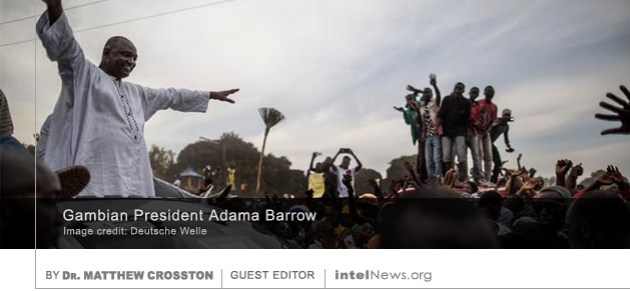
Adama BarrowFor a very long time, the field of Intelligence Studies has been dominated by analysis of the Five Eyes community, which is comprised of the United States, Great Britain, Australia, New Zealand, and Canada. In reality, that study is more often the study of intelligence in the US and the UK. While not entirely fair to characterize this as Western prejudice —access to data is better in these two countries and intelligence scholars and analysts for the most part do not fear retribution or reprisal— more voices need to come forward to consider intelligence and its role on societies beyond the Five Eyes.

There has been slow but gradual progress in getting the discipline to understand this fact, to understand how important the study of intelligence is outside of the Five Eyes. In recent years, particular emphasis has been paid to Russia, China, Pakistan, Iran, and Israel, just to name several case studies. But the countries of Africa, unfortunately, have largely remained a near-blank analytical slate when it comes to deeper work on the continent’s various intelligence communities. As recent events in The Gambia show, that absence needs to be rectified at a time when some deeply disturbing aspects of state development and political stability hang in the balance.

A few days ago, nine intelligence officers, among them the ex-head of the Gambian National Intelligence Agency (NIA), were arrested and charged with the murder of Ebrima Solo Sandeng, a top political opposition figure. Sandeng, the National Organizing Secretary of the United Democratic Party (UDP), died in custody after being arrested for his participation in a protest demanding q-quoteelectoral reforms back in April of 2016. The protests were geared to influencing the December 2016 presidential election, which ultimately saw the defeat of incumbent President/Strongman Yahya Jammeh to Adama Barrow. Jammeh had corruptly governed the country since rising to power as a young military officer in a bloodless military coup in 1994.
The official docket accused Yankuba Badjie and eight other members of the NIA of “conspiring amongst themselves to take part in the murder of Solo Sandeng”. Back on April 14, 2016, Sandeng and five other members of the UDF party were arrested by police and taken to Mile 2 Prison where, after two days of torture, Sandeng died of shock and respiratory failure. Read more of this post
Analysis: Boko Haram insurgency far from over, despite Nigerian claims

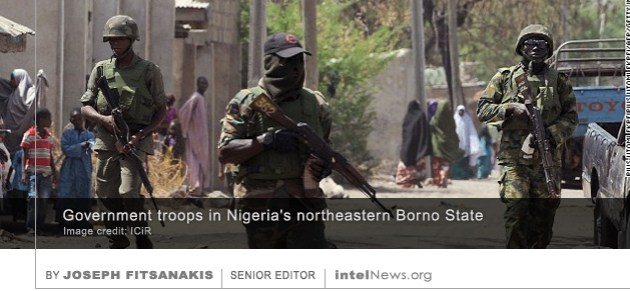
NigeriaOn Saturday, Nigerian President Muhammadu Buhari made a statement announcing that the country’s military had delivered a “final crushing” on Boko Haram’s “last enclave” deep in the Sambisa Forest. He then congratulated the Nigerian troops for “finally entering [the forest] and crushing the remnants of the Boko Haram insurgents”. This is not the first time that a Nigerian head of state announces the “final crushing” of the Boko Haram insurgency. Even though Boko Haram has suffered significant territorial losses since 2014, the armed conflict that has destabilized the entire Lake Chad region for nearly a decade is far from over, and Boko Haram may even bounce back, just as it has done in the past.
Boko Haram emerged as a public-pressure group in predominantly Muslim northeastern Nigeria in 2003, stating multiple grievances against the corruption and nepotism of Nigeria’s ruling elite. In 2009, the group launched an armed insurgency against the government, with the stated aim of establishing an Islamic state ruled by sharia (Quranic law) in Nigeria’s northeast. In 2015, Boko Haram’s leader, Abubakar Shekau, pledged the group’s allegiance to the Islamic State of Iraq and Syria and announced the establishment of “Islamic State West Africa Province”. Since then, the group has continued to fight the Nigerian military in a seven-year war that has killed more than 15,000 people and displaced two million more. The United Nations estimates that at least 14 million people in the Lake Chad region have been affected by the war and in immediate need of significant humanitarian assistance.

By early 2014, Boko Haram had managed to drive out all Nigerian government presence from the country’s northeastern Borno state and control an area of approximately 12,000 sq. mi. At that time, however, the Nigerian military, in association with Chadian and Nigerien forces, launched Operation LAFIYA DOLE, with the aim of recapturing Boko Haram’s territory. The operation involves thousands of Nigerian, Chadian and Nigerien ground forces, as well as airplanes and even construction crews, who built dirt roads leading deep into the Sambisa Forest in search of Boko Haram’s camps. As government forces have been advancing on all sides, Boko Haram fighters have retreated deeper into the 500-sq. mi. forest. On Saturday, the Nigerian president announced that government troops sacked Boko Haram’s “Camp Zero” and that the insurgents were desperately fleeing into the surrounding areas. There was no word about the fate of Shekau, the group’s leader. Read more of this post

Monitoring continues as Libya’s chemical weapons are shipped to Germany

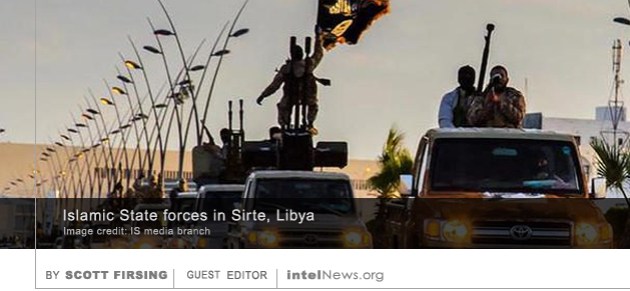
ISIS LibyaAs United States air strikes and special-forces operations continue in Libya, Libya’s Government of National Accord deputy prime minister, Mussa al-Koni, confirmed on Tuesday that their remaining chemical weapons left over from the Gaddafi era has been shipped to Germany for safekeeping. The process was supervised by the United Nations, based on UN Security Council Resolution 2298 (2016) adopted on July 22. The concern was the Islamic State getting their hands on the chemical stockpile that was stored in the central Jafa area, about 140 miles south of Sirte, where pro-government forces are currently fighting Islamic State militants.
Islamic State forces acquiring CBRN from Africa or producing it while in the region has been a continuous concern. Islamic State and other militant organizations are expanding throughout Africa’s 11.67 million mi². These groups can be very innovative and resourceful. As the Egyptian delegation highlighted in a UN Security Council debate on the proliferation of weapons of mass destruction last week, the Islamic State and other groups have already caused destruction in Iraq, and possibly also in Syria by using chemical weapons. The Egyptians and other African countries see a real possibility of these weapons spreading further in Libya and from there to the Horn of Africa or elsewhere on the continent. The final departure of Gaddafi’s stockpile is welcome news, but Islamist militants know how to acquire such weapons, are trying to produce them and know how to cross borders.

African intelligence and law enforcement agencies are alert to these and other new threats. Intelligence reports have indicated groups such as al-Qaeda in the Maghreb (AQIM) have made multiple attempts to manufacture poison, gas, biological and radioactive agents. Training camps, particularly in the Sahel area, specialized in biological and chemical weapons are known to exist. Many African nations have put their national interests aside to counter cross border Islamist or criminal threats. In late September 2010, Algeria set up a regional intelligence center in Algiers, bringing together the countries of the region to fight against militant groups, including CBRN trafficking. Similar centers around the continent exist like Kenya’s common intelligence centre in Nairobi used for joint training on investigation skills and on ways to protect borders. The center also is used to monitor and address threats posed by militant groups in Kenya, Uganda, Rwanda and South Sudan. A more recent regional intelligence center, similar to Kenya’s, was established in Kampla, Uganda, which is supported by the African Union and seeks to prevent possible attacks by militant groups.

Another concern the Centers and domestic African intelligence agencies are investigating is the recruitment of African youth by Islamist groups.  “[The Islamic State] has attracted about 5,000 Africans to join them in Iraq and Syria. Some of them are from the East Africa Community and IGAD regions”, proclaimed the African Union Commissioner for Peace Security Smail Chergui in July 2015.

Author: Scott Firsing is an adjunct professor at the University of North Carolina Wilmington

Panel to present findings on mysterious death of UN secretary general

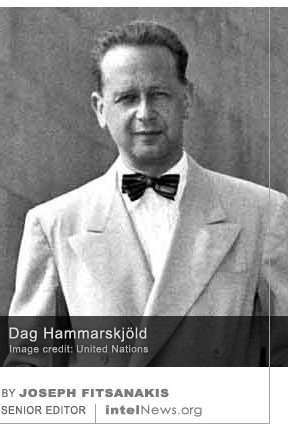
Dag HammarskjöldA panel of experts commissioned by the United Nations is about to unveil fresh evidence on the mysterious death in 1961 of UN secretary general Dag Hammarskjöld, who some claim was murdered for supporting African decolonization. The evidence could spark a new official probe into the incident, which has been called “one of the enduring mysteries of the 20th century”.
On September 17, 1961, a Douglas DC-6 transport aircraft carrying United Nations Secretary General Dag Hammarskjöld crashed in the British-administered territory of Northern Rhodesia (now Zambia). The crash killed everyone onboard. Three successive investigations into the crash, conducted by the Rhodesian Board of Investigation, the Rhodesian Commission of Inquiry, and the United Nations Commission of Investigation, viewed “pilot error” as the most likely cause of the tragedy. However, the latter probe, which was closed in 1962, opined that deliberate sabotage could not be ruled out as a likely cause of the tragedy.

Since that time, numerous scholars and independent investigators, such as Swedish development expert Göran Björkdahl and British academic Susan Williams, have raised the possibility that the plane carrying Secretary General Hammarskjöld may have been “shot down by an unidentified second plane”. Several commentators have also pointed to what seemed like eagerness by British colonial administrators in Northern Rhodesia to obscure the details of the incident. One argument is that Hammarskjöld, described as the most independent-minded secretary general in the history of the UN, had angered many world powers due to this fierce support for anti-colonial movements that were sweeping the African continent. Indeed, at the time of his death, Hammarskjöld was flying to the Congo’s mineral-rich Katanga region to meet European-supported chieftains who in 1960 had seceded from the nationalist government of Congolese Prime Minister Patrice Lumumba. Ironically, Lumumba had been assassinated in a Western-backed coup exactly eight months before Hammarskjöld’s own death.

In 2012, the independently funded Hammarskjöld Inquiry Trust appointed an international team of jurists to study all available evidence on the plane crash. The team, called the Hammarskjöld Commission, was composed of a diplomat and three judges from the Netherlands, the United Kingdom, South Africa, and Sweden. The Commission reported in 2013 that “significant new evidence” had emerged, which suggested that American intelligence agencies, notably the National Security Agency and the Central Intelligence Agency, held “crucial evidence” that could help clarify the causes of the crash.

The report by the Hammarskjöld Commission prompted the UN’s current Secretary General, Ban Ki-moon, to appoint a UN-sponsored panel of experts to examine the new evidence and present it before the UN General Assembly. The three-member panel traveled to several countries, including Zambia, the US, Britain and Belgium, to access government, as well as private archives. Its report is expected to be delivered to the UN General Assembly this week. It is said to include written testimony by a Belgian pilot who says he shot down the plane carrying Hammarskjöld by error, while trying to divert it on orders by a government entity. Another witness, a former intelligence officer with the US National Security Agency, is believed to have told the UN experts that he listened to a recording of a pilot who said he shot down the UN Secretary General’s plane.

Once this new evidence is presented, the UN General Assembly will have to vote on whether the UN should hold an official probe into the plane crash. It would mark the first such inquiry since 1962.

Author: Joseph Fitsanakis | Date: 22 June 2015 | Permalink: https://intelnews.org/2015/06/21/01-1719/

Burundi president’s whereabouts unknown as coup unfolds

BurundiBy JOSEPH FITSANAKIS | intelNews.org
Update, May 14, 1924 UTC: The BBC reports that President Nkurunziza has returned to Bujumbura. He claims that troops loyal to him “are in control of key locations” in the capital.

There was chaos last night in Burundi, as armed cells of coup plotters led by the country’s former intelligence chief claimed to have taken over power in the small but important Central African nation. General Godefroid Niyombare, who was ousted from his post as intelligence chief in February of this year, claimed in a public radio address to have led a successful “military uprising against the country’s President, Pierre Nkurunziza. As of last night, 20 people had been reported dead in capital Bujumbura, while over 200 had been injured and many more hundreds had been arrested by the coup plotters —most of them officials in President Nkurunziza’s administration. The headquarters of the country’s state-owned television and radio stations have been taken over by the coup plotters, while all private radio stations in the country appear to have been shut down. Online social media also seem to have been placed behind a firewall by the coup plotters. The Bujumbura international airport is closed, as are all border crossings into the country.

The alleged coup comes after nearly a month of daily protests in the capital and other major cities, against an attempt by President Nkurunziza to seek a third term in power. Such a move would violate the country’s constitution and has been criticized as unlawful by the African Union, the European Union and the United States. General Niyombare, the self-proclaimed leader of the coup, is thought to have been dismissed from his intelligence post in February for publicly opposing President Nkurunziza’s effort to extend his 10-year rule of the country.

Meanwhile, the whereabouts of the president, who was traveling by air to neighboring Tanzania for a regional summit when the coup broke out, remain unknown. Gunfire and explosions have been reported in Bujumbura, which is interpreted by observers as a sign that troops still loyal to Nkurunziza are defending the presidential palace, the ministry of defense and other strategic buildings in the capital. But the extent to which the plotters and the president have support within the armed forces remains unclear, and it is not known who is currently governing the country.

Burundi is the third largest target by Somali-based Islamist group al-Shabaab, and contributes the second-largest troop force to AMISOM, the African Union peacekeeping mission in Somalia. Should the government be deposed, the African Union will likely order all Burundian troops to return to their country.

Kenyan state accused of role in killings of prominent Muslims

Site of Butt's assassinationBy IAN ALLEN | intelNews.org
Human rights groups have accused the Kenyan government of being behind a spate of assassinations of prominent Muslims in the country, after a controversial Muslim businessman was shot dead in his car last week. Kenyan authorities had accused Mohamed Shahid Butt, a vocal Muslim entrepreneur, who owned several business ventures in the city of Mombasa, of inciting terrorism. He was due to appear in court in August to face charges of funding radical Muslim youth groups in Mombasa and instructing them to drive out moderate Muslim clerics from area mosques. According to court documents, the Kenyan government has been investigating several back accounts belonging to Mr. Butt, as part of a wider probe into alleged terrorism funding. However, on Friday evening the prominent businessman was gunned down in his car in Mombasa’s Chaani district by two men who then escaped, firing automatic rifles in the air. Mr. Butt was reportedly returning to downtown Mombasa from the Moi International Airport, after picking up his son who had arrived there on a flight from London. At approximately 8:15 p.m., Mr. Butt’s car was blocked and brought to a halt by another vehicle. As soon as his car was immobilized, two men emerged from the other vehicle and shot the businessman at close range before driving off. Mr. Butt died at the scene, while his son was slightly injured. Friday’s incident was the latest in a string of assassinations of prominent Muslims in the Mombasa region during the past two years. This past June, Sheikh Mohammed Idris, a moderate Sunni imam who chaired the Council of Imams and Preachers of Kenya, became the fourth prominent Muslim cleric to have been shot dead in Mombasa since 2012. Prior to his assassination, Idris had been ousted from Mombasa’s Sakina mosque, where Mr. Butt had been an elder. The mosque has since become an enclave of radical Muslims and has been renamed to Mujahedeen (holy warrior) mosque. Muslim and human rights groups accuse the Kenyan government of conducting the assassinations, in an attempt to neutralize what it sees as domestic enemies of the state. Read more of this post

White man allegedly led Kenya Islamist attack that killed 60

Mpeketoni, KenyaBy IAN ALLEN | intelNews.org
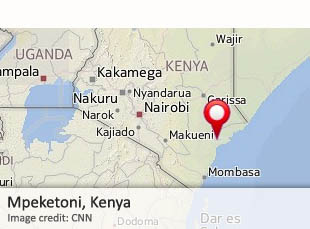
Survivors of a militant Islamist attack on a Kenyan coastal town said they witnessed a white man speaking in English and Arabic coordinating the operation that left 60 people dead. The bloody attack took place on Sunday in Mpeketoni, a small town located near the Kenya’s Lamu archipelago on the Indian Ocean. Witnesses said a group of 40 heavily armed men stormed the town in small teams and took it over last Sunday morning. Once they had established control, they visited almost every house asking residents if they were Muslim. If they failed to pass a simple test, they were executed on the spot. The attack is believed to have been carried out by al-Shabaab, a Somali-based Islamist group that has links to al-Qaeda. But survivors of the horrific raid have told British newspaper The Daily Telegraph that the leader of the attackers was “pale-skinned” and “spoke English and Arabic”. The paper quoted Mpeketoni schoolteacher Mary Gachoki, who said she saw “a white man who was speaking in fluent British English commanding the rest of the attackers”. The Telegraph report cited the accounts of several more witnesses, including a woman who saw “a white man” among the attackers, who “was commanding them and was shooting now and then”. She added that “at one point he spoke in Arabic but most of the time in English”, with a British accent. One witness said the pale skinned man “was either white or an Arab”. These accounts are believed to strengthen the view that the attack was indeed carried over by al-Shabaab. The group has strong links with foreign Arab or European-born Islamists who routinely travel to Somalia to join the group’s ranks. But the claims also bring to mind similar allegations made following last September’s attack at the upscale Westgate shopping mall in Kenyan capital Nairobi, which killed nearly 70 people. Read more of this post

Documents offer rare day-to-day insight into al-Qaeda’s finances

Al-Qaeda propaganda videoBy JOSEPH FITSANAKIS | intelNews.org
A remarkable set of documents found in western Africa offers a fascinating insight into the day-to-day running of al-Qaeda. The papers, obtained by the Associated Press (AP) earlier this year, reveal a highly bureaucratic organization that meticulously documents even the minutest expenses incurred by its members. The documents were produced and left behind by fighters belonging to the al-Qaeda in the Islamic Maghreb (AQIM) when they took over the city of Timbuktu, situated on the southern edge of the Sahara Desert in the West African nation of Mali. The AP had the documents, which include over 100 receipts written in Arabic, authenticated by experts, before posting them online, here. Analysts who spoke to the news agency said the papers show that al-Qaeda is the furthest thing from “a fly-by-night, fragmented terror organization” that conducts its financial affairs “on the back of envelopes”. Rather, they reveal a group that operates “like a multinational corporation”, with a “rigid bureaucracy” consisting of chief executives, directors’ boards, as well as clearly demarcated departments that include human resources and public relations. According to the AP, the AQIM documents found in Timbuktu include “corporate workshop schedules, salary spreadsheets, philanthropy budgets, job applications, public relations advice and letters from the equivalent of a human resources division”. Perhaps most impressively, while occupying Timbuktu, the AQIM militants appear to have gone out of their way to purchase, rather than expropriate, goods from local shopkeepers and merchants. Additionally, they went to great pains to record their cash flow, meticulously noting down purchases as small as a light bulb, a cake, or a bar of soap. The AP analysis suggests that the documents found in Timbuktu confirm what counterterrorism researchers have found in al-Qaeda’s other operational domains, in places such as Somalia, Iraq or Afghanistan. Read more of this post

News you may have missed #859

GCHQ center in Cheltenham, EnglandBy IAN ALLEN | intelNews.org
►►Some fear terrorists are exploiting online computer games. American and British spies have infiltrated the fantasy worlds of World of Warcraft and Second Life, conducting surveillance and scooping up data in the online games played by millions of people across the globe, according to documents disclosed by the former National Security Agency contractor Edward J. Snowden. The documents show that intelligence operatives fear that terrorist or criminal networks could use the games to communicate secretly, move money or plot attacks.
►►Niger’s president says Libya risks becoming like Somalia. Libya risks becoming a failed state like Somalia, Niger President Mahamadou Issoufou said last week, a day after gunmen shot dead an American teacher in the eastern city of Benghazi. “Our fear is that Libya falls into the hands of Salafist terrorists and that the state becomes like Somalia”, Issoufou told reporters ahead of a Franco-African summit in Paris. His country adjoins Libya to the south and has fought Islamists at home.
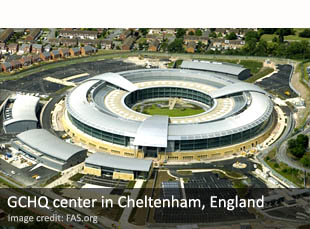
►►Secret memos show British spies’ efforts to keep Cyprus base. Heavily redacted documents show how determined British security and intelligence agencies –including GCHQ, Britain’s signals intelligence agency– were to maintain an effective presence in Cyprus after the strategically important island became independent in 1960. The files also reveal that Archbishop Makarios, the Greek Cypriot leader who became the first president of Cyprus when the island gained independence in August 1960, agreed not only to the UK bases but to British help in setting up his country’s own security and intelligence agencies.

Intelligence historian calls on MI6 to declassify Lumumba files

Patrice LumumbaBy JOSEPH FITSANAKIS | intelNews.org |
An historian whose book on British intelligence prompted the claim of Britain’s complicity in the 1961 assassination Patrice Lumumba has called for MI6 to declassify its secret files on the late Congolese Prime Minister. Calder Walton is a Cambridge University-educated intelligence historian whose first book, Empire of Secrets, examines the activities of British intelligence in the last days of the British Empire. A review of the book, published by Bernard Porter in The London Review of Books in March, prompted a claim that London had organized the assassination of the iconic pan-Africanist activist, who in 1960 had become Congo’s first democratically elected Prime Minister. Many believe that the United States had a hand in Lumumba’s assassination, which was aimed at preventing him from establishing close relations between uranium-rich Congo and the Soviet Union. But British Labour politician and Life peer Lord Lea of Crondall said in a letter published in response to the review of Walton’s book that Lumumba had been killed with the help of MI6, Britain’s primary external intelligence service. He claimed he had been told so by the late Baroness Park of Monmouth, who at the time of Lumumba’s death headed the Leopoldville station of MI6. In his book, Walton, who until 2009 served as research assistant for Professor Christopher Andrew’s authorized official history of MI5, Defence of the Realm, says it is unclear who organized Lumumba’s assassination. He argues that “at present, we do not know […] whether British plots to assassinate Lumumba […] ever amounted to anything”. But speaking to The London Times on Wednesday, the historian and author urged MI6 to declassify its internal archives on the Congolese leader. Read more of this post

Did MI6, not CIA, kill Congolese Prime Minister Patrice Lumumba?

Patrice LumumbaBy JOSEPH FITSANAKIS | intelNews.org |
The 1961 abduction and murder of iconic Congolese Prime Minister Patrice Lumumba was organized by British, not American, intelligence, according to a claim made this week by a British Labour politician and Life peer. Lord Lea of Crondall said in a letter published in the current edition of The London Review of Books that he was told so by Baroness Park of Monmouth, who at the time headed the Leopoldville station of MI6, Britain’s primary external intelligence service. Lumumba was a pan-Africanist activist who in 1958 helped found the Mouvement National Congolais, later becoming the organization’s leader. In 1960, he became Congo’s first democratically elected Prime Minister. However, his government soon became embroiled in the Cold-War rivalry between the United States and the Soviet Union. Many believe that Washington, fearing that Lumumba would attach uranium-rich Congo to the Soviet sphere of influence, tasked the Central Intelligence Agency with organize a coup d’état against him. It was carried out by Congolese Colonel Joseph Mobutu Sese Seko, who then ruled Congo with an iron fist until his death in 1997. In January 1961, pro-Mobutu soldiers, assisted by Belgian troops, abducted Lumumba and executed him following several days of beatings and torture. But according to Lord Lea, Baroness Park told him shortly before she died, in 2010, that she had orchestrated Lumumba’s killing on behalf of MI6. Known as Daphne Park until she entered the peerage, Park was often referred to as “the queen of spies” due to her four decades in the service of MI6. As one of the top female British intelligence officers, Park served as Second Secretary at the British Embassy in Moscow between 1954 and 1956, before being transferred to Congo in 1959. While there, she served as Consul and First Secretary at the British embassy in Leopoldville —renamed Kinshasa following Congo’s independence. Read more of this post

Al-Qaeda manual on how to deceive unmanned drones found in Mali

AQIM forces in MaliBy JOSEPH FITSANAKIS | intelNews.org |
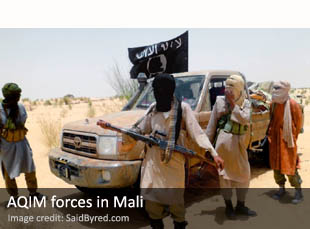
A detailed manual with instructions on how to defeat the surveillance capabilities of unmanned drones has been found in a former al-Qaeda hideout in northern Mali. International news agency The Associated Press said the photocopied document, which is written in Arabic, had been left behind in a building previously occupied by members of Al-Qaeda in the Islamic Maghreb (AQIM). The militants abandoned the document while fleeing into the Sahara desert, ahead of a French military advance on the town of Timbuktu. The document is believed to have been authored by Abdallah bin Muhammad, the operational name of a Yemeni militant serving as a senior commander in the Al-Qaeda in the Arabian Peninsula (AQAP). Its earliest known date of publication is June 2, 2011, on an online Islamist forum. Since that time, it has reappeared at least three times, all in Arabic, according to The Associated Press. The version of the manual found in Mali contains nearly two dozen detailed tips on how to deceive unmanned drones. One tip advises covering the tops of vehicles with floor mats made of hay or other natural-looking material, in an effort to confuse aerial surveillance systems. Another tip proposes camouflaging the roofs of buildings with the use of reflective glass, so as to render them invisible to aerial surveillance. A third suggestion is to mix sugar with water and dirt and apply the sticky mixture onto the body of vehicles, in order to confuse the imagery sensors of unmanned drones. Read more of this post

French, US intelligence intensify 23-year hunt for Algerian militant

Mokhtar BelmokhtarBy JOSEPH FITSANAKIS | intelNews.org |
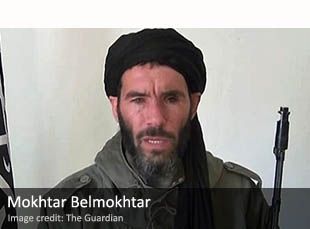
Although many Westerners are aware of the ongoing upsurge in al-Qaeda-linked activity in northwest Africa, few are able to point to the individual leaders behind it. To an important extent, Islamist-inspired groups in the region, notably Al-Qaeda in the Islamic Maghreb (AQIM) mirror the decentralized insurgency model developed by Islamist groups in Iraq and elsewhere during the past decade. However, the decentralized nature of the insurgency in northwest Africa does not necessarily entail the complete absence of principal figures in the movement. One case in point is that of Mokhtar Belmokhtar, who leads an AQIM-linked brigade known as al-Muaqioon Biddam (Those Who Sign With Blood). Born in 1972, Belmokhtar is an Algerian nomad who has reportedly been tracked by the United States Central Intelligence Agency for over 20 years. In the late 1980s, Belmokhtar traveled to Pakistan and then to Afghanistan, where he was taught the art of insurgency at al-Qaeda-funded training camps. Following the Soviet withdrawal, he left Afghanistan and returned to his homeland, where he joined the Armed Islamic Group of Algeria (GIA) and fought in the brutal 10-year civil war that ripped the country apart. In 2003, two years after the end of the war, Belmokhtar and his militia were pushed into northern Mali by the Algerian military. He soon set up camps in the area and used them to stage abduction raids into southern Algeria, targeting foreign oil workers and tourists. The Wall Street Journal reports that, according to the US department of State, in less than a decade, Belmokhtar’s militia managed to raise approximately $50 million through kidnapping foreigners and extorting cocaine smugglers traveling through Mali on their way to Europe. His big break came in 2011, when the collapse of the Libyan regime resulted in the unprecedented availability of illicit weapons previously in the hands of Muammar al-Gaddafi’s army. Belmokhtar’s militia became one of the principal buyers of Libyan weapons available in huge quantities in the black market. Read more of this post

US providing intelligence support to French forces in Mali

Mali and the Independent State of AzawadBy IAN ALLEN | intelNews.org |
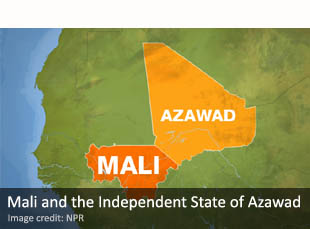
The United States is providing intelligence support to hundreds of French troops that entered the West African nation of Mali last week, according to American and French officials. On January 11, at least 400 French soldiers entered Mali from French military bases in neighboring Burkina Faso and Chad, in what the French Ministry of National Defense has codenamed Opération SERVAL. The French intervention was sparked by the conflict in northern Mali, which erupted in 2012. In January of that year, Tuareg tribesmen formerly employed by the late Libyan leader Muammar al-Gaddafi teamed up with a host of local Islamist groups, including the Movement for Oneness and Jihad in West Africa (MUJWA) and Ansar Dine (Defenders of the Faith). Guided by members of the al-Qaeda Organization in the Islamic Maghreb (AQIM), these groups rapidly seized Mali’s massive northern region (which they call ‘the Independent State of Azawad’), where they are said to have imposed a strict version of Islamic sharia law. Last week’s intervention by the French military came to many as a surprise, though not to intelNews leaders, who have known for a while that Paris had been lobbying Western officials to help it launch a military intervention in the West African country. It now appears that Western countries are indeed helping France’s military operations in Mali. Outgoing US Defense Secretary Leon Panetta told reporters on Monday that the Pentagon is gathering intelligence for the benefit of French forces. The US, said Panetta, has “a responsibility to go after al-Qaida wherever they are” and ensure that its members do not “establish a base of operations” in West Africa. He added that Washington is considering widening its support to Paris by providing “logistics, surveillance and airlift capability”. Read more of this post